Moscow’s small monuments: ducklings, a dog and unexpected heroes
A row of bronze ducklings can hold your attention as effectively as a grand façade. So can a dog lying in a metro vestibule, a familiar performer beside a small convertible or two fable characters sharing an oversized piece of cheese. Moscow’s smaller monuments offer encounters at the scale of an ordinary walk, with stories that range from playful to quietly moving.
Choose one setting that fits the day: the Novodevichy ponds, a brief stop at Mendeleyevskaya, Tsvetnoy Boulevard or the area around the Karat factory. These are separate parts of Moscow. The aim is to make a walk more memorable, with enough context to understand what you are seeing and enough unplanned time to enjoy the neighbourhood.
Choose the mood of your walk
For a gentle outdoor outing, begin with the duck family near the Novodevichy ponds. The setting allows a short encounter to grow into a waterside walk. For an urban pause, the Sympathy memorial at Mendeleyevskaya offers a more reflective subject. Near the circus on Tsvetnoy Boulevard, Yuri Nikulin’s monument connects a public street with the worlds of performance and film.
The Druzhba cheese monument is an additional option for someone already exploring northern Moscow. Its humour works through the unlikely subject and the relationship between two familiar fable characters. It deserves a focused stop when the area suits your plans, rather than a compulsory journey across the city simply to complete a list.
To build these different interests into a personal trip, try RoadMe: the app prepares a day-by-day plan around your dates, interests, pace and budget. It is a much more convenient way to turn a few appealing ideas into a Moscow visit that works for you.
Keep the expected scale modest. A small sculpture may reward ten attentive minutes, while the surrounding pond, boulevard or neighbourhood provides the longer outing. There is no need to make the monument itself carry an entire afternoon. This approach is particularly useful when your companions have different interests or the weather makes a long outdoor programme less attractive.
Make Way for Ducklings: a story at ground level
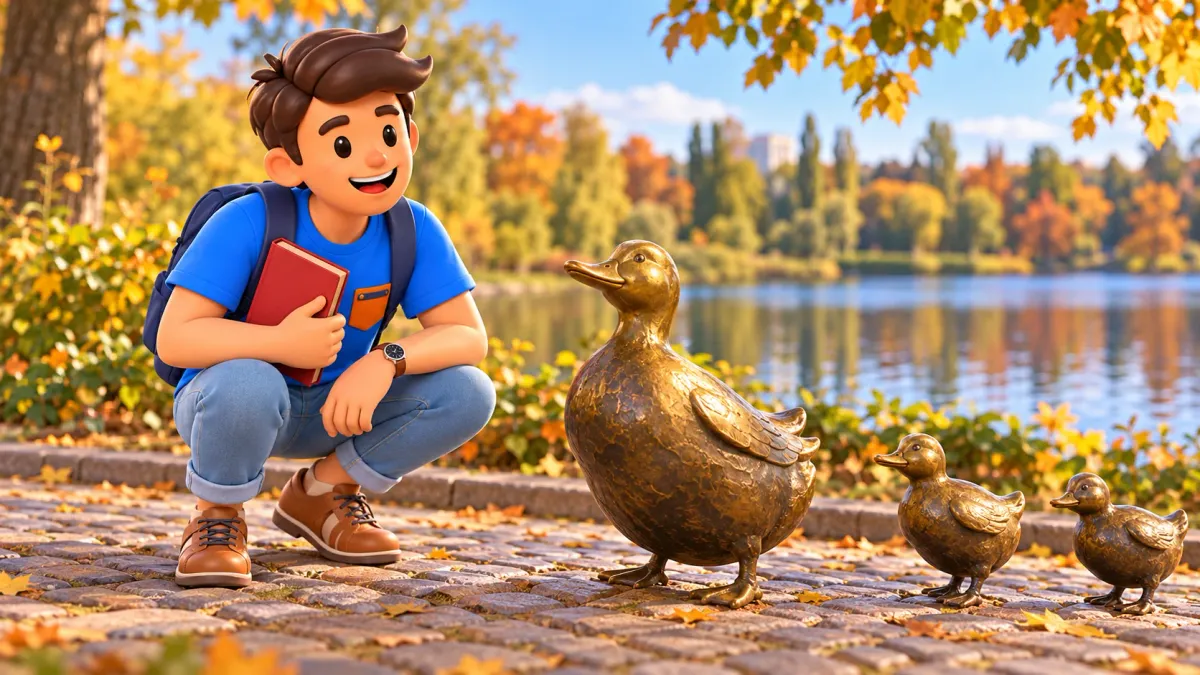
The duck family near the Big Novodevichy Pond is a good introduction to public art that invites a close look. Sculptor Nancy Schön’s Moscow installation dates from 1991 and has a counterpart in Boston. Its storybook connection comes from Robert McCloskey’s Make Way for Ducklings. The small figures form a moving family rather than a distant, elevated portrait.
Notice the direction of the line before concentrating on a single duckling. The composition creates movement through repeated forms and changing spaces between them. From a standing adult’s viewpoint it may appear as a small detail in the park; at a child’s height, the procession becomes a much larger event. Looking from both levels reveals something about how the sculpture works.
The nearby water adds context without needing an elaborate explanation. You can move from observing bronze birds to noticing the real landscape, reflections and paths around the pond. It is a different experience from viewing an isolated picture of the ducks. Give the setting time to become part of the memory instead of treating the sculpture as a quick photograph before rushing away.
For a relaxed version, allow roughly an hour or two for an approach, the sculpture, a manageable stretch beside the ponds and a rest. This is an editorial planning estimate, not a measured route. Choose the extent of the walk according to the open paths and your group’s energy. The monastery and cemetery are separate visits with their own access arrangements; neither is required for this outing.
Sympathy: a quieter meeting at Mendeleyevskaya
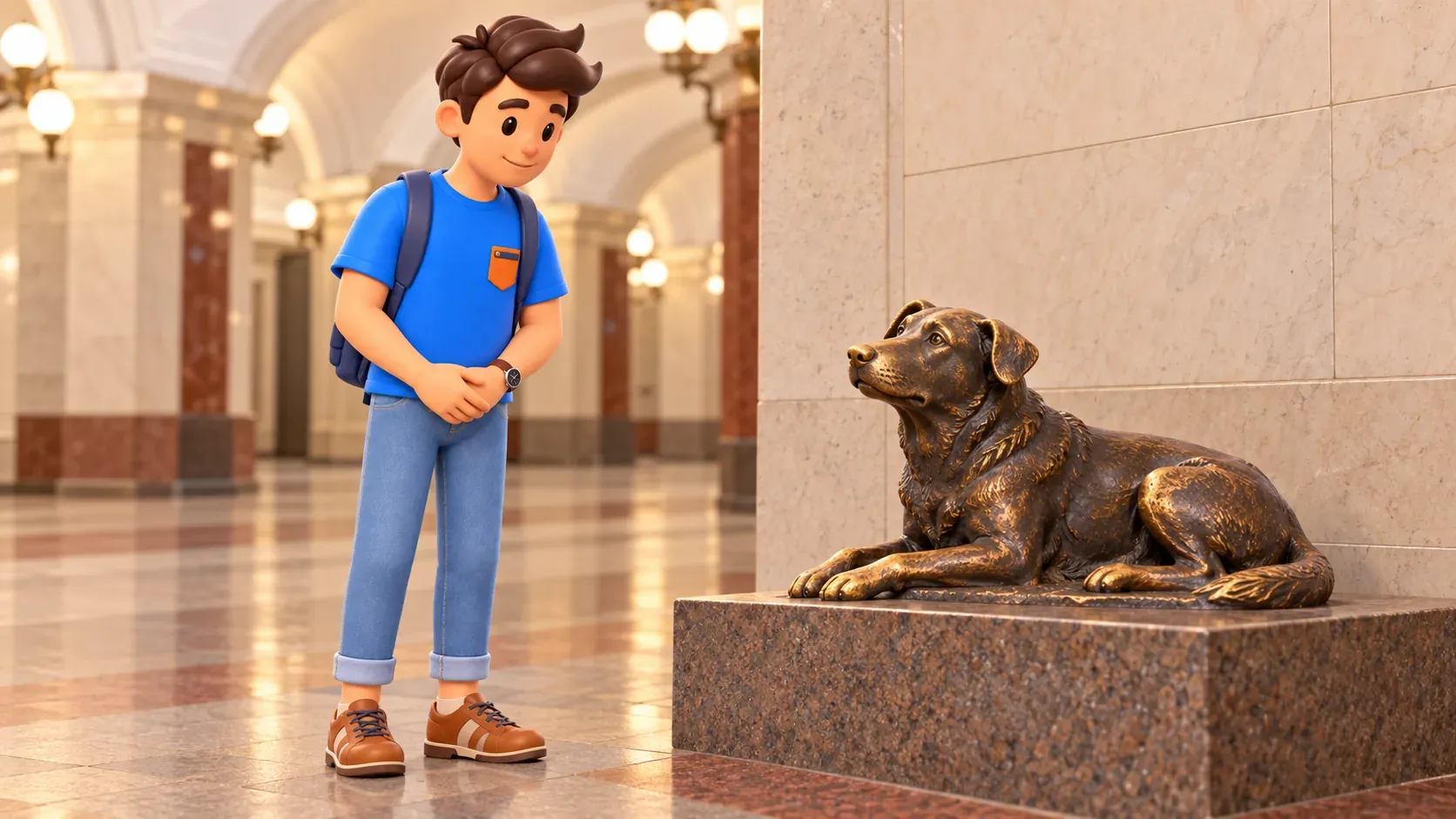
The bronze dog at Mendeleyevskaya belongs to a different kind of city story. The memorial is called Sympathy and was installed in the station’s upper vestibule in 2007. It remembers a dog known as Malchik and expresses humane treatment of homeless animals. This is a place of remembrance, which gives the encounter a different tone from a playful animal sculpture in a park.
You can understand that purpose without retelling the distressing details of the dog’s death. A short explanation is enough, particularly with children: the city has kept a memory of an animal and asks people to care about other living creatures. Let the sculpture’s quiet presence do some of the work rather than turning the stop into a dramatic story told in a busy passage.
Look at the posture of the dog and its relationship to the surrounding space. A low figure brings the subject close to everyday life, while the station setting means that remembrance sits alongside people going about ordinary journeys. That contrast is more revealing than searching for a ritual or assuming every bronze animal in Moscow serves the same purpose.
This is a transport space. Follow the actual entrance arrangements, leave room for other passengers and choose a position that allows people to pass. The memorial is not an independent museum destination requiring a long visit. If you are travelling through the area, a brief attentive stop may be the most appropriate form of encounter.
The dog here is different from the bronze dog beside a border guard at Ploshchad Revolyutsii. Their locations and meanings should remain distinct. One is a memorial with a specific message; the other belongs to a larger station ensemble with its own popular associations. Remembering the title Sympathy helps keep those two Moscow experiences separate.
Yuri Nikulin: a performer beside a bronze convertible
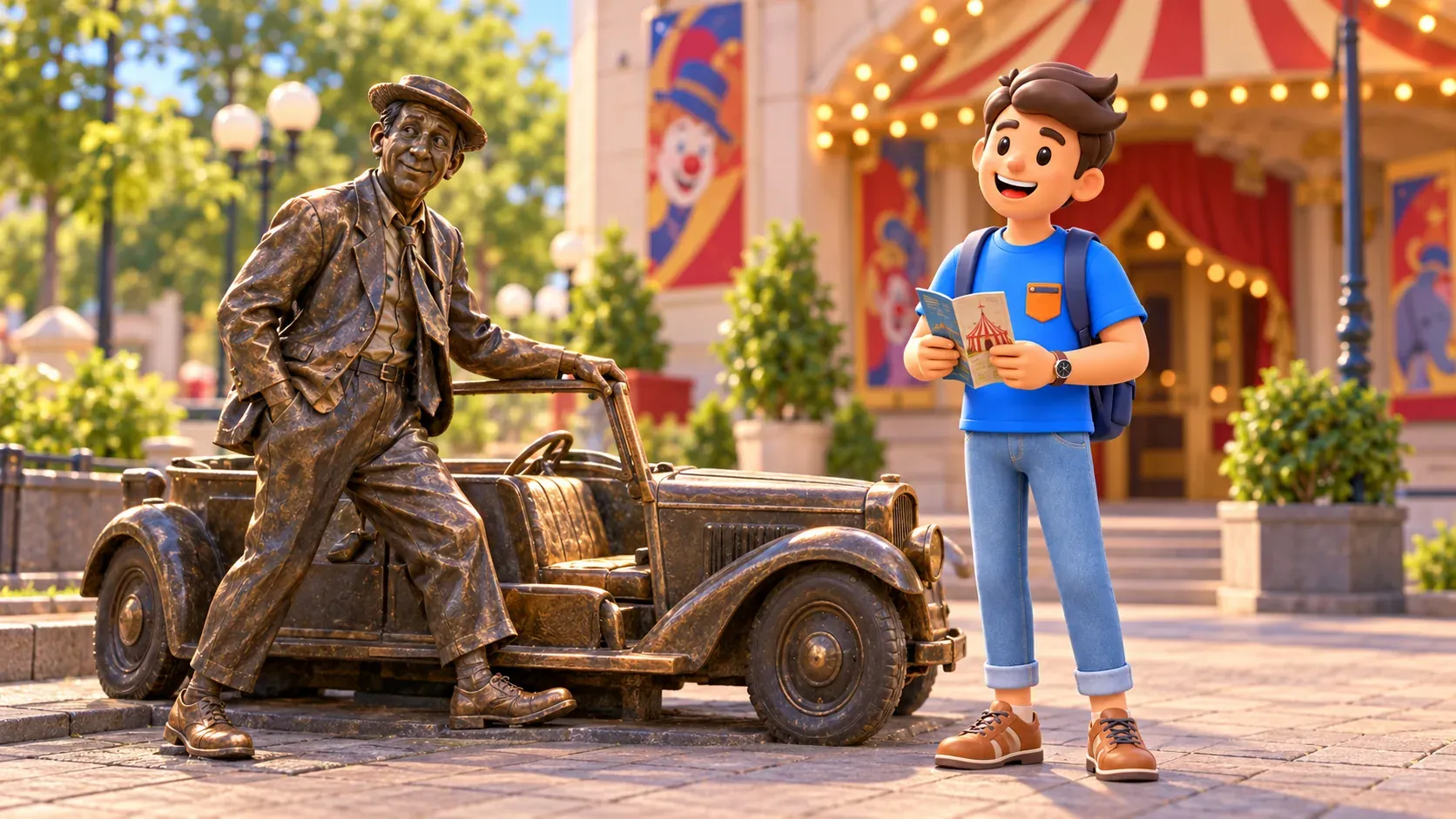
At the circus on Tsvetnoy Boulevard, Yuri Nikulin appears in a composition that feels connected to the pavement. The monument was installed in 2000; sculptor Alexander Rukavishnikov placed the performer beside a small convertible. The car recalls his screen work, while the location points towards his circus career. You do not need to know every film reference to understand that these two worlds meet here.
Look at the relationship between the figure and the vehicle. The scene suggests an action in progress, rather than a portrait placed high above a crowd. Clothing, gesture and the shape of the car give you several ways into the story. Someone who knows Nikulin’s performances may recognise more details; another visitor can simply enjoy the way an artist has made a public figure approachable.
The circus address is Tsvetnoy Boulevard 13. Treat the outdoor monument and an actual performance as two separate decisions. A street stop does not include admission, a visit behind the scenes or access to the building. If you do choose a show, plan around its real ticket and arrival requirements rather than assuming the sculpture determines the whole schedule.
For a short version, combine the monument with a comfortable stretch of the boulevard and a pause. Roughly an hour to an hour and a half can be a useful allowance, depending on where you arrive and finish. The estimate leaves room to notice the neighbourhood. It is not a promise that every activity, meal or performance will fit inside that time.
A simple photograph from the pavement can tell the story clearly. You do not have to climb into the composition or arrange an elaborate pose to make the encounter personal. Include some of the street or circus frontage so the picture records why this particular memorial belongs at this address.
Druzhba: when a familiar story acquires a comic ending
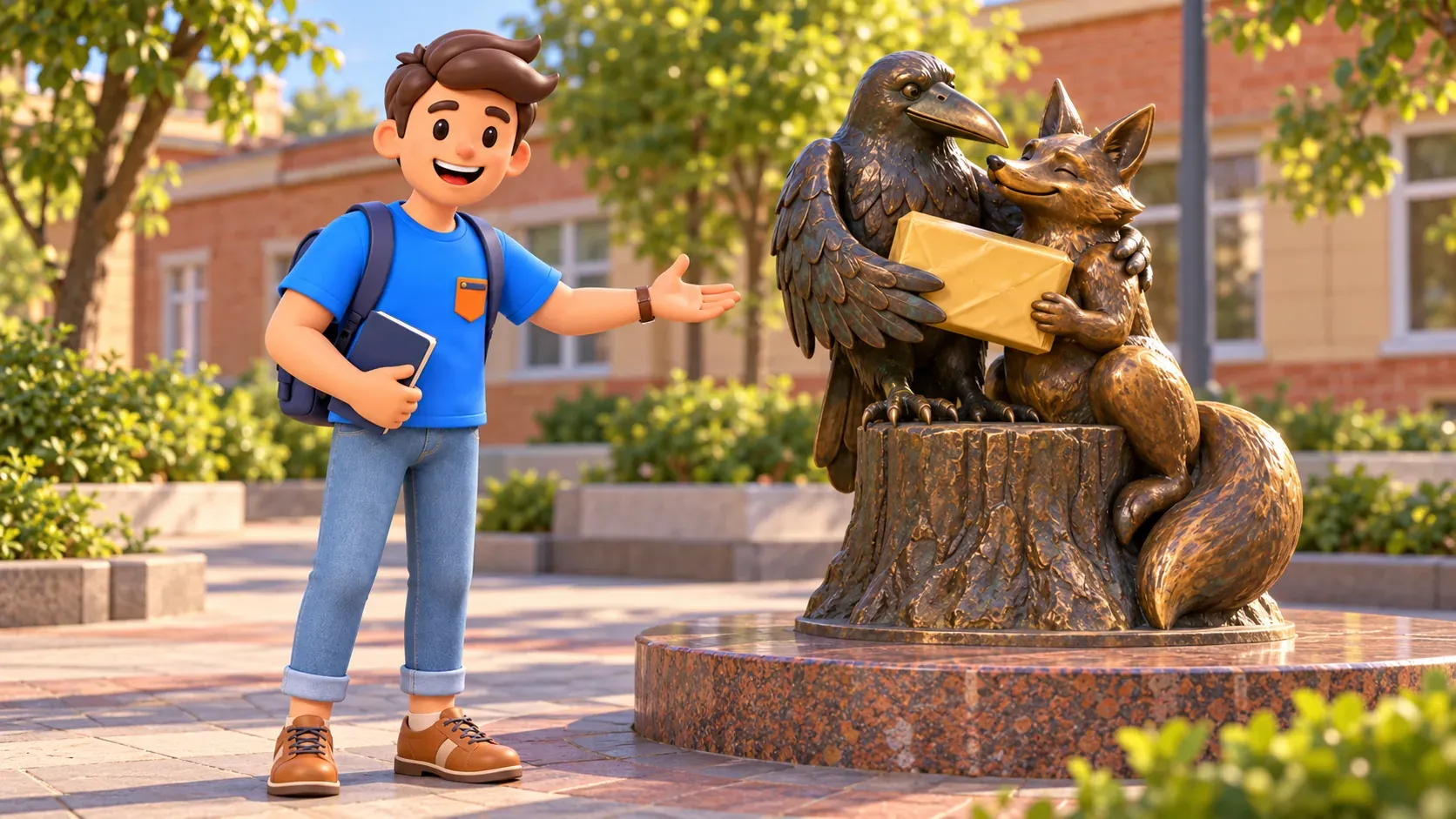
The cheese monument near the Karat factory brings a more unexpected subject into public sculpture. Its crow and fox draw on Ivan Krylov’s fable, but the pair are shown together, embracing and holding the cheese. The contrast between the familiar characters and their shared prize creates much of the joke. Even if the brand means little to you, the scene can still be read as a playful story.
Druzhba means friendship. For visitors familiar with the product, the oversized object may also carry an everyday association with food packaging and shopping. For others, it raises a useful question: what does a city choose to remember besides famous people and major events? An ordinary manufactured object can become a local reference point and a subject for humour.
Keep this as a separate northern option around the Rustaveli Street and Ogorodny Proyezd area. The factory connection explains the setting, but it does not imply a factory tour or permission to enter working premises. Use the current public approach to the sculpture and leave service entrances to the people who use them.
Give each setting enough room
The easiest pond outing begins with the ducks and continues along a suitable open section of the Novodevichy ponds. Keep the return simple and decide early whether your group wants a short loop or a gentle out-and-back walk. You can use our guide to the Novodevichy area for a wider visit, while preserving the ducks as the small, memorable centre of this particular plan.
Mendeleyevskaya works best as an urban pause within an existing journey. Nikulin’s monument works naturally with Tsvetnoy Boulevard or a separately booked performance. The two can belong to the same longer day, but they are not neighbouring objects that you pass in a few steps. Count the actual journey and any changes of transport before combining them.
For a longer stay, RoadMe can work out a personal programme with the right balance of neighbourhood walks, cultural stops and rest. Using one coherent trip plan makes it easier to enjoy these small discoveries without rebuilding the day from separate addresses.
The cheese sculpture is worthwhile when the northern area already interests you. Choosing fewer places can leave more space to observe their surroundings. A day does not become better simply because all four names have been crossed off; its quality depends on whether the pace, travel and subjects suit the people taking part.
Look closely and leave with a personal memory
With children, try describing a pose or inventing a short conversation between the ducklings. At the cheese sculpture, ask what the two characters might be saying. At the memorial dog, keep the explanation gentle and give the child room to ask a question. Each setting suggests a different kind of conversation; there is no need to make all of them equally cheerful.
Adults can use the same observation exercise. Notice one detail that a general photograph might miss: the direction of a figure’s gaze, the space between two characters or the way the sculpture meets the pavement. Then take a wider look that includes the surroundings. The relationship between object and setting is often what makes the encounter stay with you.
For photographs, keep paths and entrances clear and choose your moment without blocking other visitors. On a wet or cold day, shorten the outdoor part rather than treating a long walk as compulsory. You can still leave with one distinctive encounter and a sense of the neighbourhood, which is often more satisfying than collecting hurried images from distant corners of Moscow.