
More than a crossing: how to look at Moscow’s pedestrian bridges

A pedestrian bridge changes the way you see Moscow. From a bank, your gaze follows the water; in the crossing, a broader space opens sideways; at the exit, streets and people return. The view is only part of the interest. Railings, repeated elements and an old metal arch within a newer glass envelope reveal how the city connects movement, architecture and earlier structures.
One bridge is enough for this kind of encounter. Patriarshy offers open space and relationships between banks. Pushkinsky and Bohdan Khmelnytsky show new uses for old railway bridge structures. Bagration cannot currently be included as an operating crossing because it is closed for reconstruction. The places below are alternatives for observation rather than a compulsory sequence to complete during a single day.
Choose one architectural question
For changing layers of cityscape as you move, begin with Patriarshy. To distinguish old material from a newer setting, choose Pushkinsky or the bridge beside Kiyevsky station. Engineering knowledge is unnecessary. Notice which form draws the eye, what admits light and how the bridge returns you to an urban street. A modest question makes one structure worth a proper stop without requiring an exhaustive tour.
Try RoadMe for a complete personal trip plan based on your interests, dates and pace. Connecting a chosen bridge with other Moscow experiences makes the sequence more convenient and efficient, leaving time for observations and the journey.
About an hour including the approach may suit one attentive stop, adjusted for the place and your companions. This is an editorial estimate rather than a measured crossing or an instruction to remain on the bridge for a fixed period. A small independent subject avoids an exhausting inventory of riverbanks. If the central question becomes clearer, the outing has worked without another crossing.
Before setting out, check present approaches, restrictions and the return. A bridge shown on a map does not establish that every door, staircase or outdoor platform operates. On covered bridges, glass affects the view; on open ones, weather does. Do not promise yourself an identical photograph at every hour. Choose an observation that remains interesting under the actual conditions rather than depending on one unobstructed frame.
Patriarshy: open space and changing layers
Patriarshy Bridge is associated with the Cathedral of Christ the Saviour and continues across the island and Vodootvodny Canal towards Yakimanka. This explains why a visit involves more than one view above the main river. When changing direction, distinguish the Moskva River from the canal and identify the bank you are reaching. A familiar photograph does not explain the whole pedestrian connection.
Look first at the crossing itself: the line of the railing, repeated lamps and space available for movement. Then shift attention to the further bank. The difference between a near detail and a major urban silhouette makes the bridge a place to observe in its own right. You need not name every decorative style to notice how repetition leads the eye and where the space opens towards water.
Turn back towards the cathedral and compare that view with the one ahead. Here the building is considered from outside, without an interior admission promise. You can observe architecture’s relationship to the river without adding a religious visit. Select an available position outside the main flow so a short pause does not obstruct people who are simply travelling from one bank to another.
Pushkinsky: an old arch in a new role
Pushkinsky pedestrian bridge connects Frunzenskaya and Pushkinskaya embankments. It is often called the Andreyevsky pedestrian bridge because structures from the old Andreyevsky railway bridge were reused. Do not confuse this crossing with present-day Andreyevsky transport bridges. When selecting the approach, specify the pedestrian Pushkinsky Bridge and intended bank, rather than relying on its familiar historical name alone and discovering a different structure.
The historical structure belongs to the bridge built in 1905–1907. In creating the later pedestrian crossing near the end of the twentieth century, a metal span and historical granite received a new setting and use. That does not mean the entire present bridge survives from the early twentieth century. The glazed envelope and contemporary pedestrian environment belong to another phase of its life.
The main task is to distinguish arch and surrounding glazing. Notice where the substantial metal line remains clear and where repeated transparent elements change the impression. Examine visible connections from public space without touching the structure or passing barriers. Even without calculating loads, you can recognise the difference between a strong older frame and a newer way of moving across the river within it.
On the park side, do not make Gorky Park’s Main Entrance a guaranteed approach. Current restrictions affect part of the Parterre, including the Main Entrance and Fountain Square. Pushkinskaya Embankment and the selected bridge approach require their own current access plan. Decide which side you will arrive from and confirm the available path, rather than finding a diversion after an already lengthy walk.

Bohdan Khmelnytsky: history inside glass
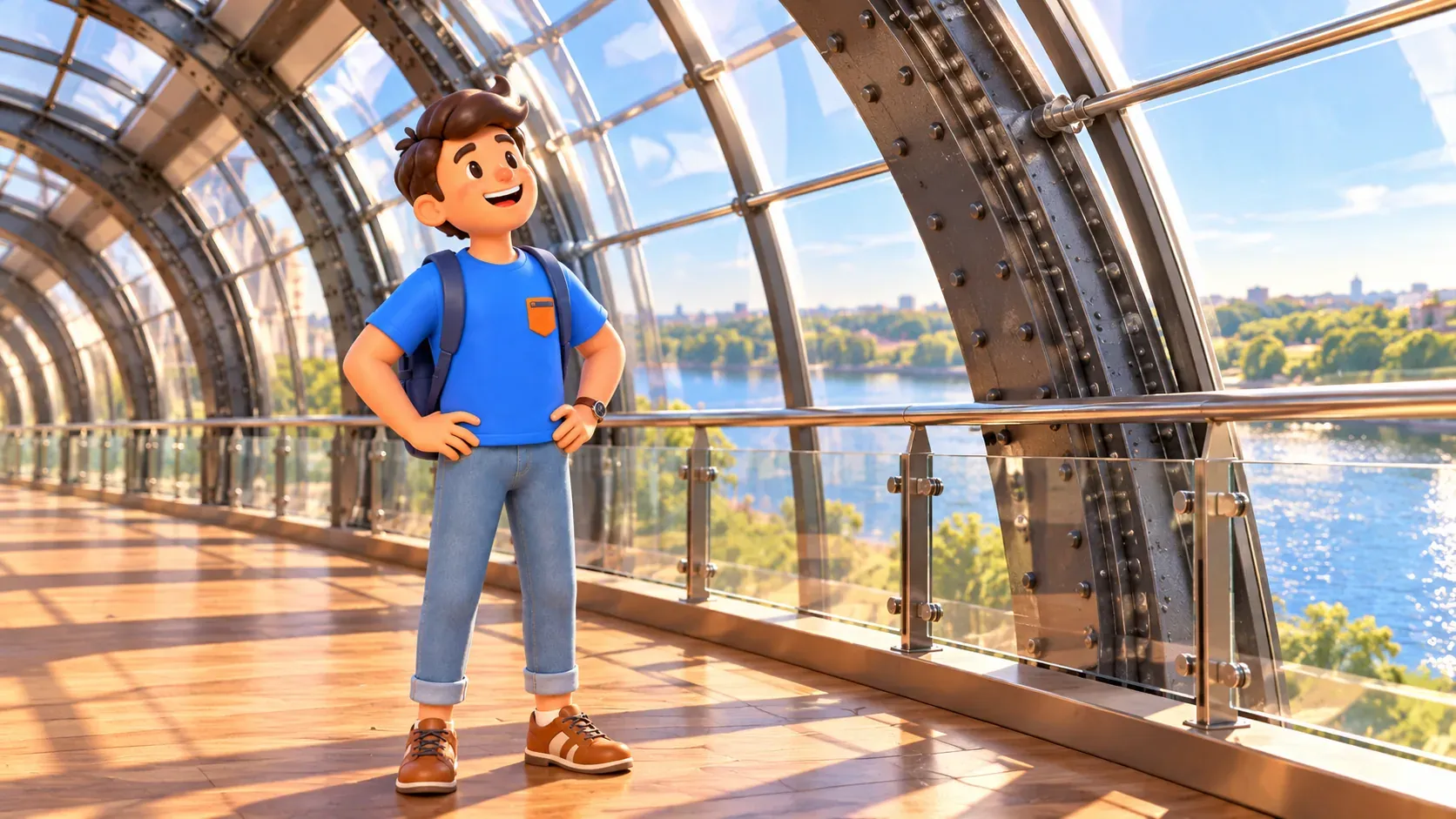
The bridge by Kiyevsky railway station links Berezhkovskaya and Rostovskaya embankments. It also incorporates historical railway structure, but from a different bridge, Krasnoluzhsky. Do not transfer the old Andreyevsky name to this location or regard the two glazed crossings as one object. Similar materials conceal separate histories and different positions within the city’s network, which are part of the interest in comparing them.
One historical steel arch was incorporated into the newer crossing. The research description emphasises its role as a compositional basis within a new covered space. Look not only at water through glass but at the way the older element is experienced within the new envelope. The modern bridge is not equivalent to an entire early-twentieth-century structure moved intact and left otherwise unchanged.
Compare the arch’s line with the glazing rhythm, and forward movement with views to the side. Repeated full crossings are unnecessary. A stop nearer the beginning and a look from an available internal section can reveal the change of scale. Outdoor terraces and individual exits should not be assumed open: their conditions may differ from the main passage, particularly during colder seasons and operational changes.
Arrival can be linked to the Kiyevskaya transport interchange using an operating exit and a current pedestrian approach. A large railway station nearby does not mean every door leads directly to the level required. Leave time to understand the location. For limited mobility, confirm actual stairs, lifting equipment and connections between levels beforehand, without relying on a general promise of step-free passage through every part.
Bagration: an example that currently stays off the route
Bagration’s covered shopping and pedestrian gallery appears in many older lists of attractive Moscow City bridges. A present-day plan must account for closure. The official transport portal announces reconstruction from 12 May 2025 until 31 December 2030. This is not a short evening interruption or a reason to expect that an available door might still provide a through route during your visit.
Do not plan a river crossing, station return or warm weather break through it. Older pages describing the connection with Tower 2000 and the business district can remain in search results. They explain the former arrangement without proving current access. An actual crossing and transport connection need a different verified option appropriate to the bank you have chosen, rather than a guess made beside the construction works.
The architectural lesson is useful: a bridge can remain a recognisable object while ceasing to be an available link. There is no need to approach construction barriers to complete a list. Instead of travelling specially to a closed gallery, select another subject or keep this example for a future visit after reopening has been confirmed. Historical interest does not remove the need to check practical access.

Compare structure, envelope and city
Ask three questions at an available bridge. Which form do you notice first? What separates a walker from water and open air? How does the passage return to its bank? Patriarshy emphasises openness, while the glazed bridges combine older arches with newer envelopes. The answers need not be technical to remain precise observations, and they give your outing more continuity than a succession of unrelated river photographs.
The middle is not always the most useful position. An approach presents the bridge as an object, movement inside reveals it as space, and the exit shows a connection with the district. Stop at two different available points and notice what disappears or enters the view. The walk then goes beyond a familiar water photograph without requiring a complete examination from every side or underneath.
Glass may create reflections and conceal part of a view; an open bridge may feel windy. These are qualities of the actual encounter, not defects in your choice. If a position is inconvenient, select another or shorten the pause. Do not pursue a clean panorama through a service door, restricted platform or place where stopping steadily is difficult. A flexible observation is better suited to a working pedestrian crossing.
Leave room for ordinary movement
Bridges continue serving people while attracting architectural interest. Keep pauses, conversation and photography to the side of the principal flow. Avoid walking backwards for a wide view, blocking stairs or placing equipment in the passage. A few photographs are enough for a modest introduction. Attention to space includes noticing how other people use it and keeping the connection functional during your visit.
With children, keep an easy shared pace and do not treat railings or structural elements as a playground. On difficult surfaces or in poor visibility, choose clear lit approaches. A roof alone guarantees neither warmth, seating nor operating services. If proper rest is needed, plan a separately available venue rather than relying on an incidental interior within a crossing to provide everything you require.
RoadMe can create a complete personal trip plan for your interests, dates and pace, connecting an architectural stop with the rest of Moscow. Try the app to select convenient connections in advance and leave time for looking and a calm return.
Finish with one clear observation
Afterwards, remember something beyond the river: repeated railing details, the weighty line of an old arch, a newer glazed envelope or the changing view at an exit. That turns a bridge from photographic background into its own urban experience. Every example need not be collected that day. Another crossing can become a future subject when you want to compare a new space with one already understood.
Patriarshy supports looking at the open city; Pushkinsky and Bohdan Khmelnytsky, at reused historical structures; closed Bagration, at the difference between architectural history and working access. Choose one available subject, check its approach and return, and leave yourself time simply to stand without preventing others from continuing their journeys. That is enough to make an ordinary crossing more memorable.


