
Moscow Metro as a museum: an art route through four stations
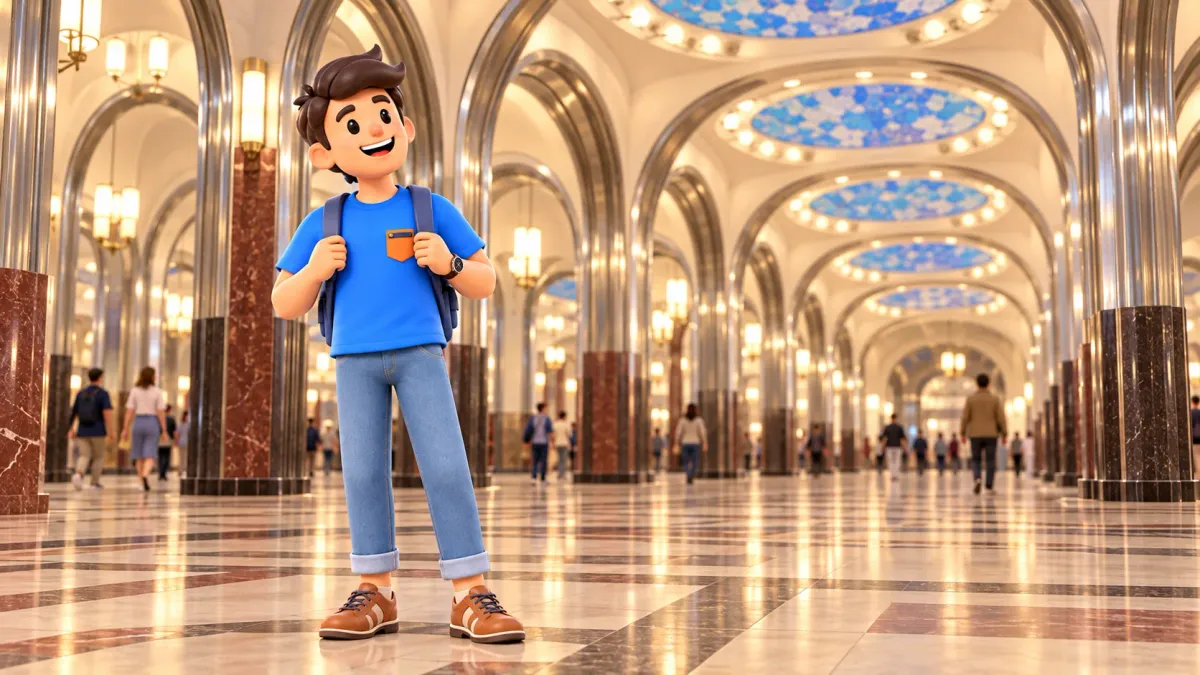
Four stops are enough for a first encounter with the art of Moscow’s Metro. At Mayakovskaya, metal and ceiling mosaics hold the attention; at Novoslobodskaya, coloured glass changes the atmosphere. Komsomolskaya on the Circle line adds a monumental mosaic vault, while Ploshchad Revolyutsii brings the gaze back to bronze figures. Different materials provide a thread that is easier to follow than a long list of beautiful stations.
“Museum” describes a way of looking, rather than a special visiting regime. Trains still arrive, passengers hurry between lines and staff manage movement. Fit the outing around actual conditions. If a stop is uncomfortable because of crowds or restrictions, shorten the viewing rather than treating an empty hall as something you must obtain.
Choose an unhurried time and one main task
Allow roughly ninety minutes to two hours for four attentive stops, adding travel to the beginning and away from the finish. This is an editorial estimate, not a timed journey. Do not make every mosaic a requirement. Understand one distinctive feature at each station and choose a detail for closer attention. The trip then remains focused without turning into hours of standing underground.
Try RoadMe for a complete personal itinerary shaped around your interests, dates and pace. Connecting the Metro visit with your other Moscow days makes a clear plan easier and more efficient to follow, leaving time for both station art and a walk above ground.
Where possible, avoid the usual morning and evening commuting periods, while accepting that this cannot guarantee empty platforms. Railway interchanges also have their own waves of passengers. Assess the actual flow before choosing a viewing position. A short attentive look from a convenient place is more useful than waiting indefinitely for the perfect photograph.
Before entering, check the operator’s current changes to lines and interchanges. A historic station’s beauty does not establish that a particular entrance is open today. The route uses connections between lines 2, 5 and 3. Choose admission payment under current fares and your own circumstances; this plan does not invent prices or assume a particular bank card.
How the four stations connect
Start at Mayakovskaya on the Zamoskvoretskaya line, number 2. After viewing, ride to neighbouring Belorusskaya, change inside the interchange to the Circle line, number 5, and continue towards Novoslobodskaya. Belorusskaya is a transfer here, rather than a fifth compulsory art stop. Follow station names and line numbers, not colour alone.
From Novoslobodskaya, remain on the Circle line towards Prospekt Mira and continue to Komsomolskaya. Prospekt Mira is not a separate viewing stop in this version. At Komsomolskaya, the intended hall belongs to the Circle line, rather than the same-named Sokolnicheskaya-line station. Afterwards, follow the Circle line to Kurskaya and change to the Arbatsko-Pokrovskaya line, number 3.
On line 3, the next destination is Ploshchad Revolyutsii, where the fourth art stop and the planned sequence end. Kurskaya is also a working interchange rather than another chapter of the tour. Follow internal transfer signs between stops instead of exiting through ticket gates. If connections change temporarily, consult the operator’s current map and notices before continuing.
Mayakovskaya: metal, rhythm and looking upwards
Mayakovskaya belongs to the stations opened in 1938. Its architecture is associated with Alexey Dushkin, and the ceiling mosaics with Alexander Deineka. Begin with the overall space and metal arches. Their rhythm can be understood without a detailed construction history. Then shift attention from the passage through the hall towards the upper part of the interior.
The mosaics reveal themselves differently from a wall panel at eye level. Choose one visible composition, find a suitable position away from the main flow and look up while remaining safely within the platform area. Do not walk backwards while studying the vault and taking photographs. Stop, put the camera down, look, then make a separate picture if conditions permit.
Two scales are useful here: repeated architectural elements along the hall and a smaller artistic scene overhead. You do not need to fill every gap or count the works. One attentive encounter can show how art forms part of an everyday route rather than occupying a separate gallery room that visitors enter only for contemplation.
Novoslobodskaya: coloured glass transforms the hall
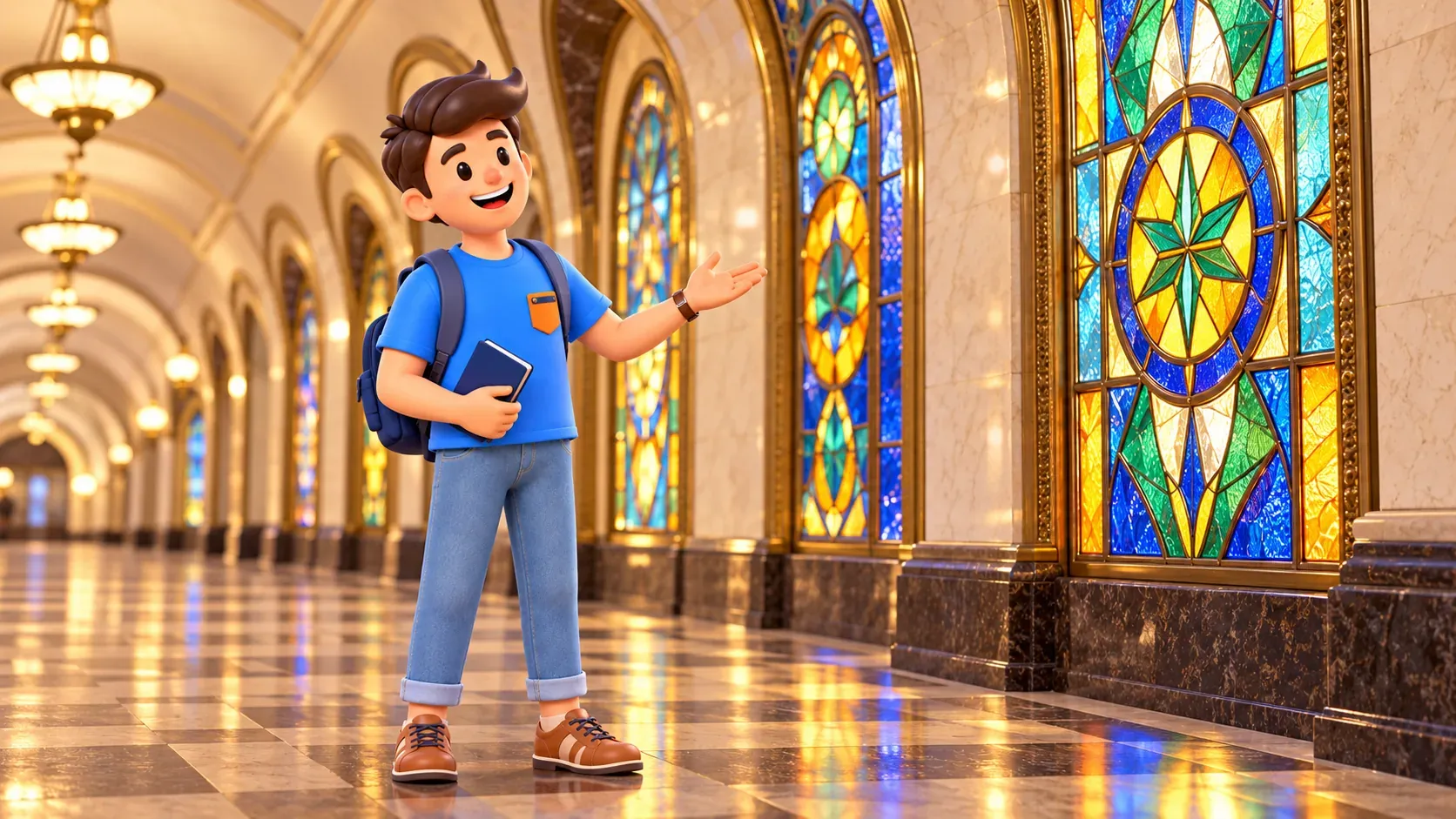
At Novoslobodskaya on the Circle line, stained glass provides the main reference point. Its artistic history is associated with Pavel Korin. After the first station’s metal rhythm, colour and light offer a different impression. Look along the hall for the repetition of coloured inserts, then select one available fragment for closer attention.
Notice how glass works with its frame and the surrounding stone. It need not be viewed solely as an independent picture; it changes the character of the wall and the movement through the station. That observation is enough for a short introduction. A detailed account of every image and its workshop history would require a different pace and more supporting material.
Do not press close to an artwork or block a passage to obtain a frontal photograph. If the flow is dense, look from an available distance or shorten the stop. The station continues working while visitors enjoy its glass. The combination of expressive design and ordinary transport life is part of the encounter, rather than an obstacle to be removed.
Komsomolskaya Circle line: scale before mosaic detail
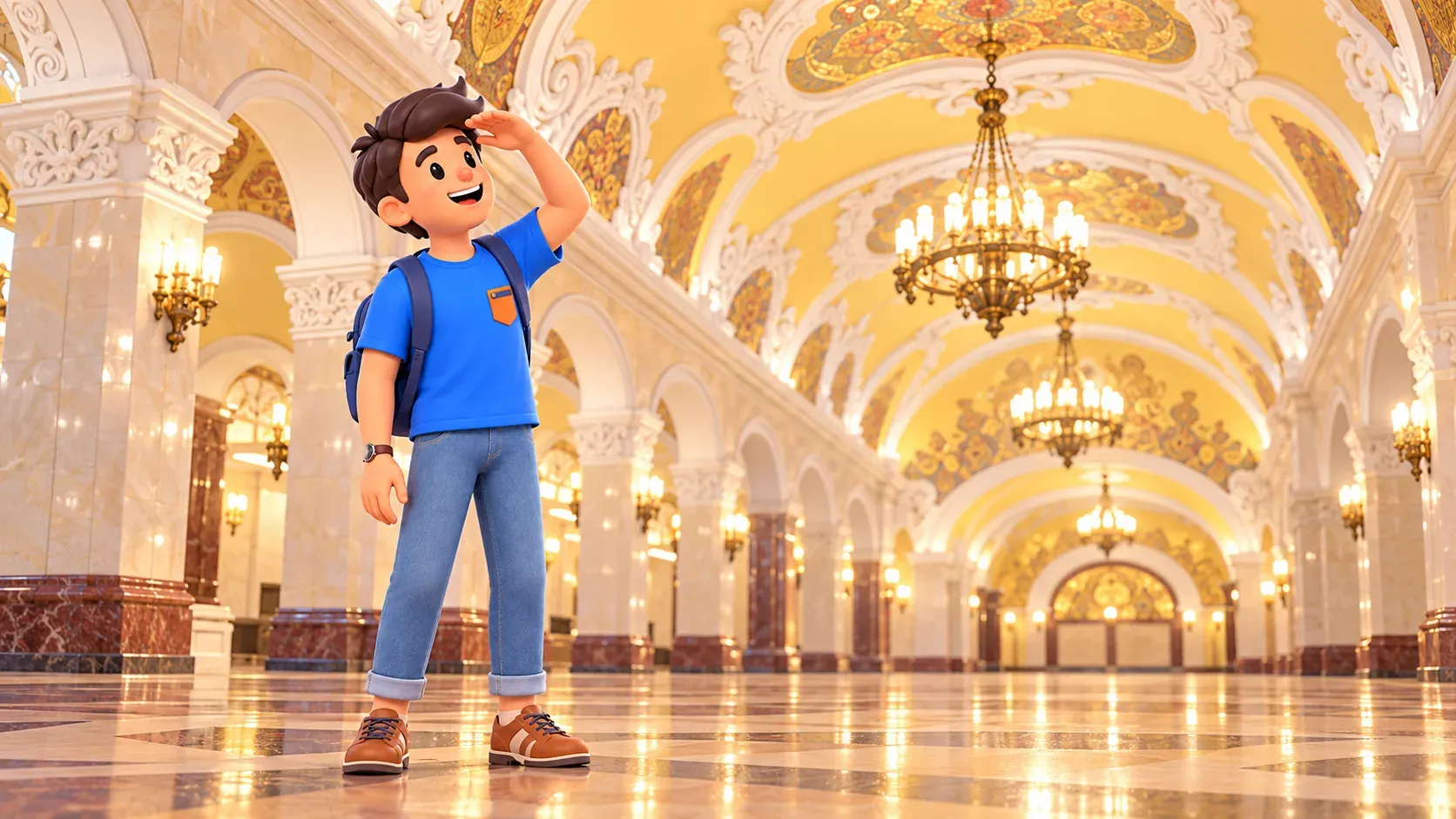
It is essential to stay with the Circle-line station here. Komsomolskaya also names another station in the interchange, but the planned hall is the circular line’s. Its project is associated with Alexey Shchusev and its mosaics with Pavel Korin. First consider the overall relationship of vault, supports and extended space, rather than immediately trying to identify every scene.
The mosaics belong to the hall’s ceremonial historical character. They can be considered as works of their period without turning the outing into an ideological argument or a test of historical knowledge. Choose one visible section and compare its position with Mayakovskaya’s mosaics. Scale, setting and the way your gaze rises have changed, despite the shared material.
This is an important railway interchange, where crowds may arrive in waves. Keep out of transfer routes and passage entrances. If lingering is inconvenient, take a brief overall look and continue. Actual transport conditions matter more than spending an identical number of minutes at every station. The plan should remain flexible enough to respect how the network is being used.
Ploshchad Revolyutsii: bronze at human scale
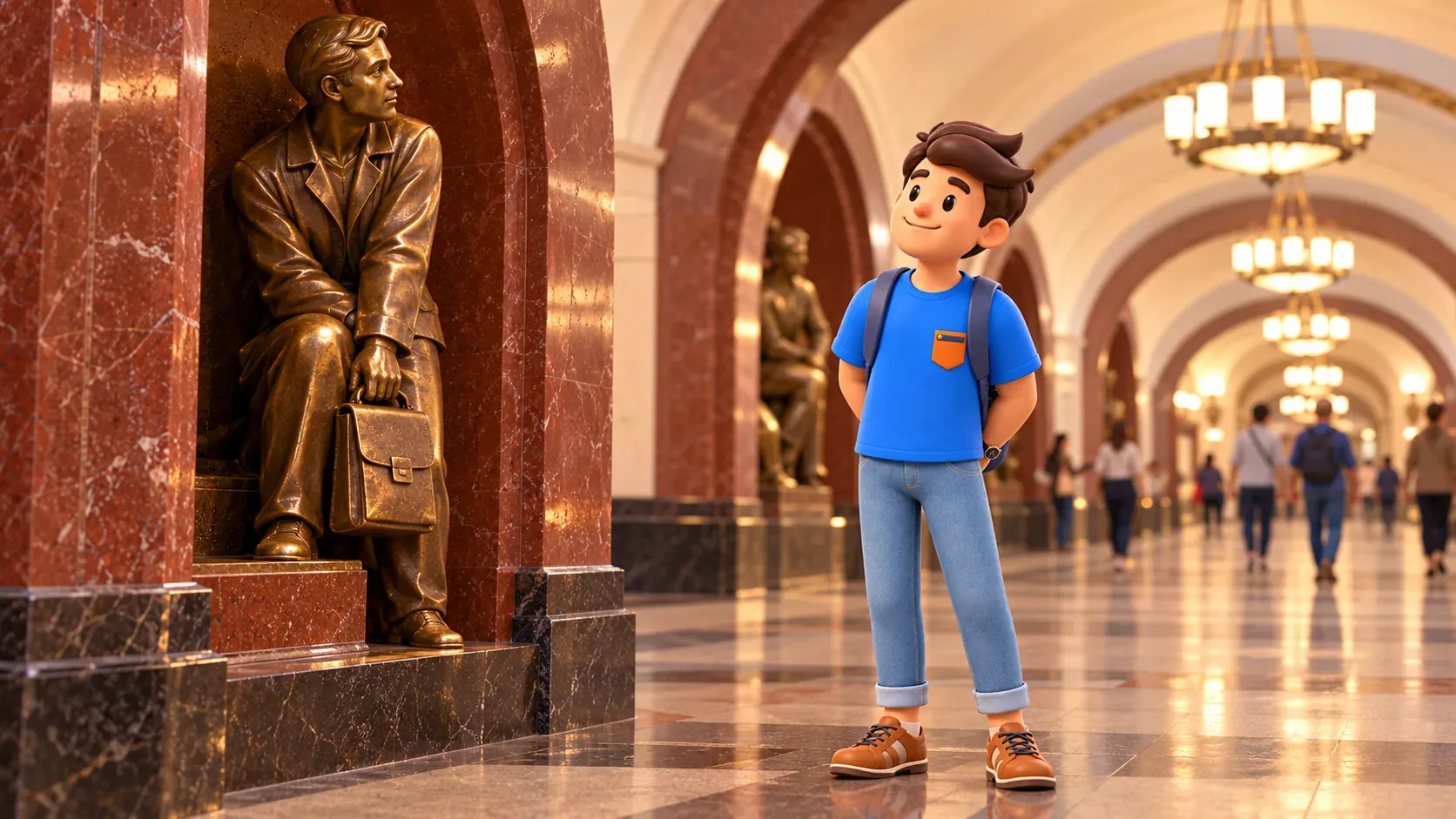
After changing at Kurskaya to line 3, complete the route at Ploshchad Revolyutsii. Attention returns from ceilings to people and sculpture. The bronze figures are associated with Matvey Manizer. Set within architectural niches, they are experienced with the arches rather than as independent objects arranged in a gallery. Begin with the broader rhythm before choosing one group.
Consider pose, silhouette and the way a figure occupies a confined space. Repetition still leaves differences in gesture and detail. This makes a useful ending after three stations where the eye frequently moved upwards or along walls. A human scale changes the mode of looking, even if you are beginning to tire of the underground journey.
There is no need to rub sculptures for a tourist superstition or wait for a mandatory photograph with a particular figure. Observation without touching and respect for passenger movement are enough. If continuing your day in central Moscow, choose an operating exit using current signs. An above-ground programme can be planned separately, leaving this Metro sequence as a completed experience.
Take photographs without obstructing travel
The transport portal’s official explanation permits ordinary still photography without a tripod, lighting or other stationary equipment without a separate permit. It also requires photographers not to obstruct passengers, cross the platform boundary line or use flash when photographing trains. Follow staff instructions. Professional or equipment-based production has separate conditions and should not be equated with a quick travel photograph.
In practice, look at the station before lifting the phone, then choose a single frame. Do not photograph while entering a train, riding an escalator or moving through a transfer. Keep belongings from interfering with your movement or anyone else’s. If it is busy, put the camera away. Seeing the interior matters more than collecting a compulsory set of images.
RoadMe can build a complete personal trip plan for your interests, dates and pace, connecting underground impressions with the rest of Moscow. Try the app for a useful sequence that leaves time for transfers, rest and your next walk.
Save station names together with line numbers before entering. At a large interchange, locate the correct direction before pausing to read or discuss the art. Agree on a meeting arrangement with companions, and leave escalator exits clear. A compact group can look more comfortably when it does not become an obstacle.
Shorten the visit and finish with a clear return
If four stations are too much, choose two contrasting materials rather than rushing through everything. One simple shorter version retains metal and glass and ends after Novoslobodskaya. Alternatively, select a compact option around your own transport needs. When changing the beginning or end, recheck connections: fewer art stops do not necessarily leave the same journey intact.
For reduced mobility, ask the Metro about the particular stations, transfers and available assistance. An escalator does not establish a step-free route throughout. With children, agree beforehand to stay together and avoid stopping in train doors. Anyone can tire before the list is complete, in which case the best plan is a clear return rather than another obligatory stop.
Before leaving, recall four differences: metal rhythm, coloured glass, a monumental mosaic vault and bronze figures. Those observations give “beautiful Metro” a concrete meaning. Other stations can become reasons for a future visit, while this route ends with enough energy left to notice the city above ground.


