
Monet in Paris: Choose Orangerie or Marmottan and a Nearby Walk
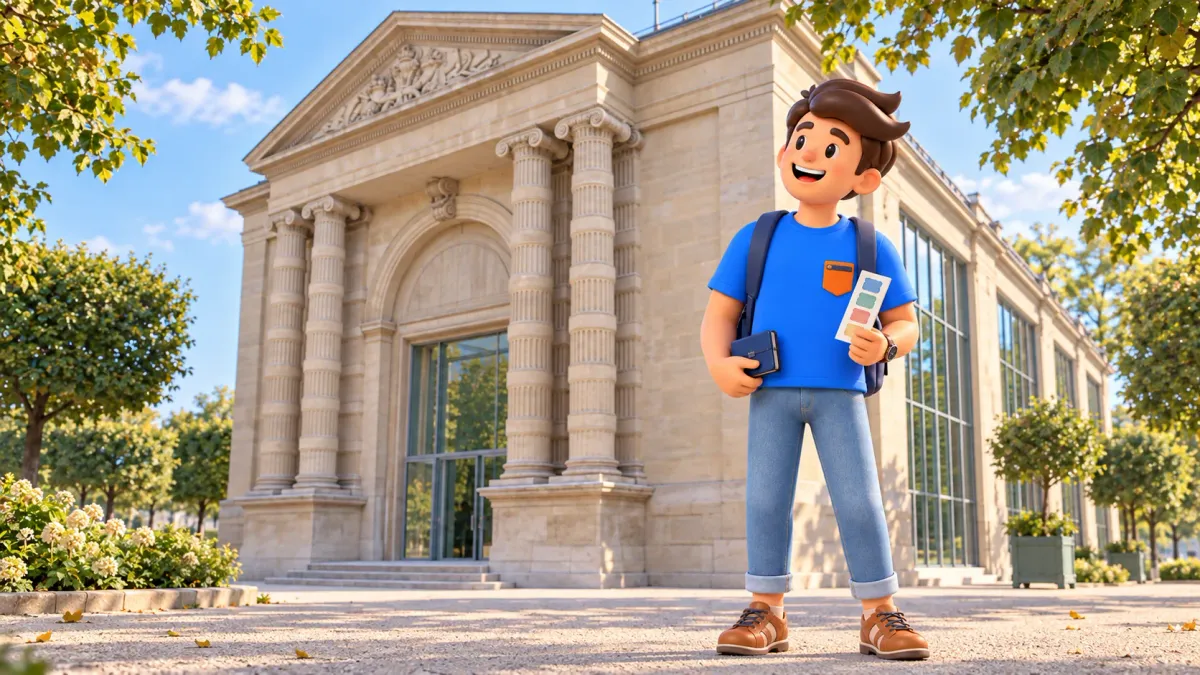
Monet in Paris offers two different pleasures: spending time inside a painted environment, or following a collection across the artist’s career. The Musée de l’Orangerie makes its great Water Lilies installation the centre of the experience. The Musée Marmottan Monet offers a broader collection in a former private residence beside the Jardin du Ranelagh.
Choose the museum through the way you want to look, then add a nearby garden walk. Each programme below takes about four hours, with a three-hour version for a more focused visit. The museums have different opening days, booking arrangements and current exhibitions. Neither choice requires crossing Paris to complete a list of Monet addresses.
Choose an experience, then give it enough time
Try RoadMe to develop a complete personal Paris trip plan around your interests, dates, pace and budget. Keeping art visits, nearby walks and rest together in the app makes preparation more convenient and helps you use your days efficiently.
Choose the Orangerie if the relationship between painting and space attracts you: broad compositions surround the visitor in two elliptical rooms. Choose Marmottan if you want to compare different moments in Monet’s work and see how a collection developed. Both museums have Water Lilies paintings, but they offer different encounters with them.
The current exhibitions may also decide the choice. Give one subject priority within the two-and-a-half-hour museum block, adding a smaller second interest if time permits. This allowance does not cover every collection and a complete exhibition.
| One independent programme | Estimated total | Time allocation |
|---|---|---|
| Orangerie and western Tuileries | 240 minutes | 30 local walking + 20 arrival/checks + 150 selected museum visit + 15 garden observation + 25 rest |
| Marmottan and Ranelagh | 240 minutes | 20 arrival/checks + 150 selected museum visit + 30 local walking + 15 garden observation + 25 rest |
The Orangerie plan begins at the western Tuileries entrance by Concorde; the Marmottan plan begins at the public visitor approach to 2 Rue Louis-Boilly. Travel and the walk from your chosen station exit to these starting points are additional. The walking allowance includes the local museum approach, garden paths and return, while checks have their own twenty minutes.
These estimates do not predict security queues. A full meal or prolonged exhibition reading adds time. The museums are approximately 4.6 km apart by a public walking model; a deliberate combined day needs its own transfer and time budget.
The Orangerie: spend time within Water Lilies
Eight large compositions occupy two elliptical rooms. The room becomes part of the work: your attention can move from a broad expanse of colour to a smaller passage, then return to the whole. Take time to look from more than one position.
Monet offered the works to France in the aftermath of the November 1918 armistice as a symbol of peace. They were installed according to his plans in 1927, after his death. That brief history adds meaning to the spatial experience: the paintings were conceived as an environment, rather than simply a row of separate pictures.
Begin by noticing what catches your eye. Perhaps a dark vertical rhythm, a change of colour or the movement suggested by reflections. Look again after a few minutes. You do not need to identify every plant or master an art-historical vocabulary to notice how your perception changes.
The museum asks visitors to discover the installation calmly. Share the space considerately and follow current signs and staff instructions. An empty room or particular viewing position is not guaranteed.
The current exhibition adds a question about time
As of October 2026, Monet, peindre le temps runs in Paris from 30 September 2026 to 25 January 2027. It explores the relationship between Monet’s work and time, from an impression of a moment to repeated subjects and the continuity of the late paintings. The exhibition is distinct from the permanent Water Lilies rooms.
If it interests you, use part of the museum block to follow that question, then compare the experience with the permanent installation. The ordinary admission ticket includes the permanent collections and current exhibitions. The virtual-reality experience is separate and is not included in that ticket; it would need its own conditions and time.
For a shorter day, reduce the museum block from 150 to ninety minutes and retain the nearby garden pause: the whole programme becomes 180 minutes. Concentrate on the experience you came for. If the exhibition is a stronger interest, add thirty museum minutes to the full plan, making 270 minutes, or four and a half hours.
Orangerie entry and the Tuileries walk
Approach through the Jardin des Tuileries at the Place de la Concorde end, on the Seine side, and follow museum signs from permitted garden paths. Concorde station serves Métro lines 1, 8 and 12, but its exits and the road crossings need a separate approach allowance. Do not expect the museum entrance to be a street door directly on Quai des Tuileries.
The Orangerie normally opens from 9 am to 6 pm and closes on Tuesdays, 1 May, the morning of 14 July and 25 December. Ordinary last admission is 5:15 pm, with rooms beginning to clear at 5:45 pm. A final-entry slot therefore cannot accommodate the planned 150-minute visit.
Individual timed booking is strongly recommended, with exceptions for the memberships specified by the museum. The ticket gives entry within the half-hour following its reserved time. On the free first Sunday of the month, an individual timed reservation is compulsory; free admission does not guarantee an available place. Groups follow separate reservation rules.
After a daytime visit, take a compact walk through the open western garden paths near the Grand Bassin Octogonal, then return towards the western entrance. The selected local loop is about 600 metres by the public map model. Thirty minutes allows walking, crossings and orientation; the fifteen minutes of observation and twenty-five of rest are separate.
Look at the garden’s arrangement before choosing a detail: a line of trees, the shape of the basin or the relationship between open paths and planting. The change from painted landscape to actual outdoor space gives the visit a gentle continuation. Use an appropriate available seat for your pause, without making the day depend on working fountains or particular weather.
Put the garden before a late Friday visit
During exhibition periods, the Orangerie opens on Fridays until 9 pm; last entry is 8:15 pm, and room clearance starts at 8:45 pm. This is an exhibition-period arrangement, not a universal year-round Friday schedule. Choose the entry time to leave the amount of museum time you actually want.
The Tuileries has a separate seasonal calendar. In November through March it opens from 7:30 am to 7:30 pm, with garden clearance starting thirty minutes earlier, at 7 pm. April, May, September and October have 7 am–9 pm opening; June to August extends to 11 pm, with the same thirty-minute clearance rule.
For a late museum visit in winter, take the garden walk and pause first. Afterwards, follow the museum’s actual exit instructions; an evening museum opening does not promise ordinary wandering through the garden after its clearance. The public garden is free, while museum entry remains a separate visit.
Marmottan: follow Monet through a collection
Marmottan’s former private residence houses a collection extending across Monet’s career; it was not his Paris home. Follow changing treatment of landscape or the relationship between a recognisable subject and colour.
The museum opened in 1934. Michel Monet’s legacy in 1966 greatly expanded its Monet holdings, and a room beneath the former house garden opened in 1970 to accommodate the large works. These dates explain how a residence became a place for encountering painting on a very different scale.
The collection owns Impression, soleil levant, which entered the museum in 1940, along with works from several periods. Ownership does not establish that a particular painting is hanging there on your date. The current Orangerie exhibition includes loans from Marmottan, so confirm the display if one named work is the whole reason for your trip.
Compare a detail in one painting with the larger impression of another. Leave flexibility within the 150-minute museum block: a favourite work or a current exhibition may deserve more attention than another collection area.
Current landscape exhibitions have their own emphasis
Histoires de paysages. De Monet à Hockney (1890–2026) runs in Paris from 24 September 2026 to 31 January 2027. It follows landscape across later artistic and historical changes, rather than presenting only Monet. The same Paris dates apply to MONET / SORIANO: Cartographie du mont Kolsås, a dialogue with Monet’s winter journey to Norway in 1895.
Use either subject as a chosen emphasis alongside the Monet collection; do not assume both exhibitions and every permanent room fit automatically. The ordinary admission covers permanent collections and temporary exhibitions. A guided activity is a separate product. Reducing museum time to ninety minutes gives a three-hour local day, while thirty extra museum minutes extend the full plan to 270 minutes.
Marmottan access, then a pause at Ranelagh
The visitor address is 2 Rue Louis-Boilly. La Muette or Ranelagh on Métro line 9 are possible starting stations, with Boulainvilliers on RER C another option; travel and the approach to the address sit outside the four-hour local programme. Find the signed museum entrance from the public street.
Ordinary opening is Tuesday to Sunday, 10 am–6 pm, with Thursdays extended to 9 pm. Last admission is 5 pm, or 8 pm on Thursdays; rooms clear fifteen minutes before closing. The museum closes on Mondays, 1 January, 1 May and 25 December. Its rules differ from the Orangerie’s.
Individual advance reservation is optional, and buying on site remains possible. Online purchases require a chosen slot; bring the e-ticket printed or on your smartphone. Standard admission is paid, with the museum’s own concessions. Do not transfer the Orangerie’s free-first-Sunday arrangement to Marmottan.
The ground floor, Monet room and temporary exhibition have accessible arrangements. First-floor permanent rooms, one level above ground, use a lift requiring a standing position. Contact the museum about specific needs; this limitation prevents promising complete wheelchair access or certifying the entire outdoor route.
After the museum, use the public Rue Louis-Boilly approach into available Ranelagh paths, heading towards Avenue Prudhon and returning through the garden. Cross roads at permitted points. The selected circuit is approximately 800 metres, included in the thirty walking minutes; it uses no private museum-garden shortcut.
The free public garden offers mature trees and a change of scale after the galleries. Spend the fifteen-minute observation block on the canopy, light and paths, then keep twenty-five minutes to rest. Garden access does not include a carousel ride, puppet show or other separately operated activity, nor guarantee that one is running.
Let one art day fit into the whole stay
RoadMe can work out a complete personal day-by-day trip plan that gives art, gardens and other interests the time you want, according to your dates, pace and budget. Having the whole plan in the app makes arranging your stay much more convenient and helps you spend time on the experiences that matter to you.
If you are still choosing between broader museum types, our Louvre, Orsay and Orangerie comparison addresses a different first-trip question. Here, choose the Monet experience, check its actual date and entry, and leave time to enjoy the nearby garden.


