
The Mob Museum and Fremont Street: Historic Downtown in Half a Day
A half day in historic Downtown can begin with a museum that deserves your attention and finish with a much lighter walk beneath the Fremont Street canopy. Give The Mob Museum the larger share of time, take a pause afterward, then look for Vegas Vic and, if your timing suits, one Viva Vision presentation. The contrast keeps the outing varied.
Allow roughly four to five hours for the local experience, excluding transport from your hotel. Within that window, two to three hours is a sensible suggestion for a museum visit with time to read; the operator gives a broader range of one to three hours according to interest. These are planning allowances, not measured travel times or a requirement to stay until a particular clock time.
Make the museum the day's main appointment
Choose your museum date and check current opening information before arranging the rest. If the evening canopy show matters to you, an afternoon visit can lead more naturally into Fremont Street after a break. If you prefer an early visit, enjoy the neighborhood in daylight instead of creating several hours of waiting just to reach darkness.
For a more convenient way to organize this half day, RoadMe works out a personal route or trip plan based on your interests, pace and available time. Give history the attention it deserves and leave the lighter walk and pauses in proportions that suit you.
Keep the structure simple: museum, pause, then Fremont. Booking several additional experiences immediately afterward would make it harder to follow an exhibit that catches your interest. The value of this plan is having room to learn something, then changing pace before the information becomes tiring.
Consider the interests of everyone traveling with you. The museum deals with organized crime and law enforcement, with some graphic material and strong language. Review the subject matter when deciding whether it suits younger companions. A thoughtful history visit depends on the group being comfortable with both the topic and the amount of reading.
Notice the building before entering
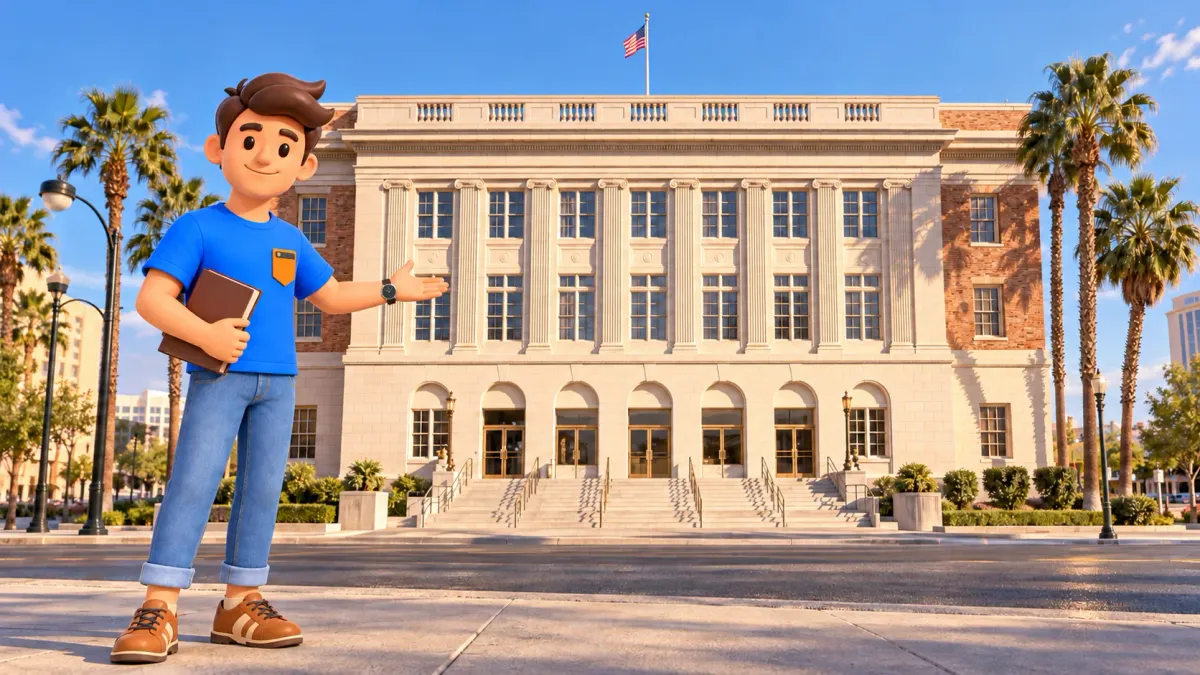
The Mob Museum occupies the former United States Post Office and federal courthouse at 300 Stewart Avenue. The building opened in 1933, and its role in the city is part of the experience. Taking a moment outside helps connect the museum to Downtown itself, rather than treating it as an exhibition that could stand anywhere.
Look at the orderly façade and the contrast between its civic character and the entertainment signs you will see later. These are two different ways a city presents itself: public institutions and commercial invitation. You do not need a detailed architectural guide to notice the change.
Keep the entrance and steps clear while taking a photograph. Follow the current visitor approach and ask about the appropriate access if you need to avoid steps. The museum publishes accessibility information; checking any arrangements that matter to you before arrival makes the beginning easier.
Once inside, take a little time to understand the current visitor route. Ask staff where to begin and whether any area is temporarily closed. That short orientation is more useful than following a remembered sequence from an old trip report, especially when the building hosts programs alongside ordinary visits.
Read the story through questions
A useful museum visit does not require memorizing every name. Choose a few questions to carry with you: how did organized crime gain influence, what made institutions vulnerable and how did law enforcement respond? This keeps the subject connected to public life and consequences rather than reducing it to a collection of famous personalities.
When an object or document interests you, give it time. Read the accompanying explanation and consider what it actually establishes. Artifacts, testimony and later interpretation do different jobs. The museum can help you see those differences without your needing to arrive as an expert.
Be cautious about carrying the visual language of crime films into every display. A familiar name may attract attention, but it is only part of a much larger history. Look for the effects on communities, business and institutions. That approach gives the visit substance without romanticizing criminal activity.
Move on when a section no longer holds your attention. Independent visiting allows different rhythms, and a complete experience does not demand the same amount of reading at every panel. Two carefully followed themes can stay with you longer than a hurried attempt to absorb every detail.
Leave time for the historic courtroom
The courtroom gives the building a direct connection to the subject. On November 15, 1950, a committee led by Senator Estes Kefauver held a hearing here about organized crime's involvement in the Las Vegas casino industry. The room has been restored to evoke its appearance at that time and now forms part of the museum experience.
Think about the difference between seeing a historical event described in a display and standing in the room where it took place. The setting makes the investigation part of the city's physical history. That connection is one reason this museum works particularly well as the anchor of a Downtown outing.
Check whether the room is available during your visit. The museum notes that it may close temporarily for special programs or events. If it is unavailable, continue with the accessible exhibitions rather than making the whole visit depend on one room. The building and its broader story remain relevant.
Allow a little mental space afterward. A museum dealing with institutions, violence and investigation can be engaging and demanding at once. A quiet pause before moving on helps separate what you have learned from the brighter atmosphere waiting a short walk away.
Choose additional experiences deliberately
The museum offers ticketed experiences beyond simply following the exhibitions. Check what your chosen ticket includes, any separate scheduling and the participation conditions of an activity before deciding. Do not assume that every interactive experience mentioned in a description belongs to every admission option.
If one of those activities particularly interests you, make room for it by reducing something else. A slot added inside the museum can affect the pause and the Fremont continuation. You can still enjoy the day; the important point is to treat the extra as part of the schedule instead of invisible time.
For this half-day idea, the ordinary museum visit can be enough. There is no need to purchase the fullest package to understand the building's place in Downtown. Compare current options once your date and priorities are clear, and choose according to interest rather than the number of inclusions.
Keep belongings manageable as well. Review current restrictions if you have a large bag or specialist camera equipment. A small amount of preparation before leaving the hotel can prevent an inconvenient interruption at the start of a visit you wanted to take slowly.
Take a real pause before Fremont Street
After leaving the museum, give yourself time to sit, drink something or have a simple meal where current availability suits. Choose a practical place rather than turning the break into a distant excursion. The purpose is to restore attention and energy before entering a more stimulating setting.

Discuss one thing you found surprising instead of trying to recap the entire exhibition. Did the building change your sense of Downtown? Did an investigation make a familiar story look different? One shared observation is enough to connect the visit with the rest of the trip.
RoadMe makes the wider trip easier to shape by working out a personalized plan around what you enjoy and how much time you have. Give a substantial museum visit room, then balance it with lighter discoveries and breaks at your own pace.
If the museum has taken most of your available time, shorten the street walk. If everyone is still curious and comfortable, continue with a clear limit rather than adding every nearby attraction. A half day works well when the second part responds to how the first part actually felt.
Find Vegas Vic on the pedestrian street
Use the current sidewalks and designated crossings to reach the Fremont Street Experience area. This local connection is separate from your earlier journey from the Strip. Once under the canopy, move slowly enough to notice the old façades as well as the bright screen overhead.
Vegas Vic, the neon cowboy installed in 1951 above the former Pioneer Club frontage, makes a useful first focus. After the museum's detailed history, the sign offers a direct visual encounter with the way older Las Vegas invited people into its entertainment district.
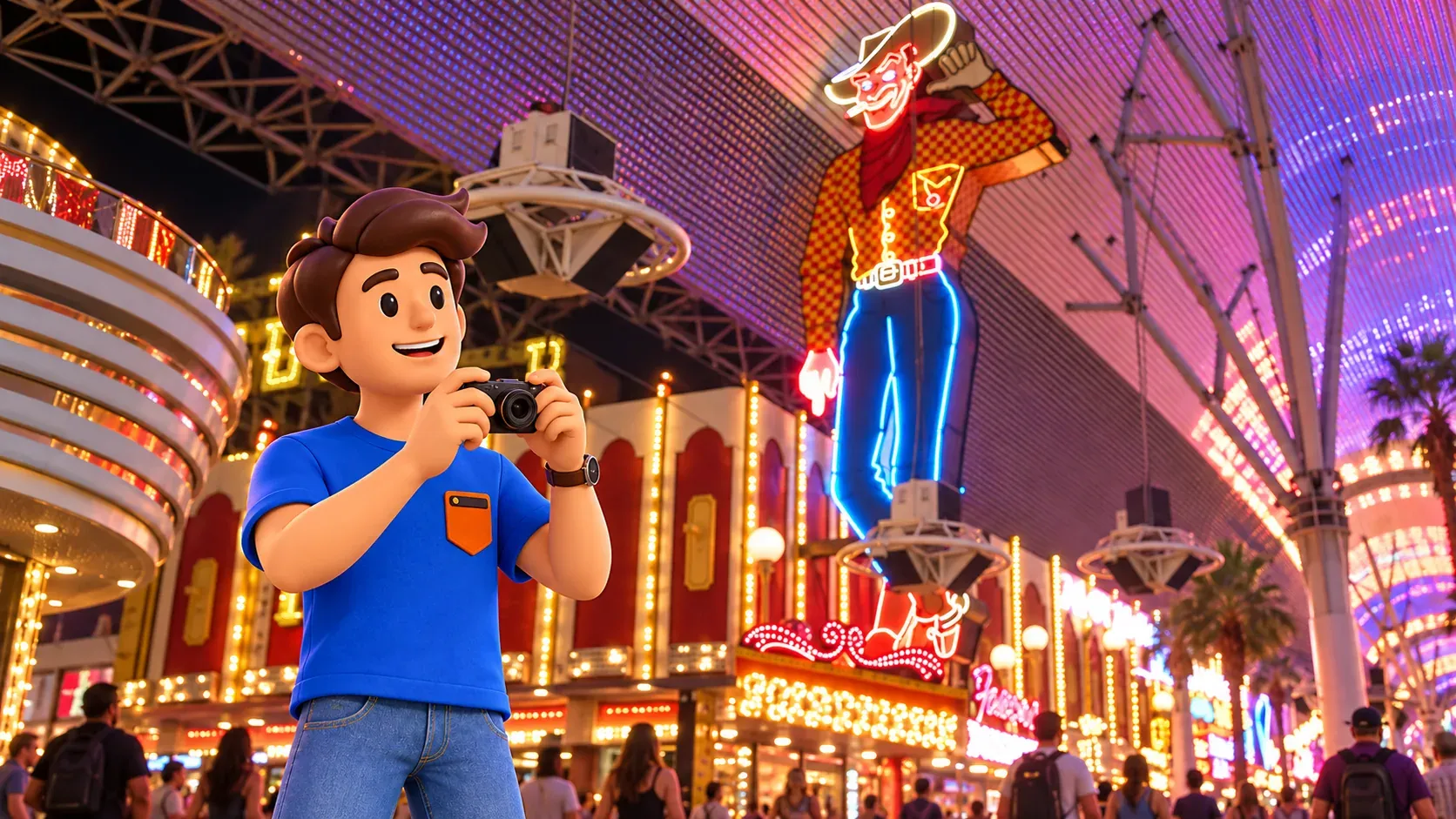
Look at the character's silhouette and the relation between the small number of neon lines and the large figure they create. A short stop can be satisfying without searching for every related sign. You have already given history a substantial part of the day.
For a photograph, choose a permitted place that leaves pedestrians room. A wider image showing Vic beneath the contemporary canopy can express the contrast between eras. Avoid turning the lighter continuation into another detailed inventory when the aim is simply to enjoy the setting.
Watch Viva Vision if the timing fits
The operator publishes the featured Viva Vision presentations at the top of each hour from 6 p.m. to 2 a.m., generally lasting around six to eight minutes. Ordinary viewing is free. Check the current program and date-specific access arrangements rather than assuming every evening follows identical conditions.

If a presentation is close, find a comfortable position that keeps passageways clear and watch it as a shared experience. Take a short video if you want one, then look up without the phone for part of the show. The scale of the screen is easier to appreciate when it fills your actual surroundings.
If you arrive much earlier, daylight Fremont still offers the signs and the street setting. Do not feel obliged to wait several hours to complete a half-day route. You can come back for an evening presentation on a different day if it becomes a priority.
Music, moving images and crowds make this a lively finish. If that feels tiring after the museum, keep it short. The outing has already achieved its purpose by combining a deeper historical visit with an understanding of the nearby entertainment street.
Finish while the day still feels balanced
Agree with companions where the walk ends and how you will leave the pedestrian district. Check the current pickup or return arrangements before the last few minutes, then gather belongings and move on without adding another museum out of habit.
The half day has a simple shape: a historic civic building, a considered look at crime and law enforcement, a pause and a street whose signs tell another side of the city. That combination gives Downtown depth while leaving enough energy for whatever comes next.


