
Milan for Science Lovers: Brera to the Planetarium
Link Milan’s history of astronomical observation with an evening under a projected sky. This science-themed outing begins at MusAB, the Astronomical Museum of Brera at Via Brera 28, and finishes with a booked programme at the Civico Planetario Ulrico Hoepli, Corso Venezia 57. Allow four and a half hours, and choose the date around the two institutions’ calendars before treating them as one itinerary.
A science afternoon that depends on the programme
The connection is an idea as much as a walk: first discover how astronomers measured and interpreted the sky, then experience how a planetarium makes the sky understandable to an audience. You do not need specialist knowledge. Curiosity about instruments, maps, time and the way people explain an unfamiliar world is enough to give both visits a common thread.
Try RoadMe to develop a personal trip plan around your interests, dates, pace and budget. Preparing the whole stay in the app is more convenient and efficient when a specialist visit and a timed evening event need to fit naturally with walks, meals and rest.
MusAB’s instrument gallery normally opens on Tuesday and Thursday, 13:30–17:30. Planetarium performances follow their own calendar. The example below works only after you confirm an appropriate 18:30 show on a compatible museum day and arrange the gallery entry. It is not a claim that every Thursday has that performance time, or that the combination works daily.
| Conditional example | Allowance |
|---|---|
| 15:30–16:30 | MusAB entry, stairs, orientation and selected gallery visit |
| 16:30–17:10 | All outdoor connections and crossings |
| 17:10–17:30 | Short seated pause or snack outside |
| 17:30–18:00 | Reserve for a slower pace or practical arrangements |
| 18:00–18:30 | Early arrival and preparation at the planetarium |
| 18:30–20:00 | Up to ninety minutes for the selected programme |
The total is 270 minutes: 60, 40, 20, 30, 30 and 90. Performances generally last sixty to ninety minutes, so a shorter show leaves an earlier finish. Expect approximately 1.8–2.3 kilometres outdoors, including small changes of viewpoint; this is an editorial estimate, not a measured navigation track. Museum walking is additional. Travel to Brera and onward from the planetarium is outside the allowance.
Brera: find the astronomical museum inside the palace
Save Via Brera 28 and the name MusAB, rather than assuming that every reservation for Palazzo Brera leads to the same visit. The Pinacoteca, astronomical museum and other institutions have distinct entrances, admission arrangements and calendars within the larger complex. This itinerary gives its indoor afternoon to the instrument gallery. It does not include the painting collection or botanical garden.
The astronomical museum’s current information places the gallery on the second floor, without a lift. Contact the museum before booking if stairs present a difficulty; do not rely on a general description of the palace’s accessibility. An hour here includes finding the visitor route, climbing, entry and a selected look at the instruments. It is a planning allowance, rather than a promise to complete every available interpretation.
Ordinary gallery admission is paid, with concessions or free entry under particular conditions. Some qualifying museum tickets or subscriptions have their own arrangements; check precisely what your ticket covers and how to reserve. A ticket connected with another Brera institution should not be treated as an automatic invitation to arrive at any time. Keep the confirmation available and follow the museum’s instructions.
What an old instrument can tell you
Brera’s astronomical history reaches back to the eighteenth century. In 1764 Ruggero Boscovich became responsible for the project for a new observatory, part of a longer sequence of scientific work at the college. Distinguishing a project, a building and an institution matters: their dates do not all describe the same event. You can understand the visit without memorising a list of foundations.
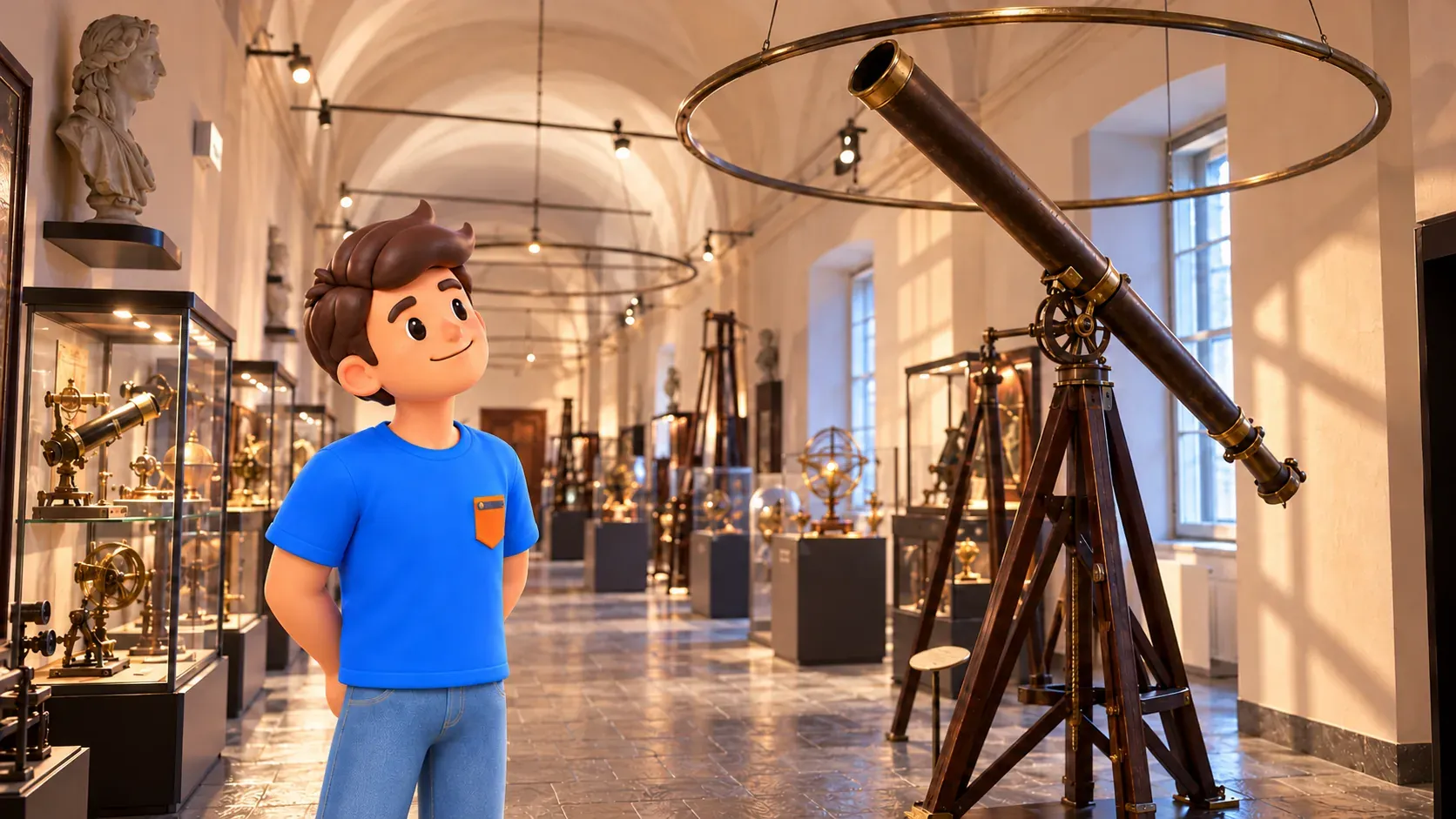
The gallery’s strength is the relationship between equipment and research. A telescope gathers light, but observation also needs positioning, timing, comparison and a reliable record. Look at the supports and graduated circles as well as the optical tube. A beautifully made object becomes more interesting when you ask which uncertainty its design helped an astronomer reduce.
Choose one instrument and follow three questions: what could it measure, how would it be adjusted, and how would a result be recorded? Use the label for its actual identity rather than deciding from appearance alone. You do not need to identify every mechanism. The aim is to recognise observation as a skilled process, with patient repetition behind an apparently simple statement about the sky.
Brera’s scientific work also reached into ordinary life. Astronomers contributed to mapping and to the provision of accurate time. That gives the collection a connection to the city outside: a position on a map or a dependable clock depends on measurements somebody had to make. The museum is therefore more than a sequence of impressive old tubes pointing towards distant objects.
Schiaparelli and the difference between seeing and interpreting
Giovanni Schiaparelli’s work on Mars is a useful second thread. Observations and maps made at Brera belong to the history of attempts to understand another world from limited visual evidence. Pay attention to the relationship between the instrument, the observer’s notes and the drawing. A map is an organised interpretation of observations, rather than an unmediated view from space.
Keep this brief historical connection in proportion. You are not following a full biography or visiting every instrument associated with his career. The large Merz-Repsold telescope often shown in accounts of Brera is now at Milan’s science and technology museum; its photograph does not prove that it stands in the gallery you are entering. Read the current collection information for any particular object you hope to see.
The observatory dome is also a separate visit, with different arrangements, more stairs and its own booking calendar. The museum explicitly distinguishes those visits from observing the actual sky through a telescope. Do not add a dome tour to this hour or imagine that the evening planetarium ticket completes a live stargazing programme. The main route combines instruments and a projected sky.
Walk east through the city, keeping the pause
Leave the Brera area using Via Fatebenefratelli towards Piazza Cavour, continue by Via Palestro and approach the public gardens and the planetarium’s Corso Venezia 57 address. Follow current crossings and the available park entrance. This is a street sequence for orientation, not a turn-by-turn navigation service; verify the final approach on a current map before setting off.
The forty-minute walking allowance covers all outdoor connections in the programme, including changes of viewpoint near the finish. Keep the pace comfortable and leave the reserve intact if you need longer. The purpose is to change from close looking indoors to the scale of streets and trees. A proper meal, shopping stop or long park circuit needs additional time.
Use the twenty-minute pause for a simple snack or drink before entering the performance. You are crossing an area with several cultural institutions, but GAM and the Natural History Museum are not extra stops in this version. Seeing another entrance is not a reason to fit another collection into the buffer. Keep the attention and the time you have already set aside for the evening.

The planetarium is a theatre for explaining the sky
The Ulrico Hoepli Planetarium opened in 1930 in a building designed by Piero Portaluppi, donated to the city by the publisher Ulrico Hoepli. Its classical entrance and dome give a civic dignity to scientific education. Inside, the circular room offers a different kind of view from Brera’s instrument gallery: the sky becomes a shared visual explanation above the audience.
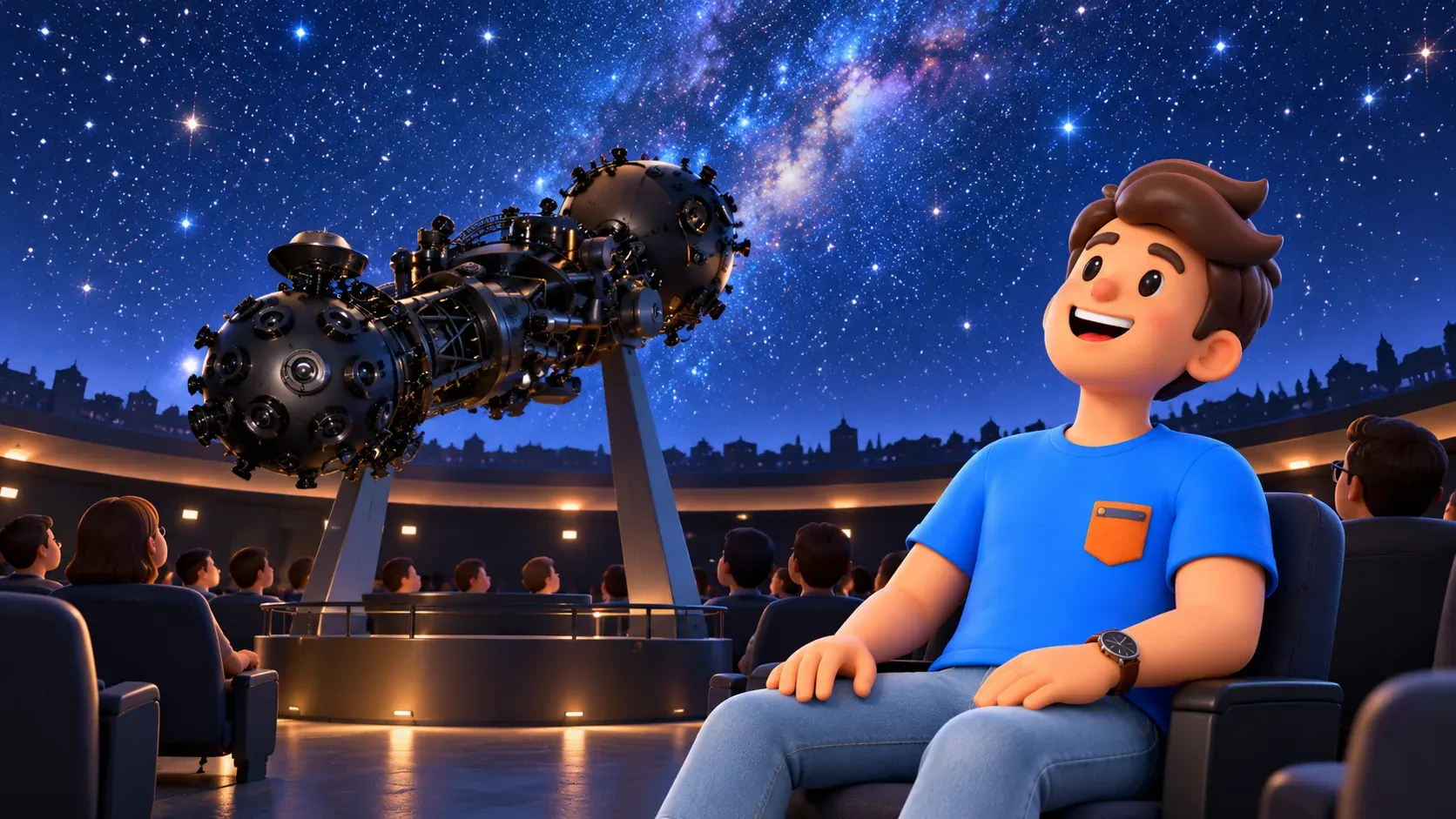
A planetarium projects stars and their apparent movements onto a dome. It is not a telescope looking through an opening in the roof, and the image is not the actual sky over the park at that moment. This distinction is part of the attraction. A presenter can explain patterns, orientation and astronomical ideas in a controlled setting without waiting for the city’s night sky to become suitable.
The historic Zeiss IV projector is an important part of the institution’s identity, alongside other projection equipment used for its programmes. Choose a session by its subject and intended audience. An introductory sky presentation, a specialist talk and a programme designed for younger visitors do not necessarily offer the same experience. The building has no permanent exhibition to substitute for a missed performance.
Language and arrival: prepare before the lights go down
Live presentations are in Italian. The venue offers its own Rosetta automatic translation service, included with the show and available in languages including English, Russian, French, German and Spanish. Tell the staff beforehand that you wish to use it. Bring your own smartphone and earphones, follow the venue’s Wi-Fi and QR-code instructions, select the language before the programme and reduce the screen brightness as directed.
Rosetta belongs to the planetarium’s visitor services; it is separate from the trip-planning app. Automatic translation should not be mistaken for an English-language presenter or a private guided tour. If following detailed spoken science is central to your visit, ask the venue about the selected event and service before buying. Set everything up while staff can still assist you.
Arrive at least fifteen minutes before the start, as the venue requires; this plan deliberately allows thirty. Late entry is not permitted. Check the ticket terms and any assistance arrangements in advance, especially if you need help with the entrance steps. Finish food outside, put unrelated notifications away and follow staff instructions for darkness, screens and behaviour during the performance.
Use RoadMe to develop a personal plan for the whole trip from interests like science, architecture or art. Bringing the days together in the app makes it easier to give a timed event its proper place without spending the rest of the stay arranging separate fragments.
If the calendars do not match, separate the visits
Choose MusAB on a suitable opening day and the planetarium on a different evening if that produces a better trip. There is no need to force this sequence into a closed museum day or a performance time you cannot comfortably reach. Conditions were checked on 17 October 2026; verify the actual calendar, admission and language arrangements for your date before booking.
For another Brera outing, our half-day art and garden plan gives the Pinacoteca its own time. The Montanelli gardens and GAM itinerary offers a separate combination of landscape and nineteenth-century art. Keep those as alternatives, leaving this afternoon with a clear scientific thread from making a measurement to making the sky understandable.


