
Milan’s Art Nouveau in Two Hours: a Porta Venezia Façade Walk
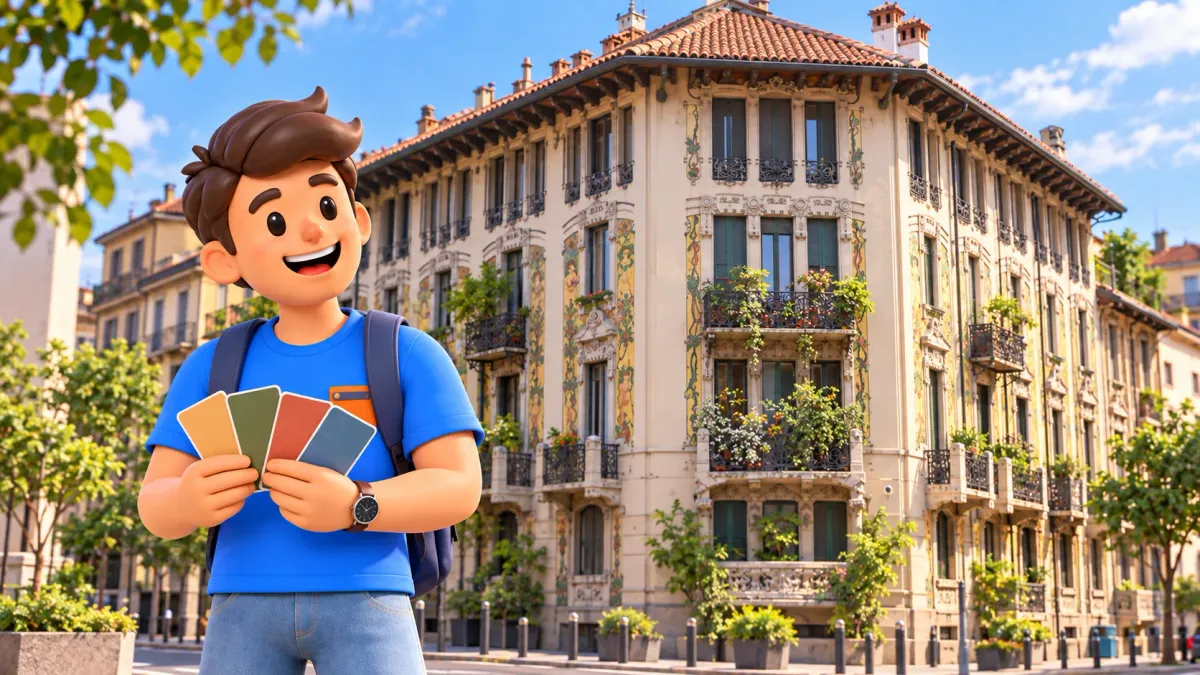
For a two-hour Art Nouveau walk in Milan, begin at Palazzo Castiglioni on Corso Venezia, continue north through the Porta Venezia area, then compare Casa Galimberti and Casa Guazzoni on Via Malpighi before finishing at the former Cinema Dumont on Via Paolo Frisi. These four façades show different ways of turning stone, painted ceramic, concrete and iron into decoration. The route is an outdoor visit, with a short optional café pause and no assumed access to private interiors.
The four-façade route at a glance
Start at Palazzo Castiglioni, Corso Venezia 47. Walk north along Corso Venezia towards Piazza Oberdan and Porta Venezia, then continue on public streets to Via Marcello Malpighi. Casa Galimberti is at number 3, Casa Guazzoni at number 12. The former Cinema Dumont, now associated with Biblioteca Venezia, stands just beyond the latter at Via Paolo Frisi 2/4, near Via Melzo.
Allow about two hours and roughly 1–1.5 kilometres, depending on the viewpoints you choose. Distance and timing are editorial estimates, not a measured track. Reaching Palazzo Castiglioni and travelling onward from the library are additional. Daylight is useful here: colour, shallow relief and the gaps between iron curves are the main subjects. A night walk gives a different impression and should not be expected to reveal the same details.
For a personal architecture walk that fits your interests and available time, you can try RoadMe: the app creates a two-hour route from your current location. It makes putting together your own version of Milan more convenient than connecting individual suggestions by hand.
| Part of the outing | Suggested time |
|---|---|
| Palazzo Castiglioni exterior | 20 minutes |
| Walk north via the Porta Venezia area to Via Malpighi | 15 minutes |
| Casa Galimberti | 20 minutes |
| Casa Guazzoni | 20 minutes |
| Former Cinema Dumont exterior | 15 minutes |
| Optional café pause | 20 minutes |
| Orientation and crossing allowance | 10 minutes |
The total is 120 minutes, including the optional pause. Short movements between the last three façades belong to their viewing blocks. Without the café, allow around 100 minutes at the same relaxed viewing pace. A palace event, library visit, full meal or extended photography session adds time. None is required to understand the main comparison.
Look for three things before learning every name
In Italy, Liberty is the local name for Art Nouveau; the buildings on this walk belong to its early twentieth-century setting. You do not need to identify a style at first glance. Use three questions instead: where does the colour come from, what projects out from the wall, and how does the metalwork use empty space?
A painted flower and a modelled flower can suggest similar subjects while behaving differently in the light. The first belongs to a surface; the second casts a shadow. An iron railing adds another layer because the street or sky remains visible through it. These are practical ways of looking, not tests with a single correct answer.
Choose one detail at each stop and carry it mentally to the next. This makes the route cumulative without requiring long historical explanations. If you enjoy drawing, trace one curve in a small notebook. If you prefer photographs, collect a whole façade and a single detail rather than dozens of nearly identical views.
Palazzo Castiglioni: begin with the weight of stone
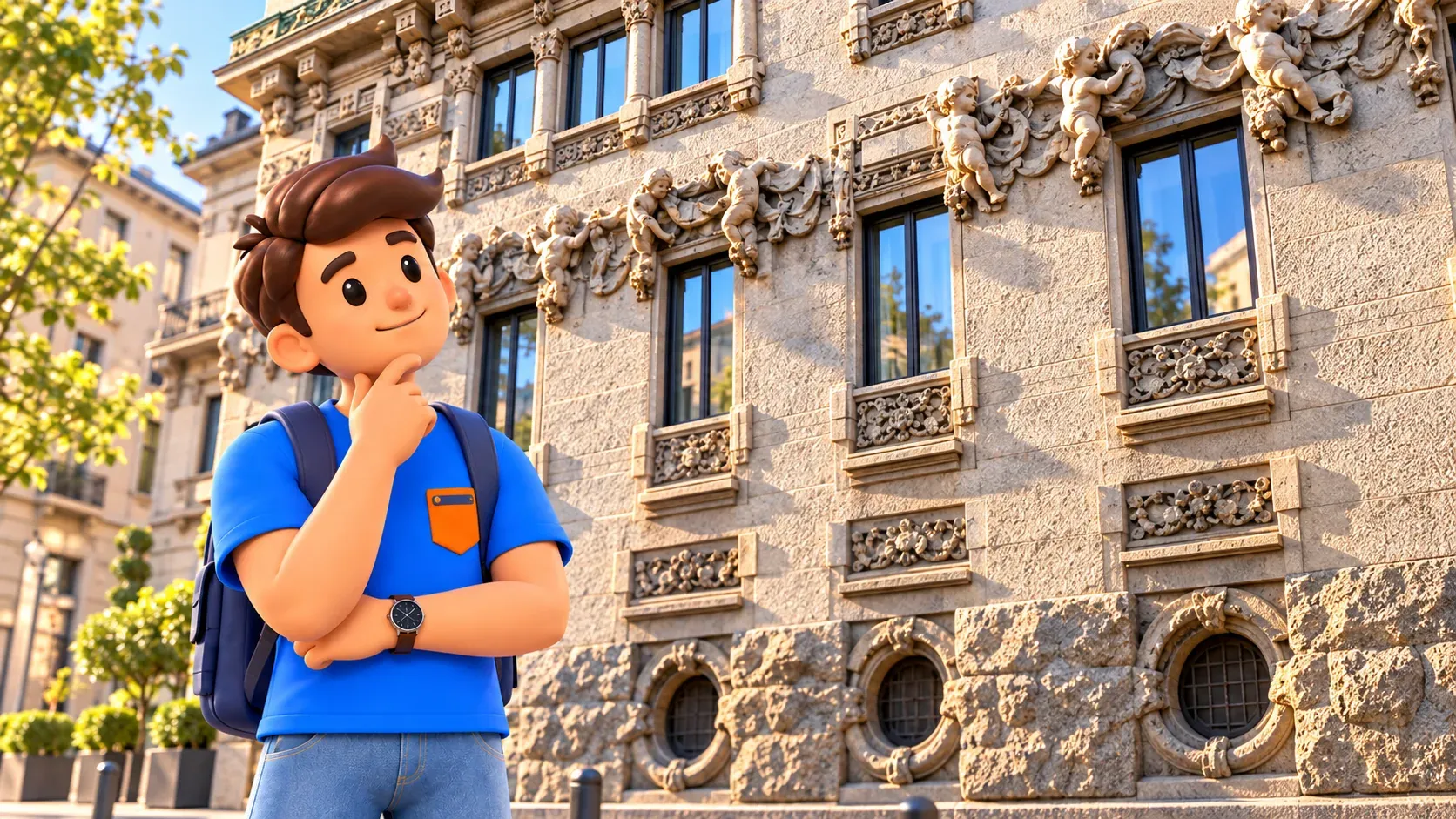
At Corso Venezia 47, look at Palazzo Castiglioni before moving towards the residential streets. Giuseppe Sommaruga designed this early twentieth-century palace, now the home of Confcommercio in Milan. Its rough stone base and tall windows give you an immediate subject: how can a substantial building also suggest movement through decoration?
Read the frontage from the lower level upwards. Notice the contrast between the heavy-looking base, the openings and the sculptural treatment around the windows. You do not have to follow every figure. Let one patch of relief show how shadows change your sense of the wall, then step back to reconnect it with the building’s overall proportions.
There is a short human story behind the entrance. Two original female statues caused controversy and were removed. The important point for this walk is that the frontage changed in response to its audience. Do not search for those figures as though they were still flanking the portal, and do not turn their story into the only reason to look at the palace.
This is an exterior stop. The building’s office and event uses do not imply that a passing visitor can enter its staircase or rooms. If you want a separate interior visit, find a specifically announced opportunity and its conditions first. The pavement view already supplies enough material for the comparison ahead.
Use the connecting walk to reset your eyes
Continue north on Corso Venezia towards Piazza Oberdan and Porta Venezia, then make your way to Via Malpighi using public pavements and crossings. The route changes from a larger street frontage to a compact group of buildings. Keep the full street names saved; looking for “Venezia” alone is an unhelpful way to navigate in a city where the name appears in several contexts.
The connection is not an extra monument hunt. Use it to look at the ordinary scale of doors, windows and street corners around you. When the next decorated façade appears, you will notice it more clearly. If you stop to check your phone, move aside first instead of slowing suddenly in the middle of the pavement.
Casa Galimberti: colour carried by ceramic
At Via Malpighi 3, on the corner with Via Sirtori, Casa Galimberti changes the mood. Giovanni Battista Bossi designed the house in the early twentieth century. Its painted ceramic panels bring figures and foliage onto the façade, while balconies introduce another layer in front. The main invitation is to distinguish the coloured image from the physical elements around it.
Begin with the corner as a whole, then choose one panel. Look at how the painted motif occupies the space beside a window and how the balcony interrupts or frames your view. The house rewards a few deliberate minutes more than a quick photograph followed by an immediate move to the next address.
Try a simple comparison with the palace: where Castiglioni first impressed through mass and relief, here colour attracts the eye. That is a way to organise your own impressions, not a claim that either building uses only one technique. Keep looking for the combination. The interest lies in how different materials work together on a building people actually use.
Casa Galimberti is a private residential building. An open entrance is not an invitation to follow residents inside or explore a stairway. Stay with the public street view unless a particular visit has been arranged. Avoid photographing into occupied windows, and make room for anyone entering or leaving while you study the exterior.
Casa Guazzoni: compare depth with colour
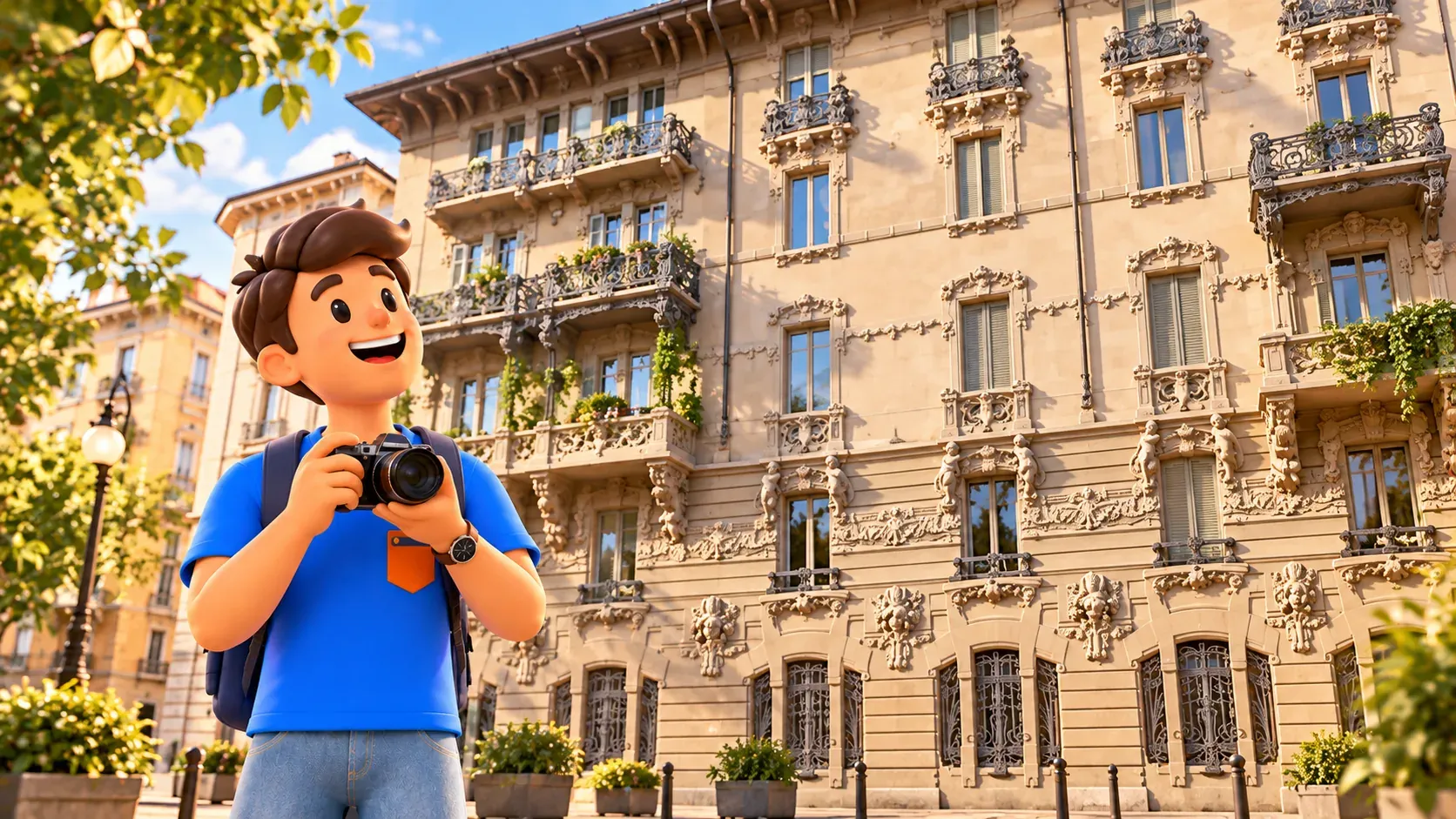
Continue along Via Malpighi to number 12, near Via Melzo. Casa Guazzoni is also by Bossi, but its modelled concrete ornament and wrought iron give the comparison a different emphasis. Alessandro Mazzucotelli is associated with its ironwork. Keep that attribution attached to this house rather than casually applying it to every ornate railing in the area.
Look at the balconies and the relief around the lower windows. Figures, garlands and plant-like curves occupy real depth. Instead of trying to count every decorative element, choose one balcony and see how its support, railing and surrounding wall relate. The open shapes of the iron can be as interesting as the solid ornament.
Now recall a painted panel from Casa Galimberti. How does the experience change when the decorative effect depends more on shadow and projection? Both buildings belong in the same short outing because the question becomes visible within a few steps. You are comparing two solutions, not deciding which house deserves a higher ranking.
This is another home, so the same privacy boundary applies. The standard route does not include its courtyard, gate interior or staircase. Special openings, when announced, have their own dates and rules; a photograph of an interior in a guide is not evidence that it is available to you today.
Former Cinema Dumont: finish with a change of use
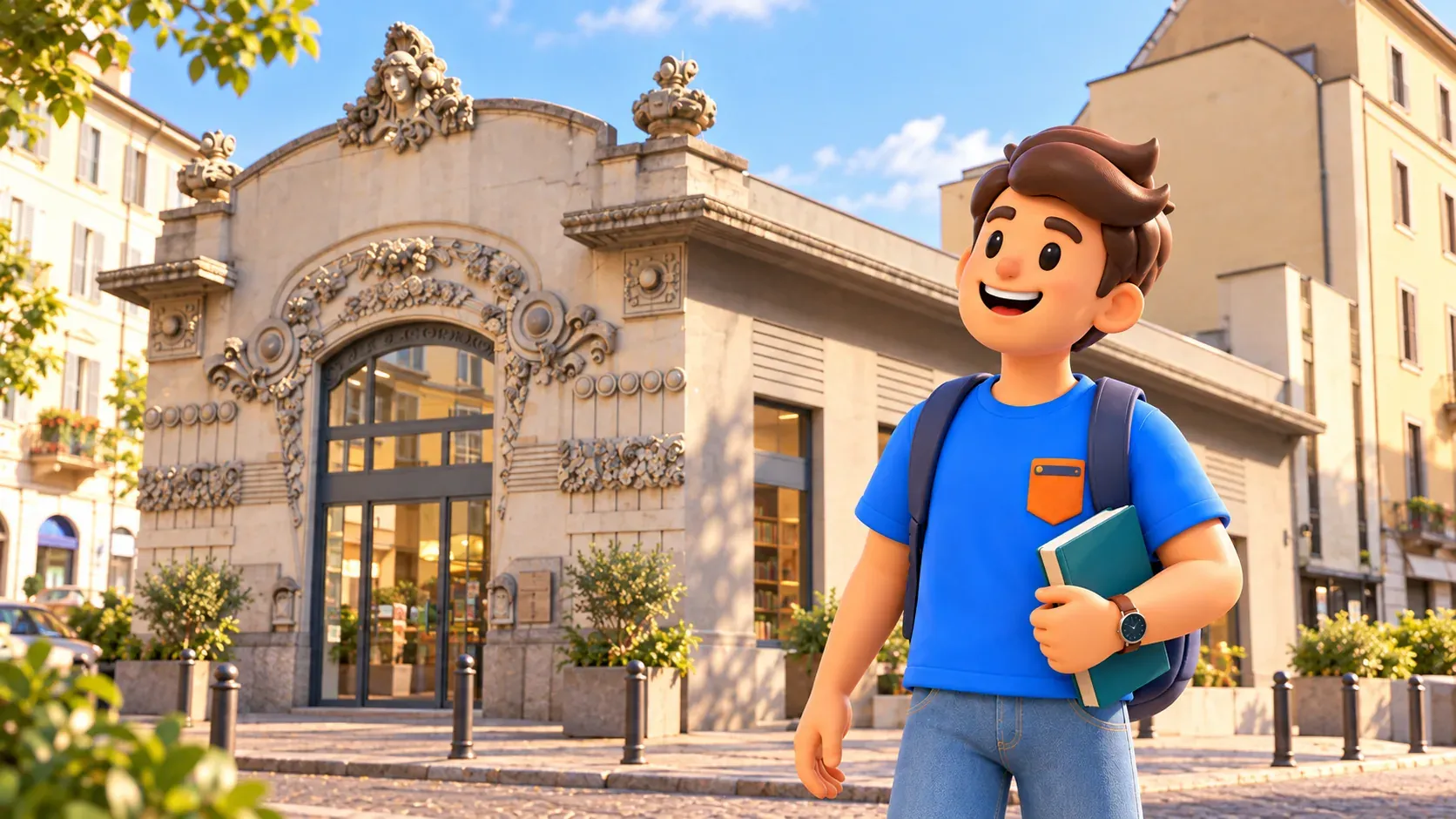
Cross where permitted towards Via Paolo Frisi and find the former Cinema Dumont at number 2/4. Built in 1908–1910 to designs by Ferdinando Tettamanzi and Giovanni Mainetti, it was an early purpose-built cinema. The decorated frontage is now associated with the neighbourhood’s Biblioteca Venezia, adding a different kind of building to a walk dominated by residences and a palace.
Notice the lower scale, the entrance and the floral decoration. Compare how the frontage addresses a person approaching from the street with the taller façades you have just seen. The cinema’s past gives this stop meaning, but you are not visiting an operating historic cinema or being promised access to a preserved screening room.
If you wish to use the library, check its own current opening information and notices separately. The route finishes at the exterior and remains complete when the library is closed. Do not treat a reading space as a sightseeing lobby; visitors using its services need the same consideration as residents at the previous stops.
A short pause to choose what stays with you
The optional twenty-minute café pause can come after the façades or earlier if you need it. Choose an available place according to comfort and the time you have. There is no essential café to book for this architectural sequence, and the allowance is for a short drink rather than a full meal.
Use the pause to pick one detail from the walk: a coloured panel, a shadow beneath a relief, a railing curve or the former cinema’s entrance. Sharing that choice with a companion makes a satisfying end. It also tells you whether another architecture walk would suit your trip better than adding another major indoor attraction.
If architecture is a priority for the whole stay, you can prepare a personal day-by-day plan in RoadMe, using your dates, interests, pace and budget. Organising the trip together helps give detailed neighbourhood walks their own time alongside larger visits and rest.
Photographs, weather and shorter versions
For photos, use a safe pavement viewpoint and a modest zoom for upper details rather than stepping into traffic. A parked vehicle or a tree may hide part of a façade; changing angle is often more useful than waiting for an unobstructed view. Images made for this article are illustrations, not a record of current scaffolding, light or street conditions.
In rain, shorten the optional pause or the viewing stops according to comfort; private entrances are not shelters to assume you can use. For a shorter version, start at Casa Galimberti and keep the three nearby façades, omitting Castiglioni and the connecting walk. Uneven paving, kerbs and crossings require separate consideration if a step-free route is essential.
For another period of Milan’s history, our walk from San Lorenzo to Porta Ticinese offers Roman material, a medieval gate and a later classical gateway. Give it a separate time slot. This outing has its own complete subject: four façades, several materials and a more attentive way of seeing the street.


