
Magenta in Half a Day: a Milan Walk around the Last Supper
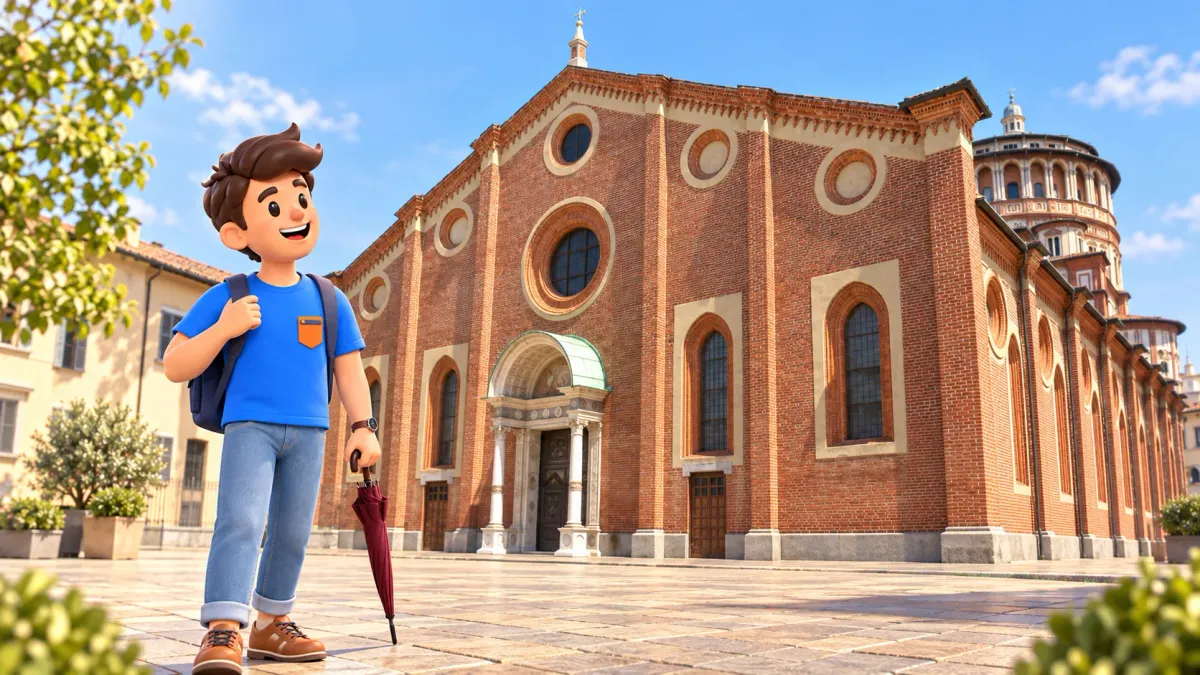
A half-day around Corso Magenta works best when you build it around a confirmed Last Supper reservation. Begin at the museum, leave separate time for the church of Santa Maria delle Grazie, then walk east to Palazzo Litta’s façade and San Maurizio al Monastero Maggiore. Allow about four hours, including the required early museum arrival and a café pause. The neighbourhood supplies a coherent sequence of painting, church architecture and a palace exterior without demanding another major museum.
Let the reservation anchor the morning
The starting point is the Last Supper Museum at Piazza Santa Maria delle Grazie 2. The painting is in the former convent’s refectory, not in the church nave. These are different visits within the same architectural complex. A walk into the church does not include the painting, and a Last Supper reservation does not remove the need to check the church’s sightseeing hours.
To organise this reserved visit alongside the rest of Milan, try RoadMe: the app prepares a personal day-by-day trip plan around your dates, interests, pace and budget. It is a more convenient way to give art, neighbourhood walks and rest the right amount of time than assembling every day from separate lists.
A morning from Wednesday to Saturday is a useful starting choice for the complete version, subject to actual tickets and current opening notices. Choose a museum slot that leaves time to visit Santa Maria delle Grazie before its midday sightseeing break. This is a planning condition, not a promise that a suitable reservation will be available. Start with the booking you really have, then fit the walk around it.
| Part of the half-day | Planning allowance |
|---|---|
| Museum arrival, Last Supper and exit | 60 minutes |
| Santa Maria delle Grazie church | 30 minutes |
| Walk east along Corso Magenta | 25 minutes |
| Palazzo Litta exterior | 20 minutes |
| San Maurizio, when open | 45 minutes |
| Café pause | 30 minutes |
| Orientation and flexible buffer | 30 minutes |
That totals four hours. The museum hour includes arriving at least 30 minutes before the booked time, the 15-minute viewing period and an estimated 15 minutes for the exit and transition. The remaining allowances and roughly 0.8–1.2 kilometres outdoors are editorial estimates, not field measurements. Walking inside buildings, your journey to the start, lunch and onward transport are additional to the outdoor distance; a substantial meal also needs time beyond the café allowance.
Prepare for the Last Supper before reaching the door
Advance reservation is mandatory for everyone, including infants and visitors entitled to free admission. The museum requires arrival 30 minutes before the booked visit; arriving only at the viewing time can mean losing admission. Keep your confirmation and the documents required for your booking ready. A nearby coffee should finish before that arrival deadline, not borrow minutes from it.
Travel light. The museum prohibits bulky luggage, food and drinks inside. Its limited lockers are not a substitute for leaving a suitcase at your accommodation. Keep the neighbourhood snack for later and follow the current staff instructions about belongings. The practical benefit of a half-day is that you can deal with these steps without scheduling another appointment immediately after the painting.
The normal museum timetable is Tuesday to Sunday, 08:15–19:00, with last admission at 18:45 and Monday closure, subject to special notices. An open museum does not mean an unreserved walk-in place is available. Your confirmed date and time govern this part of the route. Avoid planning a second departure so tightly that you spend the viewing period thinking about the next entrance.
Fifteen minutes with the painting, then a change of pace
Leonardo’s Last Supper is a late-fifteenth-century wall painting made for the convent refectory. He used an experimental method on dry plaster rather than conventional fresco technique. That distinction helps explain why conservation is central to the visit. You are looking at a work made for this wall and room, not a canvas transferred into an ordinary picture gallery.
Before going in, choose a modest way to look. Begin with the whole arrangement and its relation to the room, then notice a small number of gestures or faces. You do not need to identify every figure in order to have a meaningful visit. Preparing one question is more useful than trying to absorb a long explanation only once the short viewing period has begun.
After leaving, allow the experience to settle. Compare one detail you noticed with a companion’s observation, or write a few words while they are fresh. The church next door offers another kind of attention, but it remains a distinct visit. The route does not require you to keep the emotional intensity of the painting at the same level for the rest of the morning.
Santa Maria delle Grazie deserves its own time
The church and Dominican convent belong to the same UNESCO-listed complex as the refectory. Construction began in the fifteenth century, with major later-fifteenth-century work associated with Bramante. For a short visit, compare the broad impression from outside with the interior’s different sense of space. There is no need to turn every architectural element into a separate historical lesson.
The church currently publishes sightseeing windows of 09:00–12:20 and 15:00–17:50 from Monday to Saturday, and 15:00–17:50 on Sundays. In October 2026, Saturday tourist visits finish at 17:00. Religious activity and special notices can affect access. Use these sightseeing windows, rather than the longer general basilica opening, when deciding whether the church fits after your museum slot.
Thirty minutes is a reasonable planning allowance for a focused church visit, not an entitlement to enter during worship. If the timing does not work, enjoy the exterior and arrange an interior visit separately. Do not assume that every cloister, sacristy or guided area is included in a casual church stop. A special tour has its own arrangements and may need a different block of time.
Corso Magenta connects the visits
Continue east along Corso Magenta towards Palazzo Litta and San Maurizio. The walking section is short enough to remain part of a compact half-day, but crossings and ordinary street movement still take attention. Use public pavements and appropriate crossings. Pause for a façade or shopfront where you are not blocking an entrance, rather than trying to walk and read continuously.
Let the connecting stretch lower the intensity after the museum. You might choose one recurring detail, such as an entrance frame or a change of building material. That gives the street a small thread without turning it into another catalogue. A shop or café that catches your eye can be a separate choice; it does not become compulsory because it lies between two cultural stops.
Keep the direction simple: from the Grazie area towards Corso Magenta 24 for Palazzo Litta, then to San Maurizio near the corner with Via Bernardino Luini. The palace and church are close enough to consider together, but use a proper crossing rather than treating opposite sides of a street as one continuous viewing platform. Save a little attention for the ground as well as the buildings.
Palazzo Litta: read the façade from the street
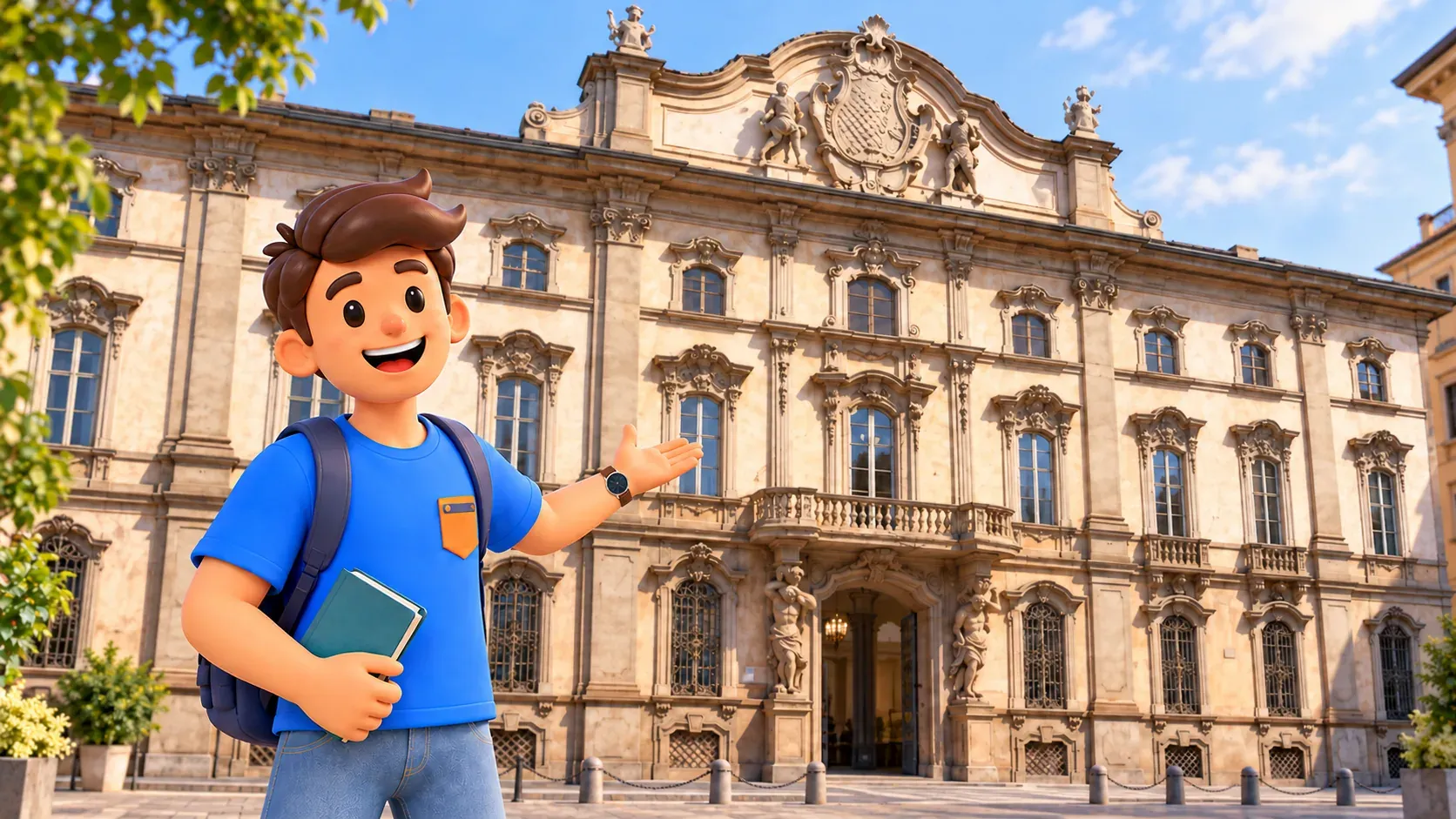
At Corso Magenta 24, Palazzo Litta introduces a different architectural period. Its core is seventeenth-century, while the elaborate street façade was made by Bartolomeo Bolli in 1761. Look first at the entrance and the large supporting figures, or telamons, beside it. They hold the balcony visually and give the doorway a theatrical scale that is easy to appreciate without entering.
Compare the centre with the broader rhythm of the façade. Twenty minutes allows a general view and one closer observation, with time to step aside for people using the entrance. This route includes the exterior. Interior rooms, courtyards and any cultural event require their own confirmed access; a historic palace used by cultural institutions is not automatically an always-open museum.
San Maurizio: leave room for colour
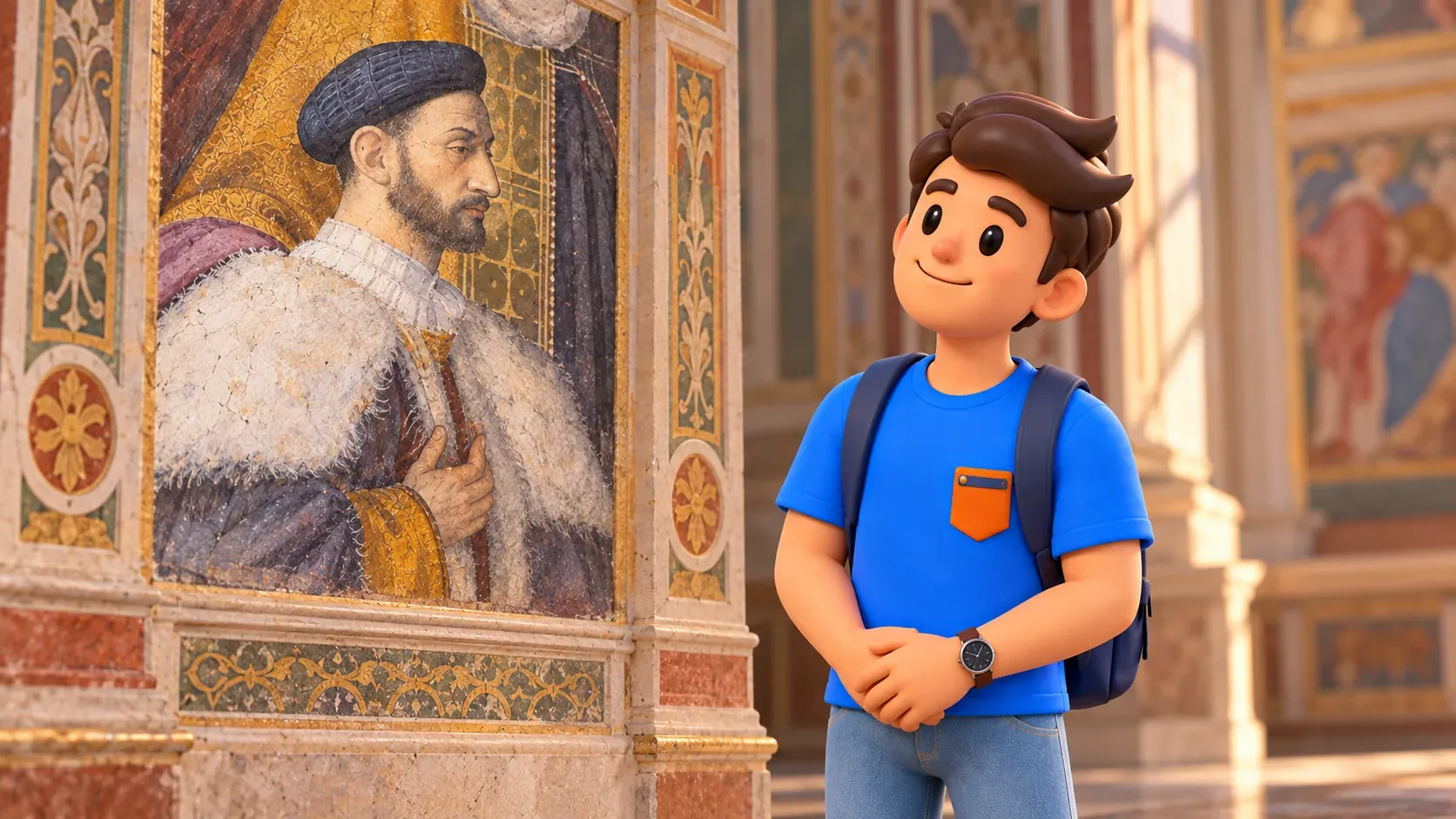
At San Maurizio al Monastero Maggiore, near Corso Magenta and Via Luini, the main reward is the richly painted interior. Its Renaissance decoration is associated with Bernardino Luini and his workshop. The church once served a convent, and the distinction between the faithful’s hall and the nuns’ choir helps you understand why the interior contains different spaces rather than one uninterrupted room.
Allow about 45 minutes when the church is open. Start with the overall relationship between painting and architecture, then choose a few details. You have already seen one concentrated masterpiece earlier; here the pleasure is how decoration surrounds you. It is a different encounter with art, so give it its own question instead of asking whether it replaces the Last Supper.
Visits are supported by Touring Club volunteers and are subject to capacity and current opening notices, including possible weather-related suspensions. Groups and school parties must arrange access in advance under the published booking procedure; individual visitors should not assume those group slots are their own timed-ticket system. Check the church’s current notice separately from the adjacent Archaeological Museum’s timetable and ticket conditions. The museum is another visit, outside this half-day.
If these different kinds of art deserve more time in your stay, use RoadMe to prepare the remaining days around what interests you and how quickly you like to travel. A personal plan makes it easier to combine substantial visits with neighbourhood time and real pauses.
Finish without adding another major museum
Take the café pause near the later part of the route, choosing an open place and checking its menu. Thirty minutes is an allowance for a drink and a short rest, not a full restaurant meal. If a church is temporarily unavailable, use some of the flexible buffer for a quieter street pause or finish earlier. Filling every minute is not necessary for a complete morning.
End in the San Maurizio and Palazzo Litta area, then count the next journey separately. If you need step-free access, check each entrance and the public-street connections rather than assuming that a short distance makes them suitable. For a wider first stay, our three-day Milan itinerary gives the western neighbourhood a place alongside the historic centre and other districts. This half-day is the closer look: one reserved painting visit, a separate church, a palace façade and time to appreciate a painted interior.


