
Guastalla Gardens to the Rotonda della Besana: a Quiet Milan Walk
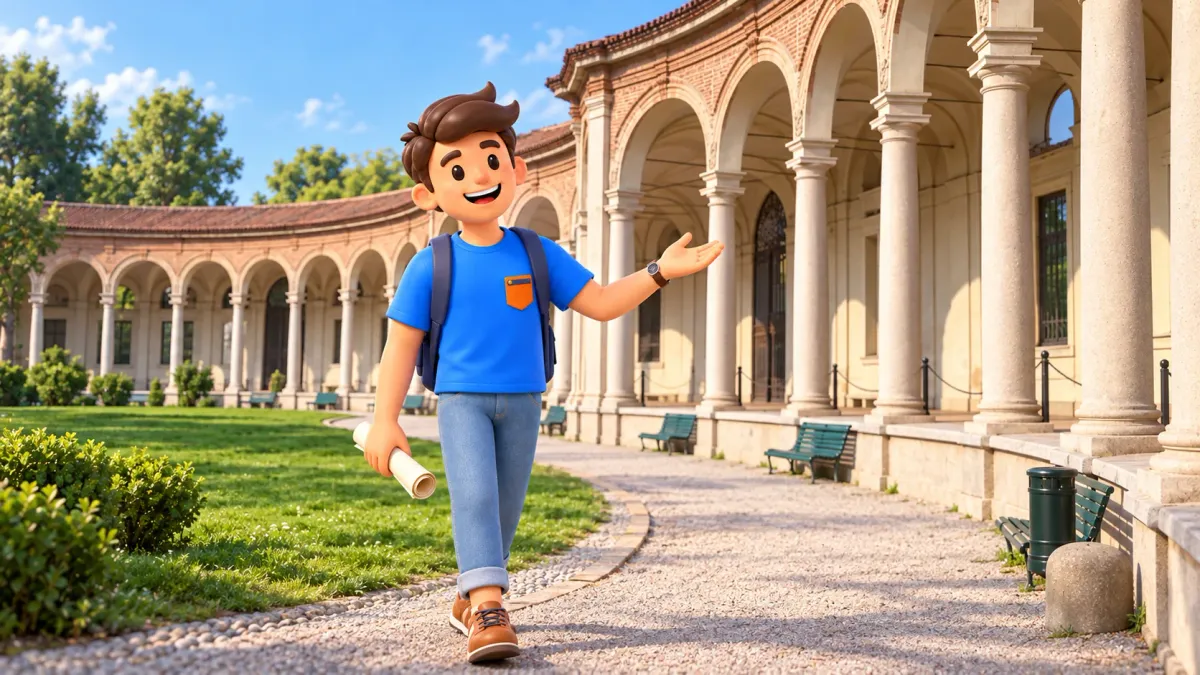
For a quieter two-hour walk in central Milan, link the Guastalla Gardens with the Rotonda della Besana. Start at the garden entrance on Via Francesco Sforza, spend time beside the historic basin and trees, then continue towards Via San Barnaba and Via Enrico Besana 12. Finish inside the Rotonda’s public garden, looking at its curving colonnade. This is a daytime outdoor route with sitting time. A MUBA children’s museum activity or a long lunch would be a separate addition.
Give two small gardens enough time
The appeal is a change of scale after Milan’s major sights: one compact historic garden, a normal street connection and a second enclosure whose architecture changes the atmosphere. Allow around 40 minutes at Guastalla, 25 for the connection, 35 for the Rotonda garden and 20 for a seated rest and flexible margin. The total is two hours. Expect roughly 1.3–1.7 kilometres including short garden circuits, an editorial estimate rather than a measured track.
For a Milan trip that balances places like these with the museums and landmarks you enjoy, try RoadMe, which prepares a personal day-by-day plan around your dates, interests, pace and budget. Bringing the whole stay together makes it easier and more convenient to leave room for a quiet walk without squeezing every day full.
Start and finish are different places. Add the approach from your accommodation and your onward journey separately. A morning such as 10:00–12:00 is an illustrative arrangement, not a booked itinerary or a promise of sunshine. It leaves the walk comfortably within daytime use of both gardens. Choose it because you want greenery and architectural details, not because it provides a shortcut through all of central Milan’s principal attractions.
The base walk requires no museum visit. Public garden access and a ticketed activity inside a building are different things, even when they share an address. This distinction lets an adult travelling alone, a couple or a family enjoy the same outdoor idea without pretending that everyone needs the same interior programme. Decide on the garden outing first; consider any additional activity according to its real schedule and your interests.
Begin at Guastalla’s historic basin
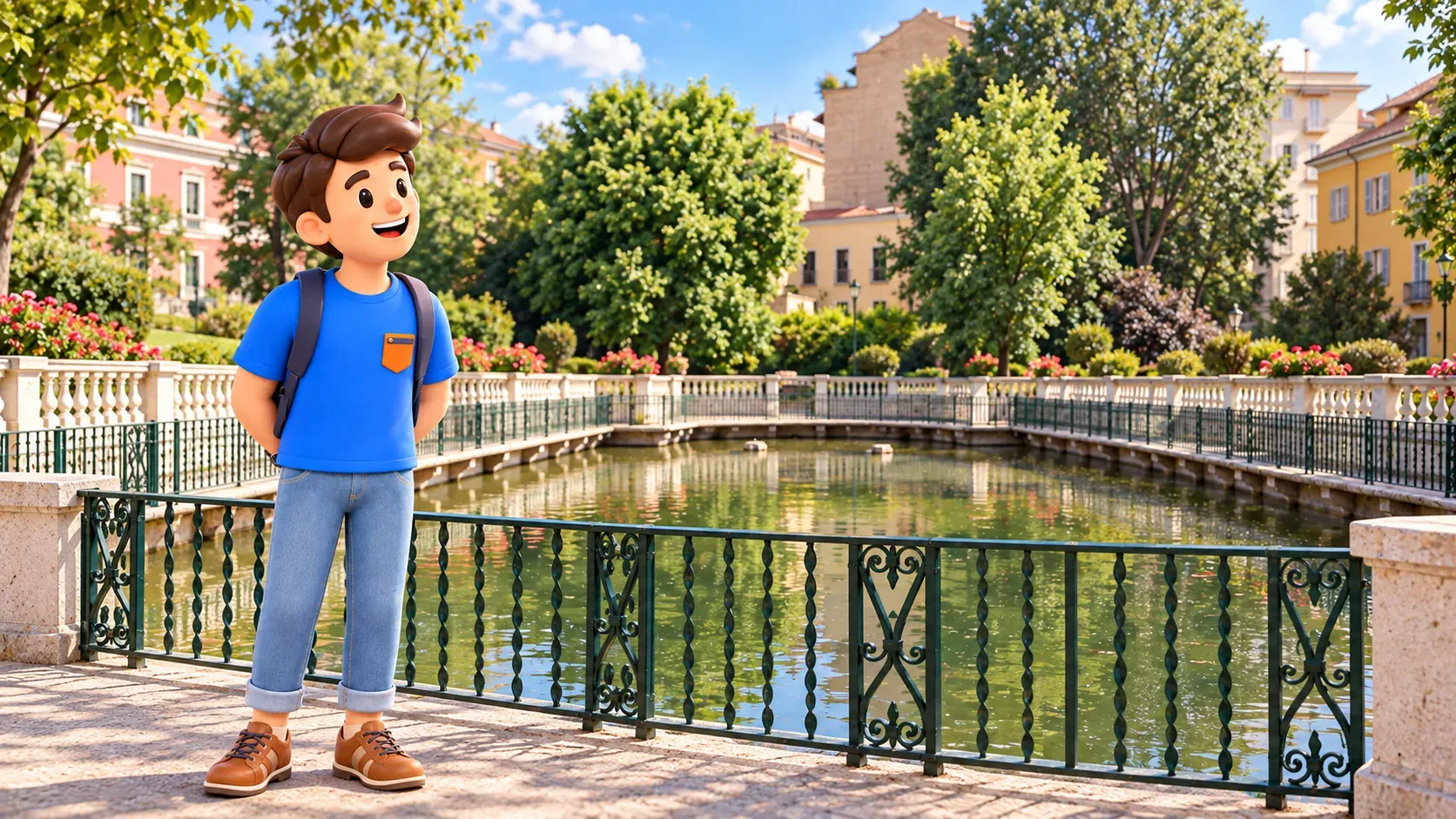
The municipality lists Guastalla entrances on Via Francesco Sforza and Via della Guastalla. Use the Via Francesco Sforza side as the starting reference, then choose the actual entrance appropriate to your needs. The view from this side introduces the garden and its peschiera, a historic fishpond or basin with stone balustrades and iron railings. Pause to see how the lower water area and surrounding terraces fit into a much larger impression than the garden’s modest size suggests.
It is a composed urban space rather than a piece of countryside. The meeting of water, pale stone, dark railings and mature trees gives you an easy subject for looking. Choose a safe position on the visitor path and compare the view along the basin with a more oblique angle. The pool is a historic feature to observe, not a place to enter or use as a seating platform. Its current water and maintenance condition may differ from a photograph.
You do not need to identify every ornamental detail to appreciate the scene. Look at how the railing frames the water and how the garden meets the surrounding buildings. Leave the camera for a minute if taking a photograph would become the whole stop. This first pause is most useful when it actually changes the pace of your morning, rather than becoming another quick image collected between major attractions.
A sixteenth-century origin, with later layers
The garden was commissioned by Paola Ludovica Torelli, Countess of Guastalla, and completed in 1555 as part of the Guastalla institution. Its Italian-garden origins help explain the importance of arranged space and architectural features. The municipality acquired the complex in 1938, with restoration preceding its opening to the public in 1939. A garden first associated with an institution thus became part of the city’s everyday outdoor life.
The basin belongs to a later Baroque layer, rather than being unchanged sixteenth-century scenery. The city’s historical account says water originally came from the Naviglio along what is now Via Francesco Sforza. You are not walking beside an open canal today. That small historical connection is enough to make the street outside feel different: an ordinary road can preserve the memory of a former urban water system without displaying it directly.
A neoclassical small temple by Luigi Cagnola adds another period to the garden. Consider it as one contrast with the basin and planting, rather than a reason to undertake a complete monument inventory. The value of this stop lies in seeing how several times coexist within a compact public place. A few reliable historical anchors make that visible without turning a short pause into a lecture on every restoration and ownership change.
Use the trees as a second way to look
Move away from the basin for part of your 40 minutes. The municipal account highlights a catalpa with a contorted trunk and an asymmetric crown, alongside other mature trees. If you enjoy plants, use the garden’s botanical information to connect a name with an actual tree. Without a guide, you can still compare the outline of a crown, branching pattern and bark. Observe from the paths without collecting plant material or approaching fragile beds.
A short bench pause makes sense here. Let the view settle at sitting height: the relation between the lawn, trees and surrounding façades can feel different from the first elevated look. People also use this garden as part of an ordinary working or study day. Treat that shared use as part of the place, while keeping paths clear. A quiet route describes the intended pace; it does not guarantee silence or an empty park.
Choose one detail to remember before leaving. It might be the shape of the basin, a tree silhouette or a contrast of stone and foliage. This is a useful way to keep a small green space distinct in a trip filled with larger buildings. You can finish the first garden without searching for a grand finale. Save some attention for the second enclosure instead of spending all the available time on one photograph.

Connect the gardens through ordinary Milan
Leave towards the Via della Guastalla side and orient yourself towards Via San Barnaba, continuing towards Via Enrico Besana 12. Use the public street network and signed crossings rather than assuming access through adjoining institutions. The two gardens do not form a continuous park. The connection is a piece of normal city walking, with traffic, pavements and daily activity between the quieter spaces. Keep the 25-minute allowance for walking and orientation, not for interior visits.
The neighbourhood’s buildings provide context, but this route does not require entry into the synagogue, the law courts or a church. Opening conditions for those places are separate from a street walk. Notice a façade or the scale of a block as you pass, then keep the main purpose in view. Adding an unplanned interior can easily consume the time intended for the Rotonda. The garden at the end deserves more than a rushed arrival.
If you need a drink or a longer rest before continuing, use part of the flexible margin or extend the walk honestly. Do not make the timing work by hurrying across a road. The short distance is valuable because it leaves room to move comfortably. On reaching Via Enrico Besana 12, check the gate information and enter the public garden when open. The change from street to enclosure is the second major moment of the route.
The Rotonda: a public garden inside a former burial complex
The Rotonda della Besana began as a burial complex for the Ospedale Maggiore. Its construction spans the late seventeenth and early eighteenth centuries. The former church of San Michele ai Nuovi Sepolcri occupies the centre, with an enclosing portico around the garden. This origin gives the architecture meaning beyond the impression of an attractive courtyard. You can acknowledge it respectfully while enjoying the place’s present public and cultural life.
From the garden level, follow the enclosure with your eyes before deciding how far to walk. The arcade curves around the green space, creating repeated openings, light and shade. It is not simply a straight corridor bent into an arbitrary circle. The architectural record describes an enclosure formed from curved segments. Looking at the repetition and changes in direction is a manageable way to appreciate the whole without requiring a technical plan.
The upper portico is reached by steps: MUBA’s current access information explicitly distinguishes it from the garden. Do not promise an entirely step-free circuit beneath the arches. If steps are unsuitable, make the garden-level views your visit and assess the actual surfaces and approach for your needs. There is still a clear relationship between the central building, lawn and surrounding columns to enjoy from the lower public area.

If small gardens, historic architecture and a gentler pace are what you want from Milan, use RoadMe to shape the remaining days around those interests. A personal trip plan makes it easier to balance substantial visits with restorative pauses, instead of filling every gap with another address.
Keep garden hours, MUBA and refreshments separate
Guastalla’s published opening pattern is 07:00–19:00 in January, February, November and December; 07:00–20:00 in March; 07:00–21:00 in April and October; and 07:00–22:00 from May to September. The Rotonda is also gated, not open around the clock. Check the current garden notice for your date and keep this route in daylight. Do not use a museum’s activity calendar as the opening schedule for the surrounding public garden.
MUBA, the children’s museum based at the Rotonda since 2014, offers activities at fixed times with limited places, rather than a permanent collection to browse freely. Its normal programme distinguishes schools on weekdays from family sessions at weekends, holidays and some Friday afternoons. Online advance purchase is strongly recommended; select an actual suitable session if you want to add one. That becomes a separate family visit with its own time and admission conditions.
The independently run bistro is another optional service, not a condition of the walk. Check its actual opening before relying on a café stop; the museum’s contact page lists Monday closure. Finish with a garden bench if that is enough. For a larger park outing on another day, our Sforza Castle to the Arch of Peace walk offers a different scale of Milanese green space. This morning can remain a complete, smaller experience.


