Milan for Free: Architecture, Parks and Cultural Spaces
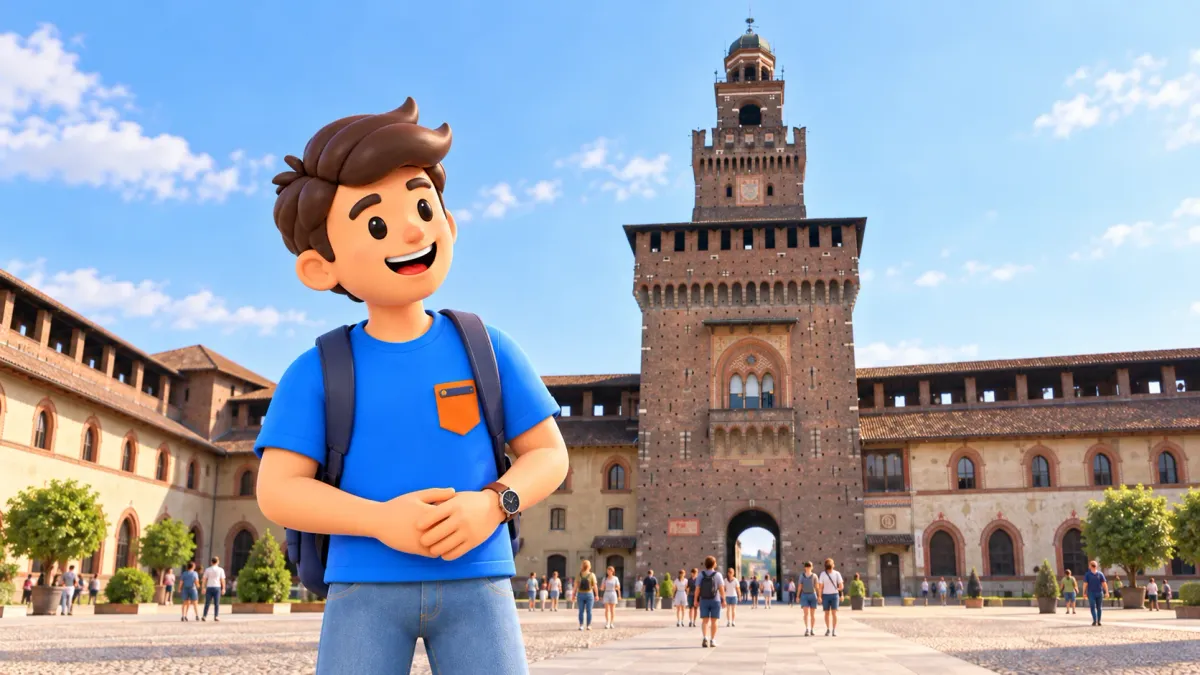
For a Milan outing without admission charges, start with public architecture: Piazza del Duomo, the Galleria Vittorio Emanuele II, Sforza Castle’s courtyards and a selected walk in Parco Sempione. A relaxed version takes about three and a half hours. For an indoor alternative, consider the MUDEC permanent collection or Pirelli HangarBicocca on their actual opening days. These are different visits, not consecutive stops on one compact walk. Free admission does not include transport, food, paid interiors or a guarantee that every exhibition is accessible on your date.
Choose a free experience, not simply the longest list
The useful question is what you want to spend time with: a monumental city square, castle architecture and trees, objects connecting Milan with the wider world, or contemporary art in industrial halls. Choose one direction first. Crossing Milan repeatedly to collect free entrances can make the day less convenient and more expensive once travel and meals are included. Public places are worthwhile destinations in themselves, rather than consolation stops between the museums you have decided not to buy.
To organise the trip around your interests and spending priorities, try RoadMe for a personal day-by-day plan based on your dates, pace and budget. Planning the whole stay in the app makes it more convenient to balance free experiences with the visits you actually want to pay for.
Keep three distinctions clear. A free public courtyard is not a museum ticket. A free permanent collection does not automatically include every temporary exhibition. A free-admission day still has opening hours, capacity and sometimes a booking procedure. Those differences matter more than whether a building appears under “free Milan” in an old guide. This selection concentrates on a few useful choices, so you can build a satisfying day without needing to turn every room and attraction into a separate research project.
At a glance: which free Milan fits your day?
| Choice | What is free | Main limit |
|---|---|---|
| Duomo area | The square and public Galleria passage | Cathedral visits, terraces and other interiors have separate conditions |
| Castle and Sempione | Ordinary courtyard access and park paths | Museums, towers and activities are separate |
| MUDEC | Permanent collection, as listed at the October 2026 check | Its own opening schedule; temporary exhibitions differ |
| Pirelli HangarBicocca | Permanent installations and temporary exhibitions | Thursday–Sunday opening, capacity and specific closures |
If you only have a morning and want to stay central, the outdoor route below avoids depending on a museum slot. If the weather makes a long walk unattractive, choose one of the indoor options and organise the travel around it. Do not assume that MUDEC and HangarBicocca are neighbours because both have free admission. They occupy different areas of Milan, and an afternoon spent moving between them is a different programme from a short central walk.
Piazza del Duomo and the Galleria: architecture without a purchase
Give Piazza del Duomo about half an hour to look at the cathedral from outside and understand its setting. Construction began in 1386, and Candoglia marble became central to the building’s identity. You can enjoy the relationship between the pale stone, carved surfaces and the open square without buying an admission ticket. This is an exterior experience: it does not include a tourist visit inside, the archaeological area, the museum or the terraces. Those parts of the complex have their own arrangements.
The Galleria Vittorio Emanuele II provides a different kind of architectural encounter beside the square. Designed by Giuseppe Mengoni and opened in 1867, it joins the Duomo area with Piazza della Scala through covered public passages. Its central octagon, iron-and-glass roof and decorated façades reward an unhurried look. Spend about 30 minutes noticing how the crossing of the passages shapes the space. You do not need to shop or order a coffee to appreciate the public arcade.
Keep the access boundary visible. The passage is not a ticket to rooftop experiences, every shop or the theatre at the other end. The roof also does not cover the whole square or every subsequent street. Choose a place to pause without blocking doors or people moving through. You can leave the area having seen a major part of Milan’s public architecture without claiming that you have completed the cathedral or La Scala. That makes the choice clearer and the visit more satisfying.
Castle courtyards and Parco Sempione
From the Galleria area, allow around 30 minutes to walk towards the castle via Via Santa Margherita, Cordusio and Via Dante. The estimate includes finding your way and normal crossings; it is not a measured navigation track. At Castello Sforzesco, ordinary courtyard admission is free, with regular hours of 07:00–19:30 daily. The museum collections follow their own timetable and normally charge admission. Monday’s museum closure therefore does not automatically close the outdoor courtyard visit described here.
The castle gives a direct impression of Milan’s fortified and ducal past, but do not assume every visible element is untouched medieval fabric. Restoration and reconstruction helped shape its present appearance. Give yourself roughly 30 minutes for the available public courtyards and exterior details. Look at the scale of the walls, the openings and the way passages divide the complex. Do not add towers, battlements, special rooms or museum masterpieces to the free programme unless you have separately confirmed their access.

Behind the castle, Parco Sempione offers a change of pace. The late nineteenth-century park was designed by Emilio Alemagna, providing a landscape of paths, trees and open spaces beside the historic fortress. Choose one 45-minute walk rather than treating every feature as compulsory. A view back towards the castle can be as worthwhile as crossing the entire park. Seeing a cultural building or tower from a path does not include entrance to its exhibitions or viewing platform.
Regular park hours are 06:00–24:00 from April to September and 06:00–22:00 from October to March. Temporary gate notices, event arrangements and weather restrictions can still change the available route. Use the public paths and respect marked boundaries. If a particular courtyard or path is unavailable, shorten the outing rather than searching for an unofficial way through. The aim is an enjoyable free visit, not completing every corner of a site regardless of the conditions.
A central walk taking about three and a half hours
A useful example starts at 10:00: 30 minutes on Piazza del Duomo, 30 minutes in the Galleria, 30 minutes walking to the castle, 30 minutes in its courtyards, 45 minutes on selected Sempione paths, 30 minutes resting and a 15-minute reserve. The total is 210 minutes, finishing around 13:30. Allow roughly 2–3 kilometres of outdoor and passage walking, depending on the park loop and available exits. These are planning estimates, with travel to the start and from the finish additional.
The rest does not require buying something. Find a suitable public place to sit when available, or allow longer for a pause you have chosen. Food and drinks remain separate purchases, and a café table is not automatically a free resting area. This outline includes neither a substantial museum interior nor a full lunch. If either becomes the priority, give it proper time and remove part of the walk instead of pretending it will fit inside the reserve.
MUDEC: a free collection with its own identity
For a different day, MUDEC at Via Tortona 56 offers the permanent collection “Milano Globale. Il mondo visto da qui”. At our check on 17 October 2026, the museum’s visitor information lists permanent-collection admission as free. Check the actual collection conditions for your travel date, rather than extending that statement to every exhibition or assuming an announced future tariff has already taken effect. The free selection is a specific part of a larger institution, not an unlimited pass to all its projects.

The museum opened in 2015; the current permanent presentation explores Milan’s connections with the world through selected objects and their histories. Look for the context of an object’s making, movement and arrival in a collection, rather than only choosing the most striking display. The visit becomes a way to understand relationships between the city and other places. It does not imply that every object in storage is on show or that collection access includes all educational activities.
Allow approximately 90 minutes to two hours for a selected visit and orientation, with travel additional. The permanent collection normally closes Monday. It opens Tuesday, Wednesday, Friday, Saturday and Sunday, 09:30–19:30, and Thursday, 09:30–22:30, with last entry an hour before closing. A temporary exhibition opening on Monday does not establish that the collection is open too. Follow the reception’s current admission procedure even when no admission charge applies. Our half-day Tortona guide explains the surrounding district as a separate outing.
Pirelli HangarBicocca: free contemporary art, with a date check
Pirelli HangarBicocca at Via Chiese 2, in northern Milan, offers free admission to permanent installations and temporary exhibitions. Regular opening is Thursday to Sunday, 10:30–20:30, with last admission at 19:30; Monday to Wednesday is closed. Free online reservation is recommended and gives priority in the chosen time slot. Registration on arrival depends on availability and can involve waiting. Do not turn “free” into a promise of immediate entry, or use the bistrot’s hours as the exhibition timetable.
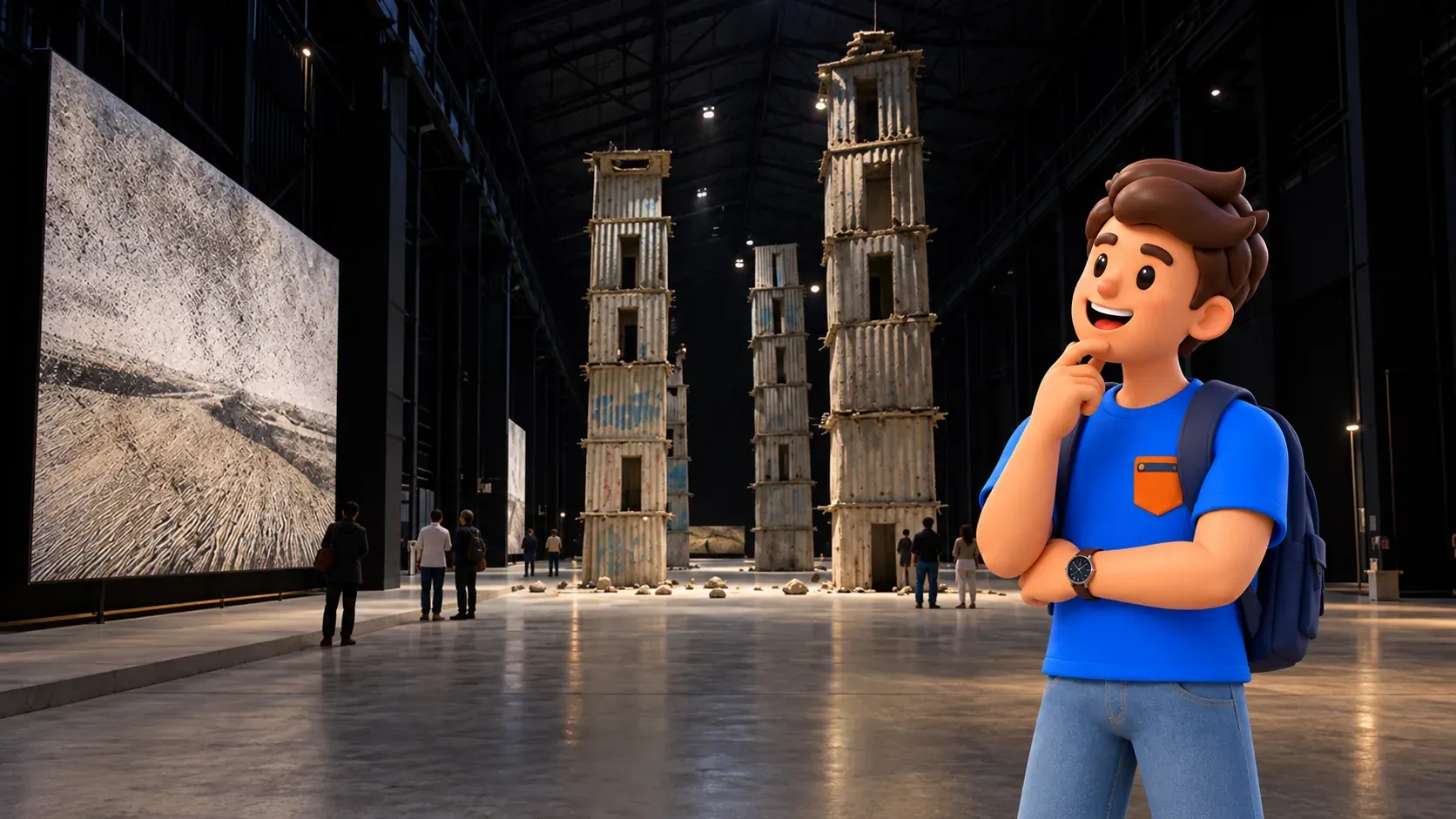
Anselm Kiefer’s “I Sette Palazzi Celesti 2004–2015” brings monumental concrete towers and paintings into a former industrial setting. The first installation dates from 2004, with paintings added in 2015. The towers are artworks to view, not buildings you can enter or climb. Their scale and relationship with the hall are part of the experience. Importantly for current planning, the venue states that the Kiefer installation will not be accessible on 24 October 2026; that notice does not say the entire institution is closed.
Choose the current programme you actually want and allow about two to three hours for a considered visit, plus the journeys there and back. Guided visits and organised activities have their own conditions; free exhibition admission does not automatically include them. The Bicocca neighbourhood guide gives wider context if you want to devote a separate part of the trip to this area. Do not add this northern visit to the central free walk without recalculating the whole day.
Free days are useful only when the conditions fit
Milan’s current municipal museum information lists free admission for all visitors on the first Sunday of the month, and for visitors up to age 25 on the second Tuesday. These are different conditions, not a rule that every Tuesday or every museum in Milan is free. State institutions, private venues, exhibitions and organised activities can have separate arrangements. Check the actual place, date, admission category and any ticket requirement before making the free day the fixed point of your journey.
Use RoadMe to build the remaining days around the balance of art, architecture and neighbourhoods that interests you. A personal trip plan makes it easier to organise your time and budget without treating every free entrance as an obligation.
You do not need a free version of every paid attraction. A public square, a covered arcade, castle courtyards and time among trees can form a complete Milan morning; a chosen free collection can give another day a different focus. Decide what you want to notice, respect the actual access conditions and leave enough time to enjoy it.