
Milan Before the Duomo: A Walk through Ancient Basilicas
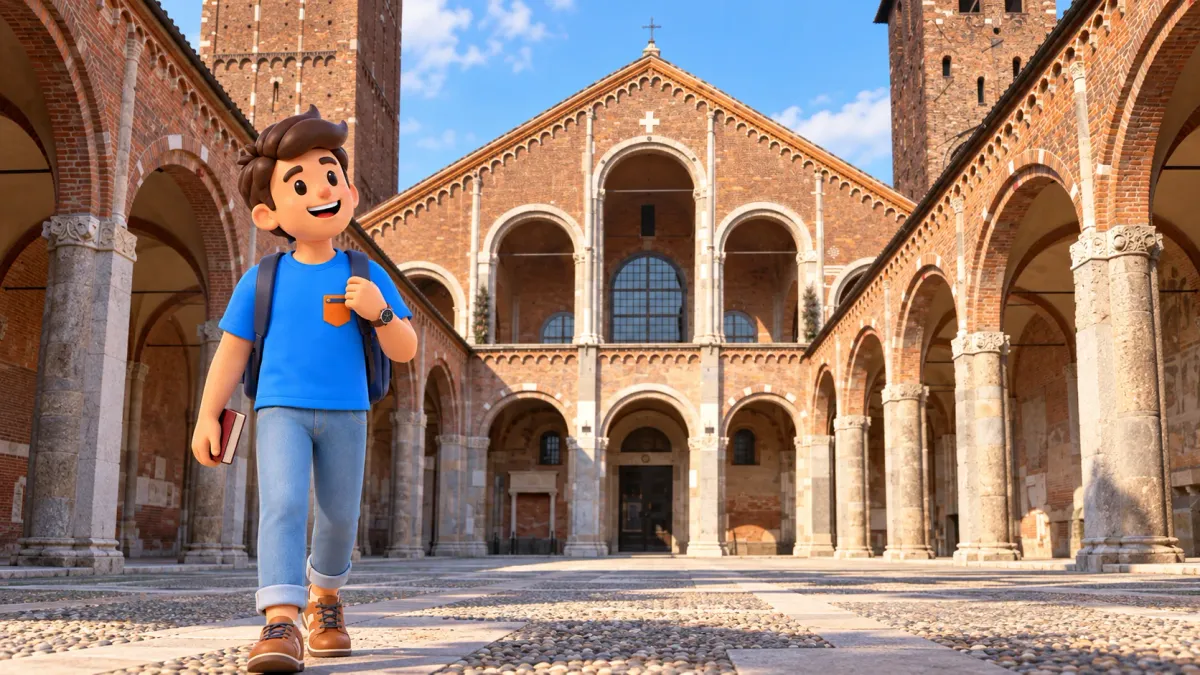
To discover Milan before the Gothic Duomo, spend a morning at San Simpliciano, Sant’Ambrogio and San Lorenzo Maggiore. These three basilicas introduce the city’s early Christian roots through very different spaces: a long church interior, a Romanesque courtyard and a building organised around a central volume. Allow around three hours and twenty minutes, including the walks between them. The route is designed for an ordinary, non-holiday Monday to Saturday, with focused church visits rather than every museum and chapel attached to them.
A morning route that respects the opening hours
Start at San Simpliciano at about 09:30 and allow 30 minutes there. Give the walk to Sant’Ambrogio roughly 40 minutes, then visit from around 10:40 to 11:25. A further 25-minute connection brings you to San Lorenzo at about 11:50; leave its interior by roughly 12:20. Another 30 minutes covers a short pause and spare time, bringing the total to 200 minutes. Expect approximately 3–3.5 kilometres outdoors, including movement around the squares. These are editorial planning estimates, not measured walking times; indoor walking and travel to the start and from the finish are additional.
If old churches, architecture and the history of cities interest you, try RoadMe for a personal trip plan built around your dates, interests, pace and budget. Planning the whole stay in the app makes it easier and more convenient to give this quieter side of Milan the time it deserves.
The early start has a practical purpose. Sant’Ambrogio’s sightseeing hours are narrower than its general opening for worship, while San Lorenzo closes for lunch on weekdays. Keep the substantial pause for after the final interior visit; spare time is not permission to arrive after closing. At the check on 17 October 2026, the three ordinary schedules fitted this sequence. Religious services and special arrangements take priority, so check the actual date before setting out. Sunday morning needs a different plan, because Sant’Ambrogio’s tourist visits take place in the afternoon.
What “before the Duomo” actually means
The title refers to roots older than today’s Gothic cathedral. It does not mean the cathedral area was empty before that building appeared: an earlier Christian episcopal complex already occupied the area in late antiquity. Nor should you imagine all three basilicas exactly as they stand today in the fourth century. Foundations, walls, roofs, decoration and façades can belong to different periods. The interest lies in recognising that continuity while noticing how later generations changed the places they inherited.
Ambrose, Milan’s fourth-century bishop and patron saint, is central to this story. Sant’Ambrogio is directly associated with his foundation; San Simpliciano is linked to the early Christian building programme of his time. San Lorenzo has its own complicated origins, with questions about its original patronage and purpose. Avoid treating every old church as an identical commission by the same person. On this walk, it is more useful to compare what space does: guide you along an axis, prepare you through a courtyard or gather you around a centre.
San Simpliciano: begin with space and colour
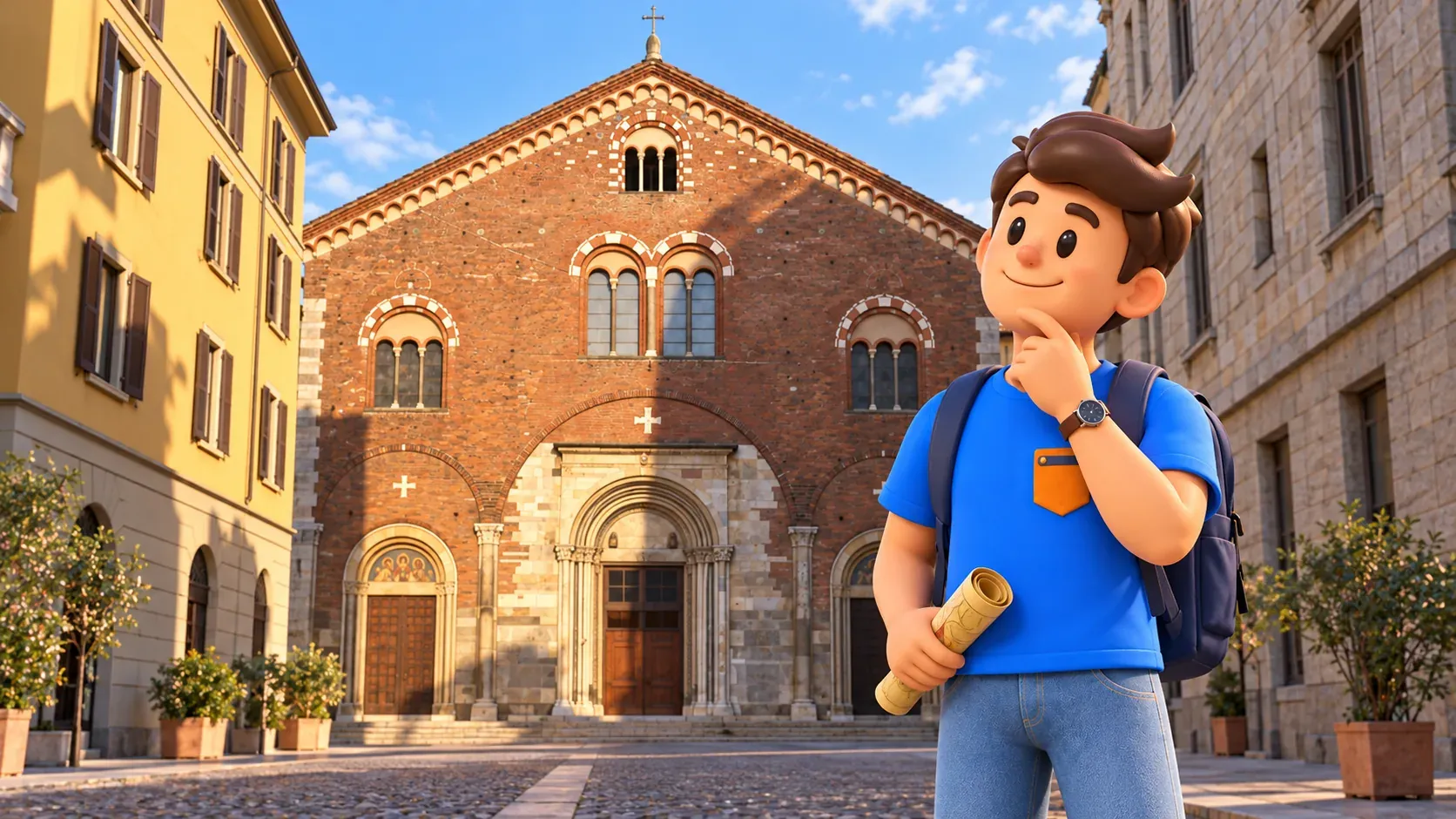
Find the first entrance at Piazza San Simpliciano 7, just off Corso Garibaldi near the Brera area. M2 Lanza is a useful approach, followed by a walk. The cobbled square and brick façade make an effective transition from the surrounding streets. Give yourself a few minutes outside before entering, without assuming an open door means sightseeing is appropriate during a service. Ordinary church admission is free. The planned half hour is enough for a focused look, rather than an inspection of every chapel or an additional monastery visit.
The building’s origins belong to the late fourth or early fifth century. Its Romanesque appearance can disguise the survival of substantial early perimeter walls; the church has been altered rather than simply replaced by an unrelated building. Inside, look first at the relationship between pillars, vaults and the long view towards the apse. Then notice how the colour changes at the far end. Bergognone’s Renaissance fresco of the Coronation of the Virgin belongs to a much later chapter than the church’s origins. Its contrast with the restrained brick architecture is a useful reminder that one interior can hold several histories.
For the ordinary morning proposed here, 09:30 fits the parish’s current weekday opening. Its schedule, in force from September 2026, lists weekdays from 07:15 to 19:00, with a midday break in July and August. Festive days have a different pattern. Do not confuse the parish office’s hours with the church’s visiting opportunities, or rely on an older tourism timetable when the parish has published a newer one. The neighbouring former monastic cloisters are now associated with the theological faculty; they are not automatically another publicly accessible stop.
Cross western Milan without adding another major visit
Allow about 40 minutes to reach Sant’Ambrogio, using the western centre around Largo Cairoli, Corso Magenta and the Sant’Agnese area for orientation. Choose the actual pedestrian connection that suits you on the day. This allowance includes street crossings and finding the entrance; it is not a promise of an uninterrupted pedestrian zone. A navigation map remains useful, particularly if works or access arrangements change. The goal of this connection is to arrive comfortably within the basilica’s morning sightseeing window.
Several tempting museums and churches lie in this part of Milan. Resist turning each nearby name into another full visit before lunch. The distinction is especially useful if you enjoy art: one substantial painting collection can easily become the main activity of a separate half-day. Our Brera half-day plan gives that interest its own space. Here, the connection between basilicas is part of the route, allowing you to see their different neighbourhood settings without losing the time reserved for the interiors.
Sant’Ambrogio: ancient roots, a Romanesque encounter
The basilica is at Piazza Sant’Ambrogio 15. Ambrose founded the church in the late fourth century in a burial area outside the ancient city walls, and chose it for his own burial. Today’s architectural encounter is largely Romanesque, shaped by rebuilding in the late eleventh and early twelfth centuries. That difference is essential: the site carries the bishop’s memory, while the red-brick forms through which you experience it belong largely to medieval Milan. Its importance is both religious and civic, closely bound to the city’s identity.
Begin in the quadriportico, the courtyard enclosed by arcades. It gives the façade a frame and creates a gradual approach from the square to the church. Look at the repeated arches, then at the two bell towers, associated with different communities of monks and canons. Their separate histories explain why the pair need not be identical. Inside, shift attention to the three aisles and the rhythm of supports. A 45-minute visit works best when you choose these relationships and a few details, leaving a complete catalogue of monuments for another occasion.
Tourist visits normally run Monday to Saturday, 10:00–12:00 and 14:30–18:00, and Sunday, 15:00–17:00, subject to liturgies. The basilica alone remains free for worshippers and visitors. Groups must reserve even for a basilica-only visit; the absence of a general admission charge does not remove that requirement. General opening for prayer starts earlier and ends later than these sightseeing windows. A 07:30 opening is therefore not an invitation to schedule a tourist visit at that hour. M2 and M4 Sant’Ambrogio are useful if you choose to start or finish here.
Make Ambrosius a different version of the morning
If early mosaics, precious objects and a fuller account of the basilica are your priority, consider the separate paid Ambrosius route. It includes the Sacello di San Vittore in Ciel d’Oro and the Treasury, beyond the basic church visit. The ticket entrance is at Piazza Sant’Ambrogio 23, rather than the basilica address above. Check the chosen visit and its actual admission arrangements. A free basilica visit should not be described as automatically including all of these spaces, and a museum timetable should not replace the church’s sightseeing timetable.
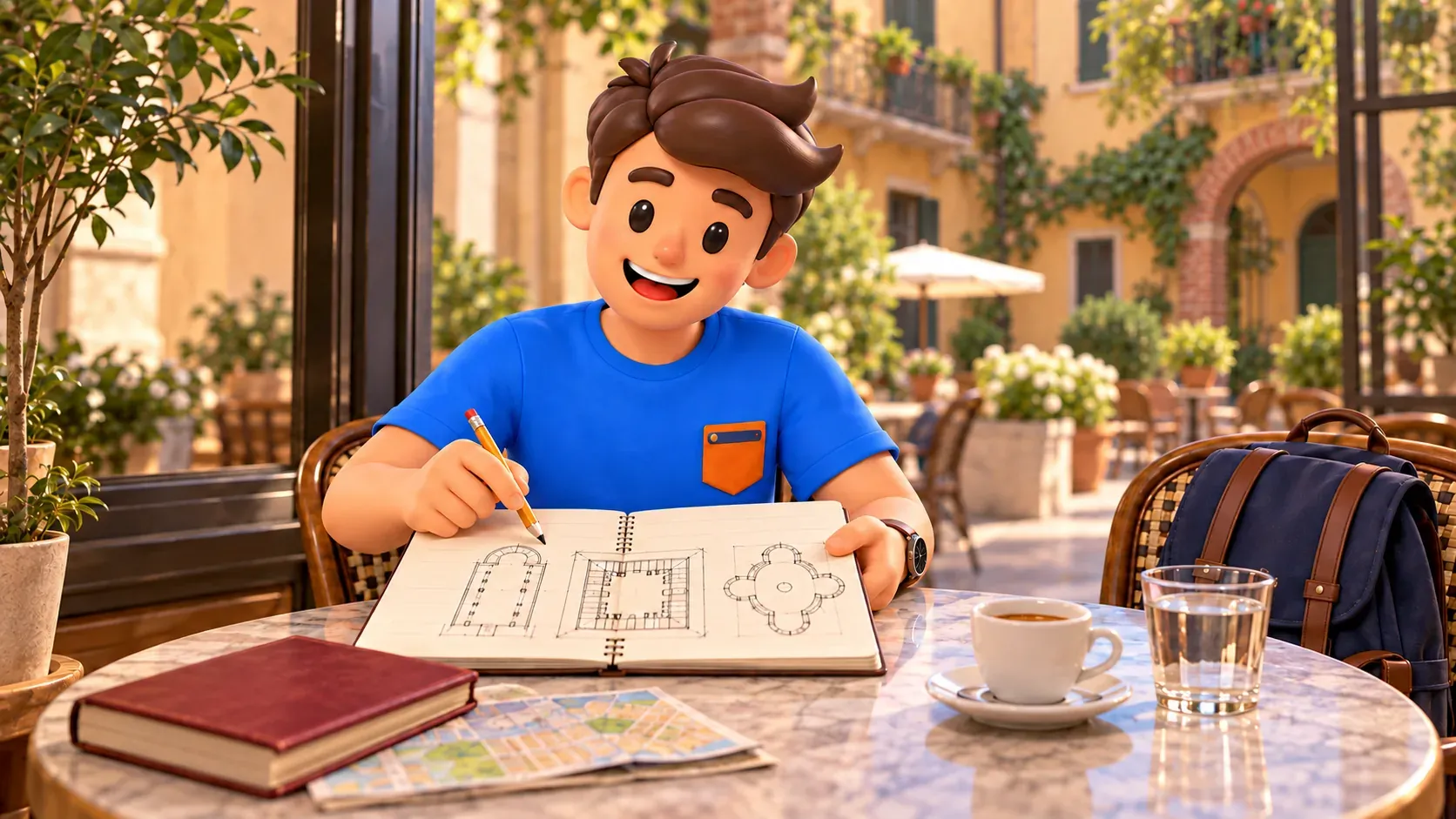
Allow around 90 minutes as a planning estimate for a more substantial Ambrosius visit, instead of the 45 minutes assigned to the free church selection. In this version, finish the morning at Sant’Ambrogio. Adding the extra time and then following the original sequence would take you towards San Lorenzo after its weekday lunch closure. Choose its afternoon opening separately if you still want to continue. This small change makes a better day than racing through a museum simply to preserve an earlier list of stops.
San Lorenzo: a different way to shape a church
For the main version, leave Sant’Ambrogio at about 11:25 and allow roughly 25 minutes towards the Gian Giacomo Mora and Carrobbio area, then Corso di Porta Ticinese. The San Lorenzo Maggiore entrance is at number 35. Its early Christian origins lie around the late fourth and early fifth centuries, but the present building also reflects major later interventions. The dome was rebuilt after a sixteenth-century collapse; it should not be presented as an untouched ancient roof. The changing fabric is part of the reason this last stop rewards comparison.
Inside, notice the central volume and its four curved recesses. The arrangement feels different from simply looking down a long nave: try following the relationship between the centre and surrounding spaces from a permitted position. Thirty minutes allows a considered look at the main basilica. The neighbouring Sant’Aquilino chapel has important surviving early mosaics, but it is not included in this allowance. Ask about its own current entry conditions and plan additional time if that is the reason you came. Do not assume every chapel follows the same access rules as the church.
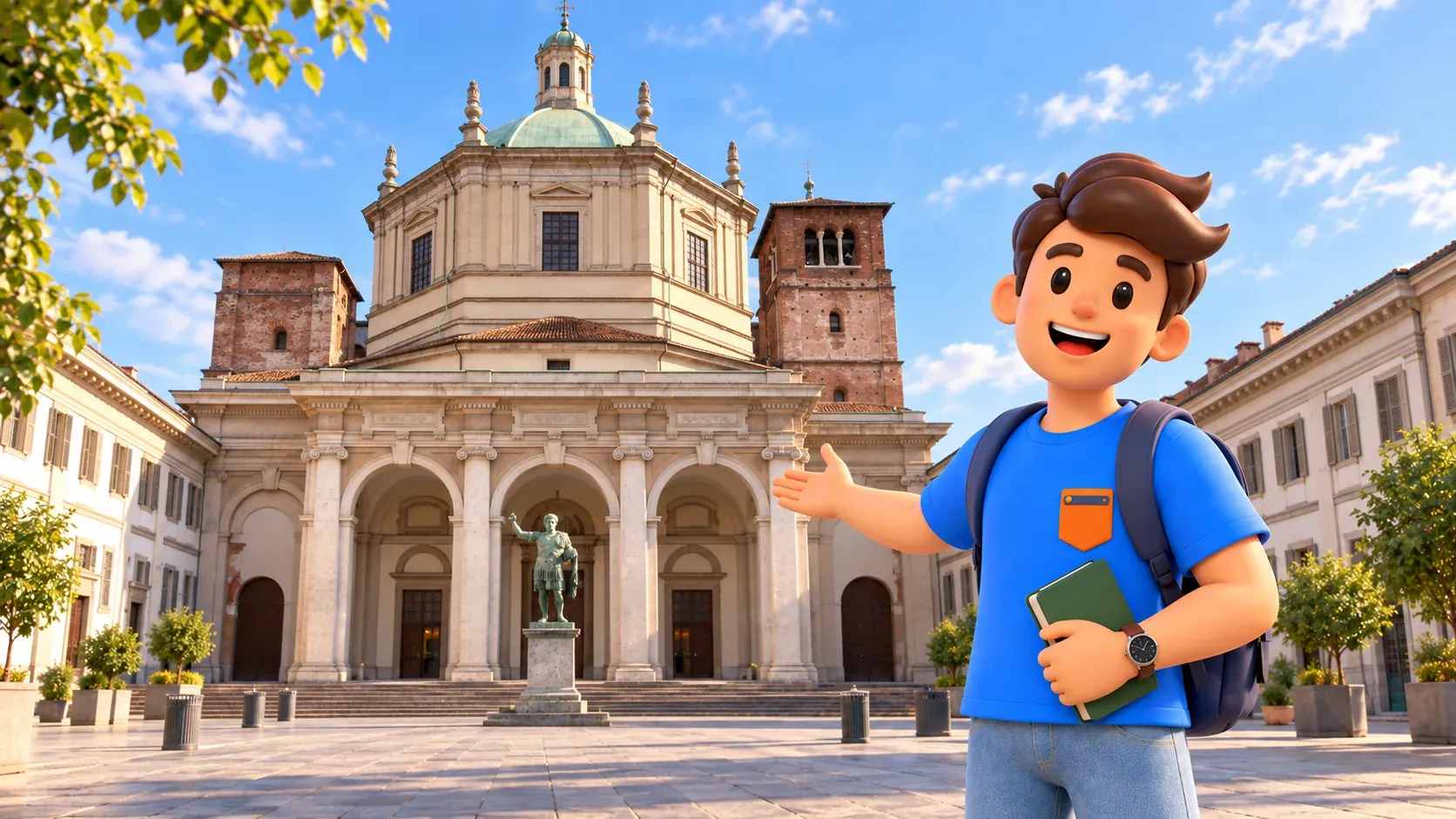
Regular opening is Monday to Friday, 08:00–12:30 and 15:00–18:30; Saturday and Sunday, 09:00–13:00 and 15:00–19:00, with services taking priority. Ordinary entry to the main basilica is free. Outside, the columns introduce an earlier material history and later reuse, explored more fully in our Roman Milan walk. Treat that as another route rather than adding its museum, palace remains and forum area to this morning. You already have a complete story through three contrasting religious spaces.
Keep the visit comfortable and unhurried
These are active places of worship. Keep voices low, put food away and follow the local instructions about photography and movement. If a ceremony interrupts the visit, wait appropriately or continue without that interior. For reduced mobility, ask about the actual entrances and intended spaces: San Simpliciano has a sloping ramp without a handrail, Sant’Ambrogio’s crypt involves steps, and San Lorenzo’s approach still has a final step. An available ramp does not make every part of a complex or the entire connecting walk step-free.
Use RoadMe to shape the rest of Milan around your preferred balance of history, art and neighbourhood walks. A personal trip plan helps organise those interests across the stay, making the trip more convenient than fitting every nearby attraction into one morning.
For a shorter version, begin at Sant’Ambrogio at 10:00 and continue to San Lorenzo: allow about two hours locally, including the walk and a small reserve. You lose the northern stop but retain a strong contrast between a courtyard-led Romanesque visit and a centrally organised church. Whichever version you choose, leave with three distinctions in mind: an ancient foundation is not the same as an entirely ancient building, free church admission does not include every museum space, and the most rewarding route gives each place time to become recognisable.


