
Midtown in Two Hours: Bryant Park to Grand Central

Two hours in Midtown can hold a small park, a marble library, an Art Deco skyscraper and a railway terminal without becoming an endurance test. The useful boundary is the area around 42nd Street. Stay here, leave the larger Manhattan checklist for another day, and the buildings have time to feel different from one another.
This short walk starts at Bryant Park and finishes at Grand Central Terminal. The New York Public Library and Chrysler Building are exterior stops; a brief look into Grand Central's public Main Concourse is optional at the end. Guided tours, a sit-down meal and seasonal activities need extra time. The core walk works without relying on admission to a particular room.
Choose a small Midtown walk with a clear finish
This route suits a gap between other plans, a gentle first introduction to Manhattan or a day when several hours of sightseeing already feels enough. It offers changes of scale rather than a large number of attractions: trees and chairs, a broad stone façade, a narrow street view upward, then a terminal built to receive crowds.
RoadMe makes it easier to turn a spare two hours into a personal route built around your interests, whether that means architecture, history or a relaxed walk. Try planning in the app so more of your attention stays with the city.
Most of the outing is outdoors. It is a good dry-weather option, rather than a promise of continuous shelter between buildings. Public access, crossings and busy pavements can slow you down. If a library tour or an extended terminal visit is the main reason for coming, let that become the anchor of a longer outing instead of squeezing it into this timetable.
Resist adding Times Square, Rockefeller Center and Central Park simply because they also belong to Midtown. Each extension changes the amount of walking and the character of the day. A clear endpoint is useful: finish at the terminal, take stock, and decide what you actually want next.
A realistic two-hour budget
As an illustrative allocation, allow 30 minutes in Bryant Park, 20 minutes to walk around the library block and study its front, 20 minutes for the eastward street walk with pauses, 15 minutes at the Chrysler Building, 10 minutes for the short return and crossings, and 20 minutes at Grand Central. That leaves five minutes spare. These are planning estimates, not measured travel times.
The total walking distance is roughly one to one and a half kilometres, depending on the park circuit and entrances used. Move from the park to Fifth Avenue, then east along 42nd Street. The Chrysler Building lies slightly beyond the terminal, so the route includes a short deliberate return west. It keeps the walk's finish at a convenient transport hub while giving the skyscraper its own stop.
If you have a train to catch, finish sightseeing before the time you need to find your platform and board. That interval belongs outside the two-hour walk. The same applies to getting here from your accommodation or an airport. A compact route cannot compensate for a tightly planned transfer, and the terminal is large enough to deserve a separate margin.
Late morning or daytime makes the architectural details easier to see. Office workers and visitors share these pavements; a busy crossing is a reason to wait, rather than hurry. You can reverse the route if you arrive at Grand Central and prefer a park finish, but check how that direction fits your next commitment.
Bryant Park: begin at human scale
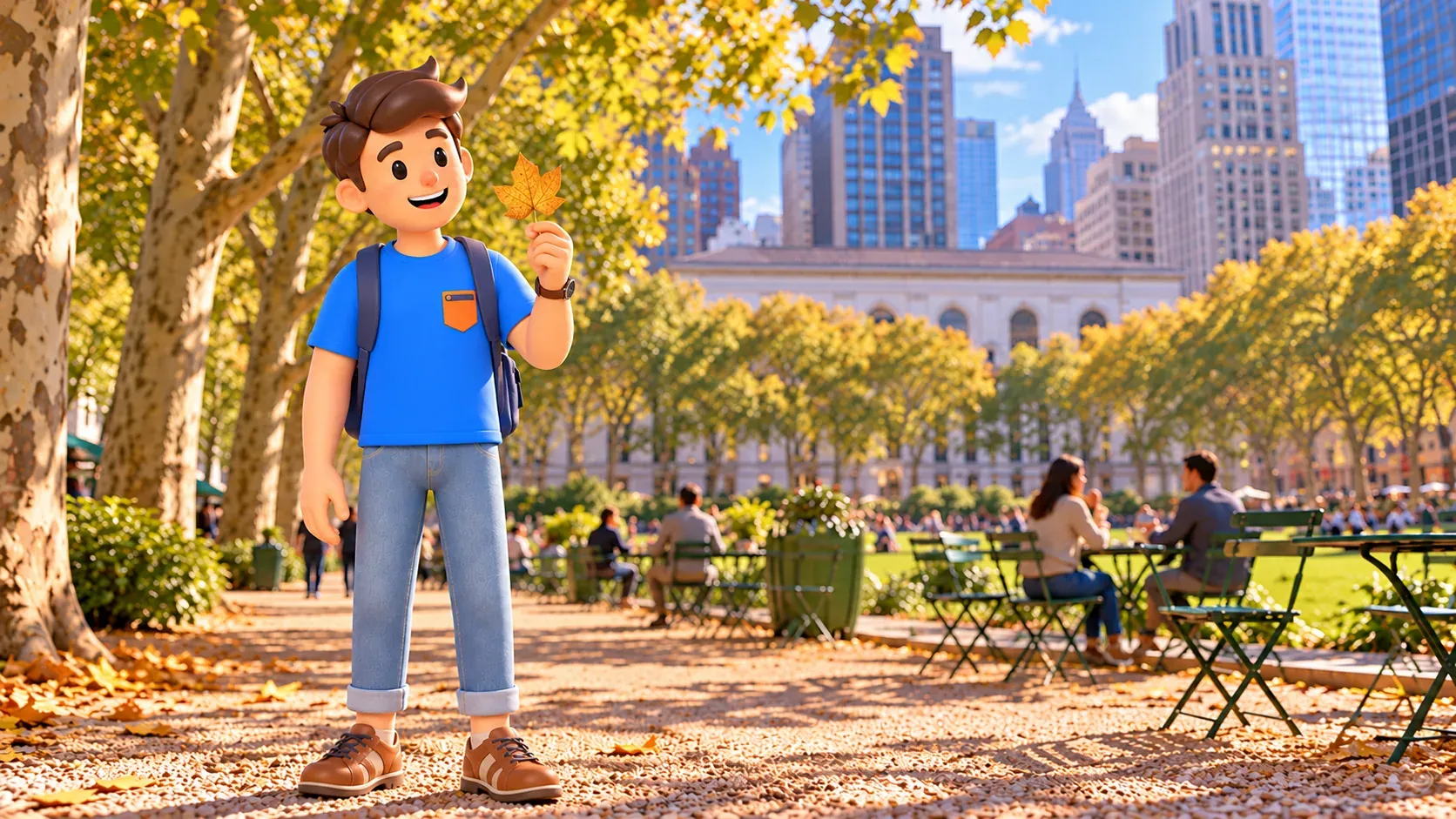
Start on the park's western or southern side and use whichever public paths are open. The first contrast is immediate: trees and places to sit give a small-scale foreground to the tall buildings around them. Take a moment to look before walking a full circuit. Watching the space being used can be more rewarding than trying to reproduce a familiar photograph.
The park took William Cullen Bryant's name in 1884, honouring the poet and editor. Its recognisable arrangement owes much to the 1934 redesign, with a central open area and formal paths and tree-lined edges. A later renewal led to its reopening in 1992. That history explains why this is a deliberately shaped public room within the city, rather than an accidental gap between buildings.
Use part of the first half-hour for a real pause. When seating is available, sit briefly and notice the back of the library beyond the park. This is already one of the outing's experiences, not merely waiting before the important buildings. A long breakfast, a food queue or an organised activity needs its own allowance. The short version can simply help you decide whether to return.
Bryant Park is open year-round, but its hours vary by month and weather or maintenance can restrict access. An open park does not guarantee an open lawn. Winter programming changes the centre of the space, while events and preparation affect it at other times. Follow the available paths rather than expecting a summer lawn scene on every date.
The library: walk around to Fifth Avenue
From the park's eastern side, go around the building on the public pavement to the Fifth Avenue façade. This walk does not cut through the library or depend on interior opening hours. The approach is part of the 20-minute library allowance. Leave stairs and entrances clear for people arriving to use the building, and step aside before stopping for a photograph.
The Stephen A. Schwarzman Building is the historic New York Public Library building designed by Carrère and Hastings and opened in 1911. Its broad frontage offers a different kind of presence from the surrounding towers: columns, pale stone and a carefully ordered horizontal composition. Coming from the park, it becomes another example of how a public place can hold its own in dense Manhattan.
Look first at the whole front, then choose one detail: a lion, a column or the relationship between the steps and the entrance. You do not need to identify every ornament to enjoy the building. Notice what attracts you, whether it is scale, material or the way it addresses the street. That personal observation makes the change to Art Deco more interesting later.
An interior visit is a separate choice. Public visitor areas and working research rooms have different rules, so an open building does not give tourists access to every space. Check the current visitor or tour arrangements specifically if the Rose Main Reading Room matters to you. No particular room is promised in this outdoor plan; a closed interior does not remove its main purpose.
If you want to go inside, take time from another stop or extend the outing. A guided visit cannot fit invisibly into an allowance already used by the block walk and the exterior. For someone more interested in books than street architecture, making the library the principal visit may be the better day. The remaining walk can then be a small addition.
Along 42nd Street to the Chrysler Building
Return to 42nd Street and continue east. This section is part of the experience: the library's calm frontage gives way to movement, dense façades and changing views above the traffic. The 20-minute allowance includes pauses as well as walking. Let the street remain a place to observe instead of turning it into a corridor to be completed as quickly as possible.
RoadMe helps build a personal walk or trip plan around what you enjoy most. It is a convenient way to fit this small architecture outing into the rest of your visit while leaving room for discoveries of your own.
Stop away from the main flow before looking up. Avoid backing toward the roadway to fit a tower into the frame or pausing immediately beyond a crossing. A partial view can work well: the crown appearing between other buildings still conveys the feeling of Manhattan. If temporary barriers or crowds affect a particular angle, use a safe available position rather than pursuing a supposedly perfect spot.
William Van Alen's Chrysler Building, completed in 1930, is recognisable through its stepped metal crown and Art Deco silhouette. For this route, an exterior look near Lexington Avenue is enough. Compare its upward energy with the library's broad composition. That contrast gives the walk a thread without requiring a long catalogue of height records or decorative details.
Allow about 15 minutes here. The plan includes no tower ascent, observation deck or guaranteed lobby admission. An uncertain interior opportunity should not determine whether the stop feels successful. If an interior is important, investigate its access separately. Then make the short return west toward Grand Central, keeping its role as the finish rather than beginning another neighbourhood circuit.

Grand Central: end at a working landmark
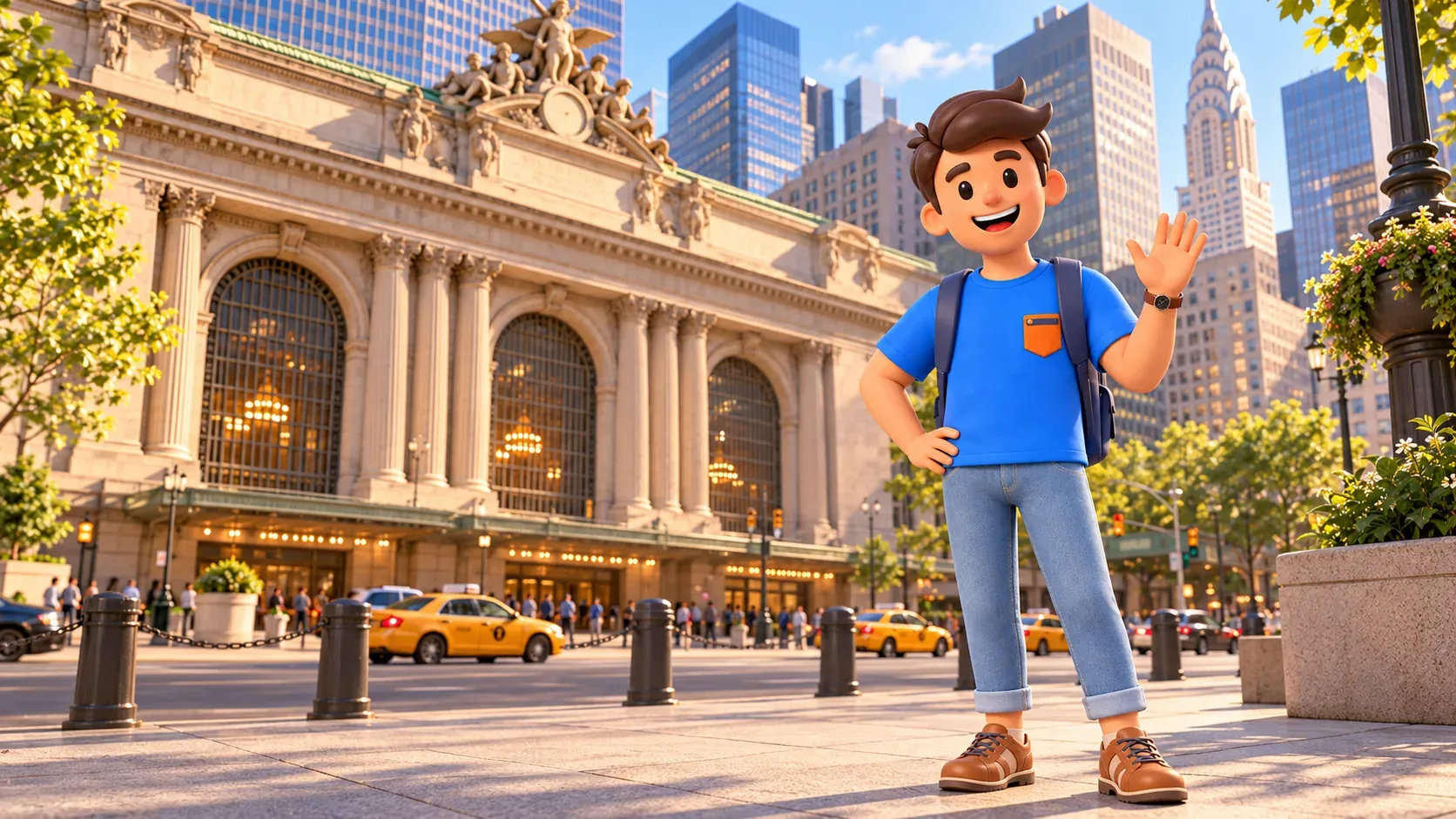
Grand Central Terminal stands at 42nd Street and Park Avenue. Begin outside where the pavement and flow of people allow. After the skyscraper, the scale changes again: the façade presents an entrance to a large transport building rather than another office tower. The terminal opened in 1913 and continues to serve the practical purpose that brought it into the neighbourhood.
If the final 20 minutes remain and public access is unrestricted, briefly step into the Main Concourse. Look at the room's volume and ceiling, then find somewhere clear of the circulation to take it in. This is a short architectural look, not a full exploration of every level and passage. Keeping the interior visit modest preserves a calm end to a busy street walk.
Ordinary access to a public concourse differs from a guided tour. At the time of checking, the terminal is open to the public daily from 5:15am to 2am, while shops, restaurants and other spaces have separate schedules. Those broad hours do not guarantee every service will be open. The room is the focus here; eating and shopping can follow as separate choices.
Remember that people are travelling through the building. Keep doors and routes clear, and do not head toward platforms simply to extend the sightseeing. If you are catching a train, switch your attention to the signs and your departure. If you are not, returning to the street is a perfectly adequate finish. There is no requirement to begin another attraction immediately.
Adjust the walk to the day you find
In hot weather, shorten exposed pauses and rest where it is permitted and comfortable. In winter, treat skating or other park activities as separate outings with their own arrangements and time. In heavy rain, choose one appealing indoor destination and reorganise the day around it. Four damp stops are not automatically more rewarding than one unhurried visit.
If time or energy runs low, leave out the extra approach to the Chrysler Building and finish at Grand Central after the library. That removes the short return section. If the park is what you enjoy most, stay longer there and accept a shorter finish. The aim is a connected experience with enough attention left to appreciate what appeals to you.
Conditions were checked on October 17, 2026. Recheck the park and any interiors you choose to add for your own date. Keep the route small, the crossings realistic and the spare minutes genuinely spare, and this part of Midtown can stand comfortably on its own.


