
Why Medieval Cloister Arcades Stand in Manhattan
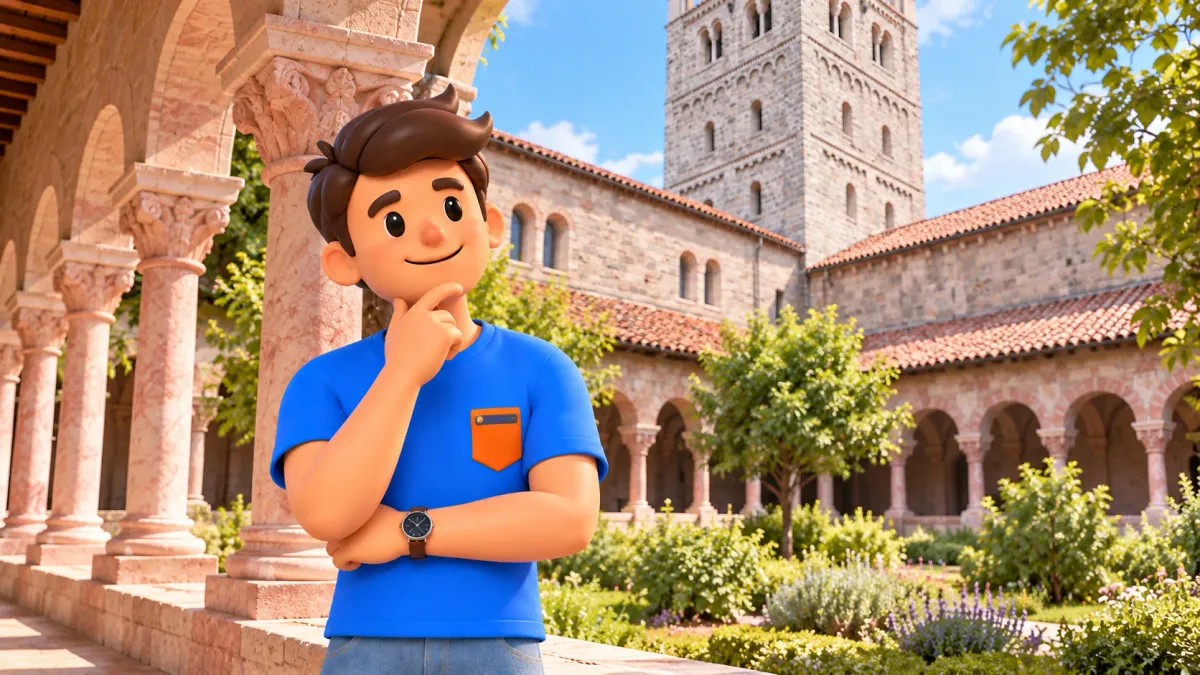
The arcades at The Met Cloisters can make northern Manhattan feel unexpectedly distant from the city's usual image. Pink stone, carved capitals and a garden framed by covered walks encourage a simple explanation: an entire medieval monastery must have crossed the Atlantic. The actual story is more interesting. Medieval architectural elements were incorporated into a museum created in the twentieth century, with new design connecting pieces that had different earlier lives.
Understanding that distinction changes a visit. You can enjoy the atmosphere while noticing how it was made, rather than choosing between a romantic illusion and a catalogue of old stones. This article follows that architectural story through a few useful ideas. The practical half-day route around The Cloisters and Fort Tryon belongs to a separate plan; here, the point is to see why these arcades are in New York at all.
A cloister is a kind of space, not one building
A cloister is essentially an open courtyard bordered by covered walks. In a monastery, those walks connected parts of daily life. Looking at the arrangement helps explain its effect before you identify a single carved figure: enclosure offers a centre, while repeated openings let you look into it. The relationship between movement, shelter and the open garden is as important as any one column.
If medieval architecture, gardens or the history of collecting appeals to you, RoadMe can build a personal New York plan around those interests, your dates, pace and budget. Using the app is more convenient than trying to turn every intriguing museum detail into another separate journey across the city.
The museum's name describes an architectural idea that appears in several reconstructed spaces. It does not identify a single monastery transplanted intact. Pieces from different European sites became part of a new whole, and the new building was not designed as an exact copy of one medieval structure. That is the starting point for reading what you see without asking every wall to have the same age or origin.
Try separating three questions during a visit: where an element came from, how it was used before and how it works in this museum. A capital can be an individual sculpture, part of a repeated arcade and a component of a modern display all at once. These layers do not cancel one another. They give a small area much more to notice than a quick photograph of a picturesque courtyard suggests.
Before the present museum, there was Barnard's Cloisters
George Grey Barnard, an American sculptor, collector and dealer, assembled medieval artworks and architectural elements in Europe. His own Cloisters opened in northern Manhattan in 1914. It was an earlier museum at a different site, not simply the same building under another owner. Keeping the two places distinct makes the later move to Fort Tryon Park easier to understand.
Barnard's interest in medieval art was both personal and commercial. The Met's account describes his wish to exhibit the works and eventually sell them to support his own studio, alongside an appreciation of their public educational value. That combination is worth remembering. The collection did not arrive through one impersonal administrative decision; it was shaped by taste, opportunity and the ambitions of a particular collector.
His first museum also relied on atmosphere. The Met records candlelight, recorded monastic chant and guards dressed as monks in Barnard's presentation. These details belong to that earlier museum, not to an ordinary visit today. They show how strongly a setting can guide interpretation. Visitors were being offered an experience of the Middle Ages as imagined by a modern collector, alongside the objects themselves.
Rather than treating that theatricality as the whole story, use it as a question. How does a room help an object seem ancient, sacred or intimate? Lighting, repetition and the route between spaces can affect your response before you read a label. Knowing that the first Cloisters made such choices openly helps you notice the more restrained decisions in its later successor without dismissing either setting as meaningless.

Rockefeller helped turn a collection into a new place
In 1925, with support from John D. Rockefeller Jr., The Met acquired Barnard's Cloisters and much of its contents. A larger setting followed. The present museum opened in Fort Tryon Park in 1938, designed by Charles Collens with close curatorial involvement. The sequence matters: the collection and the museum on today's hilltop did not begin at the same moment.
The result joins medieval fragments with twentieth-century architecture. Its spaces evoke earlier settings while belonging to a new museum programme. The building is therefore part of the interpretation, rather than a neutral container that happened to be available. Gardens, covered walks and transitions between rooms help visitors experience relationships among works that were not originally neighbours. You can read those connections while keeping their different origins in mind.
That makes The Cloisters an unusual subject for an architectural visit. You are looking both at historical material and at a modern decision about how to present it. Ask what the arrangement makes easy to understand and what distance remains between the museum and an original site. A coherent experience need not mean that every piece once belonged to the same coherent medieval place.
The park and the Hudson setting strengthen the sense of separation from the surrounding city. They are part of the modern experience of arriving here, rather than proof of an untouched medieval landscape. Pause over the difference between a convincing setting and an original location. The museum can be memorable precisely because those two things are distinct and its designers brought them into a carefully considered relationship.
Cuxa makes the distinction visible
The Cuxa cloister provides a clear example. Medieval elements came from Saint-Michel-de-Cuxa near the Pyrenees, and the reconstructed arcade is associated with its characteristic pink marble. The original cloister was considerably larger than the reconstruction in New York, approximately twice its size. The comparison alone is enough to challenge the idea that an entire courtyard was lifted away and put back without change.
Some elements are medieval, while parts of the surrounding architectural arrangement are modern reconstructions. The Met explains that new stone was cut from a quarry near Cuxa to complete the ensemble. Similar colour can make old and new look continuous. A visitor's first impression of unity is understandable, but it should not be mistaken for a claim that every visible piece has the same history.
Look at a capital, then take in several columns and the garden beyond them. The shift in scale is useful. At close range you can consider carving and shape; at a distance you can see how repetition builds an atmosphere. Keep your hands away from the stone and use the permitted visitor path. The experience does not depend on touching a surface to feel connected to its age.
You do not need to solve the provenance of every stone during one visit. Read a small amount of interpretation and let it sharpen one observation. The useful discovery is that a reconstructed space can contain authentic medieval work without being a complete original building. That idea will also help when you encounter architectural fragments, period rooms or relocated structures in other museums later in your travels.
The original places still have their own stories
Saint-Michel-de-Cuxa and Saint-Guilhem-le-Désert remain sites in Europe with architectural material and histories of their own. New York's reconstructions do not replace them. Remembering that is a simple way to avoid describing the American museum as the sole survival of places that vanished altogether. A fragment in one collection and a monument in its original landscape can both matter.
The Met's recent account of Barnard also discusses the complicated history of acquiring displaced architectural sculpture. The trade took place under conditions different from today's expectations for cultural heritage. A short travel article cannot settle every ownership question. It can encourage a more thoughtful habit: read an object's origin as part of its meaning, rather than regarding the journey to the museum as an irrelevant technical detail.
That curiosity need not overwhelm the visit. You might notice a place name, a collecting history or a reconstruction date and choose to learn more later. The museum's atmosphere and the questions behind it can coexist. Appreciating the carving does not require simplifying its movement across borders into a story in which every decision was inevitable, and asking questions does not prevent you from enjoying the space.
The same restraint applies to the word medieval. It describes the origin of much of the material, while the building and its presentation have modern histories. A later arrangement can help make an earlier object understandable, yet it also reflects the choices of its own period. Holding both dates in mind gives the visit depth without turning each stop into a lengthy specialist lecture.
Gardens connect the architecture to another kind of evidence
The Cloisters gardens draw on historical sources about medieval horticulture, including written and visual evidence. They are part of the museum's interpretation, not an untouched garden carried across the Atlantic. That distinction is similar to the architecture: research informs a living setting that has to be maintained in the present. Seasonal growth also means that no photograph promises exactly the same scene on your date.
Look at how a garden changes the experience of a covered walk. The opening frames light and greenery, while the arcade creates a rhythm between interior and exterior. You can appreciate that relationship without identifying every plant. Keep the observation modest and specific: one view through an opening can be more rewarding than a rushed attempt to record every flower, sculpture and room before moving on.
RoadMe can work this interest in architecture and gardens into a personal trip, balancing a thoughtful museum visit with the other New York experiences you want. Planning in the app is more effective than filling the same day with distant attractions and leaving no time to notice what brought you here.
Visit with one question rather than a complete checklist
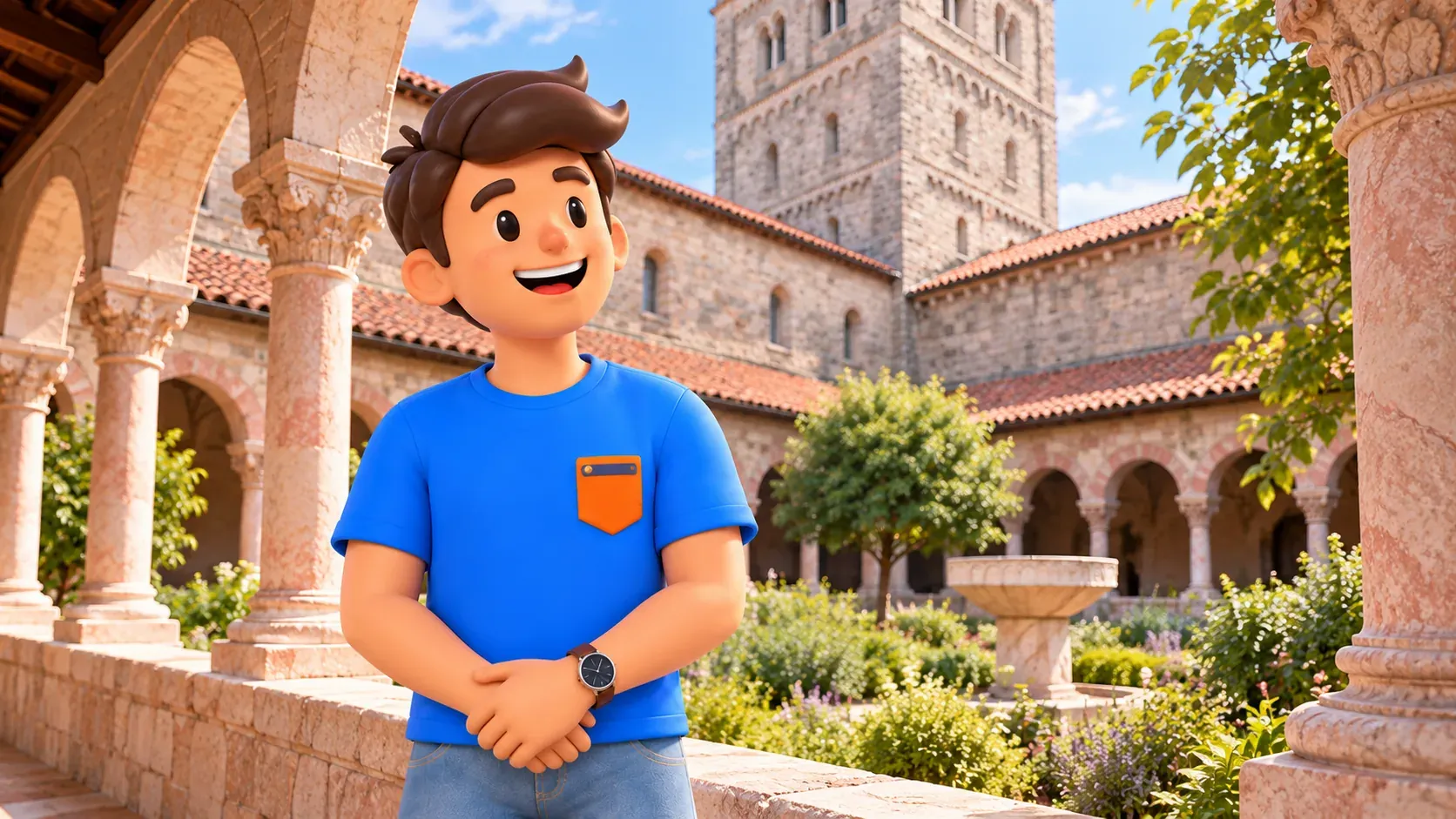
For an architecture-led visit, keep one question in mind: how do old elements and a modern arrangement work together? Start with the overall space, choose a detail, then step back to see the relationship again. Use the actual open visitor areas and follow the museum's rules for bags and photography. This article does not promise access to every courtyard in every season or repeat the separate practical route.
The arcades are on Manhattan because collecting, philanthropy, curatorial work and modern design brought medieval fragments into a new setting. The result is neither one untouched monastery nor merely an attractive backdrop. It is a museum where the building itself helps tell the story. Understanding how that happened lets you enjoy the calm while seeing the layers that made it possible.


