
Marunouchi in Two Hours: Tokyo Station, Brick and Glass
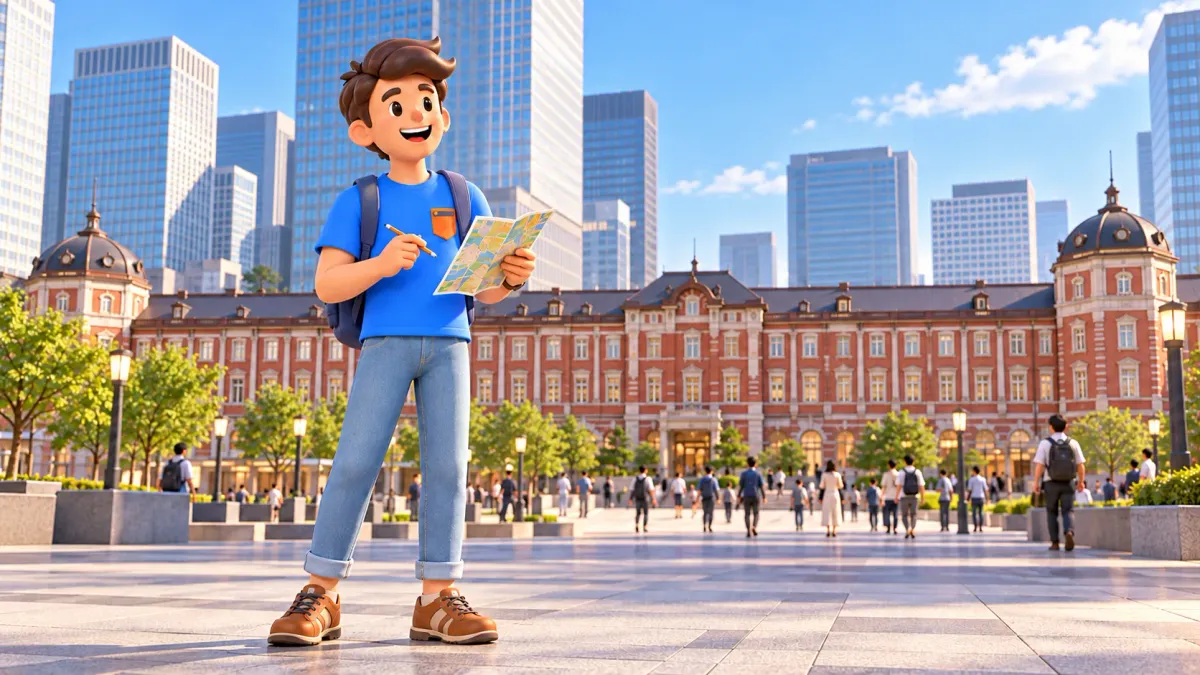
Two hours in Marunouchi can introduce three different ways of building Tokyo: the long brick facade of Tokyo Station, the reconstructed Mitsubishi Ichigokan and the glass volume of Tokyo International Forum. Start on the station's western plaza, walk south through the business district and finish at the Forum. The subject is facades, scale and the space between buildings.
This is an exterior architecture walk with a short pause. Museum exhibitions, a concert and the palace gardens require separate time. Two hours is a planning allowance, not a measured route duration; photographs, rest and the actual station exit affect the pace. If arriving with luggage or after a long journey, deal with those practical needs before beginning.
Give the two hours a clear sequence
The direction is straightforward: Marunouchi station plaza, streets southward, Mitsubishi Ichigokan and Tokyo International Forum. The main walk stays west of the railway. Before leaving, check the approach to the first stop and your onward transport from the finish. This preserves attention for the city instead of an unnecessary return through the station.
To fit this walk much more conveniently into your own trip, try RoadMe: the app develops a personal day-by-day plan around your dates, interests, pace and budget. Prepare an itinerary that brings architecture, rest and the other experiences you want into a practical journey designed for you.
| Part | Suggested allowance | Focus |
|---|---|---|
| Station and plaza | 30 minutes | See the facade from a distance, then approach details |
| Walk south | 20 minutes | Observe business-district streets |
| Mitsubishi Ichigokan | 20 minutes | Compare brick with the modern surroundings |
| Pause | 15 minutes | Sit or get a drink if conditions suit |
| International Forum | 25 minutes | Look at the glass volume from outside |
| Reach onward transport | 10 minutes | Finish by a suitable station |
These blocks are a flexible distribution of two hours, not promises of specific walking speeds. Reduce extra photographs if the opening section takes longer. A museum ticket or event booking changes the outing: give it a proper extension and move later plans rather than keeping the same short label after adding substantial visits.
Reach the correct side of Tokyo Station
The starting side is Marunouchi, facing west. Yaesu lies across the large station complex and gives a different first impression. Follow the appropriate exit signs while still inside. If you are already on the east side, find a suitable public passage calmly, accounting for ticketed boundaries and the station's actual current layout.
On the plaza, first stand far enough back to see the building as a whole. The long horizontal facade reads differently from the space before it than from a doorway. Compare height and length, the positions of the domed pavilions and the taller contemporary buildings nearby. Scale becomes the first clear theme of the walk.
This remains a working station, with passenger flows using the same surroundings. Pause clear of entrances and crossings. A few steps to one side are usually more useful than insisting on the perfect central position. Architecture is easier to enjoy when you do not constantly obstruct people who are simply going somewhere.
If walking with others, agree on a specific meeting place before looking around. By the station is vague for a building with several entrances. Afterward, you can compare distant views and close fragments without moving as a single group at the same pace. A few independent minutes can work well on an architecture walk.
The brick station: a little history changes the view
Tokyo Station opened in 1914. Preservation and restoration of its Marunouchi building were completed in 2012, recovering important features of the original appearance. These dates give the facade a useful frame: a historical station shaped by conservation and restoration, with a life beyond its recognizable red-brick surface.
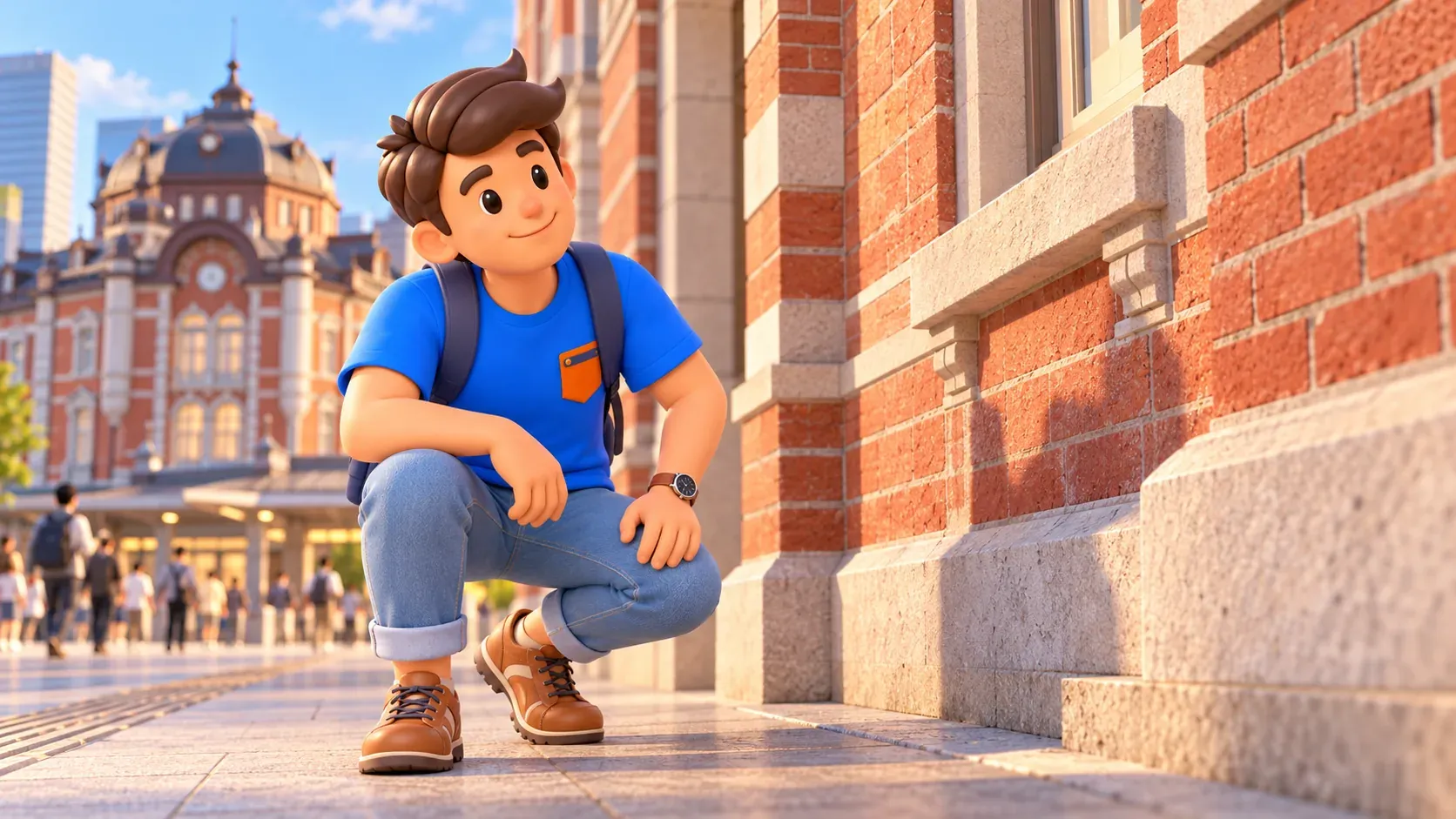
Start with the broad rhythm of windows and pale details, then approach one accessible fragment. Attention changes at close range: overall symmetry gives way to texture and the meeting of different materials. You do not need the name of every decorative element to notice how your experience changes with distance.
Choose one detail to compare later: a window's proportion, the depth of an opening or the boundary between brick and light-colored trim. It becomes a small thread through the outing. This can be more useful than trying to memorize architectural terms that vanish from memory after the next turn.
The interior dome spaces can form a separate brief task only where public access and passenger movement allow. The basic version remains outside. Hotel rooms, the gallery and platforms have their own conditions. The plaza, public pavement and a few attentive stops are sufficient for an introduction to the facade.
Walk south and notice the spaces between buildings
From the plaza, work south toward Mitsubishi Ichigokan along suitable public streets. Keep the same overall side of the railway and use actual crossings. If you want a little of Marunouchi Naka-dori, make it part of that direction rather than a separate long circuit of shops and surrounding blocks.
In a business district, looking upward is only part of the experience. Notice pavement width, entrances, trees and places to pause. Those features make a group of large office buildings usable as a walk. A few ordinary junctions introduce the neighborhood even without an observation deck or a panoramic viewpoint.
Choose one view along a street and another across it. The first reveals repeated facades; the second shows the distance between buildings and the pedestrian's position. It is a simple way to experience architecture through movement. The connection between the stops deserves attention alongside the individual buildings.
Shops and cafes may be appealing, but keep one choice for the planned break. Businesses have individual hours and conditions. The walk stays clear when its main line remains visible among the possible distractions. More extensive street exploring can belong to another free part of your stay.
Mitsubishi Ichigokan: reconstructed history beside offices
Mitsubishi Ichigokan recreates the appearance of an 1894 building designed by Josiah Conder. The original was demolished in 1968; the present museum opened in 2010 in the reconstructed building. Understanding that distinction helps you appreciate a deliberate recovery of historical architecture rather than assuming everything has survived continuously since the nineteenth century.
Look at the relationship between its relatively low brick form and the modern surroundings. After the station's long frontage, the scale becomes more compact. Your earlier detail, perhaps a window or material boundary, provides another comparison. Brick connects the experiences, while the building's shape and setting give each its own character.
The basic walk needs only an exterior view from available public space. Museum admission, the current exhibition and the cafe are separate decisions. To include a show, check its calendar and ticket and expand the allowance. A brief facade stop does not include the collection or unrestricted passage through every room.
Try several nearby public positions instead of searching for one compulsory photograph. Walk a little along the building, pause where it meets its surroundings and look back from a distance. Changing position gives a sense of architecture's role in the neighborhood without requiring a detailed technical tour.
A pause at a human scale
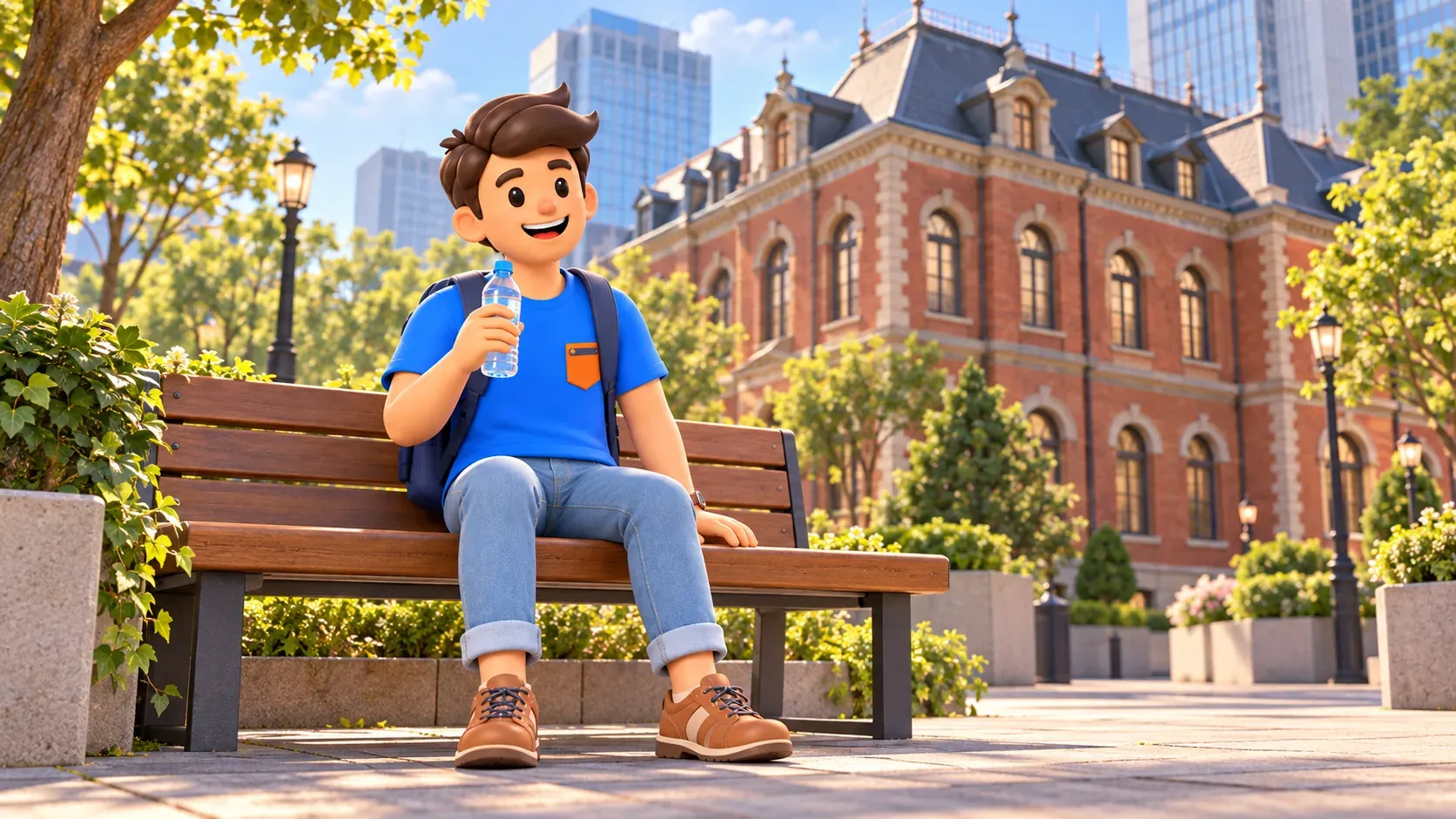
This part of the route suits a short rest in an available place. If a public seat is free, a few minutes without a screen may be enough. For a drink, choose an open business according to the actual time and queue. A long wait for a table would substantially change the remaining two-hour plan.
If you want historical facades, contemporary architecture and enjoyable breaks to fit together, develop a personal journey in RoadMe. The app makes it much more convenient to arrange your trip around your interests and pace, keeping time for the experiences you chose yourself.
Compare the first two buildings while resting: where did the whole form matter most, and where did a detail become more interesting? One answer is enough. The pause separates your observations and prepares the eye for the Forum's glass. It needs neither a written history summary nor specialist architectural training.
If tired, reduce further loops and go directly toward the Forum's exterior. If time is free, extend the rest and acknowledge the longer outing. A plan is more useful when its duration matches the day than when it retains a neat number despite extra visits and lengthy breaks.
International Forum: move from brick to glass
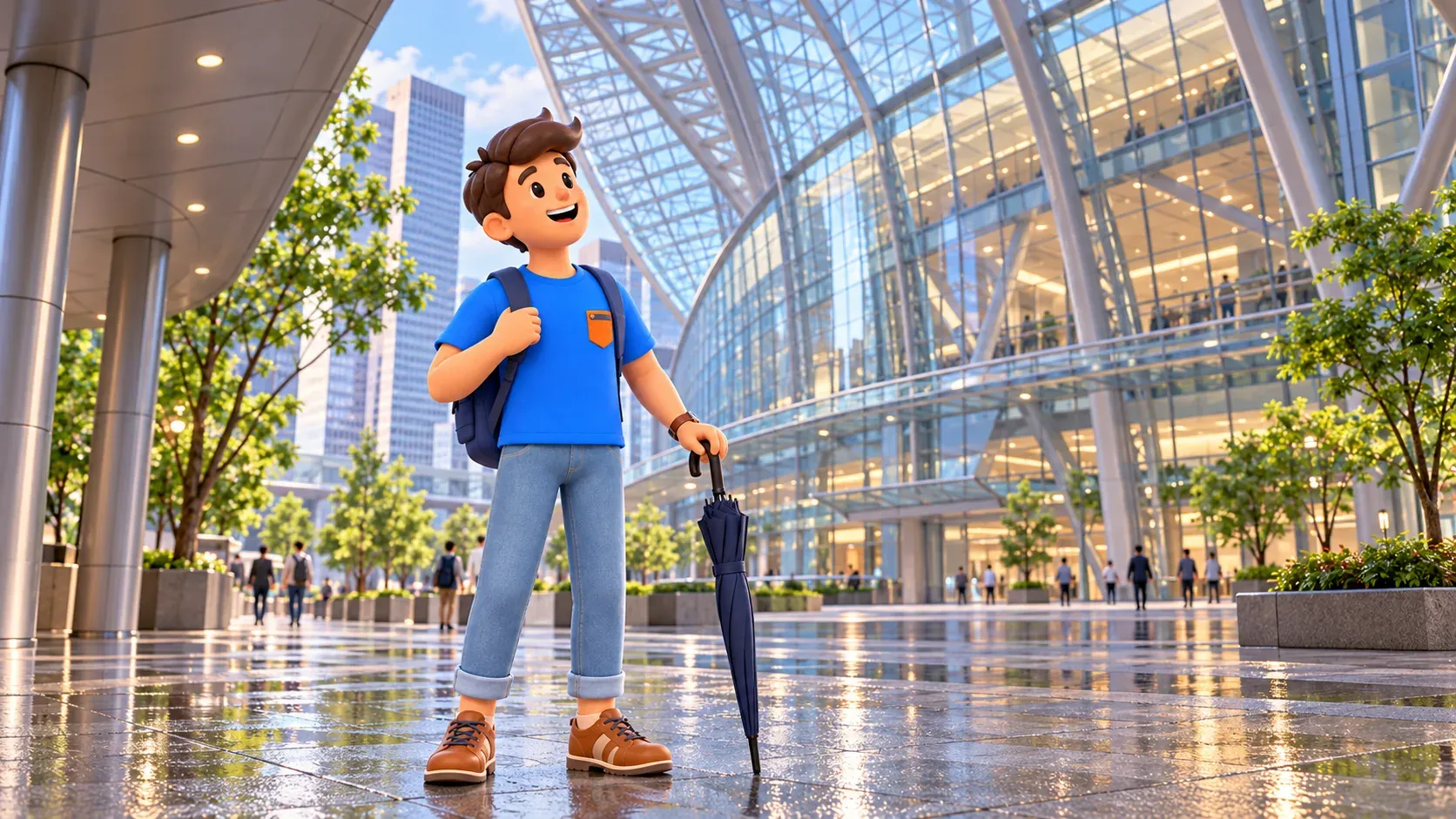
Continue south toward Tokyo International Forum. Rafael Viñoly's complex opened in 1997. Its glass volume changes the way you look: visible structure, reflections and the relationship between light inside and space outside become part of the subject. It provides a clear conclusion to the walk's comparison of brick and glass.
Begin with the form from a distance, then find a suitable place to look upward. As you move along the glass, structural details and reflections change. You do not need one position from which to understand the whole building. Several successive impressions show how a large structure reveals itself to a passerby.
Published Forum opening hours are 7:00 to 23:30, with possible closures for repairs and other changes. Public parts of the Glass Building and plaza differ from rented halls and service areas. Follow local signs; the exterior route does not require event admission. Daylight is convenient for a first encounter.
If public access is temporarily restricted, stay on permitted exterior space and shorten the stop. Check current notices before visiting late. A glass facade does not make every door accessible, and the schedule for one event is not the operating calendar for the whole complex. Keeping that distinction makes the walk easier to use.
Light and photographs without chasing every angle
Daylight helps compare materials and understand the streets. Toward dusk, lit windows and reflections become more prominent, while the effect depends on weather and actual light. Choose the time around your wider trip. A rewarding introduction does not require waiting for a special lighting moment at every facade.
Take photographs from public places, leaving entrances and paths clear. Individual sites have their own rules, and setting up equipment may require separate permission. A short outing needs only a few ordinary photographs. Look at the building first, then choose an image that preserves what you actually noticed.
Finish by a station that suits the next journey
After the Forum, choose onward travel around Yurakucho or a return toward Tokyo Station. Check the specific entrance and line. The table's final transport allowance is a planning buffer and may need adjustment for your route. Finishing the walk is not the same moment as reaching a train platform.
In rain, reduce outdoor stops and use open permitted passages; this version does not promise a fully covered route. Keep the palace gardens for another walk. Three architectural encounters already give Marunouchi a clear shape when there is time between them to move, compare and notice the city.


