
Parc Pastré: a relaxed half-day away from central Marseille
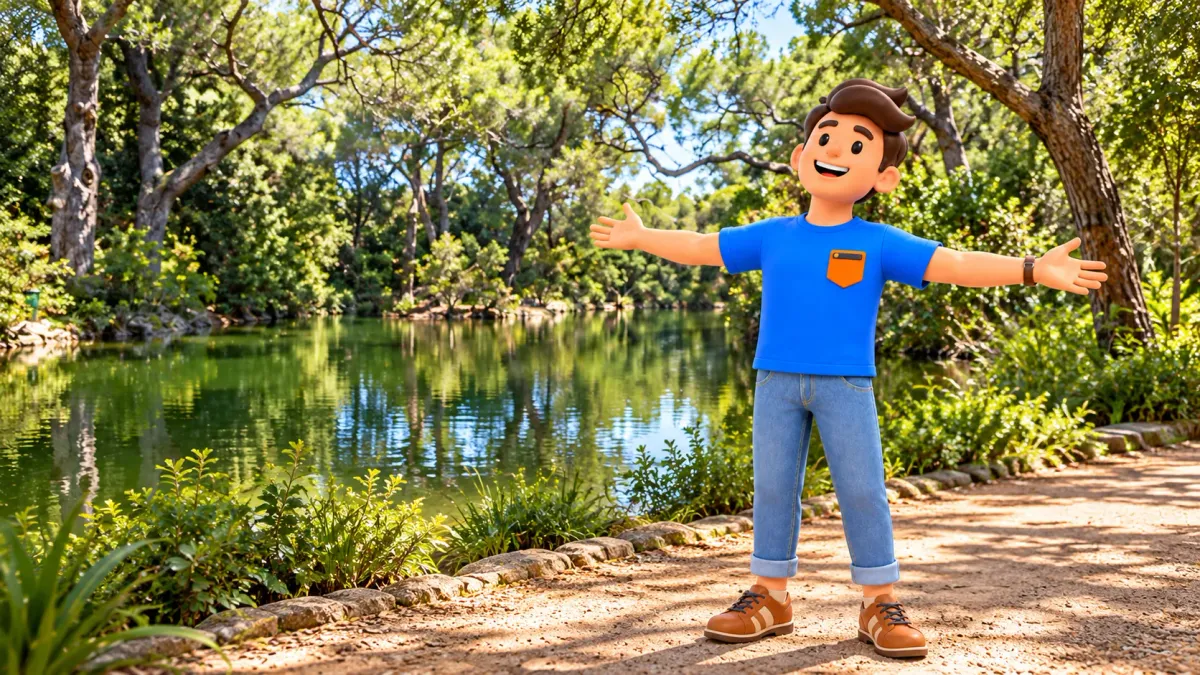
Pastré is a good choice when you want Marseille to feel greener and less scheduled. In the developed lower park, a walk by water, a view of the château and an unhurried rest can fill a pleasant half-day. You can enjoy the setting without turning towards the rugged paths of Marseilleveyre or making a mountain hike the measure of the visit.
Allow roughly three hours in the park, with a flexible range of two and a half to three and a half. Start from a suitable open entrance at 155 avenue de Montredon and return there along the lower paths you actually choose. These are editorial estimates, excluding travel from and back to the centre. The château is an exterior stop in this plan.
Choose the lower park as the whole outing
The Campagne Pastré reaches towards the Marseilleveyre hills, but the scale of the estate is not a target for your walk. This plan stays with the developed public park: water, planted spaces, paths and the château seen from outside. Its appeal lies in spending time with a few different impressions. You can finish feeling that you have had a complete visit, even while leaving a much larger natural area unexplored.
A useful starting allocation is about twenty minutes to settle into the lower park, forty to fifty for the water garden and a chosen part of the main avenue, twenty to thirty for the château exterior, thirty to forty-five for a gentler shaded walk and thirty for a proper rest. Add margin for getting back to the entrance. These are visiting suggestions, not a measured circuit.
The distinction from a hike matters. The national park describes the separate Pastré-to-Callelongue route as difficult, with substantial ascent and a different finish. That is another outing with its own preparation. Here, decide in advance that the lower park is enough.
Let RoadMe develop a personal Marseille itinerary around your interests, available time and preferred pace. The app makes it much more convenient to give a greener half-day its place in the whole trip: start with what you enjoy and let it shape your plan.
Arrive at Montredon with the return already in mind
Use the public entrance suited to your actual approach at 155 avenue de Montredon. Take a moment to locate your return point before walking further inside. A park with several possible exits can make a relaxed visit less relaxed if you finish far from your intended connection. Returning along a familiar lower path is a perfectly good choice; the plan does not require a loop or a new route for every part.
Pastré is in southern Marseille, so allow travel time separately rather than treating it as a quick addition to an Old Port visit. If you use public transport, check the service, direction and stop for your date. If you walk from another part of the south coast, count that approach as a real walk of its own. The half-day estimate begins in the park, with enough energy left to enjoy the place.
Before setting off, choose how much walking feels comfortable today. Footwear for park paths, water and a little room in the schedule are more useful than a long list of targets. Read the current signs and follow public paths that suit your group. You can decide the exact length after seeing the conditions, while keeping a clear idea of where the walk will finish.
Let the water garden slow your attention
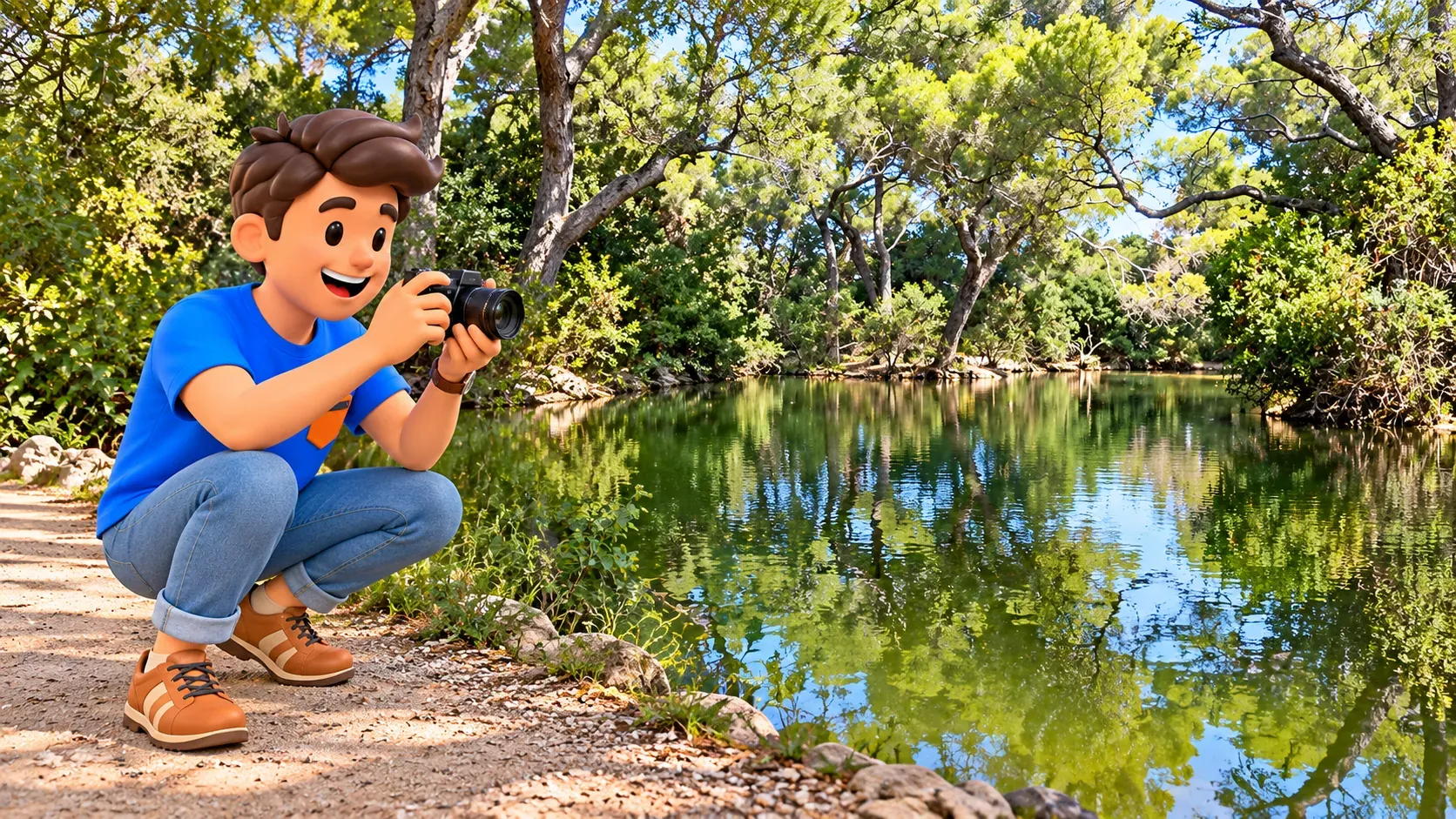
The lower section includes water features, planted areas and spaces for a gentler walk. Use them as an invitation to look, rather than a demand to locate every basin. Choose an open path with a suitable view of the water and stop where you can leave circulation clear. Reflections can make this first part interesting even when the weather is not producing bright postcard colours.
The water garden recalls Marseille’s relationship with water supply and the canal that helped irrigate the city’s large properties. That small piece of context gives the landscape a practical background. Water in this setting is more than a decorative surface; it also suggests how estates could become greener places. You do not need to follow a complete technical history to connect the planted landscape with the story of bringing water into Marseille.
Look for one contrast: dark reflections beside a pale edge, moving leaves against still water or open grass near denser trees. Follow the actual maintained paths rather than stepping onto banks for a closer view. Water effects and their appearance can change with maintenance and season. The walk does not depend on every fountain operating or a particular pond looking exactly as it did in an earlier photograph.
Give the château a short exterior visit
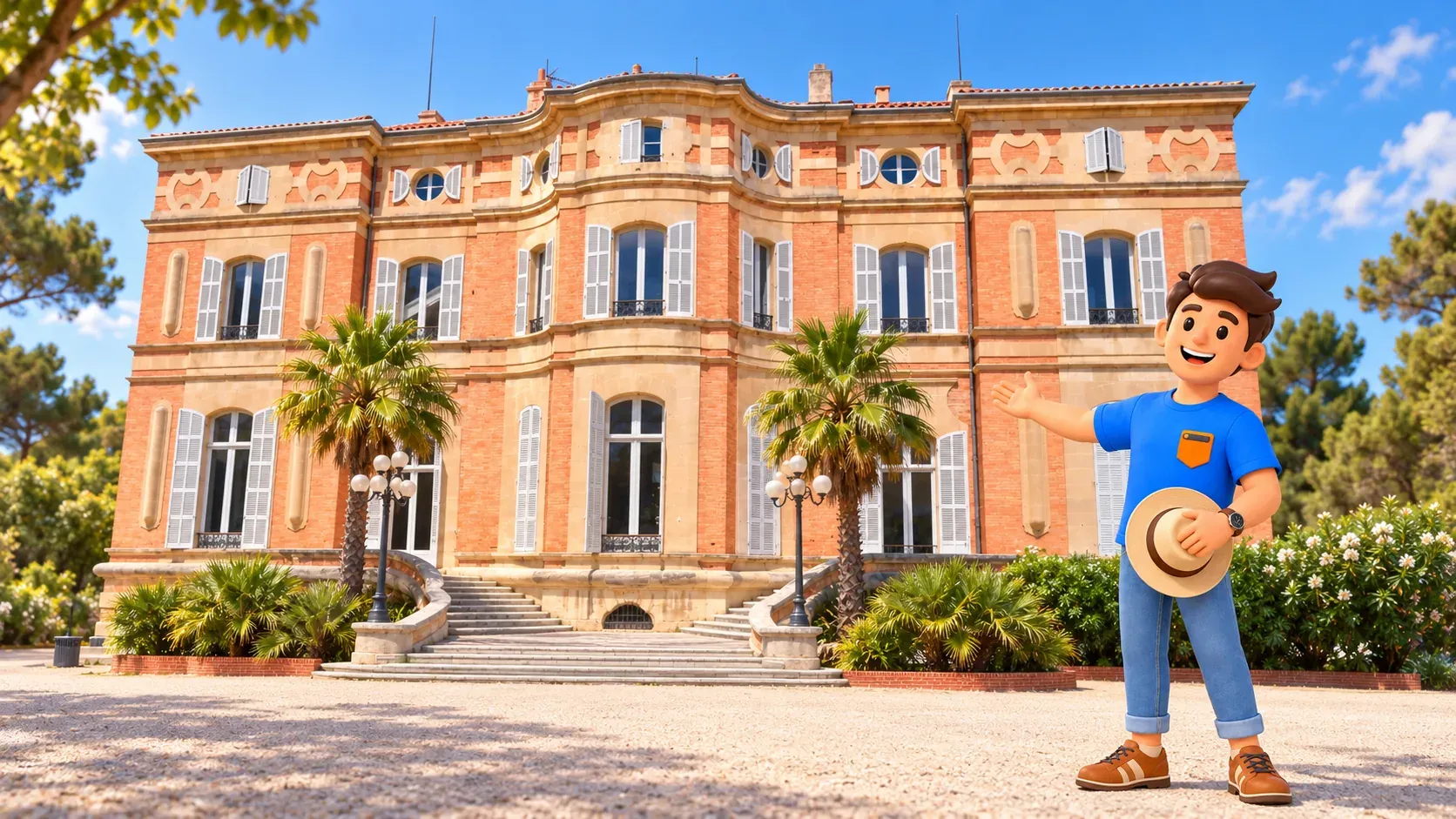
Continue towards a permitted public view of Château Pastré, adjusting the approach to the open lower paths. The nineteenth-century house belongs to the estate’s story and gives the greenery a different focus. Notice the stone and pink brick, the projecting rounded central part and the relationship between the main facade and its side sections. A modest exterior stop can be rewarding without needing to approach a closed entrance.
The Parisian architect Jean-Charles Danjoy is associated with the house. Its form speaks of a substantial residence in a landscaped setting, rather than a defensive castle. Compare the materials and curved central emphasis with the trees around it. The contrast helps explain why the building matters to the park walk: this was a place shaped around a family estate, and the architecture remains part of how the landscape is read.
The official visitor information lists the château as closed to the public. Its former faience museum collection moved to Borély, where the decorative arts museum opened in 2013. Do not plan an indoor collection visit here. Treat the current exterior, seen from allowed public space, as the intended experience. If a particular cultural event is announced separately in the future, it would have its own conditions rather than automatically belonging to this gentle park route.
Stay with a comfortable walk among the trees
After the house, choose a manageable stretch of developed park path and let the pace soften. The aim is not to follow every sign pointing towards the hills. The transition to wilder terrain changes both the effort and the nature of an outing. Keep this visit within the public lower section you intended to explore, with a return that remains clear and proportionate to your energy.
Give the trees some attention of their own. Look at the difference between a broad canopy and a narrower outline, the way shade falls across a path or the changing density of planting. You do not need to name every species to enjoy the contrast. A short stretch looked at slowly can offer more variety than a longer walk completed with your attention fixed only on the next destination.
If you want a small personal activity, choose one that fits the setting: a few sketches, a photograph of texture or a moment of listening. Keep it light enough to stop whenever you wish. Stay on the paths and observe wildlife at a distance without feeding it. The point is to make the park feel like a place you spent time in, rather than a green corridor you passed through on the way somewhere else.
Make the pause generous enough to matter
Set aside around half an hour for a seated rest. Choose an available public seat or permitted picnic space suited to the actual day. Bring what you need if you are relying on a simple snack, rather than making the visit depend on finding a particular refreshment point open. A full restaurant meal, if you prefer one outside the park, belongs in another part of the schedule.
A picnic can be modest: a little food, water and enough time to enjoy being still. Use suitable public spaces, take your litter away and leave paths and working areas clear. You do not need to spread out widely to feel that the walk has become a break.
Use the rest to decide how much more walking you want. You may feel ready to return, or you may prefer another small section of the lower park. The decision is easier while everyone is comfortable. With a group, let the person who needs the gentler pace help set the remaining distance. A half-day is successful when the return still feels manageable, not only when the longest possible outward walk has been completed.

Adapt the day to people and conditions
With children, a water reflection, a house detail or a difference between tree shapes can become a simple shared subject. Available play areas may also suit your day, but check current access and the children’s needs instead of making them a compulsory timed stop. Other activities in the estate, such as riding or a ropes course, have their own arrangements. They are not included in this easy walk or its timing.
Check actual paths and facilities if mobility, a buggy or standing time affects the plan. A general accessibility description for a large park does not establish the surface and level of every path you might choose. Start with a suitable lower route and shorten as needed. Keeping the visit modest makes it easier to adapt while preserving the main ingredients of water, architecture, trees and rest.
Choose daylight and weather that make a slow outdoor visit pleasant. Bring water in warmer conditions and remember that shade changes through the day. Weather alerts or other local restrictions can affect access; check current official information and follow signs on arrival. The estate’s usual broad opening should not be read as a guarantee that every part is available in every condition. The upper natural area and hill paths require their own planning if you choose them on another occasion.
RoadMe can work out a complete personal trip plan that balances nature, city discoveries and rest around your interests. Use the app to organise your days more efficiently and keep your attention for enjoying Marseille.
Return to Montredon and leave the rest of the day open
Turn back in time to reach your chosen entrance by the lower public paths actually used. Include the inward return in your park time, then allow a separate journey towards the centre or your next destination. Checking your connection while resting is usually more comfortable than reaching the roadside with no idea what follows. This route does not promise a particular bus frequency or an immediate onward departure.
If you are choosing between greener outings, our Borély half-day offers another version: a country house exterior with either decorative arts or a registered botanical garden visit. Pastré is different in emphasis. Here, the developed park itself is the main experience, with the château providing an architectural pause. Choose according to whether you want a more structured collection visit or a day with fewer indoor commitments.
Leave with one small thing remembered well: a curve in the facade, a reflection under the trees or the feel of a proper rest away from a crowded sightseeing day. That is enough to give the outing its own place in the trip. There is no requirement to continue into the hills or immediately add the coast. Keep the next part of the day for what you actually want after spending time in the park.


