
Frioul Islands in a day: walking between Ratonneau and Pomègues
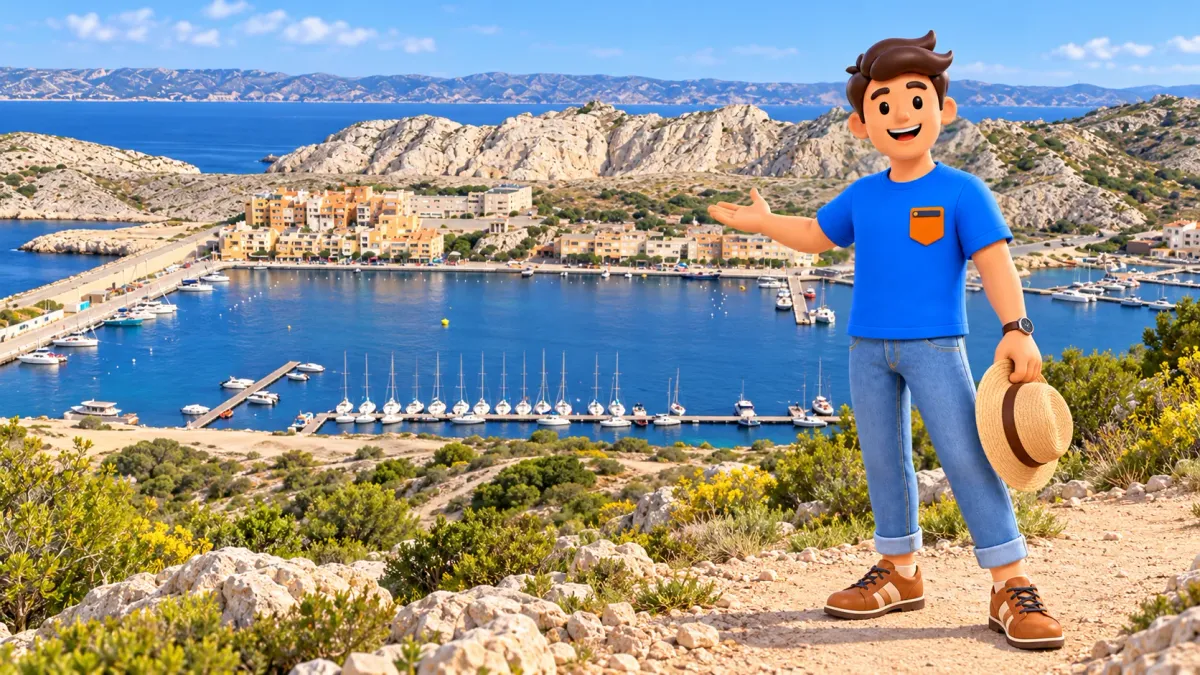
The Frioul Islands offer a sea day with pale limestone, a small harbour and paths that make Marseille feel much farther away than the crossing suggests. The most satisfying first visit gives Ratonneau the main walk, returns to the harbour for lunch and crosses the Berry causeway for a shorter introduction to Pomègues. Choose the scale that leaves time to enjoy the landscape.
Allow roughly five to six hours ashore for that version, plus both crossings, boarding and travel to the departure point. The time allocations below are editorial estimates. The route depends on actual boat operations, weather, permitted paths and your group’s pace. Hospital interiors and a long walk to the southern battery are not compulsory parts of the day.
Choose an operating date and plan the return first
Check the operator’s traffic notice before treating a timetable as a promise. During our check, it announced a specific restriction for 24 October 2026: reduced sailings from MuCem–Darse Ouest were limited to residents, eligible boaters and island workers, with the usual Vieux-Port terminal closed. An ordinary tourist outing planned for that date should therefore use another suitable operating date. This dated exception shows why checking the actual service matters, even on a line that normally connects the islands throughout the year.
For a normal operating day, choose the outward crossing and a sensible intended return. Keep a later workable option where the timetable allows, rather than shaping the entire walk around the last boat. Check the ticket that matches Frioul, its validity and the actual boarding place. A combined If-and-Frioul product describes a different day: another landing and a castle visit need their own time. The plan here stays with Ratonneau and Pomègues.
A practical shore budget gives the main Ratonneau outing about two and a half to three hours with stops, lunch forty-five to sixty minutes and the causeway with a short Pomègues extension sixty to ninety. Add local orientation and a generous final boarding margin. These blocks bend to the real day; a longer swim or a distant cape walk replaces part of the programme. It should not quietly consume the time already reserved for getting back.
Let RoadMe develop a personal Marseille itinerary around your interests, available days and walking pace. The app makes it much more convenient to give an island day the right place within your complete trip.
Meet the harbour and its quarantine story
After arriving at Port-Frioul on Ratonneau, identify the actual return boarding point and read the information there. Then take a short look around the harbour. Low village buildings, moored boats and the pale ridges form a clear introduction to the islands. This is a lived-in part of Marseille as well as a departure point for walks. Leave space for people moving between boats, homes and businesses while choosing somewhere suitable for your first pause.
The harbour’s history adds a useful layer to the view. The Berry causeway was built in the 1820s to connect Ratonneau and Pomègues and help create a quarantine port. What looks like a convenient link for today’s walkers also belongs to a system designed to separate potentially infectious shipping from the city. You need only that brief context to see the relationship between the harbour, its buildings and the more isolated hospital farther along Ratonneau.
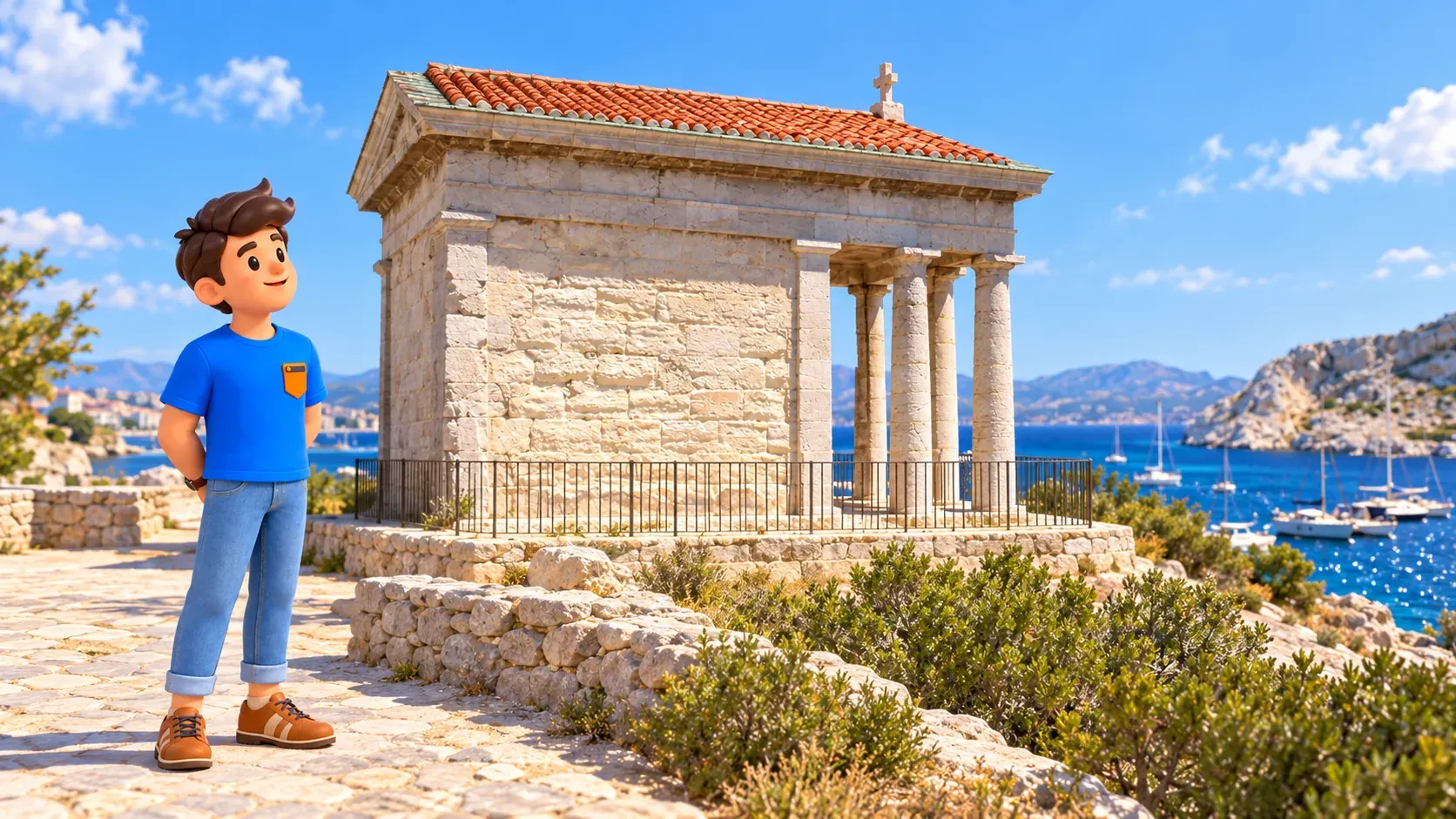
The small Port-Frioul chapel, with its temple-like form, is another part of that story. Its opening towards the harbour allowed quarantined crews to follow religious services without leaving their vessels. Enjoy the exterior from the permitted public approach; this plan does not depend on entering. Keep it distinct from the chapel inside the Caroline hospital complex. Two similar architectural ideas belong to different settings, and neither needs an invented interior visit to make the island history understandable.
Give Ratonneau the main walk and see Caroline from outside
Take the public coastal route towards Saint-Estève and the Caroline hospital area, following current marked paths and signs. This is a change from a harbour promenade: there are exposed stretches and changes of level. Walk at a pace that lets the group notice the limestone and sea rather than constantly chasing the next building. Stop in permitted places without leaving the route for a closer plant, a cliff-edge photograph or an apparent shortcut.
Caroline hospital opened in 1828 as part of Marseille’s sanitary defences. Its separate pavilions and isolated position reflect the effort to organise quarantine and care. That short explanation gives the exterior meaning without turning the day into a complete medical history. The hospital is not a regular open museum. The national park describes interior access only on rare special occasions; a current, specifically announced opening would need separate confirmation and time.
For an ordinary day, make the building an exterior subject from the permitted approach. Look at the enclosure, the arrangement of the visible structures and the way the site occupies its rise. Respect barriers and restoration areas. Then continue according to the route you actually chose. If the group prefers a simpler coast-and-harbour outing, retracing the public path can be enough. Reaching an interesting exterior does not oblige everyone to complete every higher part of the island.
Add the fort only when the walking budget suits
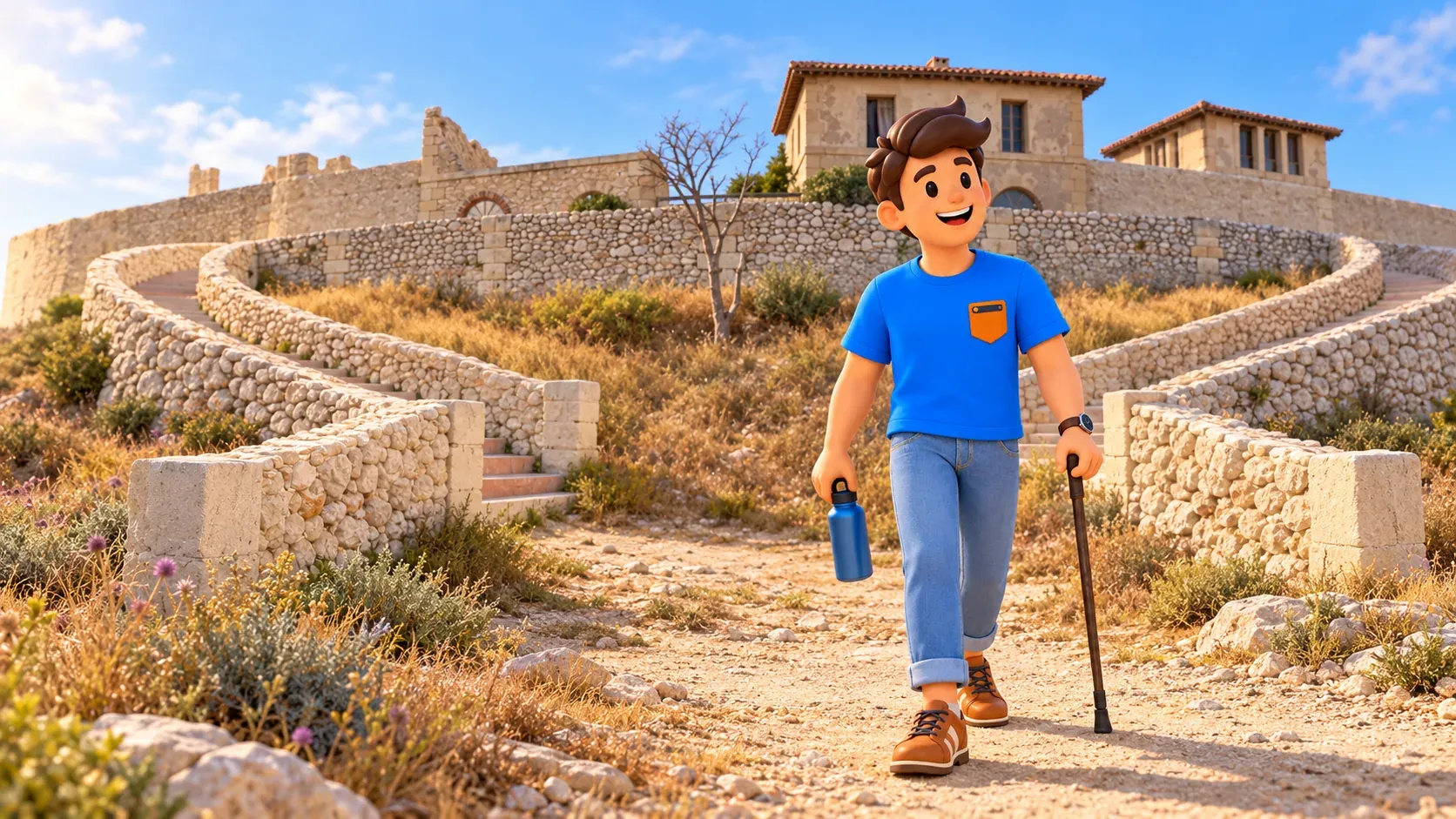
The national park publishes a Ratonneau loop of 3.8 kilometres, with 110 metres of accumulated ascent and an indicative walking time of one hour fifteen. That is a route description, not the duration of a complete day with photographs, historical pauses and lunch. Our allowance of two and a half to three hours gives the main outing room to breathe. Assess the actual terrain and conditions rather than treating an easy classification as a promise of a flat pavement.
The loop can include the fort of Ratonneau, which the national park describes as freely accessible, subject to current local restrictions. Its different military layers help explain why the islands mattered to the defence of Marseille. The cross-shaped structures seen at the top are the unfinished framework of a bunker, not a cemetery. That one detail makes an unusual form legible without requiring a tour through every ruin or a long catalogue of military alterations.
The higher section includes climbing and steps. Choose it only when it fits the group and the return calculation. Free access is not permission to enter any underground opening or cross a barrier. Keep to the authorised route and turn back when conditions call for it. A shorter Ratonneau walk still leaves time for the harbour and causeway. The most useful decision is which part deserves your attention, not how many military sites can be fitted into the same afternoon.
Return for lunch and respect the island’s open landscape
Coming back to the harbour for lunch gives the day a clear middle. Choose an open restaurant or bring a picnic suited to the permitted resting place. Do not rely on one particular business being open throughout the year. Forty-five to sixty minutes can be enough for a simple meal and a seated pause. If you want a longer restaurant lunch, shorten the second walk. Let the break be part of the pleasure rather than time borrowed from boarding.
The pale, open landscape is part of Frioul’s appeal. It also means planning for sun and wind: bring enough water for the outing, suitable footwear and the protection that the actual conditions require. A café in the village does not provide shade or supplies along every path. If anyone is finding the exposed walking tiring, a harbour-based second part can be the right choice. There is no need to compensate with another climb.
The islands are a fragile natural setting. Stay on marked paths, keep flowers in place, carry waste back appropriately and give nesting birds space. Observe from a distance instead of approaching for a close photograph. These simple choices allow the landscape to remain the subject of the walk. Swimming is optional and depends on the actual sea and local conditions; a beach stop should replace another time block, not be added as though returning to the boat required no time.
RoadMe can work out the whole personal trip, giving sea views, history and rest the balance you want. Use the app to organise your days more efficiently and keep your attention for enjoying Marseille.
Cross Berry for a short Pomègues introduction
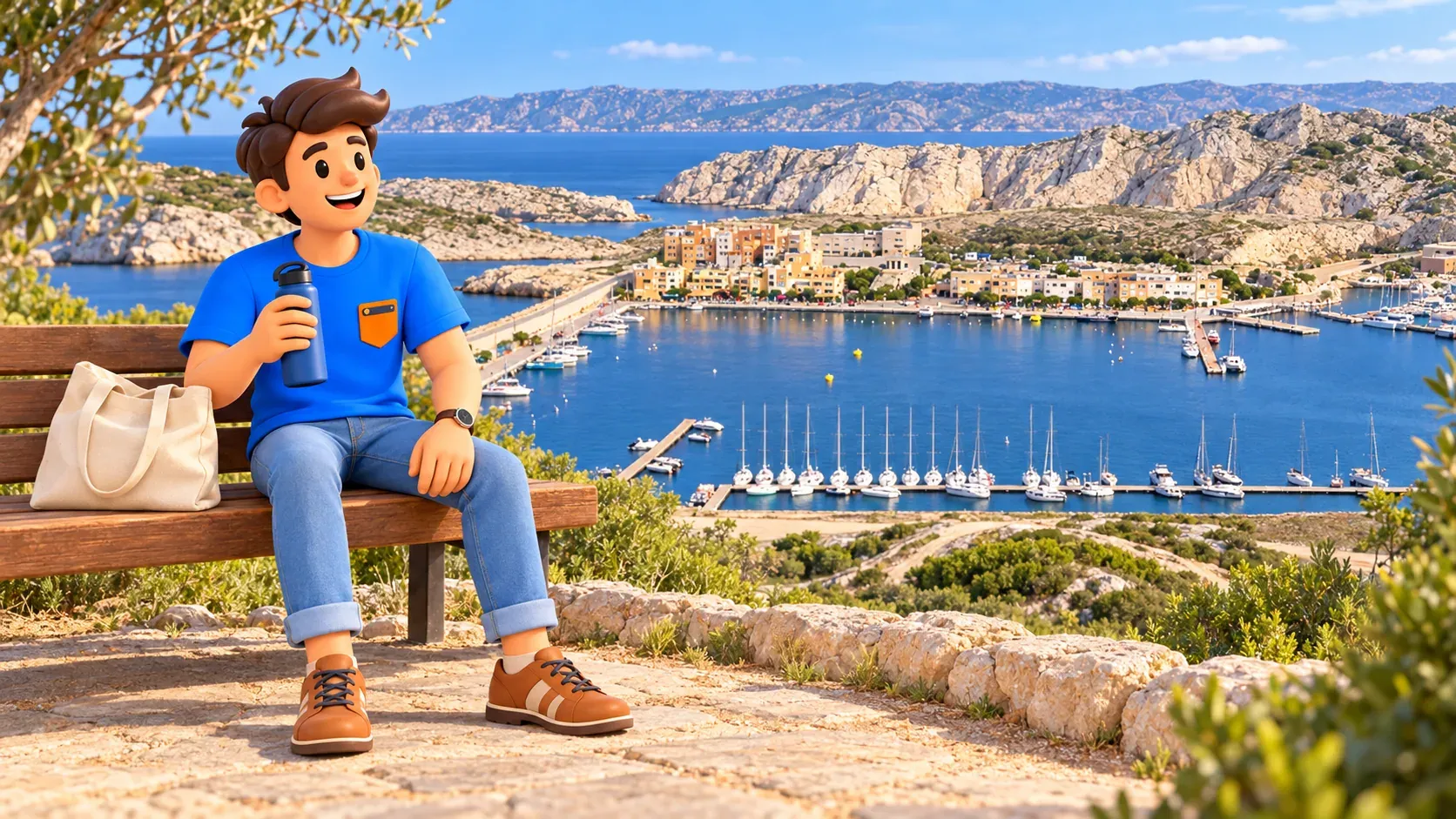
After the pause, cross the Berry causeway on the actual public route and notice the shift between sheltered harbour and more open island landscape. The link makes it possible to include both Ratonneau and Pomègues without another boat. You can enjoy that transition as a complete experience in itself. Stop only where circulation and conditions allow, then choose how much farther along the permitted Pomègues path you want to go before turning back.
For this first-day version, keep the causeway and onward section to around sixty to ninety minutes including the return. Set the turnaround from the boat calculation and the slowest comfortable pace in the group. A short out-and-back can show the difference in rock, vegetation and exposure without demanding the far southern end. The destination is not an obligation. The island will still feel distinct even if you give more of the time to looking than to covering distance.
The cap Cavau battery is a different, longer walking focus near southern Pomègues. Its interior is not open to visits; the national park describes a panoramic approach path and advises avoiding the site during the spring nesting period. If that outing is the priority, reduce the long Ratonneau programme and plan the actual outward and return route separately. Do not combine Caroline, the fort, a southern battery and beach time as equal compulsory stops. Each choice uses the same finite island day.
Be back at the harbour before boarding becomes urgent
Start the return leg while there is still comfortable margin. Aim to reach the departure area roughly thirty to forty-five minutes before your intended sailing, adjusting for actual instructions and crowds. The operator requires passengers to present for boarding at least fifteen minutes before departure; that is a latest presentation rule, not an ideal time to begin leaving a distant path. Keep your ticket available and follow the crew’s directions for the service actually operating.
A round-trip ticket should not be treated as a reserved numbered seat on any desired return. Check the conditions for the product you buy and allow for the real boarding process. Weather or operating changes can alter the day, so avoid fixing a tightly timed activity immediately after reaching Marseille. A little room at the end protects the enjoyment of the crossing as well as the walk. Use the harbour pause to look back at the islands, rather than spending it calculating how to recover lost minutes.
Our Corniche walk offers a mainland coastal alternative when an island day does not suit the service or your interests. When Frioul does fit, keep its plan simple: a chosen Ratonneau walk, a proper break and a measured introduction to Pomègues. The small chapel, quarantine history and changing relationship with the harbour give the day substance. Give those experiences enough attention, and let the return boat determine the outer frame rather than dictate a rushed finish.


