Marseille on a small budget: a day of walks without a museum marathon
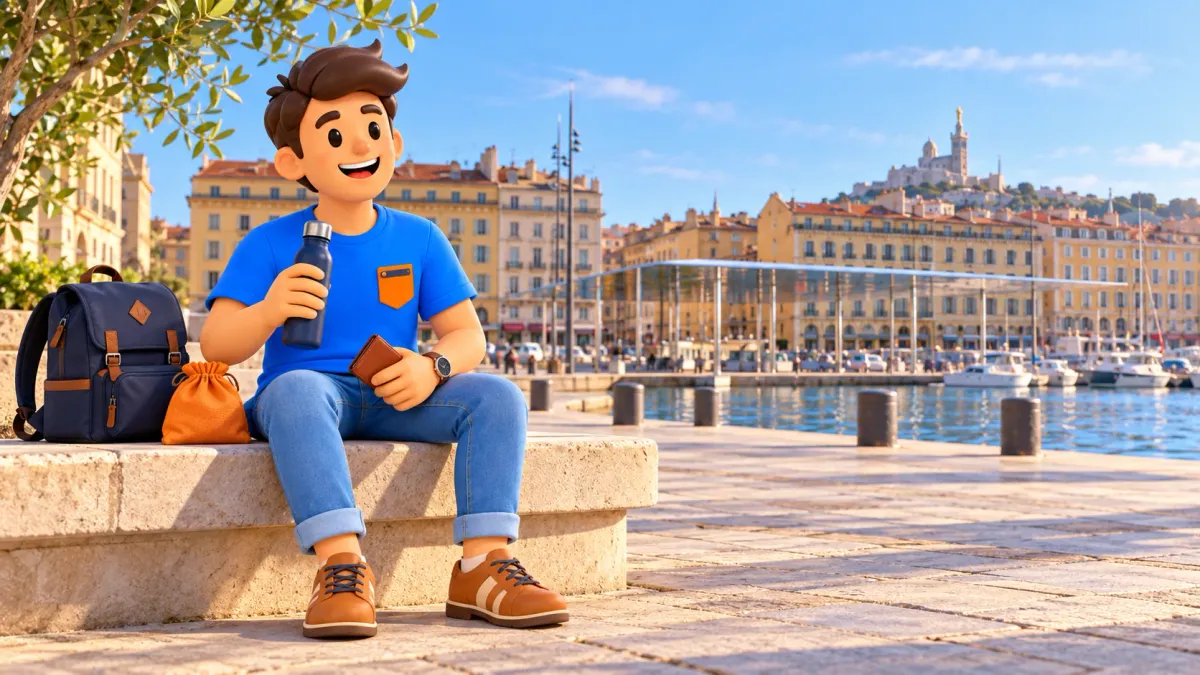
A good budget day in Marseille can begin at the Old Port, climb into Le Panier and finish, if energy and conditions allow, in the Pharo garden. The main experiences are public outdoor spaces and architectural exteriors. Choose them because the harbour, streets and changing views interest you. You do not need to replace every museum ticket with a longer list of free stops.
Allow roughly five to six hours from the Old Port area for the fuller version, including food, pauses and the walk around to the southern side. A shorter three-to-four-hour version can end after Le Panier and lunch. These are editorial allowances, not measured walking times. Add the actual journey from and back to your accommodation. Food, transport and the rest of your trip remain real expenses.
Start with a modest plan and leave room in the budget
Decide what your available spending needs to cover before choosing extras. A day without attraction tickets still needs food and drink, and it may need public transport. Accommodation and getting to Marseille belong to the wider trip budget. Keep a small margin for the return journey or a comfortable pause instead of assigning the entire allowance to optional purchases. The purpose is to enjoy a coherent piece of the city, with enough money left to make reasonable decisions when the day changes. A view can be valuable without asking for another ticket.
The outdoor core combines the Ombrière, the town hall seen from the quay, and the squares of Lenche and Moulins. The Pharo garden is an optional second part on the other side of the basin. This arrangement gives the day a harbour beginning, a neighbourhood middle and, when suitable, a green finish. Choose the shorter version early if steep streets, heat or the rest of your schedule make a long walk unhelpful.
Use interest as the filter. Architecture might mean noticing how a contemporary canopy and an older civic facade address the same port. For everyday city life, the squares and connecting streets can be enough. For open views, keep energy for the garden. You need not make all three subjects equally important. Agree on one proper food break and a finish that everyone understands. Spending less becomes easier when the programme has a clear shape and does not keep expanding whenever another interesting doorway appears.
Let RoadMe work out your complete personal Marseille itinerary around your interests, available days and pace. In the app, it is much more convenient to balance city walks, selected visits and rest across the whole trip than to plan each outing separately.
At the Old Port, make the architecture the visit
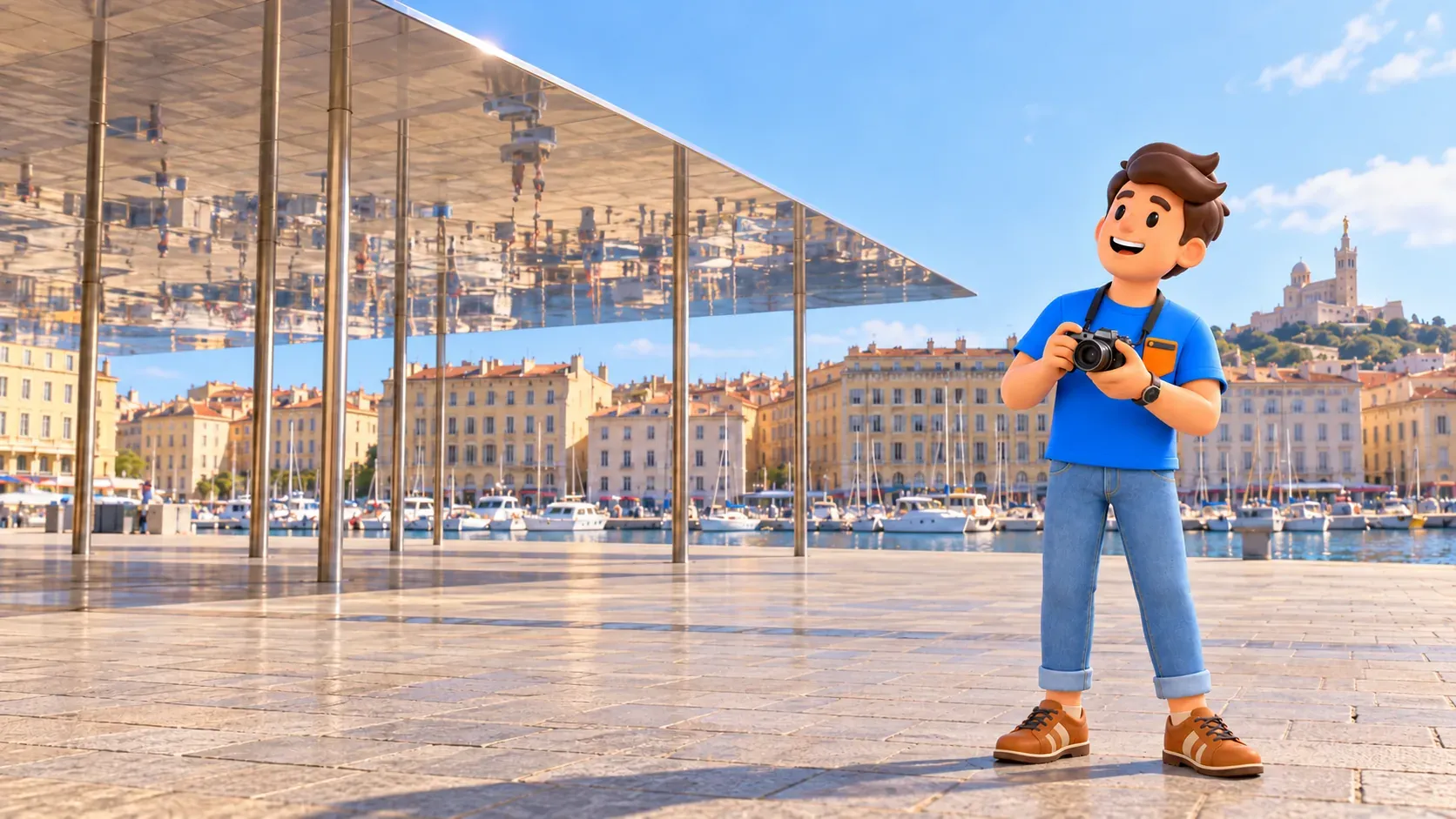
Begin near the Ombrière at the eastern head of the harbour. Its thin mirrored canopy, associated with Foster + Partners and the waterfront renewal completed in 2013, makes a small architectural encounter out of looking up. Notice how the underside reflects the ground and people, then look back at the actual quay. This is a place to pause without needing an exhibition ticket. Keep out of the way of people moving through the space; a public square remains part of a working city rather than a private photography set.
Continue along the northern side towards the Hôtel de Ville. Let the seventeenth-century municipal building supply a little historical context: public authority faced the harbour because the port mattered to the city’s life. Look at the exterior from a permitted public place and compare the older stone facade with the open space you have just crossed. This plan does not turn town hall opening hours or a special visit into a requirement. Administrative interiors and any organised access follow their own conditions. The exterior is the chosen experience, rather than a lesser substitute for entry.
Give this first part around forty-five to sixty minutes, including looking and ordinary movement, as an editorial starting point. You can stay longer with one view and shorten something later. Keep a water bottle accessible and choose shoes that suit city paving. Do not board a boat simply because it appears to shorten the day on a sketch. Its current service, fare and boarding arrangement need a separate decision. The walking version uses the public streets and quay around the basin, with crossings and actual conditions taken into account.
Le Panier: two squares are enough to change the atmosphere
Leave the waterfront for Place de Lenche, then make a modest uphill exploration towards the Accoules and Place des Moulins. Lenche gives the outing the scale of a neighbourhood square after the larger harbour scene. Its name recalls the merchant Lenche family, one small thread in the city’s trading history. You do not need to turn every facade into a lesson. Notice how routes become narrower and the height changes. The contrast itself helps explain why a short distance on a flat map can ask for more time and effort on foot.
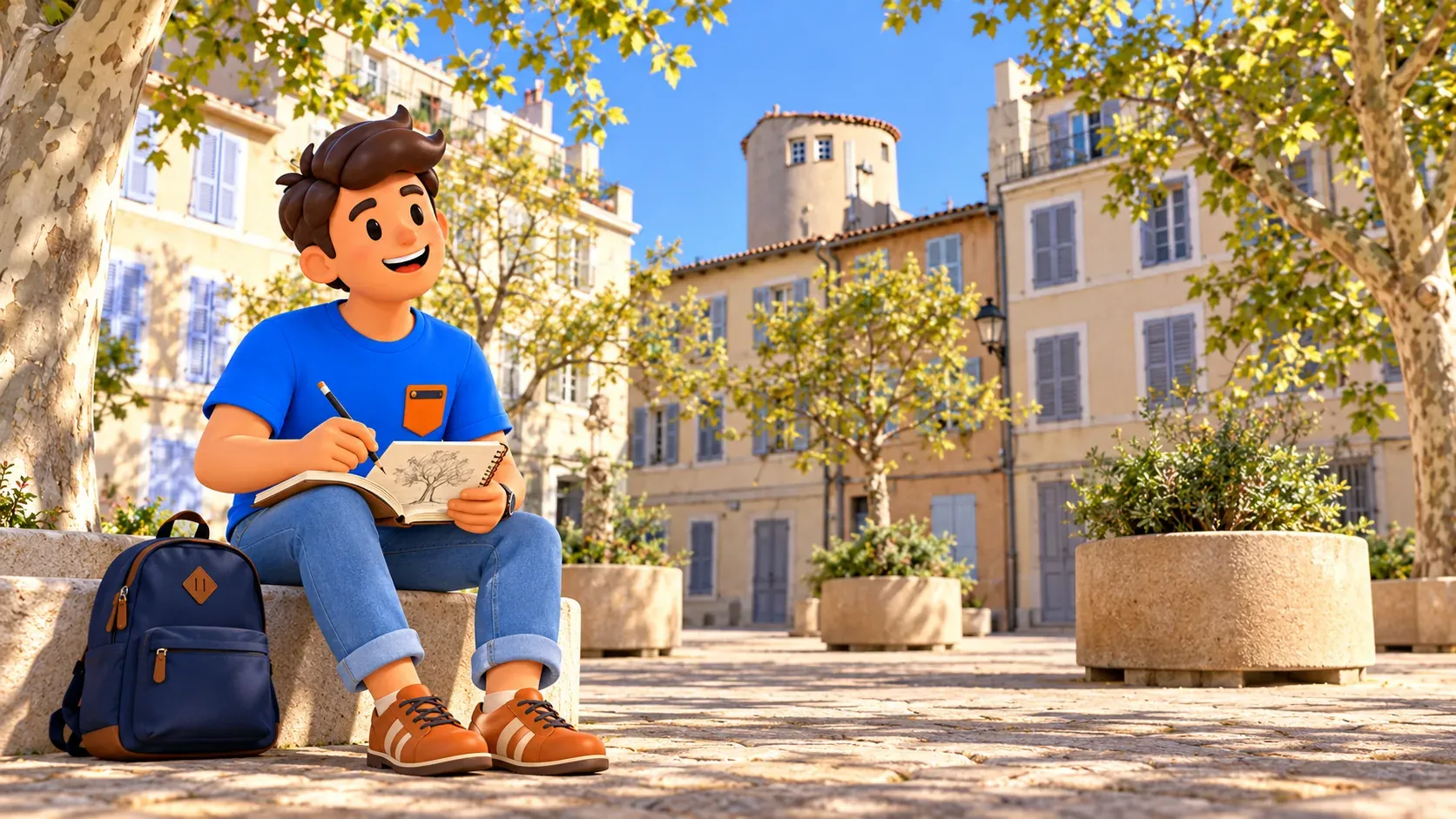
Place des Moulins takes its name from the windmills that once occupied the hill. Today the pleasure is in the square and surrounding buildings, not in an operating mill attraction. The old underground cistern is closed to the public; do not build a free visit below the square into the day. Stay with the visible neighbourhood and let one small detail hold your attention: shutters, a tree silhouette or the way buildings frame a patch of sky. Respect homes and private entrances, and keep voices and photography considerate in residential streets.
Allow roughly seventy-five to ninety minutes for this chosen piece of Le Panier, adapting to the actual approach and everyone’s pace. Steps and slopes matter more than the number of named stops. Our two-hour Le Panier walk offers a larger neighbourhood outing for a day when that is your main interest. Here, two squares can give the budget plan enough variety before lunch. If the climb is unsuitable, remain with a comfortable waterfront version instead of treating the hill as compulsory. A low spending target should not require an uncomfortable route.
Give lunch and the actual journey their own allowance
Choose how to eat before hunger starts deciding the route. Bringing a modest meal may suit the day; choosing a simple place with a clearly checked menu may suit it better. Compare what is actually included before ordering, and let the group agree on the scale of the stop. A terrace is an optional purchase, not the price of seeing the port. Equally, skipping a needed meal to preserve an ambitious attraction list is unlikely to improve the afternoon. Plan roughly forty-five to sixty minutes for eating and a proper pause, with more time if you prefer.
Keep water and food storage appropriate to the weather and the walk. Use a permitted place to sit, leave it clean and check the actual arrangements rather than assuming every square has a functioning drinking fountain or an available public table. Shops, refreshments and services have their own conditions. A carried picnic still costs something and may require preparation. These are useful spending decisions to make once, before the outing, rather than repeated small negotiations at every pause. They also keep the day welcoming for companions with different food needs or energy levels.
Protect a transport allowance when distance or mobility makes it worthwhile. The cheapest-looking plan on paper may feel poor value if it ends with an exhausting return. Check the actual service and ticket conditions for your journey; no particular fare or free transfer is assumed here. If one paid cultural experience genuinely matters, choose it deliberately for another part of the trip or resize this day around its confirmed conditions. You do not need several admissions to justify the visit, and a discount is only useful for something you actually want to do.
RoadMe can prepare the whole personal trip with the mix of architecture, neighbourhood life and open views you enjoy. Use the app to organise your days more conveniently and efficiently, keeping chosen activities at a scale that suits your travel plans.
Continue to the Pharo only if the second half fits
From Le Panier, the optional garden finish requires returning towards the eastern head of the Old Port, then following the southern side and the actual streets towards Boulevard Charles-Livon. It is not a direct pedestrian crossing at the harbour mouth. Do not draw an imaginary bridge between the northern waterfront and the garden. A chosen route includes crossings and the rise to the garden area. Allow about forty-five to sixty minutes for this connecting walk as a provisional editorial block, then adjust for your route and pace. It is additional walking, not a hidden free shortcut.
The Jardin Émile-Duclaux, also called the Pharo garden, is listed as free to enter. Information checked on 24 October 2026 gives ordinary opening from seven in the morning to nine in the evening throughout the year, with weather alerts and exceptional closures able to change access. Confirm the actual day before making it the finish. The garden surrounds the nineteenth-century palace intended for Napoleon III, who never lived there. The palace now serves as a congress venue; the outdoor plan does not promise a free interior visit or entry to an event.
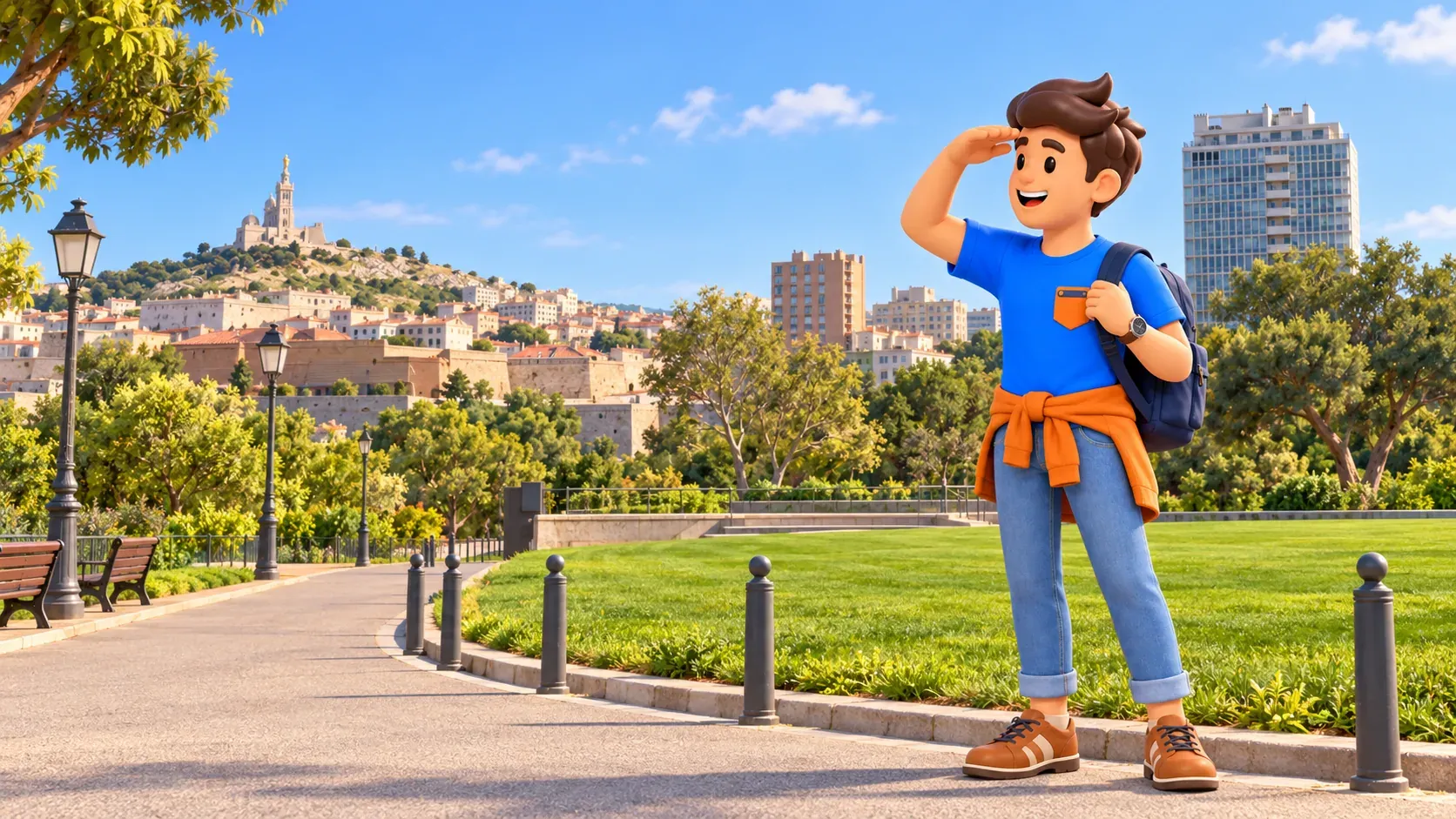
When access and conditions suit, give the garden about thirty to forty-five minutes, or more for a comfortable pause. Let the view make the last part different from the lanes of Le Panier. Look from permitted paths and keep the actual return in mind. Paid activities or refreshments remain separate choices. Our Saint-Victor-to-Pharo walk offers a fuller southern-side outing for another day. This budget version does not need to attach the abbey, fort visits, a beach stop or the entire Corniche to the garden simply because they appear nearby on a map.
Choose the full day or finish well after the shorter version
For a five-to-six-hour outline, give the port its first forty-five to sixty minutes, Le Panier seventy-five to ninety, and lunch forty-five to sixty. If the day still feels right, add the actual connecting walk around the eastern head and southern side, then a modest garden visit with pauses. These flexible blocks explain the scale rather than promise a measured itinerary. Travel before the port and after the garden is additional. Check opening, weather and the needs of the slowest person before deciding that the longer version belongs to today.
For the shorter three-to-four-hour version, keep the port, the selected Le Panier streets and lunch, then finish with a straightforward return towards your chosen connection. You can omit the hill or shorten the neighbourhood part if necessary. End with a view or detail already enjoyed instead of searching for a final attraction to fill the allowance. If the weather becomes unsuitable for an outdoor day, reassess the outing under actual conditions. A free exterior plan is not automatically an all-weather plan, and crossing the city to avoid a closed garden may cost more energy and money.
The strongest memory may come from the mirror above the quay, a small hilltop square or the changed angle of the city from the garden. You have seen several scales of Marseille without requiring a museum marathon. Keep unused places for a different day and let one chosen purchase, if any, remain a pleasure rather than a duty. A budget can shape a satisfying visit when it protects food, rest and the journey home as carefully as it protects the list of sights.