Marais, Montmartre or Saint-Germain: where to walk in Paris
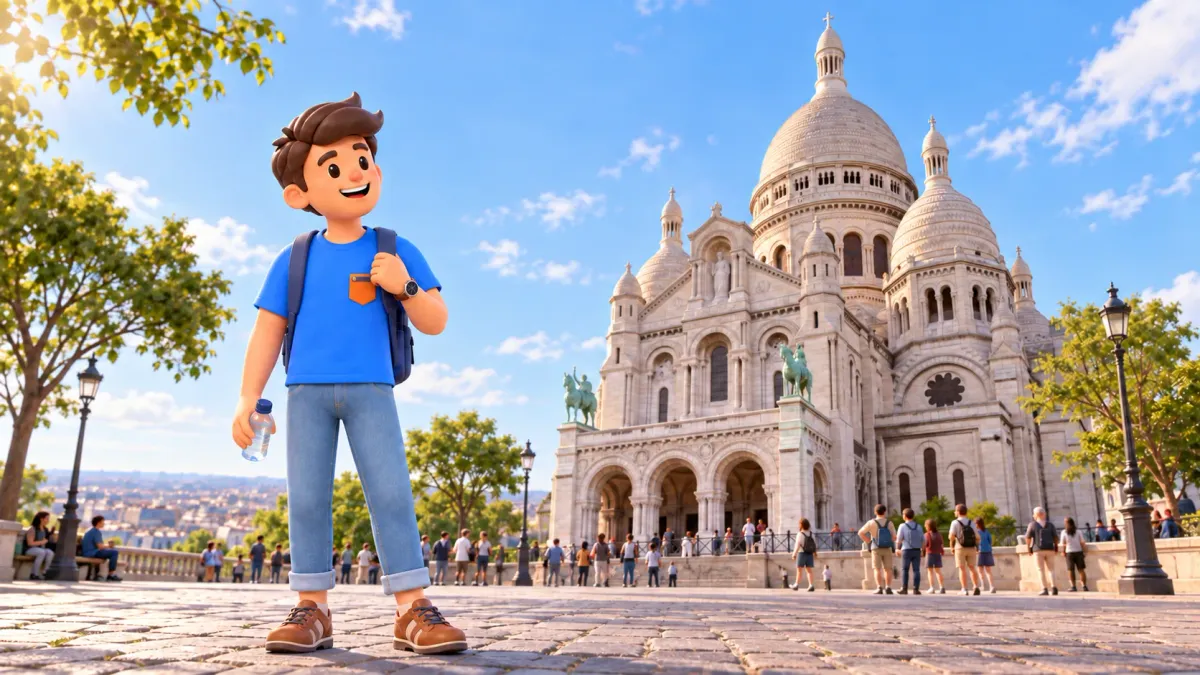
Choosing a Paris neighbourhood is easier when you begin with the experience you want today. The Marais offers repeated façades and intimate streets; Montmartre brings a hilltop view and an artistic square; Saint-Germain combines Left Bank history with church exteriors and everyday café life. The best fit changes when you have a fresh morning, a museum appointment ahead or tired legs afterwards.
These are three independent alternatives: approximately 90 minutes in southern Marais, 120 minutes on Montmartre and 90 minutes around a small Saint-Germain section. Choose one. Each begins above ground at a named Métro station and returns to the same station. The allowances include approaches, all connecting movement and a separate seated pause. They are editorial planning estimates, not timings measured on a personal visit.
Choose a neighbourhood by interest, time and effort
Choose the Marais for red brick, pale stone and arcaded architecture: a small Place des Vosges outing can introduce that character. Choose Montmartre for a panorama and an artistic square when climbing stairs fits your day. Choose Saint-Germain for two historic church façades and a short Left Bank street walk without a hilltop ascent. None requires a museum admission.
Try RoadMe to work out a complete personal trip plan around your dates, interests, pace and budget. Using one considered programme in the app is much more convenient and effective when neighbourhood walks, major visits and rest need to fit together.
Compare what remains in your day, rather than ranking all of Paris. Before a substantial museum, preserve energy for the galleries. Afterwards, a straightforward return and time to sit may matter more than another famous sight.
Also count the journey to its starting station. Ninety minutes within an area does not mean ninety minutes from your hotel and back. Métro rides, station corridors, accommodation journeys, a meal, shopping and interior visits require additional time.
The Marais: let façades and arcades set the pace
The Marais lies on the Right Bank across the third and fourth arrondissements. Its name recalls former marshland, while its familiar architectural character includes seventeenth-century mansions. Wide carriage entrances, pale carved stone and carefully composed fronts offer clues to earlier urban life. You can notice that relationship from public streets without a tour through the rooms behind them.
For a brief introduction, keep to a southern section around Place des Vosges. Completed in 1612 under Louis XIII, the square brings red brick and pale stone into a coherent ensemble. Repeated arches and windows create a setting larger than any single house. Looking carefully at a few details can be more rewarding than rushing between addresses without seeing how they relate.
Begin above ground at Saint-Paul on line 1. Follow public pavements east along rue Saint-Antoine, then north on rue de Birague to the square’s southern side. Use marked street crossings. Choose a few accessible public perimeter and arcade sections. Return by the same Birague and Saint-Antoine approach to Saint-Paul, without relying on passages through neighbouring private properties.
The 90-minute allowance contains 45 minutes for every movement: the approach, crossings, short connections at the square and station return. Reserve another 25 minutes for façade observation and 20 for seated rest. A full circuit, shopping or museum admission changes the scope and needs a new allowance.
Start with the ensemble, then select one opening. Notice how a stone arch supports the brick upper façade, how window patterns repeat and how the depth of the gallery changes the light. Move only far enough to compare a shaded view with an open one. Leave space for people walking both ways rather than waiting for a completely empty corridor or blocking it for a photograph.

The fenced central garden is Square Louis-XIII, with seasonal gates. It is separate from the square’s public street perimeter. The main outing does not require entering that garden. If greenery and a bench inside become your priority, check its hours for your date and treat it as a deliberate garden choice, rather than assuming an enclosed space shares the street’s round-the-clock access.
Preserve time to find a suitable resting place. A free bench or café table cannot be promised. A café order is paid separately, table service may take longer than the pause, and a proper lunch needs its own block. Arcades shelter selected sections in rain, but the station approach remains outdoors and wind can reach the galleries through their open sides.
This outing introduces the architecture of southern Marais. For a broader neighbourhood programme, use our two-hour Marais walking route as a separate plan. It serves a different scale of exploration.
Montmartre: budget for the climb as well as the view
Montmartre in the eighteenth arrondissement differs because of its hill. Reaching the panorama takes effort, and paved streets require attention underfoot. Choose it for a fresh morning when a city view and an artistic square appeal to you. After a day of standing and walking, consider the ascent and the eventual descent before setting off towards Anvers.
The pale domes and substantial front of Sacré-Cœur give this part of Paris its recognisable outline. Its first stone was laid in 1875 and it was consecrated in 1919. Romanesque-Byzantine forms provide a different architectural experience from the Gothic buildings of the centre.
Start above ground at Anvers on line 2. Follow rue de Steinkerque towards Place Saint-Pierre, then ascend the public staircase of rue Foyatier outside the gated Louise-Michel garden. At the top, view Sacré-Cœur from the public parvis and look across Paris. The route does not need a passage through the garden or admission to the church.
For Place du Tertre, use the short public connection north along rue du Cardinal-Guibert, west on rue Azaïs and north along rue du Mont-Cenis. Return to Anvers through the same approach and stairs. Nearby reservoirs and restricted grounds are not shortcuts.
Allow 120 minutes: 65 for all connecting movement, including ascent, descent, the Tertre connection and station return; 35 for selected exterior views; and 20 for seated rest. Beginning at the foot of the hill exposes the walking effort that a route starting outside the basilica can hide. If stairs take longer, extend the total or shorten observations while preserving the pause.
Place du Tertre gives the area’s artistic association a visible form. Painters and portraitists have long been connected with the square. You can watch work and notice the surrounding architecture without commissioning a portrait. A particular artist’s presence is not guaranteed. Commissioning, waiting and paying for a picture are additional choices, with time beyond the small observation allowance.
The basilica interior, paid dome and museums are outside this programme. The funicular may help with one ascent, but it requires a suitable paid journey and additional approach or waiting time. It neither removes the hill’s other slopes nor establishes a fully step-free outing. The stated budget belongs to the staircase option; choosing another way up means reviewing that plan.
Choose Montmartre when the climb itself is an acceptable part of the experience. Our Montmartre half-day walk provides a separate, fuller neighbourhood introduction. Compare its scope with the time you have.
Saint-Germain: a small Left Bank story
Saint-Germain-des-Prés has connections with the history of its abbey and the Left Bank’s literary life. The abbey’s foundation dates to the sixth century, while the standing church combines different building periods. Its long history does not make every visible stone the same age. The tower and surrounding streets provide a useful starting point for seeing how old institutions remain part of a living neighbourhood.
Cafés, book culture, shops and galleries add another layer. On a short walk, the relationship between everyday street life and a historic church can be enough. You need not secure a famous table or make a costly order to notice that setting. Observe from public pavements, then decide whether a café belongs in the trip according to your own interests and budget.
Begin and finish above ground at Saint-Germain-des-Prés on line 4. View the church exterior, cross boulevard Saint-Germain at a marked crossing and follow rue Bonaparte south. Continue through the street connections to the public square in front of Saint-Sulpice, selecting a façade view. Return along Bonaparte and the public boulevard crossing to the same station.
The 90-minute allowance is 40 minutes for all approaches, crossings, connections and return; 30 for exterior observation at the two churches; and 20 for sitting. The Luxembourg Garden, Place de Furstemberg and Delacroix Museum remain separate options. Adding them changes the scope, particularly when an interior visit or finding a suitable open garden gate becomes part of the day.
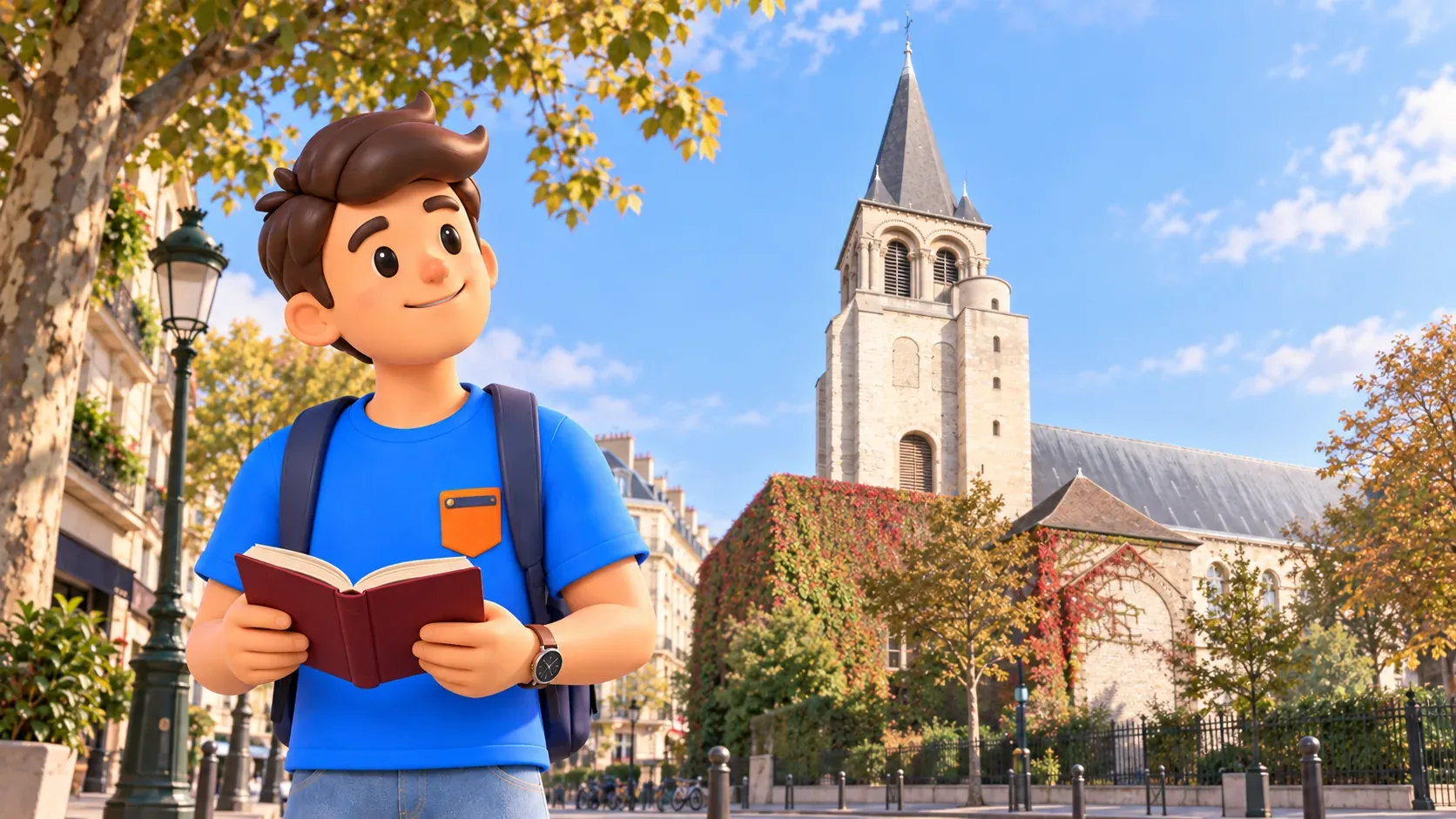
Construction of the substantial church of Saint-Sulpice began in the seventeenth century; its façade has distinctive towers. From its public square, compare its scale with the tower at Saint-Germain. One setting presents a broad architectural front, the other belongs to a tighter street environment. This simple contrast gives the connection along Bonaparte a subject, so it becomes more than an interval between two named sights.
Both churches are exterior stops here. Interior admission, services, crypt visits and upper-façade tours have their own arrangements and time. If you decide to enter, check the actual programme and extend your outing accordingly. Viewing a façade freely from a public square does not promise access to every part of the building, or participation in an organised tour without prior arrangements.
Treat the pause as a real part of the outing. Sit in suitable accessible public space when a place is available, or allow an order and possible service time at a café. If no resting place is immediately suitable, reduce observation and review the connection to an alternative. A neighbourhood’s name does not guarantee silence, spare tables or a particular price level for every establishment.
For a fuller introduction, our Saint-Germain and Saint-Sulpice walk offers a separate route. This shorter choice helps you decide whether the neighbourhood’s atmosphere suits the time between other commitments.
Fit one neighbourhood into the whole trip
Compare the main experiences: southern Marais for architectural repetition, Montmartre for a panorama and artistic square, Saint-Germain for Left Bank history and two church fronts. When two choices appeal equally, your current location, weather and energy can decide. The closest suitable option often leaves more room for noticing the city than a cross-town journey to another famous district.
Check the outing against your actual date. In cold weather or rain, shorten exterior stops and take particular care on wet Montmartre stairs. Street walks do not provide continuous weather protection. For specific access needs, assess the station, surfaces and crossings separately: excluding interior admissions does not establish a step-free journey from the platform to every viewing point and back.
Use RoadMe to prepare a complete personal journey around your interests and preferred pace. Arranging walks, major visits and rest by your dates and budget in one considered app programme is a more convenient and effective way to use the whole trip.
Agree on one main interest and a return time with companions. A commissioned portrait, a long coffee and an extra panorama each require their own allowance. There is no need to complete all three neighbourhoods in one day. A well-chosen small section can give you a finished impression and leave enough energy to enjoy what follows.