
Around Manarat Al Saadiyat: a relaxed art walk

For a cultural walk on Saadiyat, you do not have to begin with the island's largest museum. Around Manarat Al Saadiyat, a smaller cluster brings together exhibitions, creative practice, outdoor art and a private collector's public foundation. Choose one main programme, spend time in the garden and add Bassam Freiha Art Foundation when you want another perspective.
Allow around three to four hours for a selective version with the Foundation and a pause. This is an editorial estimate rather than a measured route or official visit length. A booked workshop follows its own duration. Without the final extension, the Manarat and garden combination makes a shorter outing.
Choose one reason to begin at Manarat
Decide whether you want to see an exhibition, explore photography or join an appropriate creative programme. These are different ways of spending the same available time. The point is to begin with something that interests you rather than arrive expecting every studio, event and gallery to form one unrestricted visit.
Check the programme and visitor arrangements for your date once, including any booking needed for participation. Use current visitor entrances and public paths for the small cluster. This plan does not assume access through private event areas or turn the whole cultural district into one easy continuous walk.
For a more convenient way to turn those interests into a complete trip, try RoadMe: the app creates a personal itinerary around your dates, interests, pace and budget. It helps give art, creative activities and quieter walks a natural place in the days available to you.
Keep the route's centre clear. One meaningful experience at Manarat is enough to justify the outing. The garden changes the rhythm, and the Foundation is an optional extension rather than another compulsory booking that competes for your attention.
Why Manarat matters beyond its current exhibition
Manarat Al Saadiyat opened in 2009, when the island's larger museum landscape was still taking shape. It provided a place for cultural activity and exchange early in that development. Its story helps show that a cultural district grows through people and programmes as well as landmark buildings.
The centre combines the showing of work with opportunities to make and discuss it. Art and photography studios belong to that identity alongside temporary exhibitions. This gives the visit a different emphasis from a museum organised mainly around a permanent collection.
Look at how public areas, gallery spaces and the idea of a working studio relate to one another. You do not need to enter every kind of space to understand the distinction. The useful question is how an arts centre connects looking, learning and making.
Its early role also offers context for the surrounding island. Rather than treating Saadiyat as a collection of buildings that arrived together, you can see cultural life as something built over time. A modest, focused visit can reveal that process without requiring a full chronology of every institution.
Start with one exhibition or one creative session
For a selective exhibition visit, around an hour to an hour and a half is a reasonable first planning allowance. Adjust it to what you actually want to see. A film, talk or workshop may create a fixed appointment and should determine the order of the rest of the outing.
Before entering a display, give yourself a simple focus: colour, material, a repeated idea or the relationship between images. Follow it through a small selection rather than trying to form a judgement about every work. This can make contemporary art easier to approach without a specialist vocabulary.
Read enough of the introduction to understand the exhibition's subject, then look again. A label can add context, but it should not replace the work itself. If a piece does not immediately make sense, notice what it asks you to do: move, compare, listen or stay for longer.
For a creative programme, choose the format that fits your interest and available time. Participating in a session is a different commitment from briefly observing an exhibition. Leave the other parts of the route smaller rather than treating making as an extra activity squeezed between two complete gallery visits.

Step outside to the Special Olympics Garden
The Special Olympics Garden was created at Manarat in 2019 in connection with the World Games. Its public-art commissions carry themes of inclusion and solidarity into a lasting cultural setting. You are visiting an art garden, not attending a recurring sports event.
Give this change of setting roughly twenty to thirty minutes as an initial estimate, or longer when a work holds your attention. Outdoor art asks you to consider more than an isolated object. Light, planting, space around it and your position all contribute to what you see.
Choose one available work and compare two permitted viewpoints. From one side, a material or silhouette may dominate; from another, the relationship with the path or surrounding planting becomes clearer. You do not need to identify every commission for the garden to add something to the visit.
The shared theme is a useful starting point rather than a single compulsory interpretation. Ask how a work suggests a relationship between people, a sense of belonging or mutual support. Different visitors may see that idea differently, which can make the conversation part of the walk.

Pause before choosing the extension
After a gallery and a garden, take a seated break or a meal selected from what is actually available. Leave the pause open enough to decide whether another cultural stop still appeals. A route with an optional final venue should remain useful when you choose to finish early.
Compare energy as well as time. Someone who spent a long session making work may prefer a shorter architectural look afterwards. Someone who began with an exhibition might still enjoy another collection perspective. These are different complete versions of the outing.
Keep outdoor movement purposeful in hot conditions. A nearby venue is helpful, but it does not mean every connecting step is shaded. Choose the practical connection that suits your group and preserve time for the experience rather than a long detour between entrances.
An optional finish at Bassam Freiha Art Foundation
The Foundation opened in 2024 near Manarat. Founded by collector Bassam Said Freiha, the nonprofit brings a private collecting initiative into public cultural life. Its exhibitions can draw on the founder's collection and other collections, so the actual display for your date is the reason to choose an interior visit.
Do not assume that an inaugural exhibition described in an older guide remains on view. Look at the current programme and select the part that interests you. Around forty-five minutes to an hour can be an initial allowance for a focused visit, with more time for a particular exhibition or event.
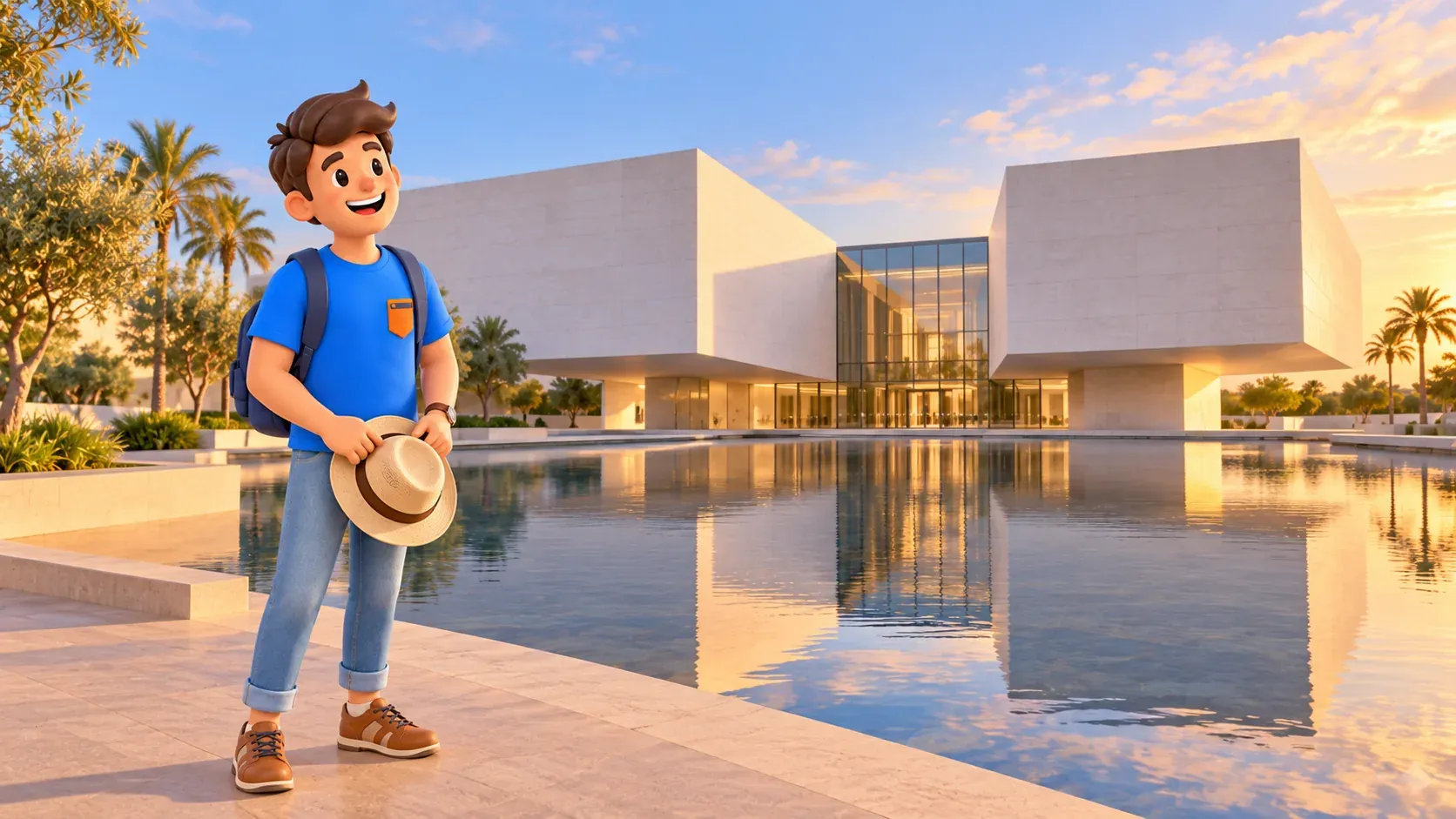
The building is also worth a deliberate look. Cantilevered volumes, central glazing and the water setting create a clear architectural presence. Compare the front and an available side view: one makes the balanced composition clearer, another reveals how the projecting parts meet their surroundings.
The contrast with Manarat is the useful link. One centre makes community activity and creative practice prominent; the Foundation adds the way a collector's initiative becomes a public space for art. You do not have to decide that one model is better for the two stops to illuminate each other.
Make the walk welcoming to different levels of interest
If you rarely visit galleries, choose one question you genuinely have rather than trying to sound like an expert. What catches your eye first? Does an image feel different at a distance? What changes when you notice the material? Concrete observations are a useful way into an unfamiliar exhibition.
For a group with experienced art visitors and beginners, agree on the main session and a meeting point for the pause. People can look at different speeds without filling the day with separate destinations. Discussing one chosen work later is often more enjoyable than walking past every object together.
If the walk reveals a stronger interest in photography, sculpture or architecture, use RoadMe to shape the next days around it. The app makes it easier to build a complete personalised itinerary that balances those interests with your preferred pace and time to rest.
With children, keep the focus small and use a real programme's stated audience when choosing participation. A shape, a colour or the difference between indoor and outdoor art can be enough for one visit. There is no need to turn a relaxed outing into three consecutive lessons.
Before leaving, each person can choose one work to describe to the others over the pause. Compare what surprised you, what remained uncertain and what you would revisit. The differences reveal personal interests without requiring everyone to agree on a single interpretation.
Take home an idea rather than a complete catalogue
A small notebook can hold a colour, a shape or one sentence about what changed between the gallery and the garden. It does not have to be a drawing exercise. A conversation, a permitted photograph or simply a remembered detail can serve the same purpose.
Keep the day at the scale promised by the route. Adding a major museum across Saadiyat is another choice and usually deserves its own block of time. The point here is a smaller cluster where creative practice, public art and private collecting can be compared without a long checklist.
Finish when one of those connections feels clear. Perhaps the strongest memory is a material, a garden viewpoint or the Foundation's reflection. That is enough for a cultural walk: a few works and spaces given proper attention, with the rest of the trip still open to follow your curiosity.


