
Madrid with kids: one museum, Retiro and time to rest
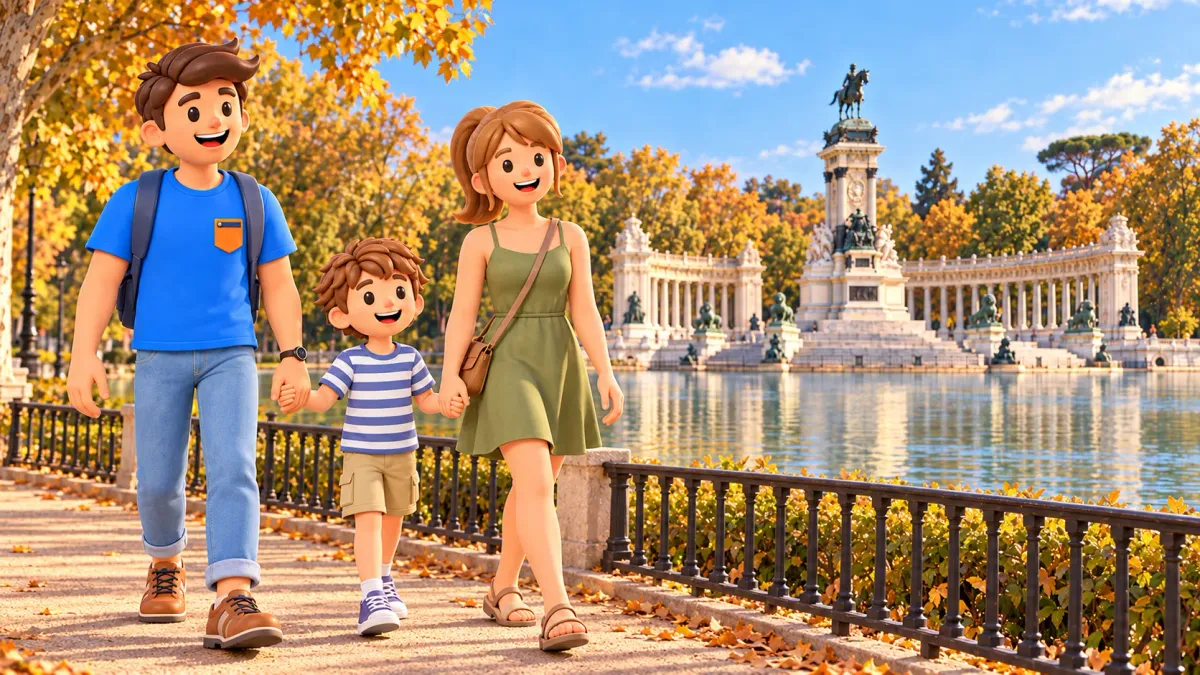
A family introduction to Madrid can be as simple as one museum and one park. Start at the National Archaeological Museum on Calle de Serrano, choose a few objects about life in the past, then head towards Retiro’s northwestern corner. Keep a proper food break between them and unstructured time outdoors. This four-hour outline is designed to be shortened when needed, without making every skipped gallery feel like unfinished business.
Who this half-day suits
The suggested approach particularly suits families with children around six to twelve who enjoy looking at objects, spotting differences and asking questions. That age range is an editorial guide, not an admission rule. With a younger child, shorten the museum; with a teenager, explore one idea more deeply. The shared principle is one substantial stop, a useful break and an outdoor section that does not require everyone to keep promising to hold on until the next attraction.
To make this outing part of a comfortable trip, try a personal plan in RoadMe: the app develops your days around interests, dates and pace. Choose the themes and intensity you enjoy, so museum time, walks and rest fit together without rebuilding the whole plan each morning.
This is an independent visit, not a promised children’s tour. The museum’s family activities have their own dates, ages, languages and booking conditions. An English-language programme page does not establish that an activity is delivered in English. Check separately if a guide or particular language matters. The observation questions below are ideas to use yourselves, without a workshop reservation, official treasure hunt or advance knowledge of ancient history.
Four hours with a clear finish
- 20 minutes: arrive at the museum. Allow for entry, checks, orientation and immediate practical needs.
- 75 minutes: one museum theme. A few objects, short conversations and a small pause, without touring the whole collection.
- 35 minutes: leave and walk towards Retiro. Head south along Serrano towards Plaza de la Independencia, using marked crossings.
- 30 minutes: light food. Choose an open business near the park; allow longer for a substantial restaurant meal.
- 60 minutes: a short park outing. Walk towards the near side of the large pond, pause and return to the northwestern exit.
- 20 minutes: shared reserve. For waiting, a toilet stop, a slower crossing or finishing earlier.
The total is 240 minutes. Arriving at the museum at 10:00 gives an illustrative finish around 14:00 if entry does not involve a long wait. This is an editorial estimate, not a measured journey or confirmed booking. Count travel from your accommodation to Serrano and onward travel afterwards separately. The outing finishes near Plaza de la Independencia and Puerta de Alcalá, rather than continuing through the entire park towards Atocha.
Agree that the reserve belongs to the family, not to another attraction. If the museum is especially engaging, reduce the outdoor walk. If hunger arrives earlier, finish the galleries and leave. Avoid using every spare minute and then insisting that the remaining timetable stay intact. A helpful family plan leaves room for decisions during the outing. It can still work well when a child remembers one object with enthusiasm rather than completing the same sequence as everyone else.
Archaeology through familiar things
The museum address is Calle de Serrano, 13. It shares a large complex with the National Library, whose Recoletos entrance is not the museum entrance. Check the correct side before arriving rather than circling the block with a tired child. Founded in 1867 under Isabel II, the museum brings together the preservation and study of material evidence from the past. For a first family visit, the useful idea is straightforward: history can be approached through things as well as words.
A manageable theme for seventy-five minutes is everyday life in Roman Hispania. The collection includes domestic objects, inscriptions, sculpture and mosaics. This is not a promise to cover every Roman gallery: use the current museum plan and choose a small accessible section. Replace a list of compulsory masterpieces with one question: what tasks did people face then, and how do we handle similar tasks now? The comparison gives unfamiliar objects a connection with daily experience.
Start with something whose function you can guess from its shape. How might someone hold it? What could it contain? What material was used? Then read the label and compare the explanation with your guesses. Being wrong is useful: you are examining evidence, not taking an exam. If your child chooses a different object, give it a little time. A question they have formed themselves may sustain interest better than an adult’s advance list of the collection’s most famous pieces.
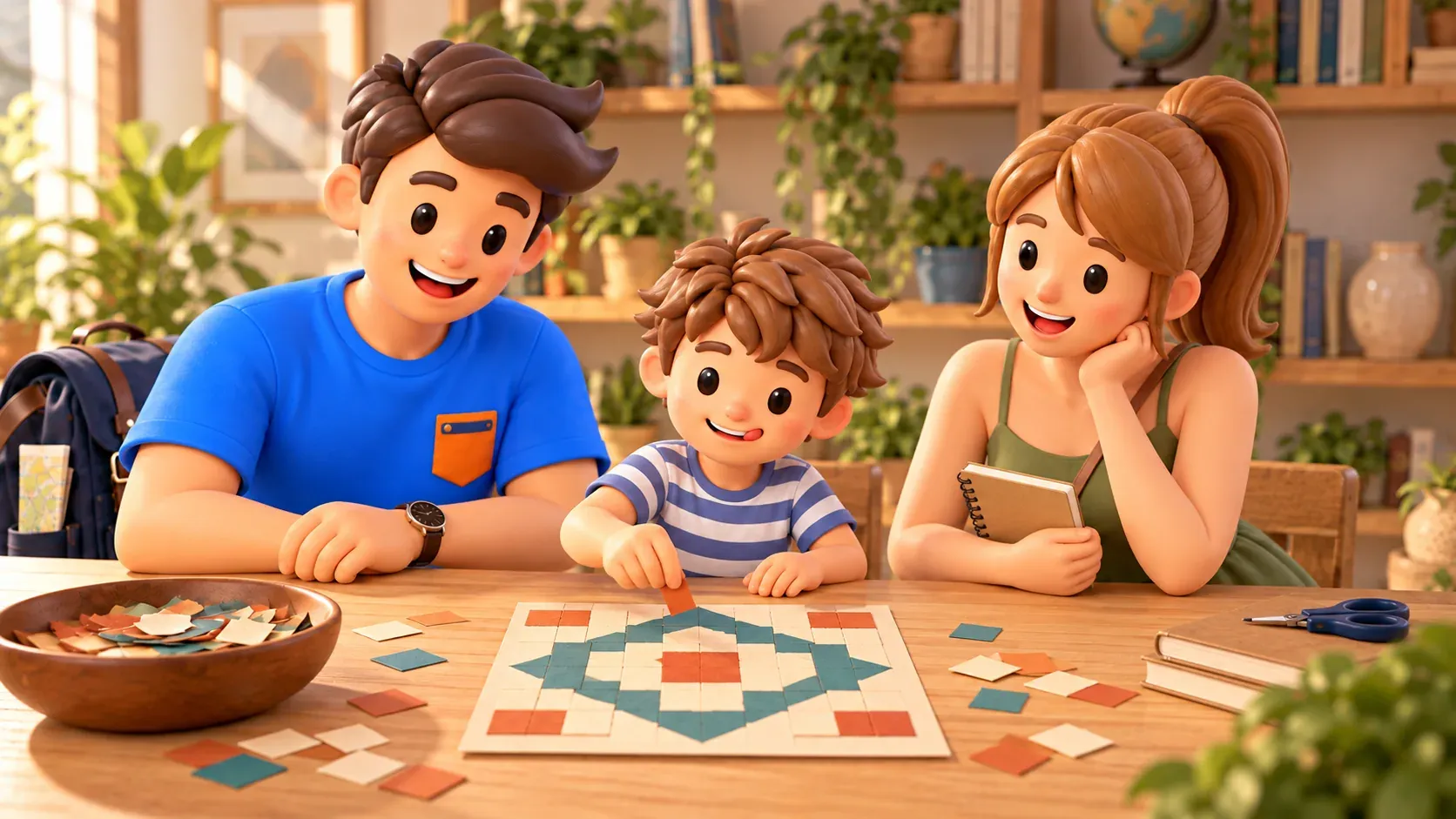
At a mosaic, notice the small elements that make up an image and look for a repeating pattern. In Roman villas, mosaics decorated residential rooms and could express the owner’s wealth; that does not mean everyone lived in such a house. Compare attractive decoration with the practical function of a floor. There is no need to locate one compulsory scene. If the intended section is unavailable, another domestic object can support the same conversation without a dash through every floor.
An inscription offers another approach. You need not read Latin to notice the size of letters, the arrangement of the text or its likely audience before consulting the explanation. A portrait can prompt a conversation about expression, hairstyle and material, without pretending to infer a historical person’s character from their face. Three different observations are plenty. The purpose is to discover ways of asking about the past, rather than accumulating the greatest possible number of correct names.
Opening times, tickets and the practical details
At the check date of 16 October 2026, the museum listed Tuesday to Saturday opening from 09:30 to 20:00, and Sundays and public holidays from 09:30 to 15:00. It closes every Monday, plus 1 and 6 January, 1 May, and 24, 25 and 31 December. Check the calendar for your actual date: the current 2026 schedule lists 15 May as an open holiday from 09:30 to 15:00, despite older guides describing it as a closure.
The ticket office closes fifteen minutes before the museum; gallery clearance begins ten minutes before closing. For this family outing, choose a morning rather than attempting to start shortly before closing. Normal adult admission is paid, while visitors under eighteen qualify for free entry with evidence of age. Under-fourteens must be accompanied by an adult. Concessions and free periods have their own conditions. A child’s free admission does not automatically include every activity for the whole family.
Food and drink, touching original objects and leaning on display cases are prohibited in the galleries. Flash photography and tripods are also prohibited. Children may not ride on an adult’s shoulders. Large bags are not admitted: the museum gives a maximum size of 40 × 40 centimetres and provides a cloakroom. Scooters, tricycles and similar vehicles are not allowed inside, and the museum has no storage for them. Consider that before leaving your accommodation with transport intended for the park.
The museum provides adapted spaces and toilets, accessible materials and tactile stations. Permission to touch a designated reproduction does not extend to original objects nearby. Ask the cloakroom about sensory backpacks if relevant to your needs; availability at a particular moment should not be assumed. If a specific entrance, lift or piece of equipment matters, check arrangements in advance. Accessible museum facilities do not establish that every pavement or park path later in the outing is equally suitable.
The walk and food break are part of the day
After the museum, head south along Serrano towards Plaza de la Independencia and Retiro’s northwestern approach. The thirty-five minutes include leaving, finding your way and ordinary crossings, not just uninterrupted walking. Use signals and permitted pavements. Puerta de Alcalá is a useful landmark, but you do not need to enter its traffic island to continue. Put the museum plan away before crossing and agree where you will stop on the other side.
Do not postpone food until after a long park circuit. Thirty minutes allows a simple snack or light meal at a suitable open business, without guaranteeing a table or a restaurant’s serving speed. For a longer lunch, shorten the walk or extend the half-day. Choose somewhere comfortable to sit with the facilities you need, rather than following a famous name regardless of convenience. Eating stayed outside the galleries; now it has its own place in the programme.
Retiro in a small, enjoyable portion
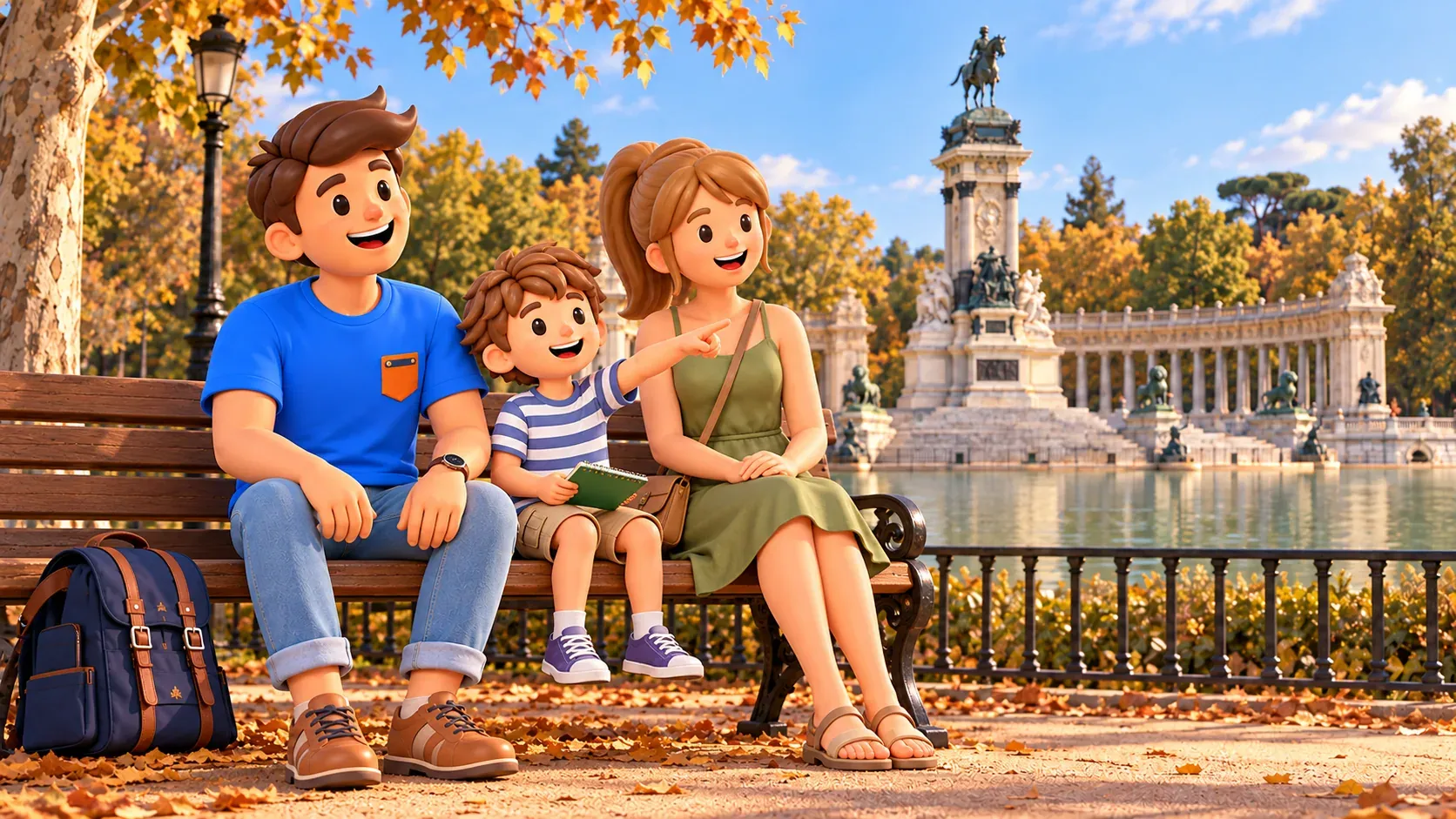
Choose a short route from the northwestern entrance towards the near western or northern side of the Estanque Grande and back. The hour can be divided loosely into fifteen minutes approaching, thirty minutes pausing and fifteen returning. Turn back earlier if your pace is slower. This does not include a circuit of the pond, a compulsory visit to the monument on the opposite bank or all the park’s palaces. Water, trees and somewhere to stop can be enough.
Change the way you pay attention. Inside, you looked at objects and read explanations; outside, enjoy reflections, choose a favourite view or simply sit. Rest need not become another lesson. If you choose a playground, use an open area whose posted age guidance and equipment suit your children. The presence of play areas across Retiro is not proof that every particular one is right for your family. You can also spend the free time nearer the entrance without reaching the water.
Retiro is free to enter. Normal hours are 06:00–22:00 from October to March and 06:00–00:00 from April to September. Weather alerts can nevertheless close individual areas or the entire park. Check current notices and respect barriers. If it is closed, finish after the museum and a calm break in a suitable indoor place. There is no need to preserve a green section at any cost by heading to a distant alternative park.
For subsequent days, it is easier to develop the whole trip in RoadMe, with a personal plan shaped by your interests and pace. It helps give museums their own time and leave breathing space between outings, instead of assembling each family day from unrelated attraction lists.
What to leave for another outing
A rowing boat or a puppet performance is a separate addition with its own conditions and time. Neither is included in the park hour. Check the current programme, availability, ages and admission arrangements before promising it to a child. The Crystal Palace is also unsuitable as a rainy-day indoor backup: it is closed for works until 2027. Do not add a second museum merely because it is relatively close. Saving energy for the rest of the trip is a reasonable outcome.
If the park becomes a favourite, return another day with our two-hour Retiro walk and choose a larger outing. Today’s aim is smaller: one museum conversation, food without a rush and free time beside water or trees. A successful finish might be a question your child wants to ask again, rather than a long list of places the family managed to visit.


