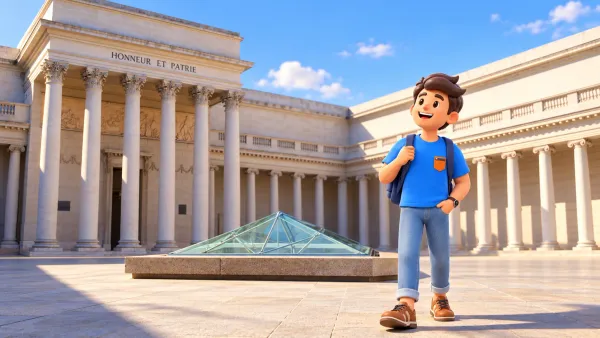
Madrid sunset: Debod, the Cornisa or Cerro del Tío Pío?
Choose one viewpoint for a Madrid sunset evening. Debod suits ancient stone and a walk near Plaza de España; the Cornisa offers a western outlook from the royal district; Cerro del Tío Pío offers a broad city panorama from hills in Puente de Vallecas. Allow around two hours for an unhurried approach, looking and departure, separate from travel from your accommodation and dinner. The starting time depends on your date and access. One fixed hour does not work throughout the year, and three viewpoints cannot share the same sunset.
What would make a satisfying evening?
Decide what you want to remember: an unusual monument’s silhouette, royal architecture contrasting with green space below, or a city extending far beyond the nearest roofs. Each has a different character. Debod connects naturally with a central walk; the Cornisa fits a day near the Palace or Royal Collections Gallery. Cerro requires choosing another district and allowing travel. This is not a beauty ranking. Comfort depends on where you already are, remaining energy and whether another journey would improve the evening.
It is easier to build this evening into a personal trip with RoadMe, which develops a plan around your interests, dates, pace and budget. Try planning the whole journey in the app so daytime visits, views and rest form days that suit you without assembling every connection yourself.
Do not chase one sunset across all three places. Debod and the Cornisa sit towards the western side of central Madrid, while Cerro del Tío Pío is elsewhere. Even a transfer between the central pair consumes what you came for: a gradual change of light. Choosing one lets you understand the setting, step away from the busiest edge and watch without checking the next departure.
Debod: light on ancient stone
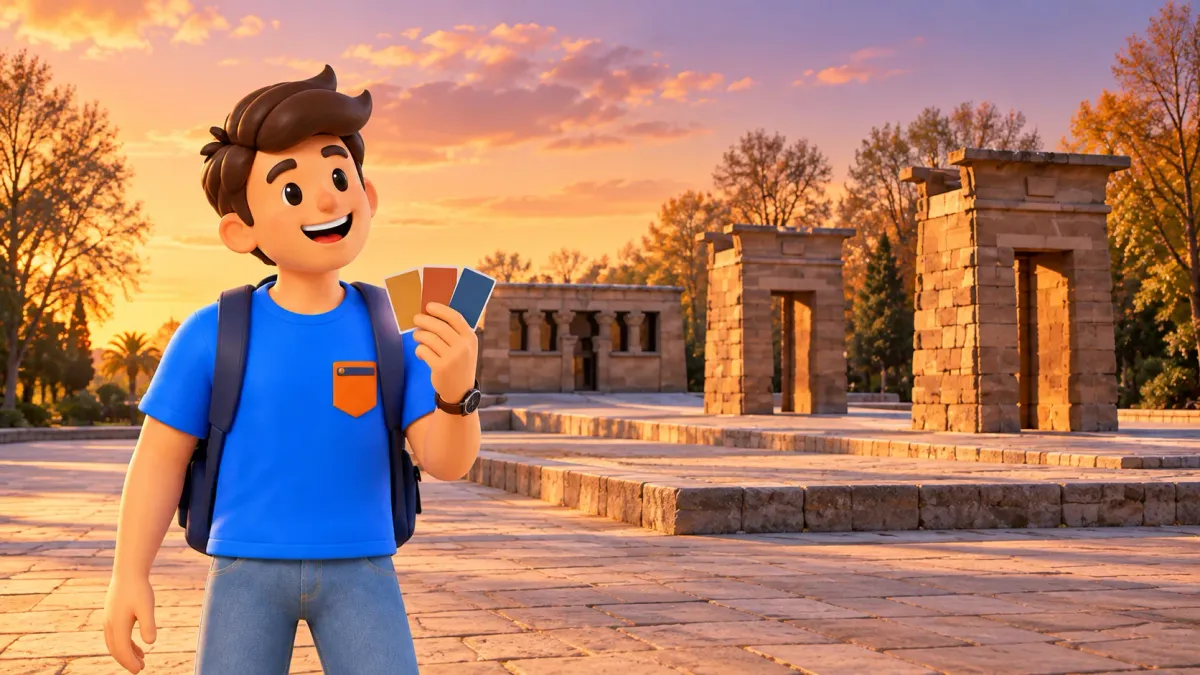
Choose Debod for evening air with an understandable historical thread. This is an ancient Egyptian temple, not modern photographic scenery. Its beginnings connect with the second century BC and King Adijalamani; later additions expanded the complex. After transport and reconstruction, it opened in Madrid in 1972. That brief knowledge of travelling stone changes how you see the simple volumes in a city park. You can leave the detailed history for another visit rather than turning a quiet outing into a complete account of every building phase.
Notice relationships between walls, openings and trees. Do not immediately search for the single correct photograph with a reflection. In April 2026 the city announced a programme to restore the water feature; that announcement does not demonstrate completed works or water on your date. Build the evening around stone, sky and accessible space rather than reproducing an old image. A familiar silhouette becomes more interesting when you notice its real surroundings. Reflections are a possible visual effect, not an essential condition for enjoying the monument.
Distinguish the exterior walk from entering the temple. Interior rooms have separate hours, limited capacity and recommended advance booking. This sunset plan includes neither the indoor visit nor its queue. A closed museum door does not automatically remove every exterior view, and an accessible park does not promise open rooms. Follow current restrictions. If the interior matters, give it separate time rather than assuming it fits unnoticed between your approach and the evening sky. The main outing remains complete without that additional visit.
The Plaza de España area gives a clear starting point before the uphill approach. For a fuller walk, use our evening through Plaza de España and southern Parque del Oeste. It has its own time calculation and does not automatically fit inside the two hours below. Debod is well known, and attractive evenings can bring many people. An empty platform or available bench is not promised. Flexibility about where to pause helps more than making the entire outing depend on occupying one exact photographic position.
The Cornisa: a western view beside the Palace
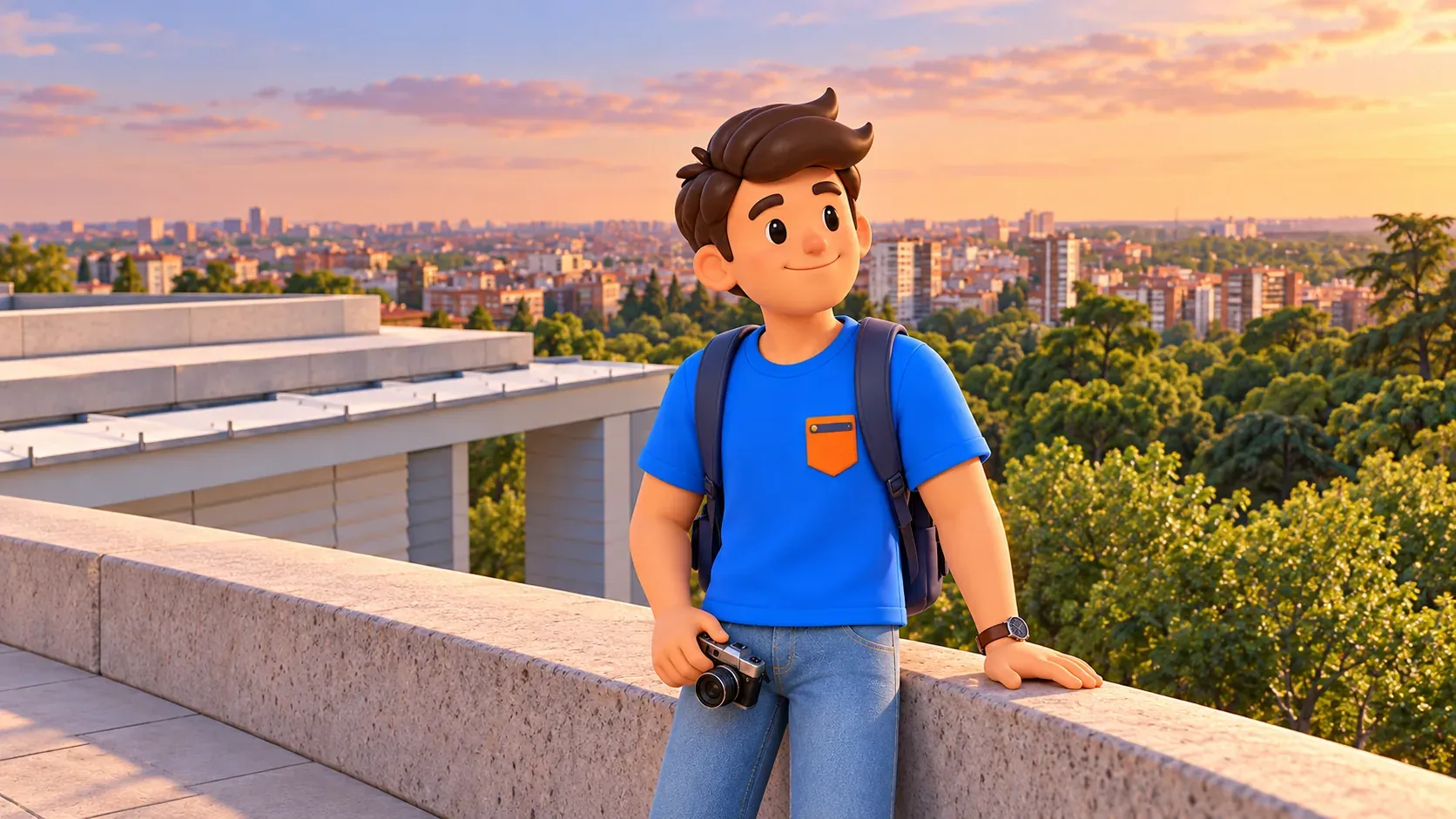
The Cornisa occupies the upper Plaza de la Armería area between the Royal Palace and Almudena Cathedral, beside the main approach to the Royal Collections Gallery. It looks towards Campo del Moro and Casa de Campo. The relationship between the city’s edge and green landscape below gives it character. Do not expect to be simultaneously on the Palace roof, beneath the cathedral dome and inside the museum. This is a separate exterior viewpoint with its own access arrangements and way of seeing Madrid.
Look at layers: nearby architecture, treetops below, neighbourhoods and the distant horizon. Begin with the whole composition, then follow the boundary between buildings and trees. Height need not become a test of how many landmarks you can identify. The royal setting already supplies a landscape story. The entrance area incorporates restored fencing designed in 1899 by Enrique Repullés Segarra. This short fact makes the approach part of architectural history, rather than simply a passage to a photograph. You can appreciate it without recording every decorative detail.
Access to the Cornisa itself is free, but not continuous. Current seasonal hours are October–March 10:00–20:00, April and September 10:00–21:00, and May–August 10:00–22:00. An older general instruction to arrive any evening before ten is unsuitable throughout the year. Compare your date’s sunset with closing. If it does not fit, choose another evening option beforehand or enjoy earlier light. Do not plan to remain after closure for a promised colour. Viewpoint hours are also distinct from the neighbouring museum’s indoor hours.
A view from the upper terrace does not promise a descent into Campo del Moro and immediate return. Different levels, access points and exits require separate decisions. Keep the evening upstairs when the horizon is the priority. Choose a substantial indoor day through our Palace and Royal Collections Gallery comparison. Proximity does not include either major interior in a sunset pause. After a concentrated visit, standing outside briefly, talking and finishing can be enough. There is no need to attach another compulsory programme to every useful connection.
Cerro del Tío Pío: the city beyond a single monument
Choose Cerro del Tío Pío for Madrid as a broad urban landscape. The park is in Puente de Vallecas, with Calle Benjamín Palencia 2 as an approach reference. Nearby metro options include Buenos Aires and Portazgo on line 1, but leaving a train is not arriving at the upper viewpoint. Allow separately for reaching the park and climbing. Choose this evening deliberately rather than fitting another district into the last spare minutes after the Palace. Its different location is part of the decision, not a minor detail to discover on departure.
Seven hills and varying levels shape the park. The subject is the relationship between roofs, distant volumes and sky rather than one famous façade. As the city becomes a broad band, attention shifts from names to scale. Choose several large silhouettes, then notice tones between them. This does not make the place guaranteed empty, exclusively local or equally comfortable in every weather. It is popular. Leave paths clear and do not treat the highest grassy slope as the only legitimate place to enjoy the view.
The hills have an urban history. They were shaped in the 1980s on the site of an earlier settlement; the name connects with Pío Felipe Fernández and that community’s history. The park was inaugurated in 1987. These layers reveal a transformed city landscape rather than untouched nature above Madrid. For an evening, remembering that the panorama belongs to a lived district is enough. Avoid turning its complicated past into a decorative legend or imagining the present greenery has always looked the same. The view contains change as well as distance.
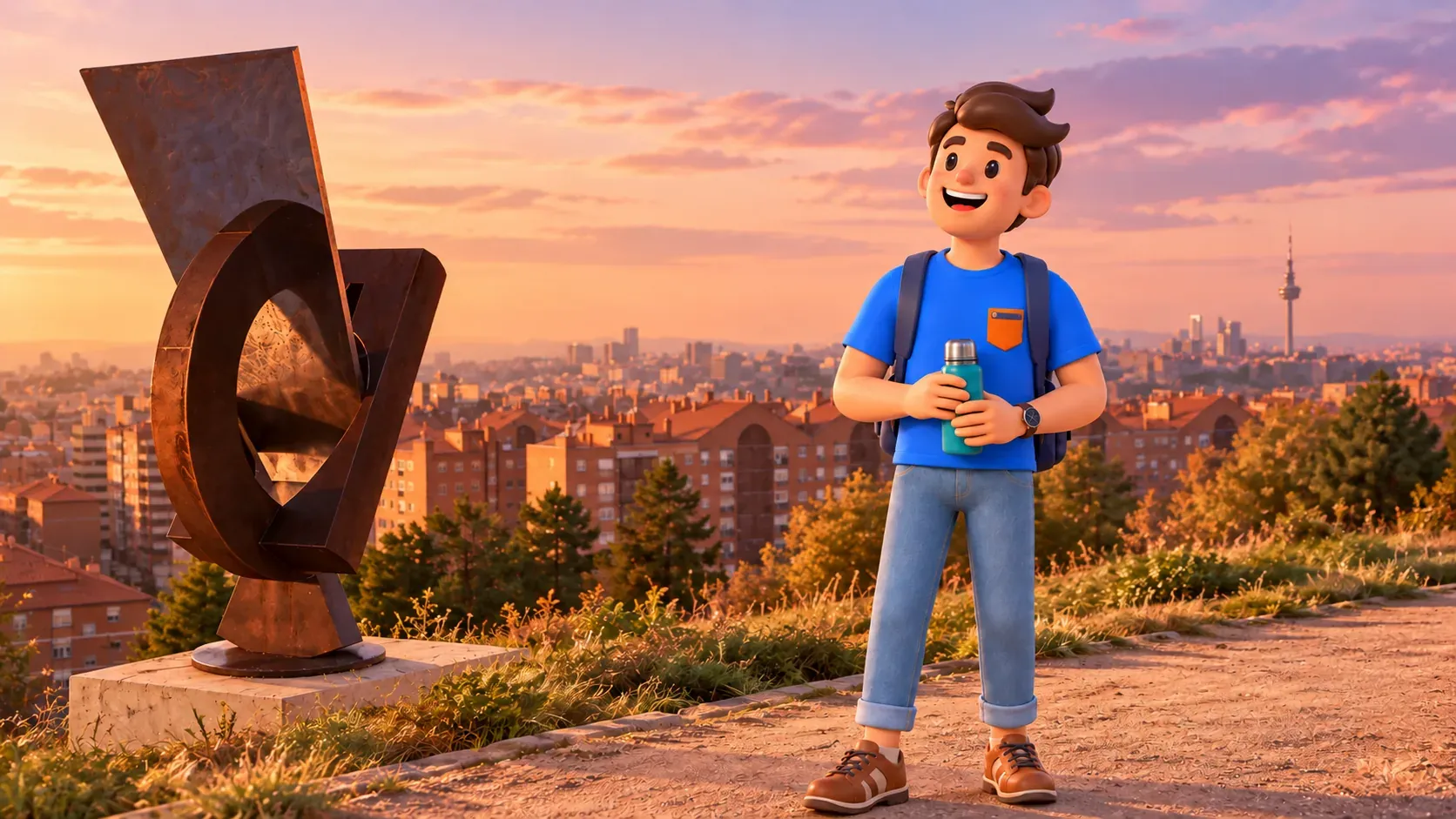
Near the upper lookout stands Enriquez de Salamanca’s Rectángulo real ilusorio sculpture. Its metal forms change with the viewing angle and suggest an instrument for contemplating the horizon. Notice that connection without touching or climbing the structure. The city describes paths to the viewpoint as accessible, but that does not make every grassy slope equally convenient. Choose a suitable approach for your needs and current surfaces. If a short level departure matters, establish it before light fades rather than discovering the return route only when you decide to leave.
Two hours with one viewpoint
This framework is an editorial estimate, not a field measurement. It includes a local approach, looking and departure, but not hotel travel, dinner or a full interior visit. Start around Plaza de España for Debod, Ópera for the Cornisa, or the Benjamín Palencia entrance area for Cerro. The walk from a chosen metro station to that final starting point is additional. Aim to begin roughly ninety minutes before the date’s local sunset, provided access hours leave enough room to finish comfortably. No universal clock time is implied.
- 30 minutes: approach. Follow the functioning route towards one chosen view without distant extra stops.
- 30 minutes: understand the setting. Find a comfortable position, establish the exit and look at the whole landscape and several details.
- 30 minutes: changing light. Watch and take a few photographs without transferring to another viewpoint.
- 30 minutes: departure. Return to a clear street or local finishing point; onward transport and food are additional.
The last block begins around calculated sunset rather than after a long wait for complete darkness. Leave sooner and shorten observation if the path requires more attention. If Cornisa closes before the framework ends, shift the plan or choose elsewhere. Two hours cannot override opening times. A sunset calculation also does not promise an unobstructed horizon: cloud and local topography alter the view. The purpose is to arrive early and leave calmly, rather than guess one magical minute regardless of conditions or the group’s comfort.
Look without racing for a photograph
Choose an overall view, then a nearer element: a stone opening, parapet edge, sculpture silhouette or band of roofs. This helps reveal changes in light. Photograph briefly and keep time without a screen. You do not need to look directly at the solar disc to enjoy warm walls or cloud colours. A perfect image need not occupy every minute. Talking about buildings gradually losing their differences can become a clearer memory than a sequence of nearly identical photographs, especially after an already image-filled day.
Discuss standing, sitting and photography preferences with companions. If someone tires, a shorter pleasant outing is better than a long wait for another person’s ideal colour. Bring water and an appropriate extra layer: walking and standing exposed feel different. Plan food before the start or after leaving. A nearby café does not guarantee a free table and immediate dinner. Keep the next appointment flexible so the entire pause does not become a countdown to running elsewhere.
To preserve energy for evenings like this, try a personal trip plan in RoadMe. The app distributes substantial visits, walks and rest around your interests and pace more conveniently, for days that stay rewarding without becoming overloaded.

Before setting out
Check local sunset for your date, the forecast, current access and the return route. In poor conditions, another exposed viewpoint is not an automatic substitute. Earlier exterior light or a relaxed evening near your accommodation can work instead. Free viewpoint access does not remove transport and food costs. Debod, the Cornisa and Cerro offer different relationships with the city. Choose the one fitting today. A personal impression develops through time in a place rather than through the number of observation decks collected.