
Madrid without attraction tickets: a day of squares, gardens and views
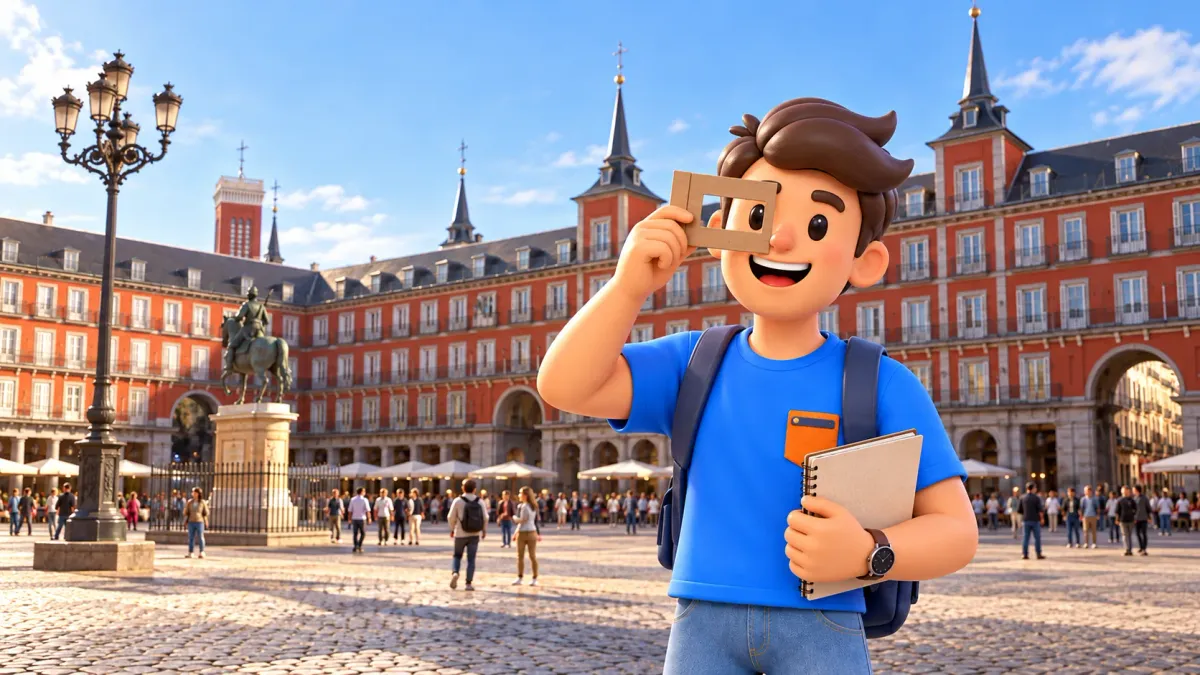
Madrid offers a satisfying day without buying attraction tickets. Link the squares of the old centre, the Royal Palace exterior, Sabatini Gardens and the park around the Temple of Debod. Allow about six hours, including a lunch break, starting at Puerta del Sol, heading west and then north towards Plaza de España. Food, purchases and transport remain separate expenses; the chosen public spaces are the admission-free part of the day.
What this free day actually includes
This plan suits travellers who want to experience the city while keeping money for one particularly meaningful visit on another day. It does not depend on combining several museums’ free-entry windows or qualifying for a concession through nationality, age or residence. The main outing stays outdoors: squares, open paths, façades and an accessible section of garden. Weather restrictions, temporary barriers and garden opening arrangements still apply.
Developing this day is much easier in RoadMe, which prepares a personal trip plan around your interests, dates, budget and pace. Try organising walks, rest and selected paid experiences across your days together, rather than assembling every connection separately.
“No paid attractions” does not require skipping a proper meal or walking home exhausted to avoid a fare. Set aside money for food, water and any necessary journey. Bringing a prepared snack is another option, provided you stop somewhere that permits eating and follow local rules. A café drink remains a purchase even if its table stands beside a free public square.
A realistic six-hour framework
These durations are editorial estimates, not a timed field walk. Begin once you are already at Sol and finish near Debod; reaching the start and travelling onwards need extra time. Connections are included in the relevant blocks. A 10:00 start and roughly 16:00 finish illustrate a daytime outing and do not promise sunset.
- 20 minutes: Puerta del Sol. Meet your companions and choose one or two city symbols.
- 40 minutes: approach and Plaza Mayor. Allow around ten minutes for the connection, then observe the square.
- 40 minutes: Calle Mayor and Plaza de la Villa. Include small stops and compare the buildings outside.
- 45 minutes: approach to Oriente and palace exterior. Around ten minutes connect the spaces; the rest belongs to the square and façades.
- 55 minutes: lunch nearby. Spending depends on what you choose.
- 40 minutes: approach to Sabatini and garden. About ten minutes reach an open entrance, followed by thirty in a selected section.
- 45 minutes: connection and Plaza de España. Allow fifteen minutes for the approach and thirty for the square.
- 45 minutes: approach to Debod and park. About fifteen minutes cover the uphill connection and thirty the exterior and a pause.
- 30 minutes: shared reserve. Use it for orientation, photographs or a slower pace.
A lengthy restaurant meal or extended architectural sketching will change the timetable. Give the day longer or remove one green-space block. Avoid rushing lunch merely to preserve every place name: the sequence is intended to make an enjoyable day, not test how many free attractions you can collect. For a shorter version, finish at Oriente.
Sol and Plaza Mayor: notice the city’s shape
At Sol, begin with the clock of the Casa de Correos and the Kilometre Zero plaque. The clock is associated with the New Year tradition of twelve grapes; the plaque marks the starting point for distances on Spain’s national radial roads. It does not establish the geographical centre of the country. Recognising these references is enough without joining a queue for the perfect photograph. For a city-emblem theme, substitute the Bear and the Strawberry Tree statue for one.
Agree on a precise meeting point before arriving: the name of a large square does little to locate someone in a crowd. Once together, take the Calle Mayor direction towards Plaza Mayor. Keep ordinary pedestrian movement clear and step aside before stopping for photographs. A free day does not require constantly finding a new activity. Watching how street width, building height and open space change already offers a useful introduction to Madrid.
At Plaza Mayor, look first at the whole composition of arcades and repeated windows. Juan Gómez de Mora worked on ordering the buildings in the seventeenth century; Juan de Villanueva reshaped the square after the fire of 1790. Its present appearance therefore represents several historical moments. Rather than treating it as an untouched stage set, notice how changes maintained the impression of a coherent outdoor room, with openings connecting it to the surrounding city.
The current paintings on the Casa de la Panadería façade are by Carlos Franco, rather than an anonymous seventeenth-century artist. That small distinction makes later artistic layers part of the story. You need not identify every mythological figure to appreciate the colour against the regular neighbouring windows. The equestrian monument in the square honours Philip III. Another royal rider will appear at Oriente, creating a simple connection between two otherwise different public spaces.
Through Plaza de la Villa to the palace quarter
Continue west along the Calle Mayor direction to Plaza de la Villa. Its smaller scale makes comparison easier. The Casa and Torre de los Lujanes date from the fifteenth century, Casa de Cisneros from the sixteenth and Casa de la Villa from the seventeenth. Use those references to read the exteriors; they are not promises of unrestricted entry. Choose a detail on each building rather than attempting to memorise every historical name.
The square is associated with Madrid’s former town hall. That history does not mean the city’s present administration occupies every old civic building, and Cibeles Palace lies elsewhere. Today, the interest is how several architectural periods meet within a compact space. Compare a material, window shape or tower outline.
Continue towards the royal quarter via Calle Mayor and the open pedestrian connections to Plaza de Oriente. The change of scale is noticeable: narrow streets give way to broad perspectives, the palace and garden sections. The main plan excludes palace rooms, cathedral admission, the Royal Collections Gallery and theatre tours. If one is your priority, assign it its own visiting time and revise the remaining walk instead of treating admission as a quick extra.
Oriente shows the palace within a larger urban composition. An important phase was Narciso Pascual y Colomer’s project of 1844. Its central equestrian monument honours Philip IV, unlike Philip III in Plaza Mayor. That is enough history for a small discovery: a similar kind of sculpture has a different role in each setting. You can enjoy the palace façade and the relationship between greenery and stone without having a ticket for the state rooms.
Lunch belongs in the itinerary
Pause nearby before moving towards the northern garden. Check the menu, seating conditions and available tables before relying on a particular terrace. A famous-square view does not establish affordability or availability. The fifty-five-minute allowance suits a straightforward break; it cannot guarantee the serving speed of any restaurant.
There is no need to order an entire checklist of supposedly essential local dishes at once. Choose something you want and keep enough energy for the afternoon. With a brought snack, use a permitted place and take away packaging. Do not occupy a business’s tables without ordering, or interpret public ownership as permission for every kind of picnic. One considered meal is usually more useful to this plan than repeated unplanned purchases prompted by tiredness.

Sabatini: a later garden beside the palace
Sabatini Gardens lie beside the Royal Palace’s north façade. Their geometry changes the relationship between architecture and greenery: straight alignments, clipped forms and sculptural accents offer a different view from Oriente. A selected section is enough for this outing. Campo del Moro is not a continuous adjoining courtyard you can casually add. It occupies lower ground and has its own entrances, so exploring it would change the route’s size and finish.
The name can mislead. These gardens were created in the 1930s on the site of royal stables built by Sabatini; they are not his preserved eighteenth-century garden. More recently, the gardens reopened after rehabilitation on 12 September 2025. Work addressed paving, drainage and garden elements. The place has continued to change behind its apparently timeless appearance. Keep that perspective rather than assuming everything beside an old palace must be equally old.
Admission is free and the normal arrangement provides daily opening. This means neither round-the-clock access nor freedom from temporary restrictions. Check the current schedule and notices before visiting: Sabatini is among Madrid’s parks that can close under weather-alert protocols. Respect barriers and shorten the outdoor programme when conditions require it. A closed garden is not a reason to cross the city searching for another free park under the same adverse conditions.
Plaza de España and Debod in daylight
Follow the available connections from the Bailén side towards Plaza de España. Look at the Cervantes monument with Don Quixote and Sancho Panza and rest before the uphill approach to Debod. This square connects several city directions, but you need not follow them all. Gran Vía, Casa de Campo and the wider Parque del Oeste remain separate outings. Today requires only the nearby connection towards the temple’s park, without a long detour through every green space.
For combining this relaxed day with museums, food interests or modern architecture, it is more convenient to develop the whole trip in RoadMe. The app works out a personal plan around your interests and pace, giving major experiences their own time and keeping walks from becoming accidental long transfers.
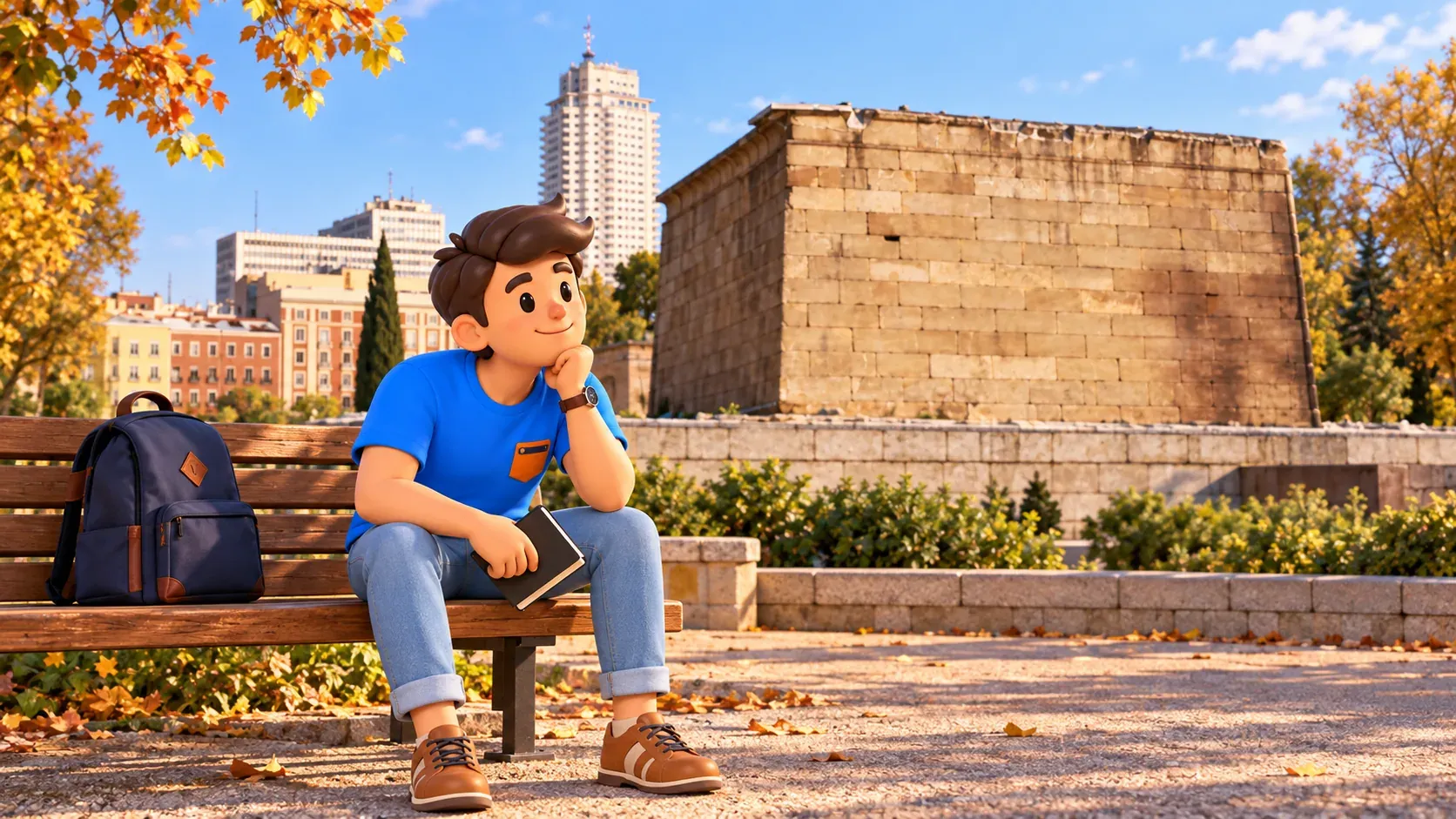
Debod is an ancient Egyptian temple whose origins reach back to the second century BC. Following Egypt’s gift to Spain, it was reconstructed in Madrid and opened to the public in 1972. Its stone architecture introduces an unexpected historical geography among familiar European streets. The main day includes the exterior and surrounding park. Entering the building requires a separate check of visiting arrangements and a revised allowance, rather than being automatically included here.
A daytime finish has value: see the masonry, enjoy open space and pause. Sunset is not part of the six-hour promise. To wait for evening light, check the local sunset time for your date and add the waiting period, or start later after reviewing garden hours. Neither colourful skies nor an empty popular viewpoint can be guaranteed.
When to change the day
Heat, heavy rain or wind warnings justify reconsidering an entirely outdoor itinerary. Arcades do not turn it into a comprehensive rainy-day plan, and nearby trees do not establish continuous shade. Finish earlier if necessary and take a normal indoor break. The route also has slopes, varied surfaces and garden levels. If you need step-free travel, verify specific connections and working access facilities in advance rather than interpreting the six-hour estimate as an accessibility assessment.
For another day, choose our more detailed Royal Palace gardens walk or a separate evening around Debod. Today’s squares introduce history, the garden changes the rhythm and the open view provides a finish. Free admission gives you room to choose the depth of your visit; it does not create an obligation to see everything before returning home.


