
Love Lake at sunset: a quiet outing from Dubai
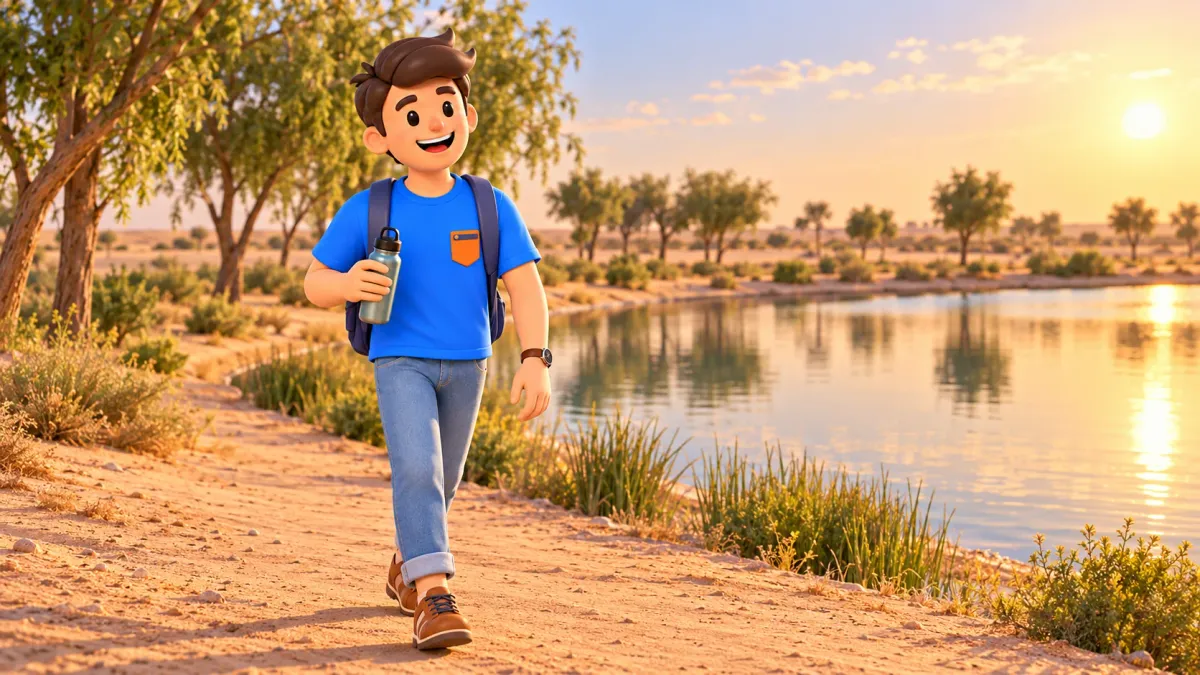
Love Lake is easy to recognise in an aerial image: two connected hearts placed in the Al Qudra desert landscape. The ground-level visit is different. You see a curving bank, trees, reflections and the open surroundings rather than the complete graphic shape at once. That difference is the key to enjoying the outing.
Come for a modest walk and a pause near the water, with changing evening light as part of the setting. Allow roughly one and a half to two and a half hours at the lake as a first estimate, then add the actual outward and return journeys. This is not a measured circuit, and sunset should not become a deadline that makes the drive or the walk rushed.
Plan the return before choosing the sunset moment
The first decision is how the whole outing will work, not where the most dramatic photograph might be. Check current access information and conditions for the destination, identify the appropriate arrival point and arrange a dependable way back. A location outside the main urban sightseeing areas needs a return plan of its own.
RoadMe can develop a personal Dubai trip plan around your interests, dates and preferred pace, making it easier to give this quieter outing a sensible place in the holiday. The app connects the wider journey into a coherent itinerary instead of leaving you to assemble separate destination lists.
Do not assume that an arrangement convenient in the centre will work in exactly the same way here. Confirm transport details for the people travelling and keep the return independent of a last-minute guess. Follow current permitted access and local directions rather than drawing an improvised line across the desert.
Choose timing from the actual sunset and conditions on your date, leaving daylight for arrival and orientation. A generous margin is more useful than a fixed hour copied from another season. The aim is a calm evening, not reaching the shore at the last possible minute.
Understand the landscape beyond the heart-shaped image
Love Lake is a designed landscape made from two connected bodies of water. Its recognisable outline joins geometric intention with planting and an open desert setting. From above, the whole works like a sign; beside the water, the experience becomes more local and physical.
The contrast between water and surrounding sand is important. Planted areas create a closer foreground, while the broader arid horizon remains visible beyond them. You can notice the relationship between a deliberately composed place and the environment around it without needing a high viewpoint.
Look for changes in the bank line and reflections rather than expecting a complete heart silhouette from where you stand. A picture taken from the air and a walk on the ground answer different questions. Neither needs to reproduce the other.
This is also an interesting part of Dubai’s landscape story. Recognisability is created through the shape of water and arrangement of planting, rather than the height of a building. The place becomes a large-scale composition whose smaller details only appear once you stop looking at it as a map symbol.
Begin with a short walk you can easily finish
On arrival, orient yourself using current permitted routes and signs. Choose a manageable lakeside section rather than assuming you need to complete an entire circuit. The best first walk is one that leaves enough energy for sitting, taking in the setting and returning comfortably.
Keep the route appropriate to the group and the actual surface. A smooth line in an aerial image does not tell you how a particular stretch feels underfoot or whether it is the intended visitor way. This article offers a structure for the outing, not turn-by-turn access or driving directions.
Give the walk one simple focus. Notice how a reflection changes as you move, how trees interrupt the open horizon or how a bank curve reveals another piece of water. You do not need to find a named object at every stop for the route to have a purpose.
With children, a small observation can work better than a large distance target. Ask what looks different in the water and on the bank, then leave space for their own response. The activity should remain optional; walking, talking or a quiet pause are equally reasonable ways to enjoy the place.

Let sunset change the scene rather than control the visit
The attraction of late light is its gradual change. A patch of water can look different as the angle lowers, while trees and the bank become stronger shapes against the sky. You do not need one perfectly timed instant for the evening to feel worthwhile.
Choose a comfortable permitted position and allow yourself to stop. Avoid spending the whole visit moving between possible photo spots in search of the ideal colour. The light will change while you move as well, and a simple place can become more interesting when watched for a while.
Clouds, haze and other conditions affect the result. Treat the sunset as a changing landscape, not a guaranteed performance. If the sky is understated, reflections, silhouettes and the contrast of water and dry ground can still give the outing its character.
Keep the agreed departure practical. There is no need to extend the visit indefinitely for one more photograph if that makes the return less comfortable. The last part of the day belongs to the journey home as well as the view.
Photograph the ground-level experience
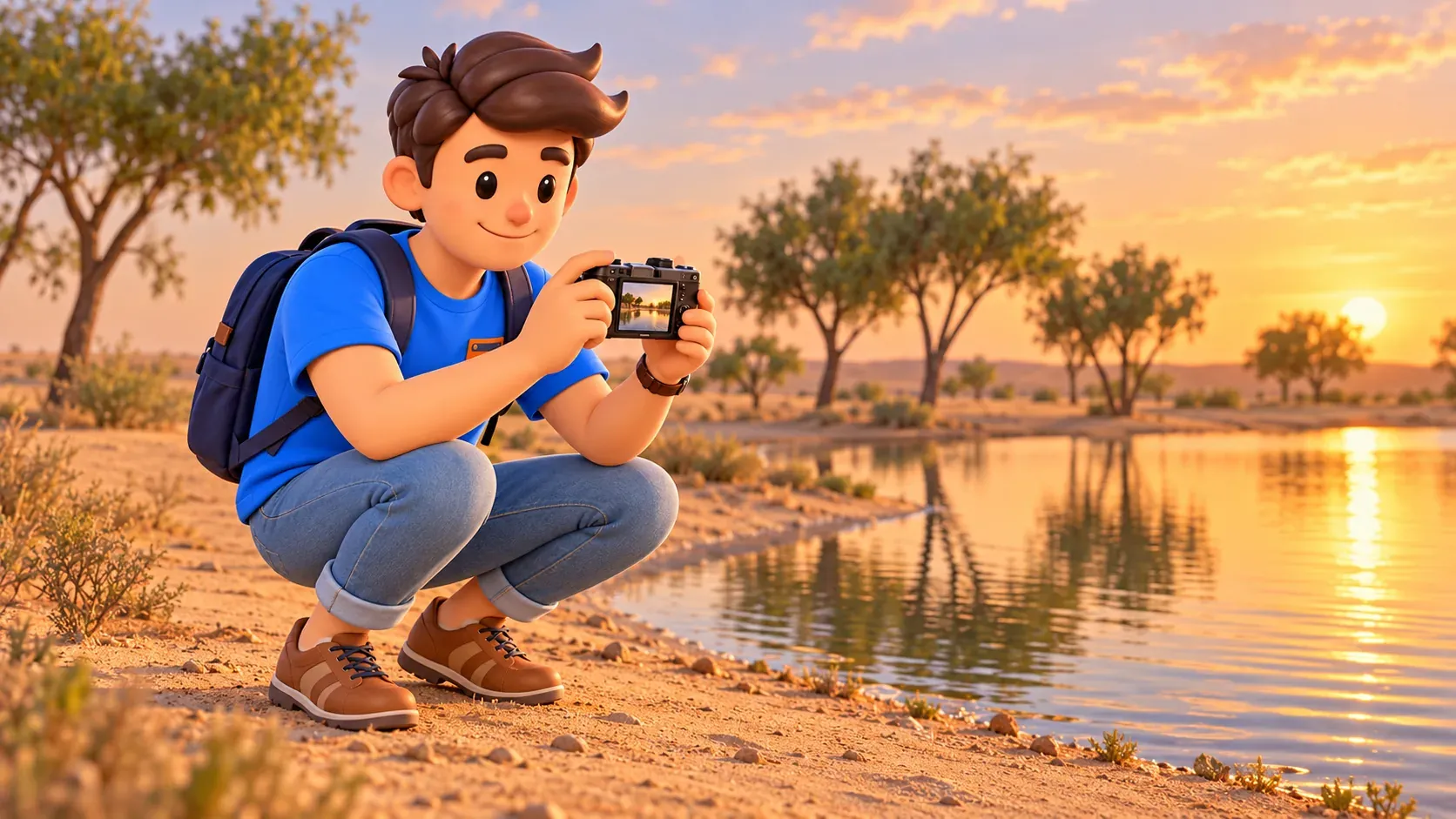
A useful set of pictures can be simple: one wider view of water and surroundings, one reflection and one portrait with room around the person. This tells a story of being beside the lake without pretending to show the whole aerial design.
Stand on appropriate dry ground, respect the current rules and keep the setting undisturbed. A photograph does not require entering the water, moving planting or placing props in a shared natural-looking space. Let the composition come from the relationship between what is already there.
Choose a few moments and then put the camera away. The gap between images can be the part you remember most clearly: a quieter conversation, a change in colour or the simple feeling of leaving the busier city for a while.
If someone in the group enjoys photography more than the others, agree on a limited period for it. That prevents the rest of the outing becoming an extended wait. Different interests can coexist without giving one activity control of the whole evening.
Keep the pause simple and the setting clear
Bring the practical essentials for the outing you have chosen, including water, and check current rules before planning food or any other use of the space. Do not depend on an assumed café, shop, bench or other facility. A simple prepared pause can be more useful than a complicated plan built around something unconfirmed.
If you bring a snack or a mat where their use is permitted, keep the load easy to carry and plan to take everything away. The stop should not leave packaging or other traces. There is no need to turn a short sunset visit into a camp in order to make it feel complete.
Use the break to decide how everyone feels. Another short look at the water may appeal, or it may be time to return. Adults should keep the practical decision about conditions and transport rather than asking tired children to redesign the remaining outing.
The pause can also explain the landscape to memory. You have seen part of a much larger design at human scale. Think about the bank, water and planting you actually noticed, not only the image that originally led you here.
Choose a version that fits your company
For a couple: keep one modest walking section and a generous pause as the core. The setting does not need a staged romantic scene or elaborate equipment. A calm shared evening can be enough.
For a family: let the length follow attention and energy. A short walk, one observation and a snack can form a complete visit. Keep the return arrangement clear and avoid making the whole outing depend on children staying interested until a particular light effect appears.
RoadMe makes the whole trip more convenient through a personal day-by-day plan based on your interests and pace. Use the app to balance this quiet evening with the Dubai experiences you most want, while leaving enough room for rest and the journeys between them.
For photography: choose ground-level ideas before arriving rather than chasing an aerial image. Follow the current rules for your equipment and keep the wider experience enjoyable for companions as well.
With limited time: include the real travel time when deciding whether the outing fits. Do not treat a short stay at the shore as a short total excursion. If the connection would dominate the evening, choose another day with more room.

Leave before the calm turns into a rushed return
Gather belongings, clear the place you used and follow the agreed way back. Confirm any necessary meeting details before the moment of departure. A smooth return is part of what makes an outing feel restful.
If current access or weather does not support your plan, change the visit rather than trying to force the original idea. An itinerary should fit the conditions and the people taking it. The heart-shaped image is an invitation to understand a place, not a requirement to reach it regardless of the day.
Love Lake works as a focused escape from urban sightseeing: a little movement, open space, water and changing light. The visit is most rewarding when you appreciate the bank-level landscape for itself and give the whole journey enough time.


