
Three Days in Los Angeles: Downtown, Hollywood and the Coast

For three full days in Los Angeles, give one day to Downtown and an art museum, a second to Hollywood followed by Griffith Observatory, and a third to Santa Monica and Venice. That creates a trip with city history, familiar screen landmarks and the ocean. The order is flexible: if your stay includes Monday, make that the coastal day.
This plan assumes three free sightseeing days, with breakfast before setting out and a journey home afterwards. An afternoon arrival or morning departure reduces the time available. All suggested time allowances are planning estimates rather than measured completion times, and travel from your accommodation must be added separately.
Check the calendar before booking the visits
The structure is three contrasting days with one main purpose in each. Downtown combines streets and a selected museum; Hollywood pairs familiar façades with a panorama; the coast gives you a longer walk beside the water. A recognisable name in another district is not, by itself, a reason to add another journey to the day.
Check weekdays first. The Broad closes on Mondays, as does the Griffith Observatory building. The observatory grounds are a separate part of the visit, generally available during park hours, but exhibitions need a building-opening day. Swap a whole themed day rather than scattering its stops across the rest of the trip.
To turn this outline into a thoroughly worked-out personal trip, try RoadMe: the app builds a day-by-day plan around your dates, interests, pace and budget. It is a convenient way to prepare a coherent itinerary that fits your group instead of manually adapting several general schedules.
- Downtown day: optional Union Station and El Pueblo, lunch at the market, then one museum or Grand Avenue architecture.
- Hollywood day: a selected stretch of the boulevard, lunch, a separate journey to the observatory and the return downhill.
- Coastal day: Santa Monica Pier, a walk towards Venice and a return journey arranged in advance.
For a Saturday-to-Monday stay, put Downtown and Hollywood on the weekend, leaving the coast for Monday. If you begin on Monday, start by the ocean. Check holiday and temporary closures separately: a Tuesday on the calendar does not guarantee that every individual space will be available.

Day 1: Downtown, from early city history to contemporary art
Allow roughly six to eight hours with lunch if you want to begin at Union Station and finish with a museum. For a shorter programme, start near Grand Central Market and leave the early-history section for another visit. This is a useful adjustment after a tiring journey.
Morning: Union Station and El Pueblo
Begin around 9:30 at Union Station. This remains a working transport hub: enjoy public areas without treating passenger spaces as unrestricted museum galleries. Use marked crossings to continue to El Pueblo, the historic area on the other side of Alameda Street.
The settlement that grew into modern Los Angeles was founded in 1781. That brief historical reference gives another perspective on the enormous city around you. A walk around the historic plaza is enough for this introduction. Individual houses and museums are not automatically included in the schedule; check their own visiting arrangements if you want to go inside.
Continue towards the Historic Core and the market. Treat this as a separate urban walk rather than a tiny step between neighbouring attractions. Follow public pavements and permitted crossings. If walking is already becoming tiring, shorten the morning and arrange transport to the market instead.
Lunch and the upper part of Downtown
Grand Central Market provides a proper meal break, with individual vendors keeping their own schedules. Nearby, make a short stop at Bradbury Building. Opened in 1893, it is known for its light-filled court. The plan can reliably include its exterior; look inside only if the entrance is open and visitors are allowed.
After lunch, move up to Bunker Hill. Angels Flight links the lower entrance at 351 S Hill Street with California Plaza, listed at 350 S Grand Avenue. Its history began in 1901. If the railway is not running, use an open public walking route that accounts for the climb, or arrange a separate ride. Construction barriers do not become pedestrian shortcuts because the original connection is unavailable.
Choose The Broad as the main visit if contemporary art interests you. Select an afternoon entry with a margin after lunch; timed reservations are recommended for ordinary free admission. Some exhibitions have separate charges, and the Infinity Mirrored Room requires its own advance reservation. An ordinary museum booking does not automatically cover every additional experience.
Finish after the museum with the exterior of Walt Disney Concert Hall nearby. Its location helps keep the afternoon compact. A concert or interior tour is another visit with its own arrangements, rather than an uncounted addition to a substantial museum afternoon.
The Broad expansion has closed the pedestrian bridge from Grand Avenue Arts/Bunker Hill station and brought restrictions to Hope Street. Follow signs towards the Grand Avenue entrance. If the museum is closed or a suitable entry time is unavailable, keep the architecture, lunch and a shorter walk rather than adding several substitute museums.

Day 2: Hollywood and Griffith, with a separate transfer
Start around 10:00 near TCL Chinese Theatre and Dolby Theatre on Hollywood Boulevard. Allow approximately an hour and a half for a selected stretch: façades, pavement stars and the handprint forecourt if accessible. The long Walk of Fame does not need to become a search for every familiar name.
Hollywood's public image is different from a working-studio visit. This three-day outline does not include a studio tour. If that matters more than the boulevard, substitute it for part of the programme after checking the address, content and time required. Universal Studios Hollywood also needs a deliberate decision about how to use a day.
Have an unhurried lunch after the walk. Without a car, take the B Line from Hollywood/Highland towards Union Station to Vermont/Sunset, then change to DASH Observatory/Los Feliz. The bus goes up to the observatory. Waiting and getting between stops are part of the journey; one vehicle's running time does not describe the entire transfer.
Leave the bulk of the afternoon for the journey and observatory visit. A car does not remove limited parking, possible road restrictions or traffic associated with Greek Theatre events. Do not quietly replace the transfer with a compulsory uphill walk: that needs a different allowance for effort and time.
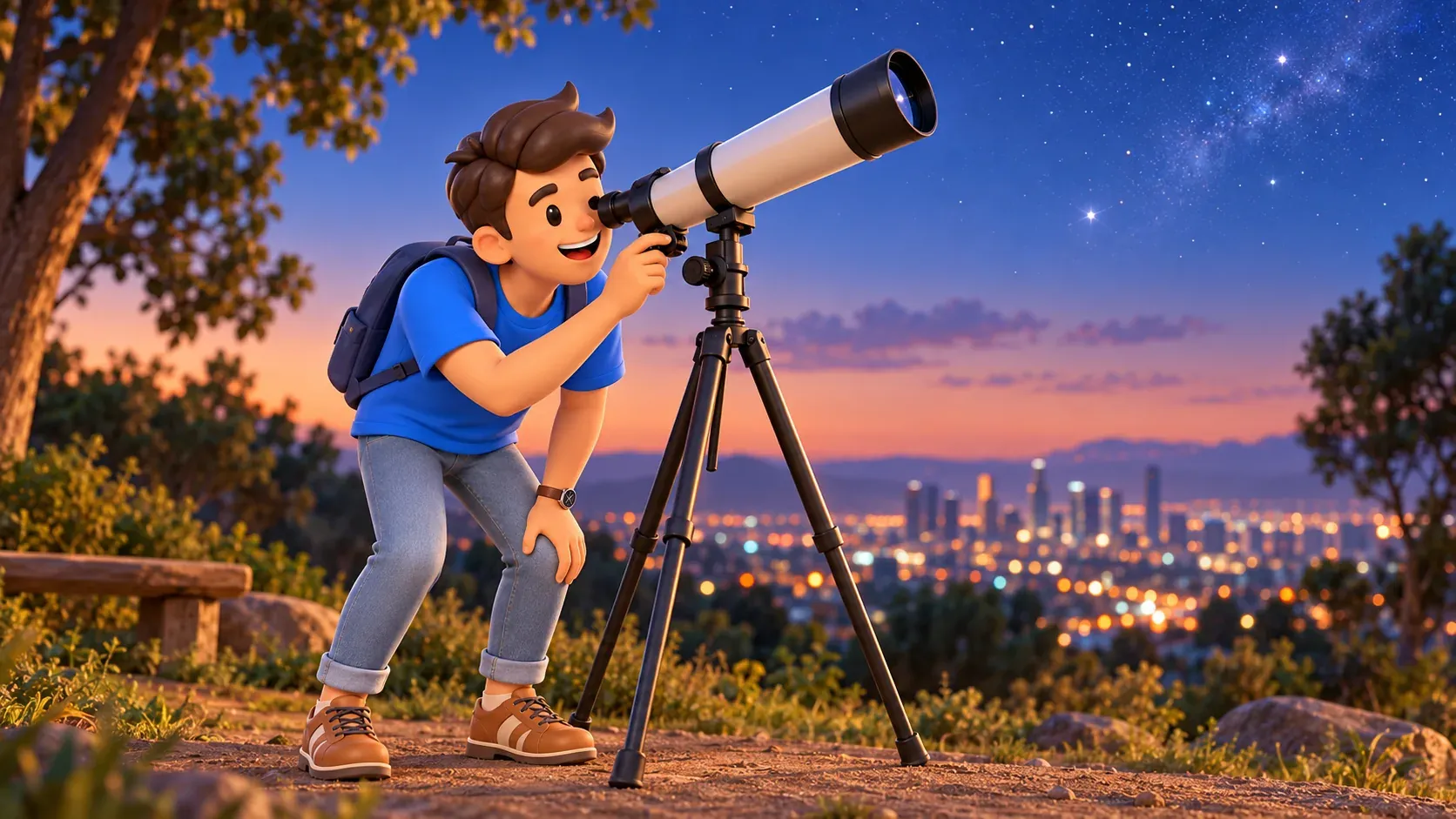
Griffith opened in 1935 as a public educational destination. Its setting combines a panorama with astronomy, giving a reason to spend time with both the grounds and exhibitions. The building normally opens at noon Tuesday to Friday and at 10:00 on weekends; it closes on Mondays. A planetarium show has separate visiting arrangements.
Late light can be an optional bonus rather than a fixed appointment at the same time in every season. On an overcast day, keep the building and exhibits as a focus without expecting a distant view. Decide on the return bus or pickup before going out to the grounds: finishing sightseeing on a hill does not finish the journey.
If some of your group love cinema while others prefer scientific discoveries, try planning the trip in RoadMe, where your interests and preferred pace shape a personal itinerary. Work through all three days in the app to get a connected plan around your dates and budget.
For a relaxed pace, leave dinner and rest after returning. If a trail walk is important, give it space by replacing other activities. A boulevard walk, studio tour, hike and evening observatory visit together would need a different programme.
Day 3: Santa Monica and Venice, with time for the ocean
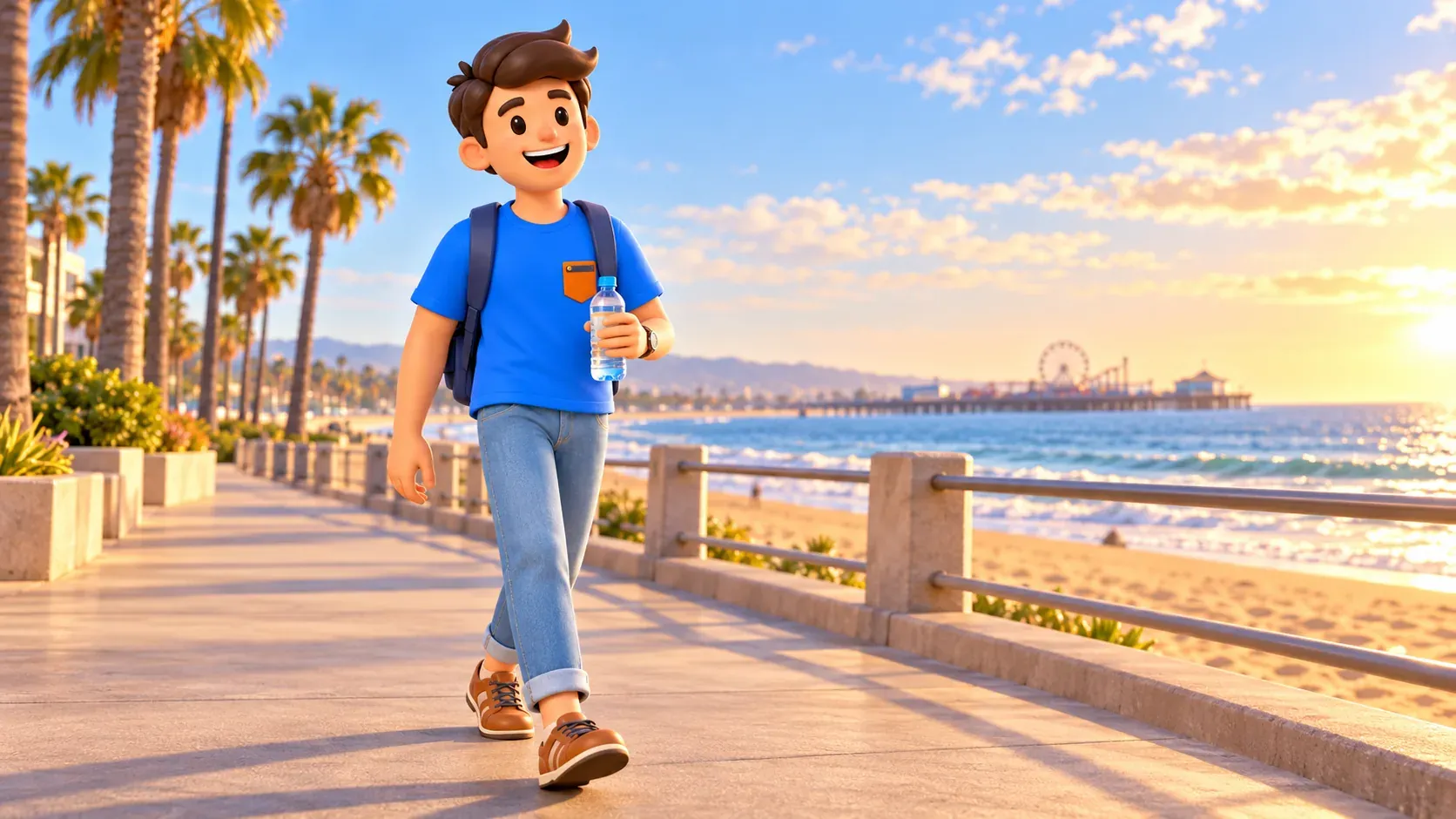
Begin at Santa Monica Pier around 10:00. Leave time to walk on the pier, look towards the shore and decide whether you want rides. The pier opens daily from 6:00 to 22:00, but those hours do not mean every attraction and restaurant operates throughout them.
The Pier Bridge is being rebuilt. The pier itself remains open, with possible diversions and delays. Follow temporary signs. If reaching the pier takes longer than expected, shorten time around the amusements while keeping lunch and room for the journey home.
Then join the coastal pedestrian path and head south towards Venice with the ocean on your right. Near the pier is Original Muscle Beach in Santa Monica. This gymnastics area is distinct from Muscle Beach Venice further along the coast.
The walk to Venice Beach Skatepark covers several kilometres with opportunities for food and rest. Treat it as a substantial walk, rather than a short link between two photographs. Give the whole coastal block roughly five to seven hours with pauses; swimming, rides or a long meal change the timing.
Finish in Venice at the skatepark, observing from outside the skating area. Keep Muscle Beach Venice as an optional continuation if you have energy. A compulsory Malibu excursion or Getty Center visit would change the day considerably: the coast already offers a complete experience, with the return still to come.
This is a one-way route. If your car is at the pier, walking back adds another long section; arrange another way back if that does not suit you. The E Line serves Downtown Santa Monica rather than the skatepark, so getting to the station is a separate journey. The shorter version stays around the Santa Monica Pier and nearby promenade.
Adapt the outline to the time you really have
With a late arrival, keep the first evening for dinner and a short walk near your accommodation. It is not the first full day. If you really have two sightseeing days, choose two main experiences and keep their programmes intact instead of scattering three abbreviated days across long transfers.
Without a car, the distance from your particular accommodation to a useful station matters. The B Line provides a corridor for Hollywood and the E Line for Santa Monica. Check the final stretch to each entrance and the evening return separately. Drivers should add parking and the walk from it; a neighbourhood name in a listing is no substitute for the exact address.
Decide in advance how to divide spending between main visits, meals and transport. Free admission does not make the whole day free. Check temporary closures before leaving and save your finish address. A workable three-day plan lets you move or shorten a block while preserving the trip's purpose and enough rest between days.


