
Los Angeles Chinatown in Two Hours: Temple, Plaza and an Optional Park
For a short introduction to Los Angeles Chinatown, choose two contrasting places: Thien Hau Temple on Yale Street and Central Plaza. Begin at the temple, continue to the plaza and leave room for food or a quiet pause. Los Angeles State Historic Park can follow if you have extra time and energy, rather than becoming another compulsory stop.
Allow roughly two hours for the main programme, excluding travel from your accommodation and back. This is an editorial planning estimate, not a measured route with guaranteed admission. The temple is a religious place, the plaza belongs to a living commercial neighbourhood, and the park is a separate continuation. They do not share one set of visiting arrangements.
Give the two-hour walk a clear shape
The main walk begins at Thien Hau Temple on Yale Street and ends around Central Plaza. This direction lets you start with the quieter religious stop before moving towards the plaza's architecture and everyday life. A park extension remains a decision to make after the food break, rather than a requirement to collect another destination.
About twenty to thirty minutes can be a starting allowance for the temple exterior and any permitted interior visit. Leave a separate part of the window for walking and finding your way, then give the plaza and pause most of the remaining time. If you want a long lunch, shorten the street exploration. For more architectural attention, choose a simpler food break rather than a long queue.
To make this walk part of a convenient personal day, try RoadMe: it develops a plan around your dates, interests, pace and budget. Select neighbourhood culture, architecture or a quieter walk so the programme reflects your trip and the experiences you actually want.
Save the temple at 750–756 Yale Street, Central Plaza around 943 N Broadway and the park's name before setting off. Do not confuse Chinatown's Central Plaza with the historic El Pueblo plaza elsewhere in the centre. Plan towards a specific address rather than a general Chinatown pin.
- Main sequence: Thien Hau Temple, Central Plaza, then a nearby pause.
- Two-hour finish: Central Plaza and the surrounding open streets.
- Optional continuation: Los Angeles State Historic Park, with its own time and return journey.
- Without a car: check the A Line and Chinatown Station, then the actual way to the start.
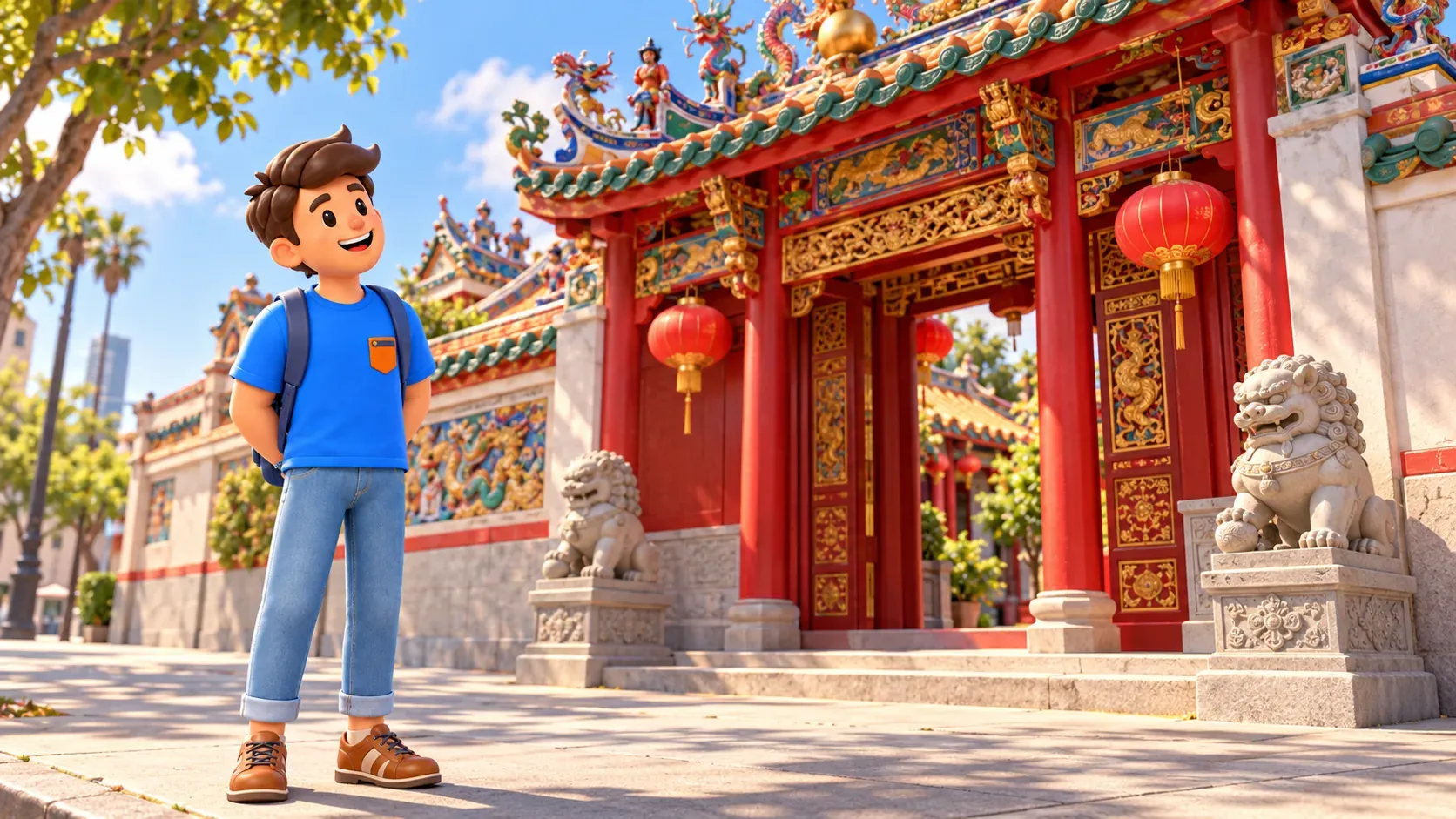
Thien Hau Temple: approach it as a place of worship
Thien Hau Temple is a Taoist temple on Yale Street associated with Mazu, the sea goddess. That context makes clear that it is more than an ornamental pavilion on a visitor trail. Its significance belongs to religious life and community history as well as the appearance of its exterior.
The Chinese American Museum's account says the temple opened in 2005 after the Camau Association converted a former church building. Much earlier dates appear online, but the history of a similarly named temple elsewhere should not be attached to this address. One checked piece of context is enough for a short walk without turning the stop into a complete historical essay.
Start outside without obstructing people arriving. Look at the roof, entrance and colour details. There is no need to explain every symbol if you have not checked its meaning. Careful observation is more useful than an appealing invented story that later becomes hard to distinguish from a real tradition.
Current interior visiting hours could not be confirmed through an accessible operator source. Entry is therefore a possibility if the door is open and visitors are allowed, not a promised part of the route. If the entrance is closed or restricted, continue after the exterior stop. The programme remains coherent without access to the rooms.
If visitors are admitted, follow staff instructions and the situation inside. Ask before photographing, avoid taking pictures of people praying without permission and allow religious activity to keep its own rhythm. These are respectful visiting principles rather than a claim about a specific written temple policy.
Do not plan a guaranteed meeting with a member of staff, a ceremony or an individual explanation of symbols: those services have not been verified. If worship is taking place, a shorter personal visit may be more appropriate. Your sightseeing timetable should not determine what happens in a place of religious practice.
Between stops: notice the neighbourhood as it is
After the temple, continue along open pavements towards Central Plaza. Yale Street lies west of the plaza; use the current street crossings and permitted routes to reach it. Do not assume every courtyard or indoor passage provides a public shortcut. Check the precise route against the current city map and arrangements on the ground.
This section helps you see how the temple fits within an ordinary neighbourhood. Notice shops, the street scale and the changing surroundings rather than simply searching for the next familiar façade. Entering every open business is unnecessary to understand that people live and work here.
If you want to shop on the way, decide how much of your food break and finish time remains. One shop's hours do not stand for the entire neighbourhood. A closed display or passage does not mean the walk has failed; individual places keep their own schedules and serve purposes beyond a visitor's route.
In a two-hour programme it helps to give each stop a main purpose. At the temple, that is cultural context and a quieter look. Between stops, it is everyday street life. At the plaza, it is architecture and the history of the neighbourhood's formation. This avoids repeating vague descriptions of atmosphere at every corner.
Central Plaza: why New Chinatown has a history
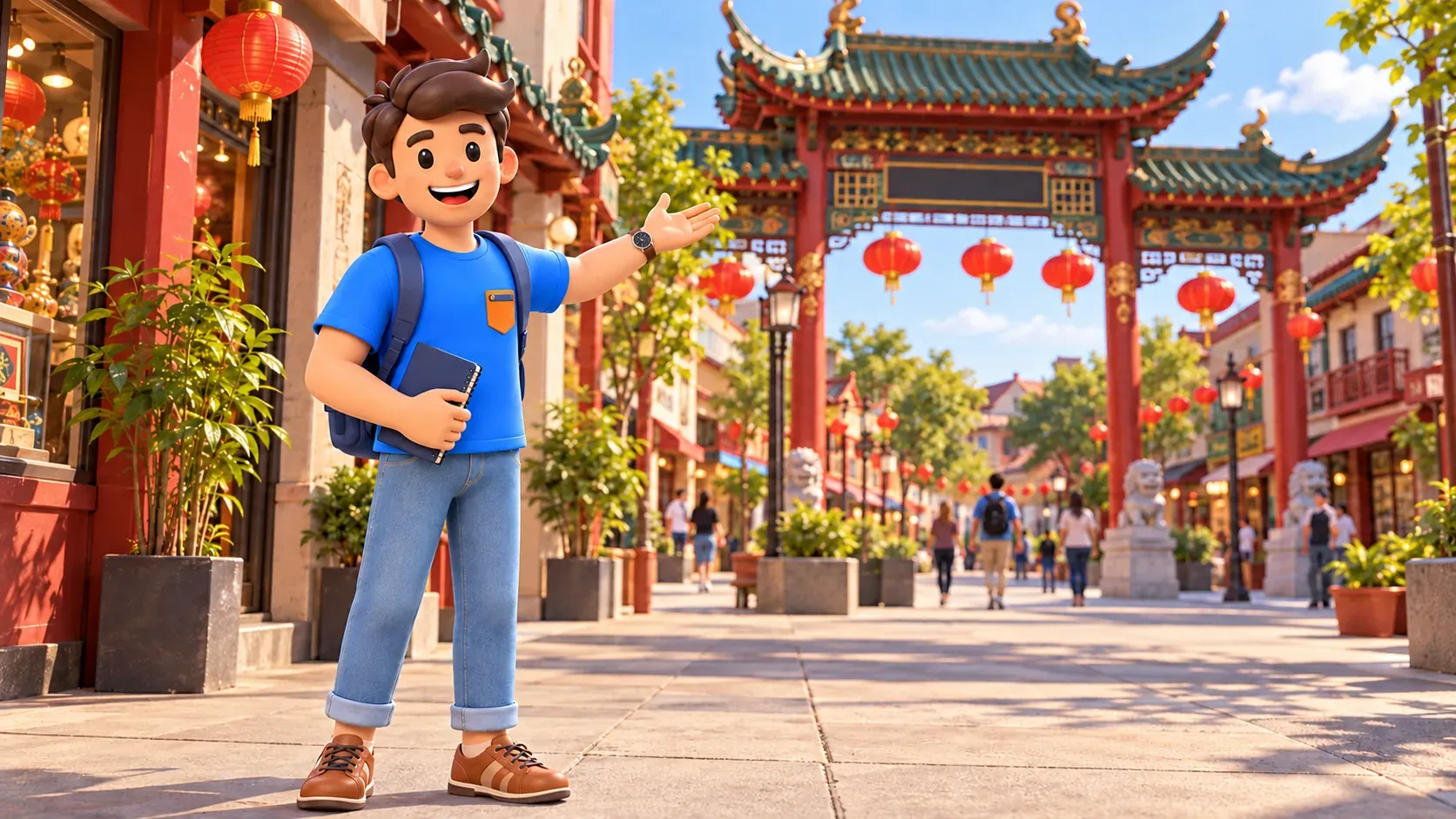
Central Plaza is a recognisable heart of the present historic Chinatown. The new plaza opened on June 25, 1938. Its creation is connected with the displacement of the earlier Chinatown for Union Station and with the Chinese American community's own efforts to establish a new place for businesses and public life.
That background explains the name New Chinatown in descriptions of the area. It does not mean a recent shopping development with no past. New is relative to the earlier neighbourhood where the railway station now stands. Keep that relationship in mind without trying to tell the entire story of relocation and every building during one small walk.
Look at gates, pagoda-style roofs and lanterns. Together they give the plaza its distinctive composition. It should not be described as an exact copy of one city in China: this is part of Los Angeles' own Chinese American history. Notice how the architecture works with passages and commercial premises.
The plaza is not a museum room with one ticket and one opening arrangement covering everything. Independent businesses operate here and events can affect the space. This guide does not promise every part is open at every hour. A short introduction can use the accessible areas and views from open streets.
The plaza area is a natural finish for the main walk. Pause and choose a place to eat according to what is actually open and the queue. There is no need to seek a single most authentic meal or judge a whole culture through one dish. Choose food that interests your group and leave time to enjoy it.
If you want more history, linger over one checked detail rather than adding five unprepared stops. That keeps the neighbourhood from turning into a collection of borrowed dates. Longer stories about individual monuments and museum collections work better on later visits with separate time available.

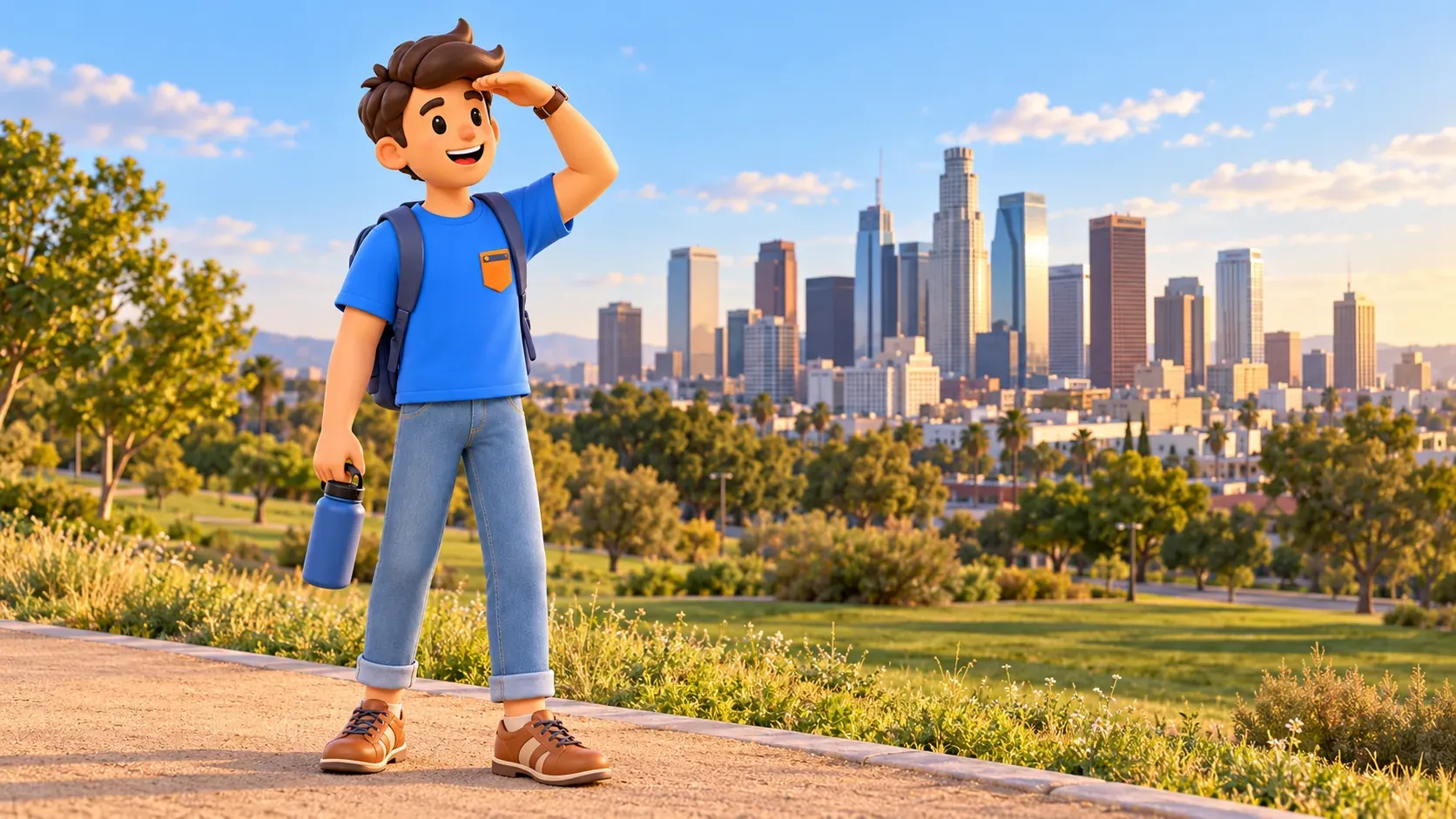
A park extension: greenery, city views and a railway past
Los Angeles State Historic Park is beside Chinatown but is a separate destination. Add it after the main walk if you have more than two hours in total. Allow extra time for reaching an entrance, a short walk and a pause. The amount depends on your chosen entry and how far you want to explore.
California State Parks identifies the site with the former River Station of the Southern Pacific Railroad. This connects the open space with the history of people arriving in Los Angeles. You can wander paths and look towards Downtown without making the visit a separate sporting programme.
The park opens daily from 8:00 a.m. to sunset. That is a seasonally changing boundary, not a fixed 6:00 p.m. closing. If the main walk finishes late in the day, check sunset and current restrictions first. Do not build the extension on the assumption that several hours in an open park always remain after dinner.
The main State Parks page lists 1245 N Spring Street. Different landmarks and entrance areas can serve the park, so check your actual public entry when planning the return. A parking address, the centre of the green space and a station-side approach are not interchangeable destinations.
To decide whether a park break fits after the plaza, you can use RoadMe, where your interests and preferred pace shape a personal itinerary. Try planning the whole trip so the green pause finds a convenient place among your other experiences.
When a shorter programme makes sense
If the temple is closed, keep the exterior stop and continue to the plaza. If you feel tired after eating, finish at Central Plaza without the park. That is a complete short walk, not a failed version of a bigger programme. The green continuation was designed as an option from the beginning.
In heat or rain, shorten the time outdoors rather than relying on the temple as a universal indoor shelter. Its access has not been confirmed as a sightseeing service. Check places that are actually open for a pause. If someone needs less walking, discuss shortening before the start rather than after a long additional stretch.
What to prepare before leaving
Save the addresses, choose the main finish and decide how you will return. For rail travel, use the current A Line name: older guides mention Gold Line or L Line and can confuse the journey. Check actual departures and restrictions before travelling. The running time of one small part does not describe the whole trip from your accommodation.
A useful Chinatown walk respects the different roles of its places. The temple introduces religious life, the plaza community history and architecture, and the optional park another urban scale. That provides a practical foundation while leaving you free to choose how deeply to explore each experience.


