
Los Angeles Broadway in Two Hours: A Walk Past Historic Theatre Façades
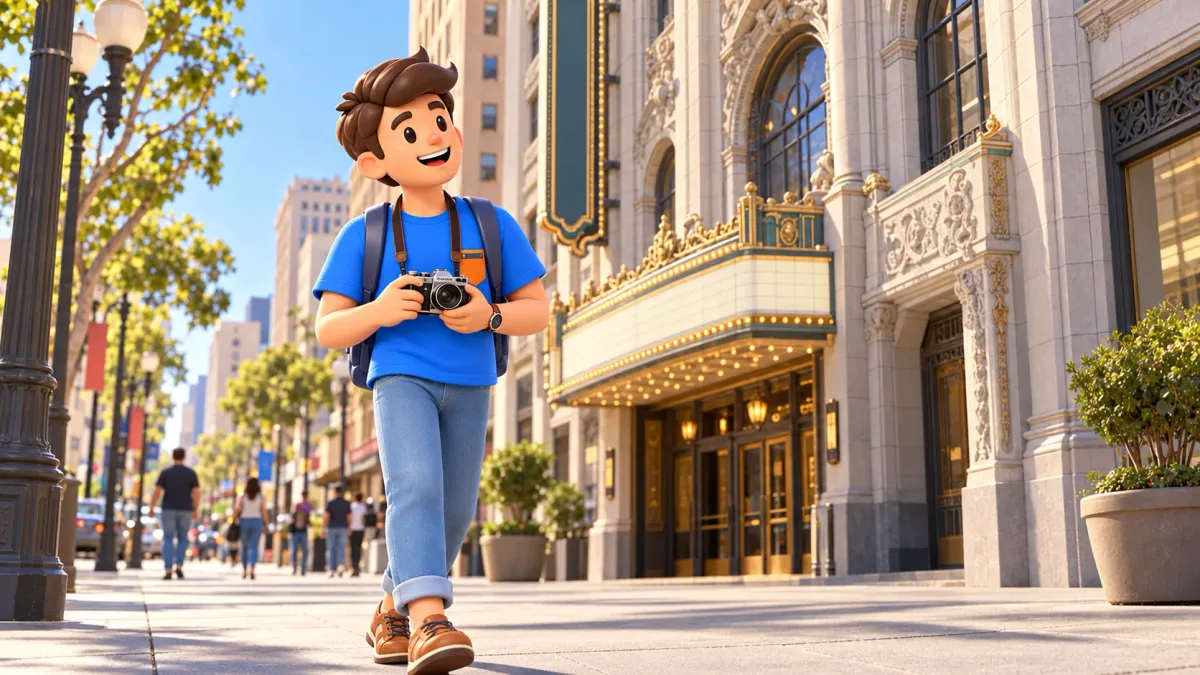
You can discover Los Angeles' old movie palaces without an evening screening or a complicated tour programme. For a first visit, walk south along Broadway from the Million Dollar Theatre to the Palace, Tower and Orpheum. Each has an exterior worth stopping for in its own right. Near the finish, the turquoise Eastern Columbia Building adds a different architectural accent rather than another theatre.
Allow roughly two hours for this programme, separately from your journey into Downtown and back. That is an editorial planning estimate, not a measured walking time. The foundation is exterior viewing from open pavements. A performance ticket, an organised auditorium visit or a long lunch needs its own allowance.
Start with a clear direction and a realistic window
Begin at the Million Dollar Theatre, 307 S Broadway, and continue towards increasing street numbers. The Palace follows at 630 S Broadway, then the Tower at 802 and the Orpheum at 842. Eastern Columbia stands at 849 S Broadway near the southern end of this sequence. The four theatre stops therefore form a straightforward direction without repeatedly returning to the start.
A useful rough balance is to leave half the window for looking at façades and half for walking, crossings, orientation and a short pause. You may linger at one building and need only a few minutes at another. Studying every shop window will quickly change the two-hour shape. Choose one main interest before leaving: decoration, signs or the relationship between historic buildings and present uses.
To make this walk part of a convenient personal day, try RoadMe: it develops an itinerary around your dates, interests, pace and budget. Choose architecture or cinema history as a trip interest so the short route finds a suitable place among your other plans.
- Start: Million Dollar Theatre, 307 S Broadway.
- Middle: Palace Theatre, 630 S Broadway, then Apple Tower Theatre, 802 S Broadway.
- Theatre finish: Orpheum Theatre, 842 S Broadway.
- Brief addition: the Eastern Columbia exterior, 849 S Broadway.
- Format: one direction, with a separate decision about returning.
For the approach, check Historic Broadway station on the A and E lines and then the actual way to the start. After the southern finish, 7th Street/Metro Center, also served by A and E, is another possibility to consider. Reaching it is a separate walk, not a direct exit from a theatre onto a platform. Check current departures and restrictions before travelling rather than relying on older colour names for the lines.
Million Dollar: begin with a richly worked exterior
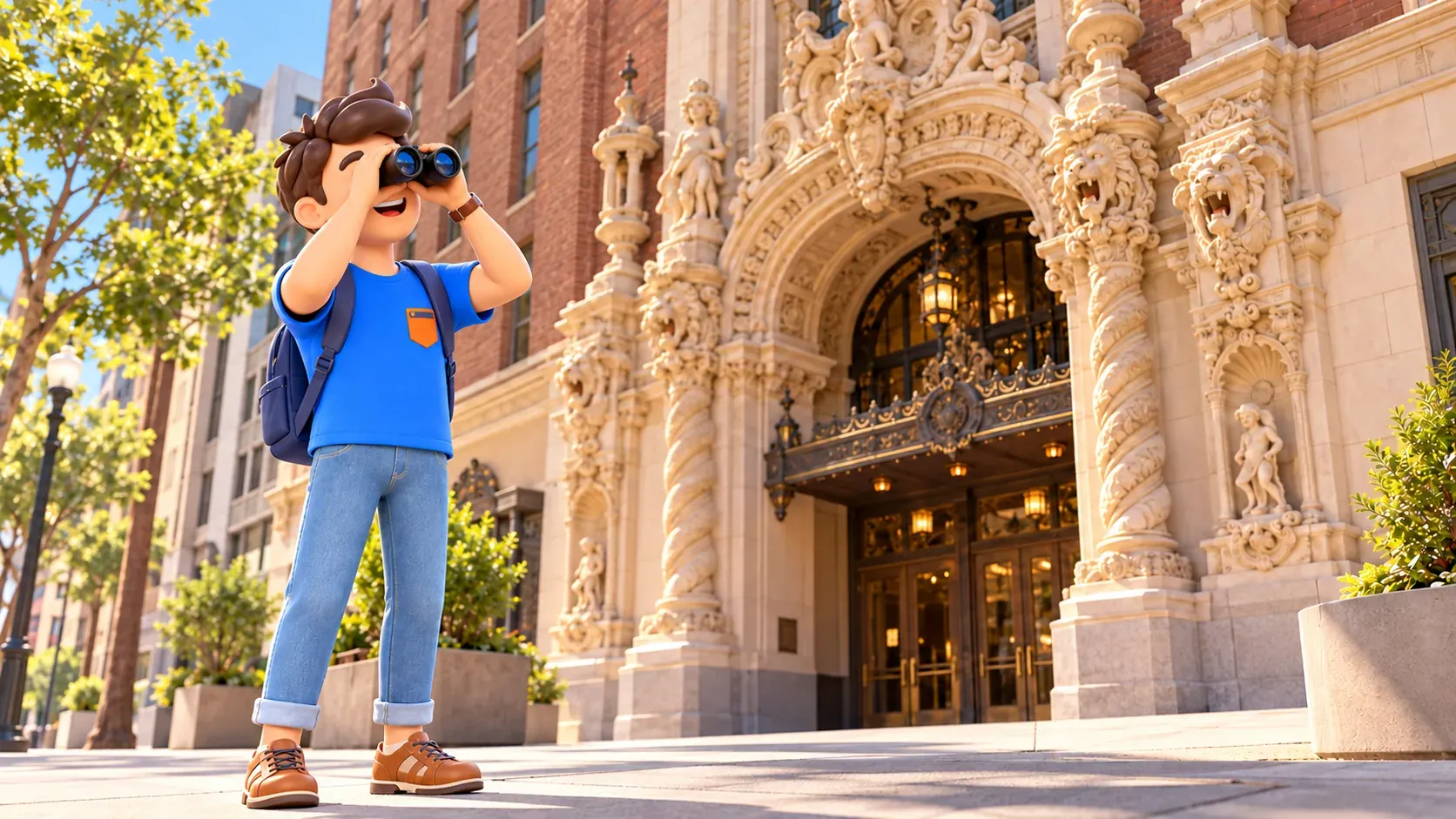
The Million Dollar Theatre opened in 1918 as Sid Grauman's first Los Angeles venue. For this walk, one piece of context is enough: it belongs to the early large movie palaces designed to make an impression before a film began. The main focus now is the exterior decoration around and above the entrance.
The façade is associated with Spanish Churrigueresque, an elaborate decorative style. You do not have to remember the term to recognise the contrast between a restrained commercial wall and this theatrical exterior. Look for sculpted figures, animal heads and the rhythm of dense detail. These help explain how the building attracted a passer-by's attention from the street.
Start with the whole façade, then select one small area. Notice how the decorative frame changes the feeling of an ordinary entrance. For a general photograph, find an unobstructed spot on the pavement. Cross only at a functioning street crossing if you want a different viewpoint. Pedestrian flow and traffic matter more than perfect symmetry in a photograph.
The venue now accommodates events, filming and other productions. Looking from outside does not include unrestricted admission to the auditorium. Check a particular event separately if it interests you. Neighbouring Grand Central Market can provide a pause before the start or after returning, but a full market visit changes the timing of this programme.
Continue to the Palace and compare the street
Keep following Broadway towards number 630. The route is about more than four isolated buildings: between them, notice historic upper floors alongside present-day commerce and movement. Look upwards after stopping out of the flow rather than while negotiating an intersection. That allows architectural attention without constantly distracting you from the way ahead.
A first visit does not need every theatre on the street. Broadway contains more historic buildings than the four chosen here. Adding all their names turns a short programme into a hurried list. Comparing a few carefully observed exteriors is often more rewarding than finishing with dozens of photographs that are difficult to tell apart.
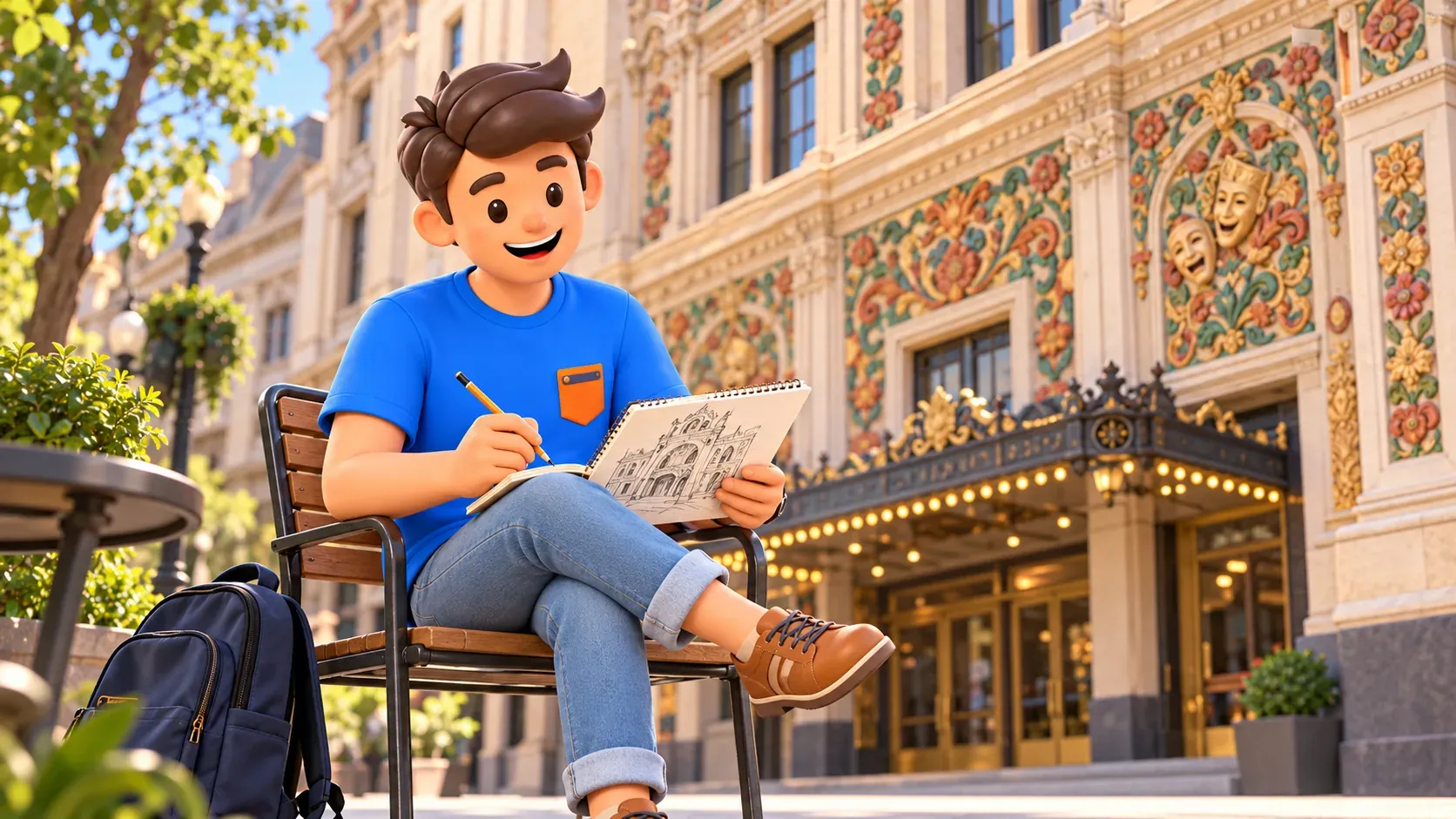
At the Palace, look for multicoloured terra cotta, floral decoration and theatrical masks. The Los Angeles Conservancy describes an exterior loosely influenced by an early Renaissance Florentine palace. Its character differs from the Million Dollar's dense sculptural work. Consider how details are distributed across the façade and how they relate to the windows, rather than simply counting ornaments.
The Palace opened in 1911 as the Orpheum circuit's third Los Angeles home. When the circuit moved to a different building in 1926, this venue became the Palace. Remembering that small detail helps later at the present Orpheum: a connected naming history does not make the two addresses the same place.
View the building from outside before continuing. Hours associated with an office, box office or event preparation should not automatically be read as sightseeing admission times. The Palace auditorium is not a required visit in this programme. An event or organised tour needs its own confirmed access arrangements.
Tower: an old theatre with a new everyday role
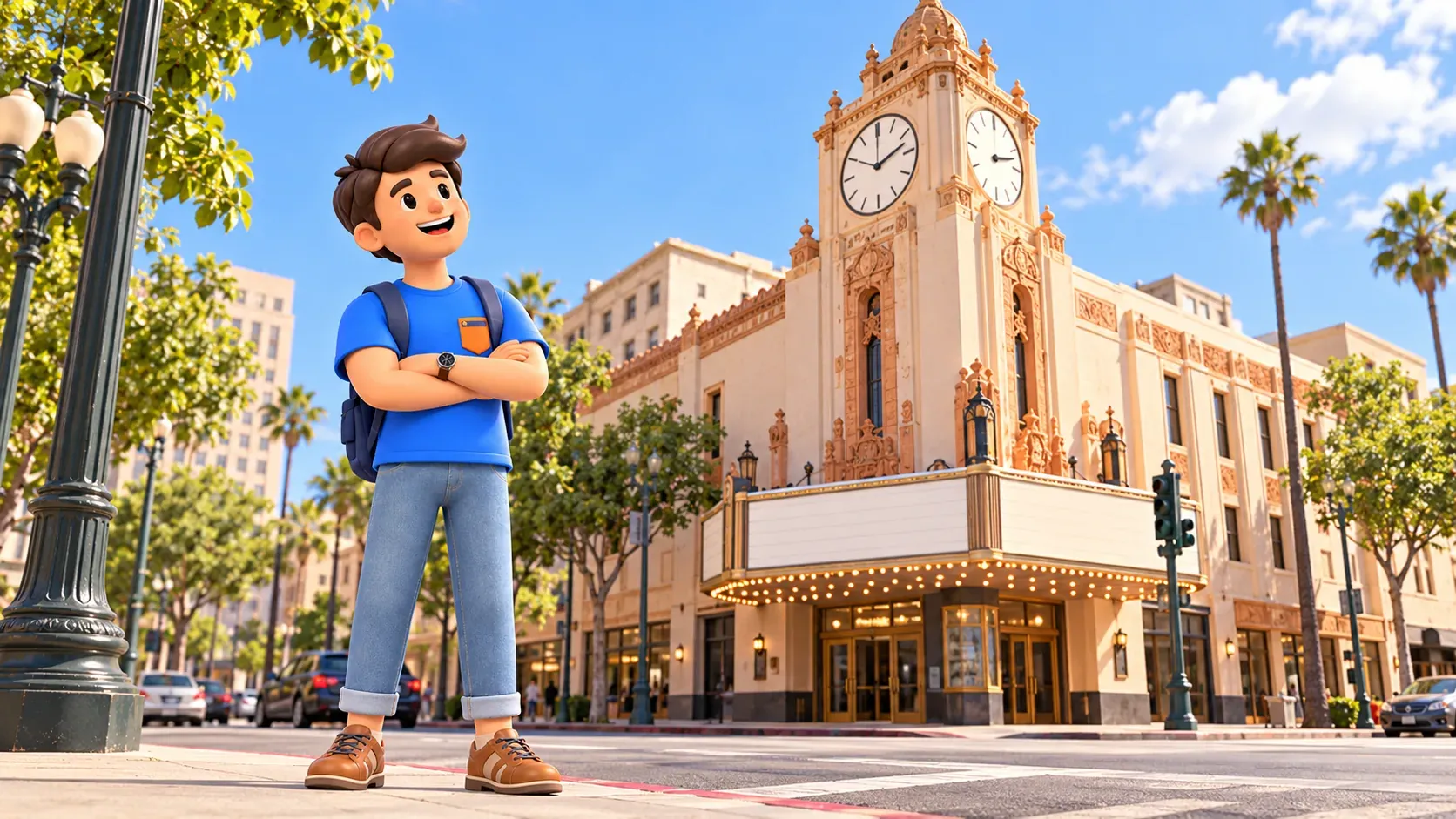
The next main stop is the Tower Theatre at Broadway and Eighth Street. Designed by S. Charles Lee, it dates from 1927. Today the building houses Apple Tower Theatre. Looking for a conventional cinema schedule here would miss the point: the historic structure now serves another everyday purpose.
First examine the clock tower, terra-cotta exterior and restored theatre signage. The corner position offers another way to understand the building's volume. After the preceding façades, compare the effect of its vertical emphasis: your eye rises from the entrance towards the tower. This is an accessible architectural exercise without needing specialist knowledge.
If the store is open and you want to step inside, that can become an extra part of the stop. Apple's current page provides drop-in shopping information and hours for specific dates. Check your own day because times can change. The schedule in the original 2021 opening announcement should not simply be transferred into a new trip.
The restored interior retains a theatrical scale while functioning as retail space and a place for visitors and staff. Follow the arrangements there and avoid occupying working areas for a lengthy photography session. If the interior particularly interests you, allow more time and shorten another pause instead of assuming everything fits unchanged.
A closed store door does not undermine the walk: comparing the four exteriors remains its foundation. Visiting the shop follows its own opening arrangements and is not a general ticket to historic Broadway. This distinction makes it easier to appreciate the different ways former theatres continue to be used.
Orpheum: signs and a theatrical finish
Continue from the Tower to the Orpheum Theatre at 842 S Broadway. It opened in 1926 as the vaudeville circuit's fourth and final Los Angeles home. The earlier Palace stop now makes sense: one institutional story unfolds at two distinct addresses. The full chronology can wait for another exploration of Broadway.
The Orpheum has a Beaux Arts façade clad in grey terra cotta. Notice how historic signs and the marquee work alongside the wall's more restrained surface. In contrast with the first theatre, concentrate on how the venue announces itself from a distance. Historic signage does not mean every light will necessarily be switched on during your visit.
The theatre hosts performances and special events with their own schedules and admission conditions. Exterior viewing is enough for the ordinary two-hour walk. If you want to end with a concert or screening, choose an actual event and count the waiting and running time separately. An evening ticket reshapes the day even when its address already belongs to your route.
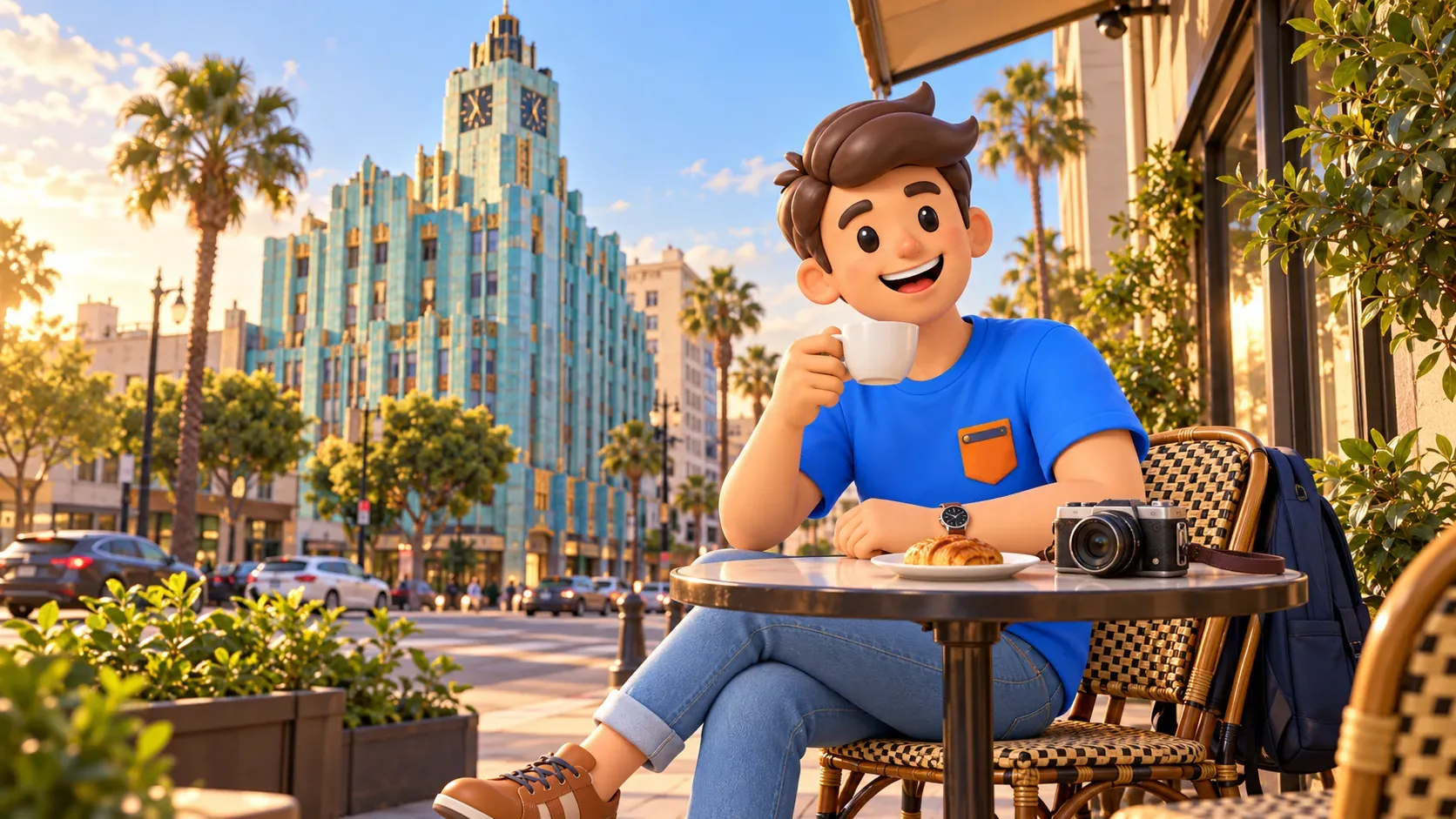
Near the southern finish, Eastern Columbia at 849 S Broadway provides another visual accent. The 1930 building's turquoise terra cotta, geometric decoration and clock tower contrast with the theatre fronts. It is an architectural addition rather than a fifth cinema. The building contains private homes, so view it from the open street without expecting tourist admission to the lobby.
For a final comparison, choose one difference you noticed yourself: dense sculpture, terra-cotta masks, a corner tower or a system of signs. An observation like that connects the stops better than trying to memorise every date. Two hours can provide enough material for your own impression while leaving reasons to return.
Make the pause and return part of the plan
Once you have seen the main exteriors, assess the time remaining. Use it for a brief pause somewhere actually open or keep it for reaching transport. If another appointment follows, count towards it from the specific southern finish rather than the starting address. The walk is not circular; returning to a car near the northern end is a separate decision.
If you want to continue after Broadway according to your own interests, try planning the whole trip in RoadMe, where a personal itinerary takes your preferred pace into account. The architecture walk, food and other experiences become easier to arrange around your dates and budget.
If you become tired, finish at the Tower or reduce additional observations at the end. In rain, shorten exterior stops instead of treating every theatre entrance as an available shelter. If mobility is a concern, check actual crossings and pavement conditions beforehand. A short address list does not establish accessibility across the entire route.
For a small photography series, alternate an overall view with a detail visible from a permitted position. There is no need to photograph every entrance in exactly the same way. One frame can explain a building's place in the street; another can show why you stopped. Before moving for a better angle, check that people can still pass and use the entrance.
Before setting off, save the address sequence, check transport and, if relevant, the Tower store's hours. Plan an event separately if you decide to include one. Then give your attention to the façades themselves: they turn an ordinary city walk into a focused introduction to Los Angeles' theatre Broadway.


