London Without Admission Fees: A Day of Streets, Gardens and Views
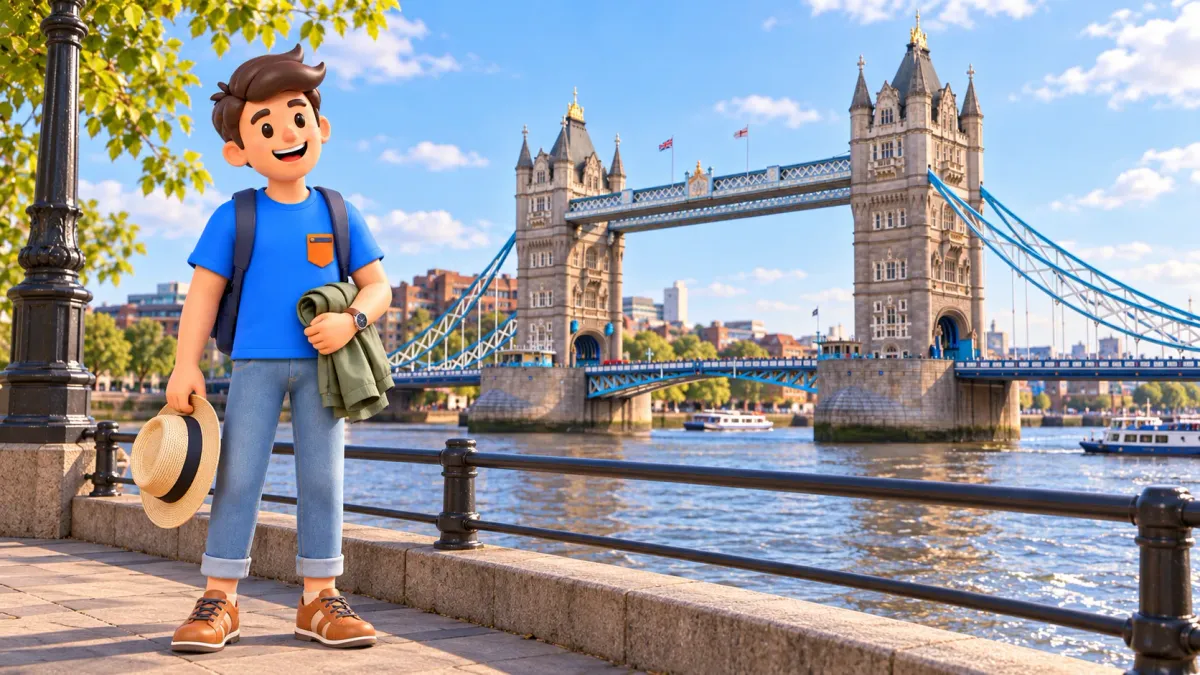
For a London day without attraction admission fees, follow a compact outdoor route from Bank to the Thames: the Royal Exchange exterior, Leadenhall Market’s public lanes, St Dunstan in the East, Tower Bridge’s lower pavement and Potters Fields Park. Architecture, a garden and river views provide the experiences. You can enjoy the sequence without buying entry to a major landmark.
Allow about five hours from the public space outside the Royal Exchange near Bank station to London Bridge station, with a meal and reserve included. This is a daylight plan, not a promise to cover the entire city. Food, travel and optional purchases remain separate expenses. Neither the Tower of London’s interior nor Tower Bridge’s upper walkways belongs to the free outdoor route.
Decide what a free day means
Removing admission charges does not require spending the day looking at attractions you would rather enter. Choose this plan when streets, architectural detail, plants and views are things you actively enjoy. Its value comes from that combination. If your main ambition is a particular collection or historic interior, keep money and time for that visit on another day rather than treating the exterior as the same experience.
Try RoadMe to plan the whole London trip more conveniently around your interests, dates, budget and pace. The app prepares a personal itinerary that gives free outdoor days, substantial visits and time to rest a suitable place across your trip.
The basic route needs no intermediate train journey, though reaching the start and leaving the finish may cost money. Expect approximately four to five kilometres on foot, including approaches and movement around viewpoints. This is a planning estimate, not a measured track. Keep a separate food allowance or bring a suitable packed meal; free access to a market does not make its lunches free.
A five-hour outline
- Royal Exchange exterior: fifteen minutes. Start outside near Bank around ten.
- Leadenhall Market: forty-five minutes. Explore the public passages and their architecture.
- St Dunstan in the East: thirty minutes. A selected look and garden pause when open.
- Tower Wharf and the bridge: forty-five minutes. Public riverside views and the lower crossing southwards.
- Potters Fields Park: thirty minutes. A riverside green pause on the southern bank.
- Meal, connections and reserve: 135 minutes. Forty-five for food, sixty for walking connections, thirty spare.
The total is 300 minutes. Divide the connection hour into fifteen minutes from Bank to the market, fifteen from the market to the garden, fifteen from the garden to Tower Wharf and fifteen towards London Bridge station at the end. With these allowances, the garden falls around 11:30–12:00, the bridge section around 12:15–13:00 and lunch around 13:30. Use the reserve throughout the day as needed.
Begin with the Royal Exchange from outside
Agree to meet in the public space near the Royal Exchange rather than simply saying “Bank station”. The station has several exits around a busy junction. Start the five-hour allowance once you are outside and oriented. Find a position that leaves pedestrian movement clear, then look towards the portico. The first stop is about the building’s relationship with the surrounding streets.
The present Royal Exchange was designed by William Tite and opened in 1844. Its eight-column entrance gives a commercial building a monumental presence. It is a later chapter in the Exchange’s history, not the original sixteenth-century structure surviving unchanged. You can appreciate the frontage without going shopping, reserving a restaurant table or depending on the interior’s particular opening arrangements.
Notice the difference between a junction and a formal viewing square. People are moving to work, crossing streets and entering buildings around you. The surrounding City is a working district. That everyday activity can be part of the experience, provided you share the public space comfortably.
Leadenhall Market without a shopping requirement
Continue towards Leadenhall Market on the public route along the Cornhill and Gracechurch Street area, using current crossings. The market’s address is Gracechurch Street, EC3V 1LT. Its covered passages make the change of scale immediately clear. Look up at the painted structure, then back towards the paving and the people moving through. You are visiting a place, not committing to a purchase.
The present market was designed by Horace Jones in 1881. Decorated columns, arches and the glass roof belong to that Victorian design, even though trading here has a much longer history. Choose one feature to follow through the space: a repeated colour, the curve of an arch or the way the roof changes at the crossing of the passages. A little attention makes the architecture worth its own stop.
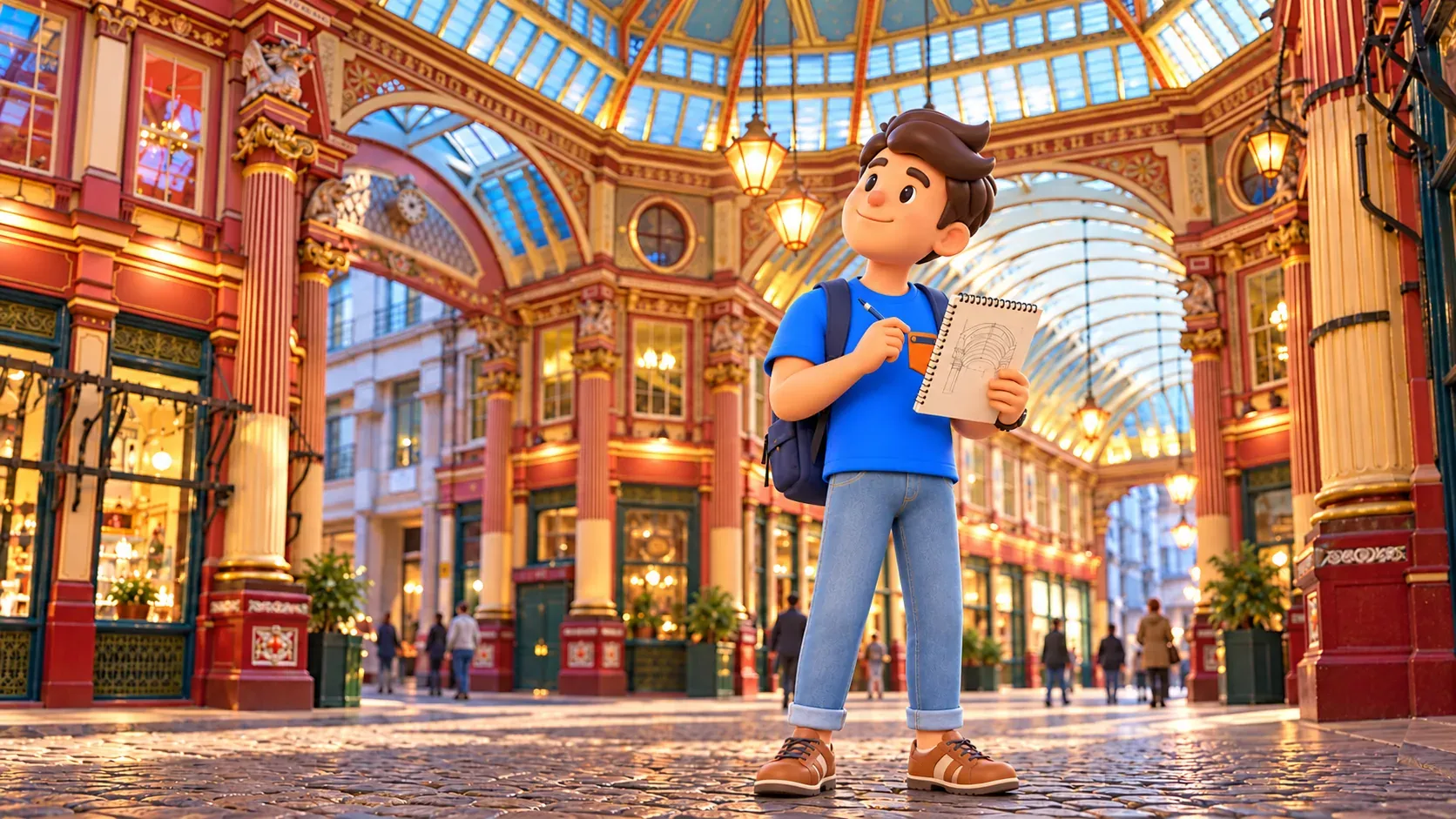
The owner describes the public areas as open around the clock, while individual shops, bars and restaurants keep separate hours. This makes an architectural visit different from a shopping or dining plan. Do not arrive on a weekend assuming every business will be operating. Events or works can also affect particular areas, so use the public route available when you visit and respect any barriers.
Forty-five minutes is an unhurried allowance, not the minimum time needed to pass through. If you buy a drink, count it as part of your own food budget.
A garden inside the remains of a church
Head south towards the Eastcheap and Great Tower Street area, then find St Dunstan in the East through its available public entrance near St Dunstan’s Hill or Idol Lane. The garden changes the day from large commercial buildings to plants and open stonework. Give yourself a moment to notice the absence of a roof before reaching for a camera.
The church has origins around 1100, but the remains do not all belong to one medieval building. It suffered in the Great Fire of 1666 and again during the Blitz in 1941. Christopher Wren’s tower and steeple survived the bombing. The damaged church was not rebuilt as before; its remains became a public garden. That layered history helps explain the unusual meeting of architecture and planting.
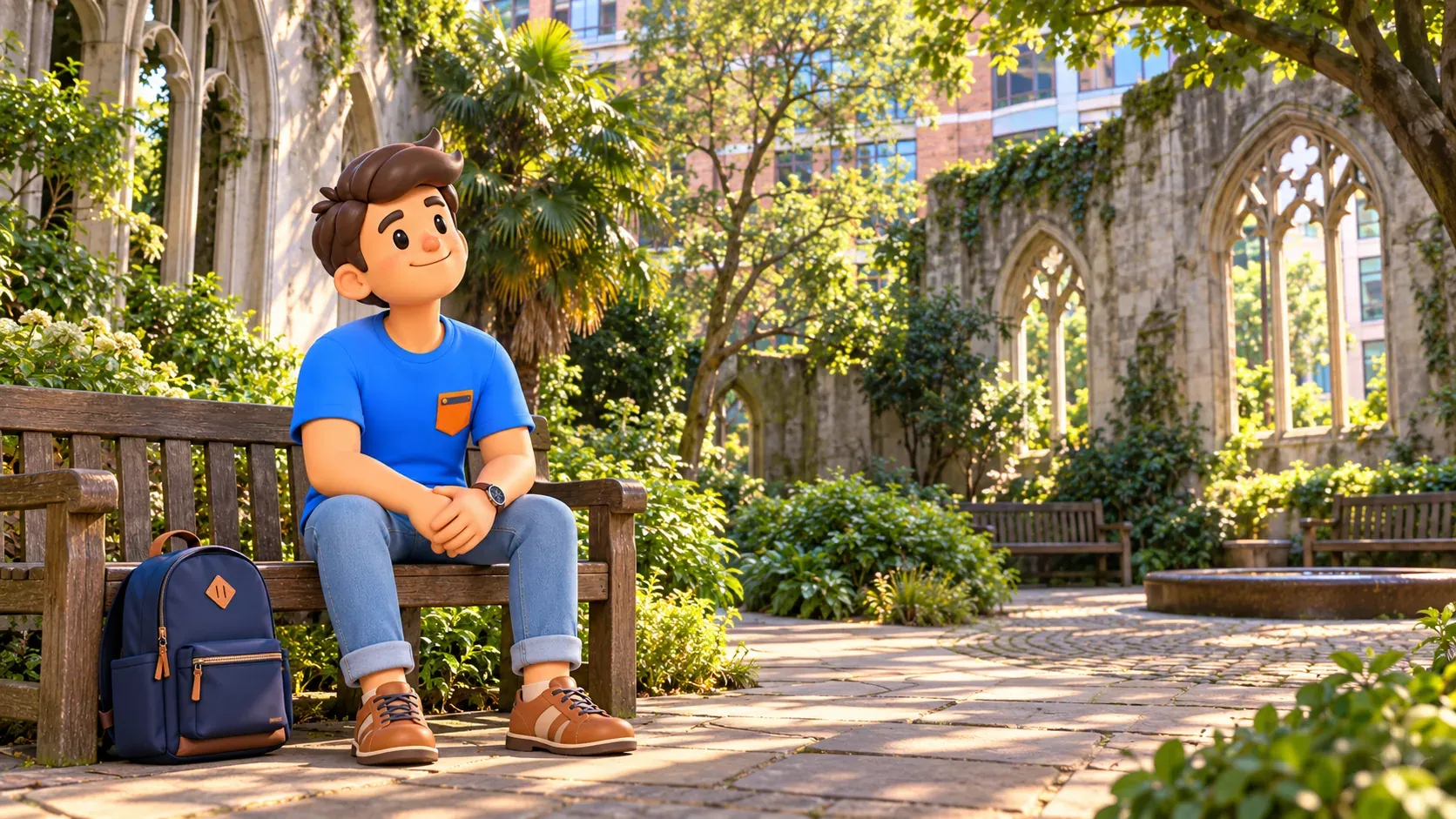
Look through one empty window, then notice how greenery changes its outline. A bench, when available, makes this a useful place to rest rather than another object to photograph and leave. The garden is well known, so a beautiful image online should not become an expectation of having it to yourself. Share the paths, leave planted beds alone and avoid climbing the stonework.
Plan the visit in daylight and check the actual gates and notices. A street remaining open does not mean a managed garden remains accessible all evening. If the garden is temporarily closed, keep the exterior look brief and move on; do not replace it with an unplanned paid stop just to fill the half-hour. The river section can absorb some extra time if conditions are comfortable.
The Thames and Tower Bridge at ground level
Continue towards the public riverside outside the Tower of London using the available streets and crossings. Tower Wharf introduces the river before the bridge crossing. You are outside the fortress: seeing walls from public space does not include the Crown Jewels, the White Tower or the visitor route inside. Those experiences need a separate admission decision and substantially more time.
Tower Bridge opened in 1894. Its Gothic appearance can suggest an older structure, but it is Victorian engineering built to combine a river crossing with space for ships. The central bascules can rise for vessels. Notice the distinction between the lower road-level pavement and the high walkways linking the towers. Only the ordinary lower crossing belongs to this plan.
Approach the northwestern side and cross southwards on the lower western pavement beside the road, following current signs. Crossing this public route has no admission charge; entering the towers, glass floors and Engine Rooms is a separate paid attraction. A ticket-office queue is not the queue for an ordinary walk across the bridge. Keep moving considerately and step aside for photographs only where there is room.
Vessel lifts and maintenance may interrupt a crossing. Check current notices and the lift calendar if timing matters, but do not assume a lift happens at one fixed hour every day. If it occurs, wait behind the barriers and use the reserve. A major closure needs a revised route and finish rather than a hurried attempt to recover the exact five-hour schedule.
Potters Fields: let the view be enough
On the southern bank, continue to Potters Fields Park west of Tower Bridge using the open public approach. Its lawns and planted areas offer a green counterpart to the market’s roof and the garden’s stone walls. The park is managed as a public open space by a not-for-profit trust. You can enjoy the river view without adding a boat ride or a high observation deck.
The park opens throughout the year, but events can change the available areas and atmosphere. Choose an accessible spot that is actually open. If the ground is wet, sitting on the grass may be less appealing than using an available bench or taking the meal indoors.

From the public riverside, look back at the bridge as a whole. The pleasure here differs from standing beside traffic on the crossing. You can see the relationship between the towers, the moving river and the skyline without climbing higher. Keep that ground-level experience as the point of the stop; it does not need to compete with the views sold by nearby attractions.
Food, weather and the end of the day
Use the forty-five-minute meal allowance for a packed lunch in a suitable open public area or a straightforward paid meal nearby, according to weather and availability. Bringing food can limit extra spending, but you still need water, comfortable clothing and a plan for rubbish. A café table, indoor seating and toilet access should be checked rather than assumed to be free public facilities everywhere.
From Potters Fields, head towards London Bridge station through the available public connection to Tooley Street. This final fifteen-minute block is an estimate, so allow more if your pace is slower. The station is the finish, not a requirement to cross London Bridge itself. Reaching the platform and waiting for onward transport are additional to the outdoor outing.
For a shorter bridge-focused day, our Tower Bridge walk between two riverbanks gives that section more attention. If sustained rain makes this outdoor plan unattractive, choose the separate Wellcome and British Library rainy-day plan instead. Keep its opening-day conditions separate and make a replacement decision before travelling, rather than combining both itineraries.
Check access for your particular needs. Public pavements, garden entrances and station connections do not automatically make the entire day step-free. In cold weather, use shorter pauses; in heat, preserve water and rest time. A free outing is successful when you enjoy the experience comfortably, not when you force every stop into a rigid timetable or remove every possible expense.
With RoadMe, it is easier to turn your own mix of architecture, gardens and landmark visits into a personal plan for the whole journey. Try the app to balance London days around what matters to you and the budget you want to keep.
Finish with the experiences you chose: a monumental frontage, a decorated market, a garden in ruins and a recognisable bridge seen from public space. This is one satisfying London day without admission tickets, with enough room to eat and return comfortably. It leaves other days available for the interiors or collections that genuinely interest you.