London in the Rain: One Area, Two Indoor Visits
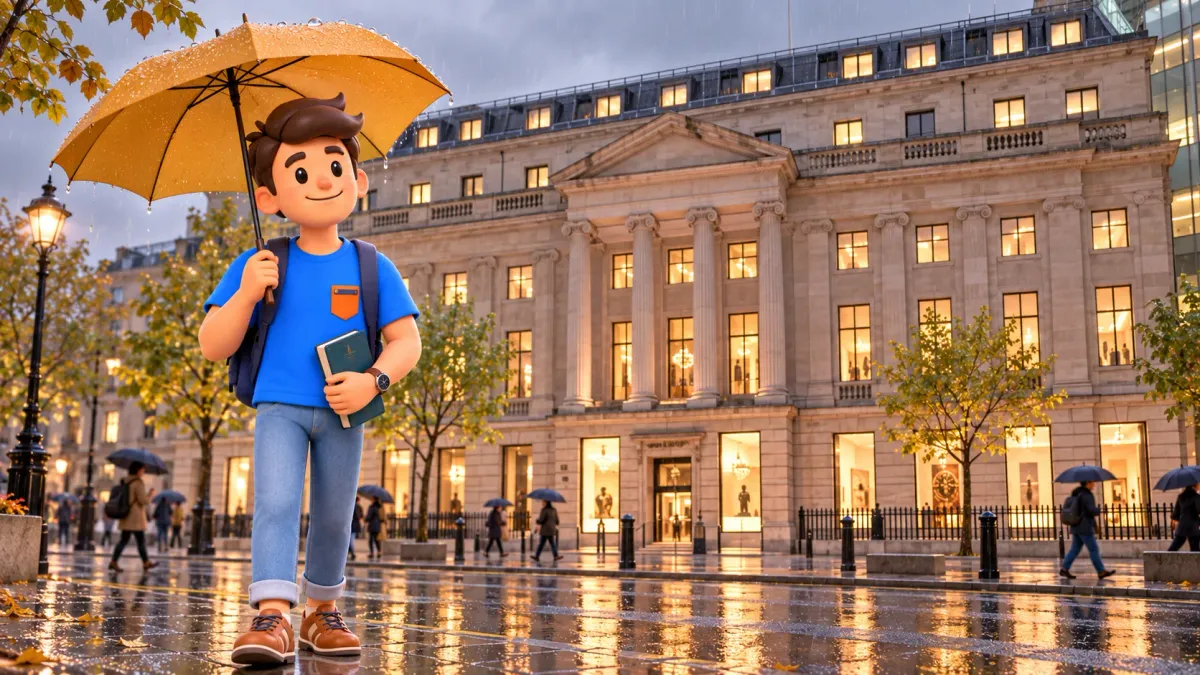
For a rainy half-day in London, stay around Euston Road: visit Wellcome Collection, pause for a light lunch and continue to the British Library’s free Treasures Gallery. This gives the day two distinct subjects, art and health followed by books and manuscripts, without spending hours travelling between scattered indoor attractions. You still need an umbrella for the streets between them.
Allow about four and a half hours from Euston Square station to King’s Cross St Pancras. The main plan works Tuesday to Sunday, subject to current opening arrangements. It includes selected displays, lunch and a reserve, rather than every exhibition in either building. Admission to these main displays is free; food and transport cost extra. Severe weather may call for staying in one venue instead.
Choose one small part of London
Rain makes a long list of attractions less useful than a clear decision. Euston Road offers two substantial indoor visits close enough to combine on foot. The contrast gives them a purpose beyond shelter: Wellcome connects art with questions about human life, while the Library shows how ideas survive in physical pages. You can enjoy both without making specialist research appointments.
Try RoadMe to organise the whole London trip more conveniently around your dates, interests, budget and pace. The app develops a personal itinerary that gives museum visits, neighbourhood walks and time to rest a suitable place across your days.
Begin around ten and aim to finish around half past two. Expect approximately two to four kilometres on foot, including approaches and indoor movement: a planning estimate, not a measured track. Travel from your accommodation and waiting for trains are extra. Both venues have their own entrances and visitor procedures; this is not a continuous covered passage through connected buildings.
A four-and-a-half-hour outline
- Approach: fifteen minutes. From Euston Square to Wellcome Collection, including orientation.
- Wellcome Collection: ninety minutes. A selected gallery visit and a short Reading Room pause.
- Light lunch: forty-five minutes. The ground-floor café, subject to service and space.
- Outdoor connection: fifteen minutes. Continue east along Euston Road to the British Library.
- Treasures Gallery: sixty minutes. Choose a few cases rather than every document.
- Public spaces, station and reserve: forty-five minutes. Fifteen for each.
The blocks total 270 minutes. In this example, Wellcome falls around 10:15–11:45, lunch follows, and the Library visit starts around 12:45. The Sunday opening at eleven therefore fits the sequence. Use the reserve wherever needed for entry or lockers. If a queue uses more time, reduce a visit or finish later; the schedule is an allowance, not a promise of immediate admission.
Wellcome Collection: begin with one question
The address is 183 Euston Road, NW1 2BE. The substantial stone frontage, with columns and a central pediment, belongs to the building designed by Septimus Warwick for Henry Wellcome and constructed in 1931–32. That earlier history should not be confused with the date of the present public museum. Behind the formal exterior, the visit is about the relationship between science, medicine, life and art.
Start with the permanent Being Human gallery on level one. Its subject is how we understand ourselves through health, identity and our relationships with the world. Choose a question that interests you rather than trying to absorb every label. How does an artwork express a physical experience? What can an ordinary object suggest about the way people care for each other?

This is an art-and-ideas visit, not medical advice or a practical science lesson. Read the current interpretation beside an object before deciding what it represents. Some exhibitions address sensitive aspects of bodies, illness or human experience; check content information if visiting with children or anyone who prefers to avoid particular material. There is no need to make a more difficult display compulsory for the outing.
Give a handful of works time to become interesting. First look without reading, then use the label to test your initial impression. Discuss one detail with your companion or note it privately afterwards. This produces a more memorable ninety minutes than racing through every available room. If a temporary exhibition is your main interest, substitute it for part of the permanent display instead of adding it without extra time.
The Reading Room is a different kind of pause
On level two, the Reading Room combines books, artworks and objects with places to sit. You can browse a subject, look at a picture or read a few pages. It offers a change of rhythm after standing in the gallery. Choose something because it catches your attention, not because you need to finish a chapter before the next stop.
Do not confuse this public space with Wellcome’s separate research library. Access arrangements and opening days are different. The Reading Room also hosts conversations and activities, so it is not a guaranteed silent study room or a reserved desk for working all afternoon. Follow the arrangements you find and use only the books and materials made available for visitors to handle.
If you settle into a subject, staying longer here is a good reason to shorten the second visit. Two venues are an option, not a test. A visitor interested in art and health may prefer a longer Wellcome visit; someone drawn to literature can preserve the full Library hour. Make the decision while seated rather than after hurrying out into the rain.
Lunch before the short outdoor connection
Wellcome’s café is on level zero and offers sandwiches, cakes and hot and cold drinks. Forty-five minutes suits a light lunch, depending on service and seating. It is not a reservation or a promise of a full restaurant menu. Check dietary requirements with staff and leave time to collect belongings before going outside. Keep food and drinks in the areas where they are permitted.
The next address is the British Library, 96 Euston Road, NW1 2DB. Continue east towards St Pancras using public pavements and current crossings. The street connection is roughly three quarters of a kilometre, depending on entrances: allow fifteen minutes rather than treating a fast walking estimate as an appointment. Heavy rain, signals and collecting bags can all slow the change between buildings.
Use an ordinary rain jacket and shoes that are comfortable on wet pavements. A compact umbrella is easier to manage at entrances than a large one, but close it before joining indoor circulation. In very poor conditions, make one venue the whole outing. A short distance on the map does not mean the walk will be pleasant in strong wind or a downpour.
The British Library: a visitor, not a researcher
Choose the London St Pancras site, not the Library’s Boston Spa location in Yorkshire. It is also a different destination from the British Museum on Great Russell Street. The red-brick Library and its public entrance lead to a visit centred on books and manuscripts. You do not need to become a research Reader simply to see the free permanent Treasures Gallery.
The research Reading Rooms require a Reader Pass and have their own rules. Keep them outside this plan. Public access does not mean you can enter collection stores, take a book from any visible shelf or order an item for casual browsing during the next hour. The distinction prevents an attractive image of a library from becoming an unrealistic promise about what visitors can use.
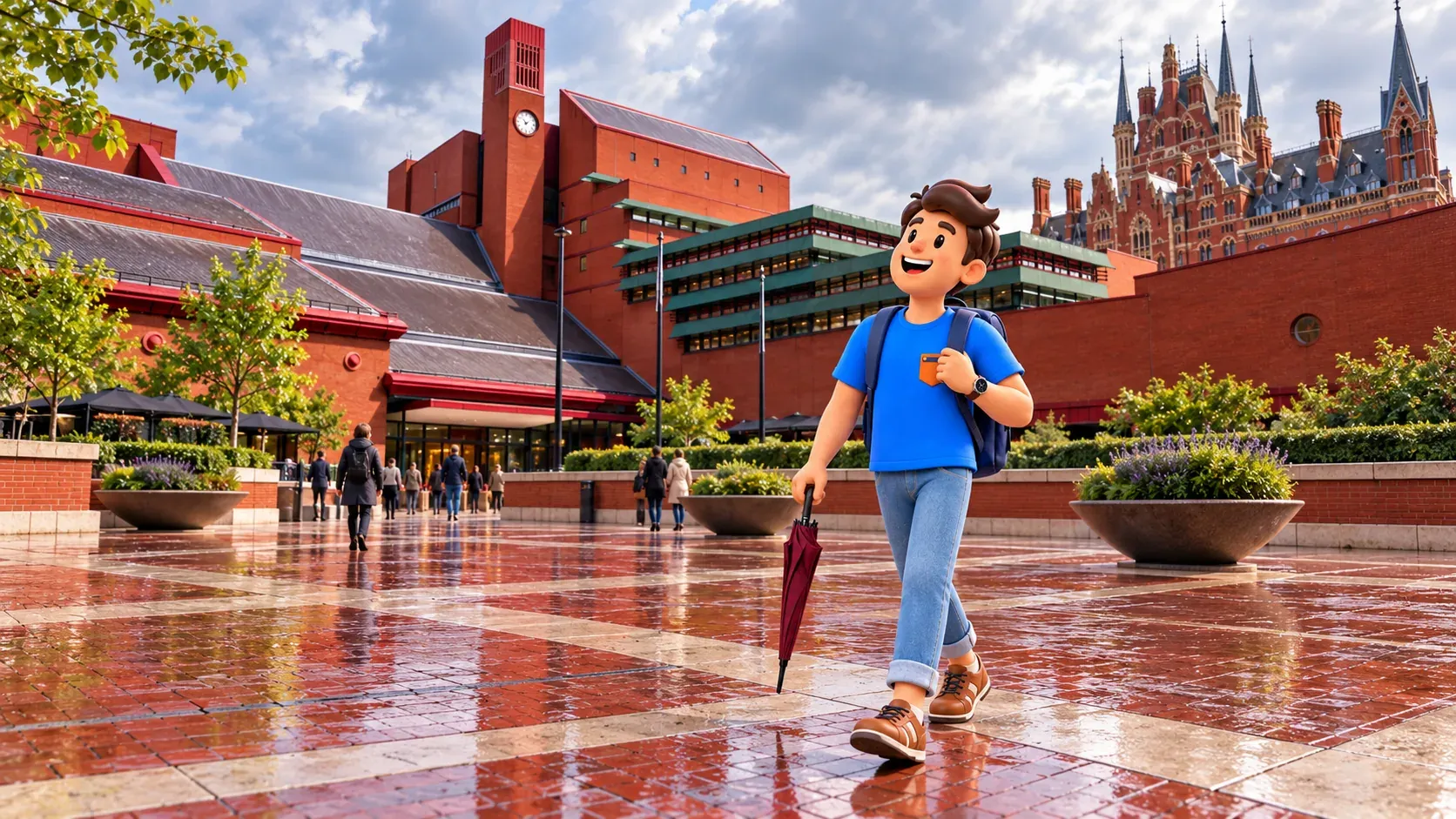
Pause in the public areas to notice the King’s Library tower, containing the collection associated with George III. It makes the stored book a striking architectural presence. Looking towards the glass is different from entering the tower or handling its contents. Let that view introduce the scale of the institution, then spend the main hour with selected works in the gallery.
Give the Treasures Gallery an hour
The permanent exhibition occupies the Sir John Ritblat Gallery and is free without booking. Its cases bring together literature, maps, historical documents, sacred texts and other parts of the collection. Start with two interests, perhaps writing and maps, rather than a checklist of famous names. This leaves time to read enough context for each chosen object to mean something.
Magna Carta and Shakespeare’s First Folio are well-known examples associated with the gallery. The First Folio was published in 1623 as a collected edition of plays; it is not Shakespeare’s handwritten manuscript. What matters when looking at such a book is the physical act of preserving and arranging writing for later readers. You do not have to understand every word on a page to appreciate that work.
Individual items rotate for conservation or loans. If a particular manuscript is the reason for your visit, ask the Library in advance whether it will be displayed. Avoid building the whole day around a list copied from an old visitor photograph. The gallery is cooler and darker than some public areas to protect fragile material, so an extra layer can make the visit more comfortable.
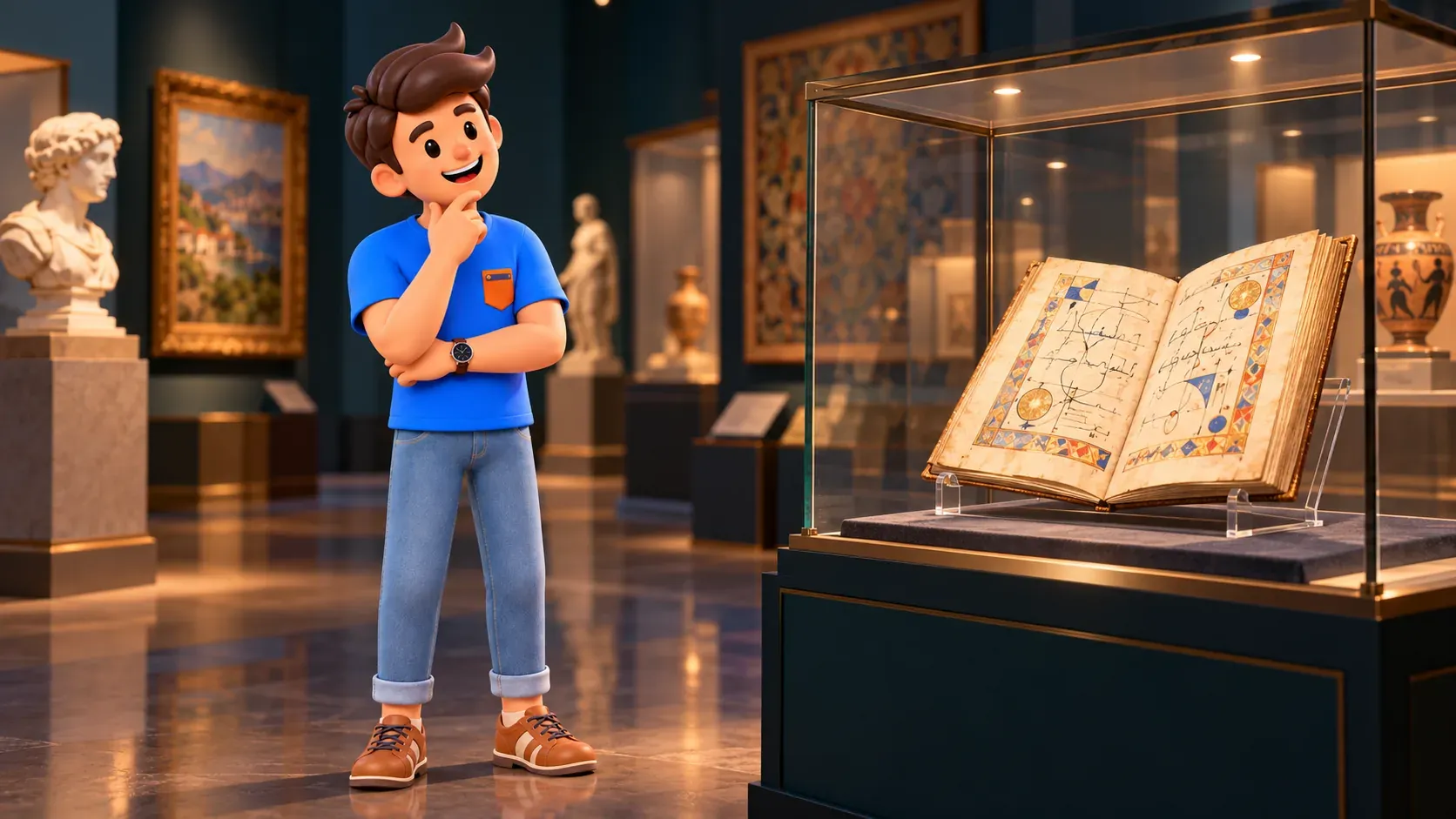
Look for small evidence of making: handwriting, page layout, corrections or the relationship between an image and its text. Use the information provided to distinguish an original from a later edition. After a few cases, step back and consider which object changed your understanding. That is a useful stopping point even if other visitors are continuing through the room.
Check the day and leave room for belongings
Wellcome’s galleries and Reading Room normally open Tuesday to Sunday, ten to six, and close on Mondays. The main plan therefore does not work unchanged on a Monday. Choose a shorter Library-only outing instead, checking that day’s arrangements. Its café remaining open is not evidence that Wellcome’s galleries are open too. Special closures can override ordinary weekly hours at either venue.
At the time of checking, the British Library has announced a full St Pancras closure on 12–13 December 2026. The partial closure on 24–25 October concerns Science Reading Rooms and Reader Registration; the rest remains open as usual. Check notices for your actual date. A scheduled maintenance notice should not become either a permanent closure claim or a blanket assurance for another weekend.
Travel light. Wellcome does not allow umbrellas into galleries and provides free lockers; large suitcases are unsuitable for this outing. At the British Library, backpacks must be left in the cloakroom or lockers before entering exhibition galleries. Its cloakroom closes on Sundays, when lockers remain available. Allow time for storage and retrieval, and check current conditions if carrying anything beyond a normal day bag.
Wellcome offers step-free access between its floors, and the Treasures Gallery has step-free access. That does not certify the complete station-and-street journey. Check the entrances, transport arrangements and facilities relevant to your needs. Keep the final fifteen-minute station approach and a little flexibility instead of ending with a fixed onward connection that depends on every earlier block running perfectly.
With RoadMe, it is easier to turn your interests into a personal plan for the whole trip, including a comfortable balance of indoor visits, walks and rest. Try the app to build London days that suit your own pace rather than a general sightseeing checklist.
For a drier day, our two-hour Bloomsbury walk through squares and museum façades offers a different experience nearby. Keep it as a separate outdoor outing. This rainy-day plan already has a complete arc: questions about human life, a meal, and the books through which ideas reach other people.