
London in Winter: Plan a Good Day Around Short Daylight
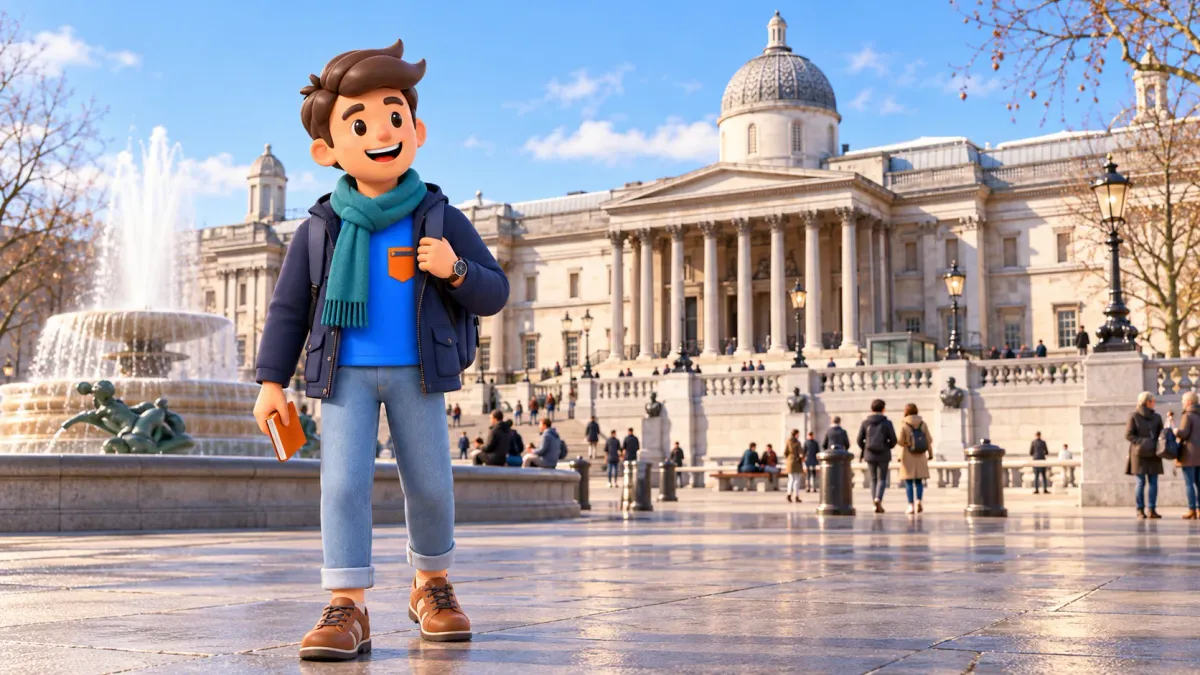
A satisfying winter day in London starts with a simple choice: use daylight for the outdoor experience you care about, then give one indoor visit enough time. You do not need a chain of famous addresses from opposite sides of the city. A selected walk in St James’s Park, an indoor meal and part of the National Gallery collection make a varied central day without relying on snow, Christmas decorations or a booked evening performance.
Allow six hours locally, for example 10:00–16:00 from an available public park entrance near Storey’s Gate and Birdcage Walk to Trafalgar Square. Accommodation travel, the initial station approach, platforms, waiting and the onward journey are extra. The park and general gallery collection are ordinarily free, while meals, transport and some exhibitions cost separately. This example is for a day when both places are open; the gallery closes on 24–26 December and 1 January.
Put daylight before the indoor anchor
Use fifteen minutes to arrive and orient yourself, seventy-five for selected park paths and viewing stops, forty-five for all connecting public-street walks and forty-five for an indoor meal. Add thirty minutes for gallery entry and security, 120 for selected paintings and movement between rooms, fifteen for leaving and facilities, and fifteen in reserve. That totals 360 minutes. These are editorial estimates rather than a measured route, and the six-hour outline does not promise six hours of daylight.
Try RoadMe to have the app develop a personal plan for your whole London trip around your interests, dates, budget and pace. It is much more convenient to distribute outdoor time, museums, meals and recovery across the stay with a programme that reflects the journey you actually want.
Keep the outdoor block first, roughly 10:15–11:30 in this example. Return towards the park’s south-eastern side, then use public pavements along Great George Street and north along Parliament Street and Whitehall towards Trafalgar Square. All connecting walks share the forty-five-minute allowance, including connections around your meal and the gallery. Follow current pedestrian crossings and diversions. A queue or slower walking means shortening another block or finishing later, not quietly removing the travel time.
Winter has several different kinds of day
A December visit and a February visit do not offer the same daylight. Around the December solstice London has approximately eight hours between sunrise and sunset; after the shortest day, daylight increases again. In 2026 the solstice falls on 21 December. Use that as a reason to put your outdoor priority early, not as a fixed sunset time for the entire season. Check the actual date and conditions before choosing how long you want to stay outside.
Christmas is also only part of winter. Markets, light displays and ice rinks operate on particular dates, sometimes with booked sessions and separate tickets. A January or February plan should not depend on an attraction simply because an old winter guide lists it. Our main day works without festive programming. If a seasonal event is the point of your visit, build the day around its real location and admission time, then reduce the other commitments.
Do not make snow part of the promise. Prepare for the conditions forecast for your date, with comfortable footwear and layers you can adjust when moving indoors. Carry only what you want to bring through gallery security. A small practical bag is easier to manage than travel luggage. The purpose is to make the two main experiences comfortable, rather than packing equipment for every imaginable version of London weather in the same day.
St James’s Park: one outdoor experience to remember
Start near the available public entrance by Storey’s Gate and Birdcage Walk. Choose a manageable selection of open paths around the lake, with time to look through the trees and notice the birds. The seventy-five minutes include walking inside the park, not just standing at viewpoints. You do not need a complete circuit or a visit to every monument. Turn back early enough to leave near the south-eastern side for the connection towards Whitehall.
The landscape has a history of deliberate design. In the 1820s John Nash replaced an earlier formal canal with a curving lake and winding paths. What appears relaxed and natural therefore also tells a story about changing tastes. In winter, look at the shape of branches, the curve of the water and the way a path frames a distant view. A bare tree can make that structure easier to notice without needing a particularly dramatic photograph.
This is not a plan for the Changing of the Guard or an interior palace visit. Either would introduce another timetable, access arrangement and substantial waiting or visiting time. The park already provides the outdoor focus. Watch wildlife without feeding it, keep to open paths and respect temporary closures. Some pedestrian gates ordinarily operate from 05:00 to midnight, but event or maintenance restrictions can change access; an early opening does not mean every gate remains available.
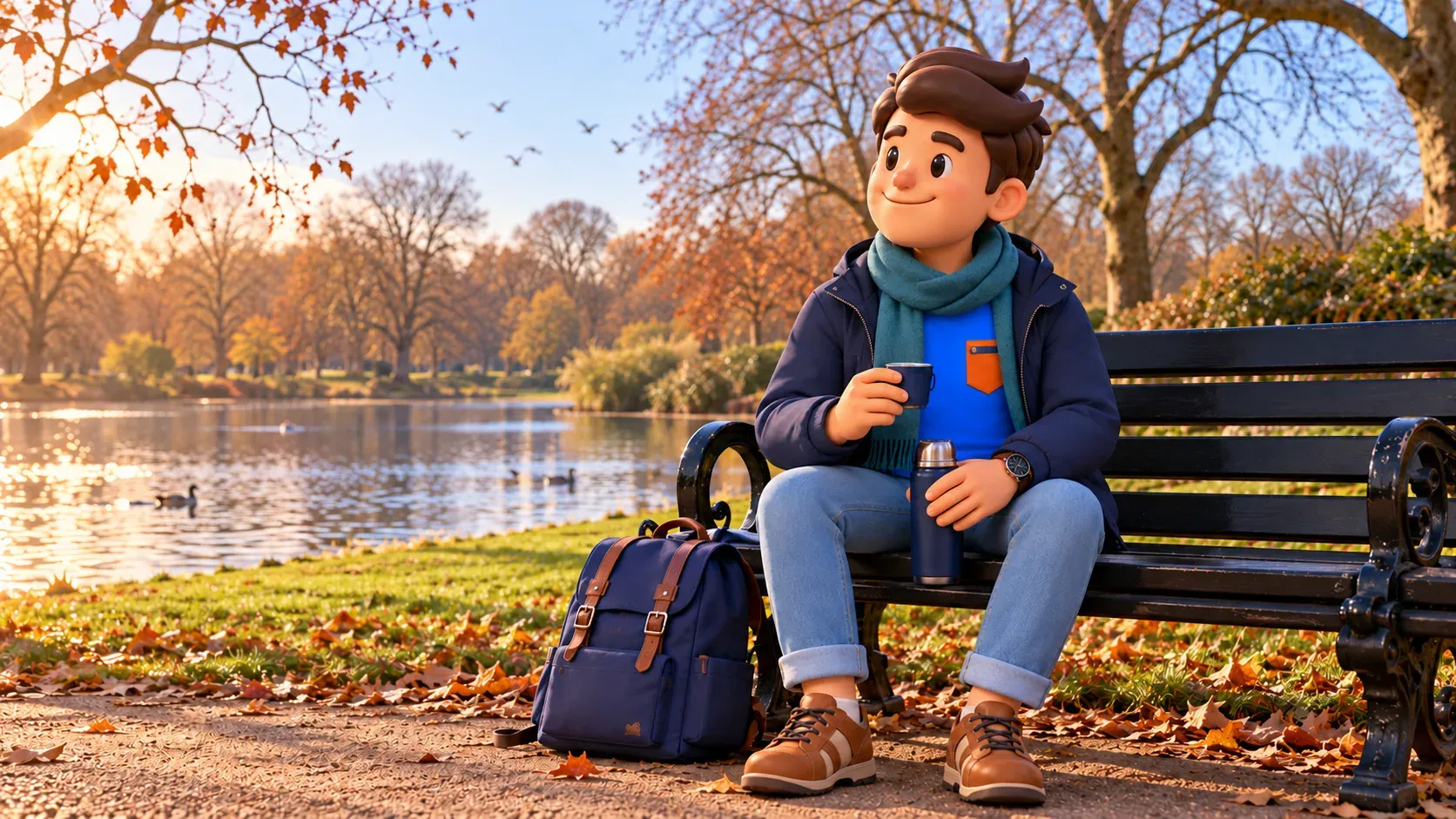
A brief pause on an available bench can fit within the park block. Have a little water or a drink from your own flask, then continue while you still feel comfortable. There is no requirement to sit through wind or rain for a photograph. If conditions make the park unpleasant, shorten or omit it and have a shorter day. A closed park needs another date or a different plan, not an attempt to enter a restricted area.
Make lunch a real break
After leaving near Storey’s Gate, use the public street connection towards Trafalgar Square and choose an open café nearby for a simple indoor meal. The forty-five-minute allowance is for sitting and eating; the walk belongs to the separate connection budget. A straightforward dish can fit, while a long restaurant lunch needs more time. Check the actual menu, availability and ingredients rather than relying on a particular seasonal dish being served everywhere.
This is a good moment to adjust layers, put a wet umbrella away appropriately and decide what you want from the gallery. With children or a group, agree on one shared interest and a sensible stopping point. Do not treat the meal as something to consume while hurrying along Whitehall. Its role is to change the pace between an outdoor walk and standing in front of paintings, so that the afternoon still has your attention.
If you intend to eat at the gallery instead, check that venue’s own hours and allow for entry before the meal. Café and restaurant schedules differ from gallery opening hours. You cannot assume your packed food may be eaten at a café table: the gallery does not permit visitors’ own food in its designated café and restaurant spaces. The main example keeps lunch outside the museum so that it remains a separate, straightforward decision.

The National Gallery is the afternoon’s main visit
Use the Sainsbury Wing, the main entrance at the corner of Pall Mall and Whitcomb Street facing Trafalgar Square. The familiar central portico is not the entrance instruction for this itinerary. Book a free general-admission ticket for fast-track entry and updates if you can; walk-up entry is also available. Neither the word free nor a booking eliminates security. Keep the thirty-minute entry allowance and be ready to adjust if the queue takes longer.
Ordinary opening is 10:00–18:00 daily, with Friday opening until 21:00, except for the stated closure dates. Specific notices and room closures still matter. Current building work means some rooms close and paintings move. If a particular artist or work is essential, check its present location before the visit. An old room number is not a reliable plan, and a long list of masterpieces is less useful than knowing what you want to look at.
The institution began in 1824 with thirty-eight paintings from John Julius Angerstein’s collection, initially displayed in his Pall Mall house. William Wilkins’s Trafalgar Square building opened in 1838. Those dates describe different stages in the gallery’s development, rather than the age of every room you encounter today. Knowing that a public collection grew from a private one adds a little context to an afternoon that can otherwise begin simply with colour, faces or light.
Two hours need not become a complete museum survey
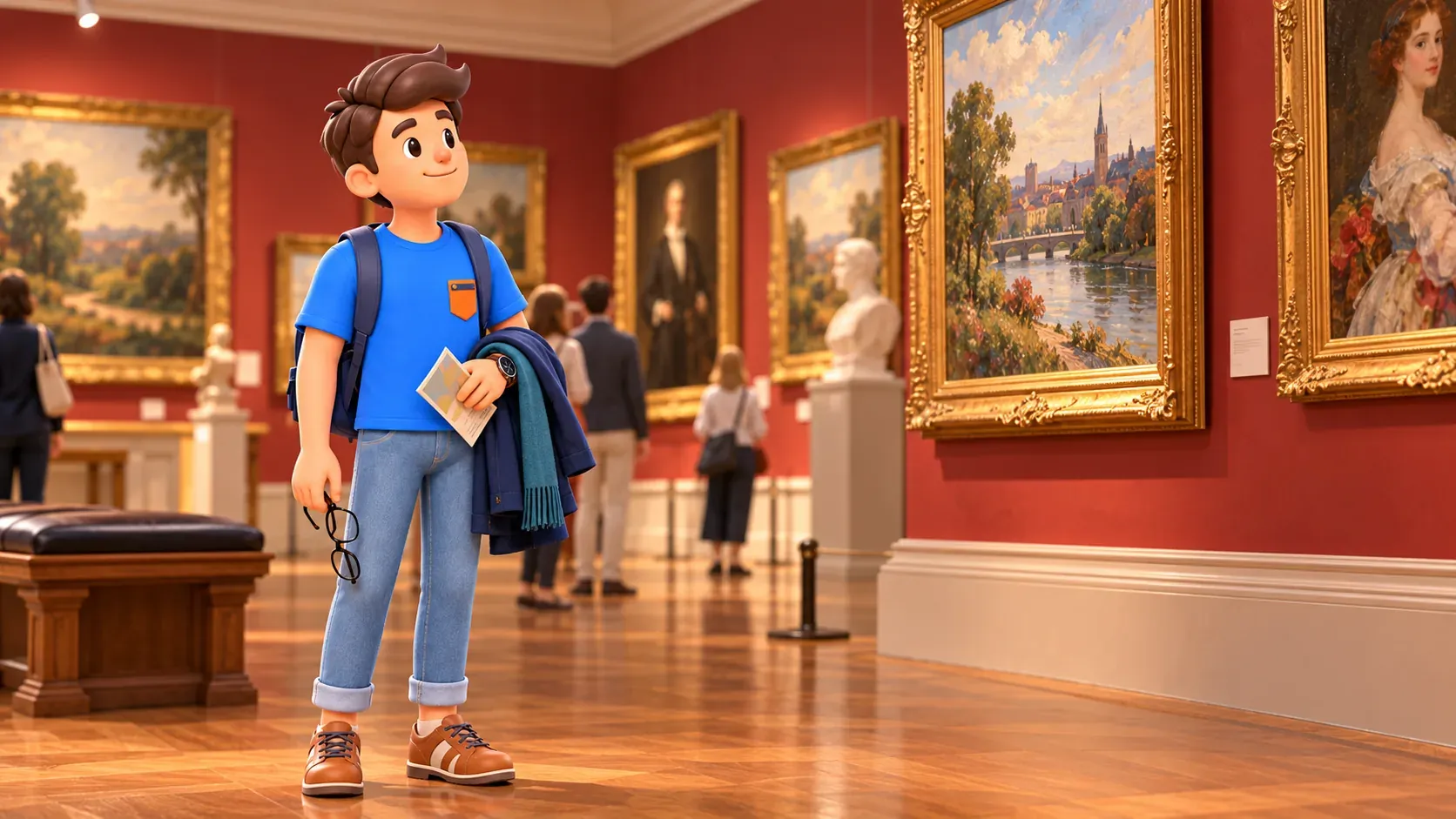
Choose one small question. How do painters suggest winter light? What changes when you compare two faces? Where does your eye go first in a landscape? You can follow such a question through a few available paintings without knowing the entire history of European art. Read labels when they help, step back for the whole image and let one work take longer. The 120 minutes include internal walking and pauses, not two hours for each section.
Use available seating when you need it. The gallery provides seating and folding stools, and staff can help you find them. Leave room around works that attract a crowd, and move on when a room feels too busy for the kind of looking you want. A successful visit can end with one picture you remember clearly. Adding a paid temporary exhibition is a separate choice, requiring its own admission and enough additional time.
Keep the calendar and access conditions concrete
The gallery’s closures on 24–26 December and 1 January rule out this exact plan on those dates. Do not transfer the ordinary daily hours to a holiday without checking. Transport timetables and planned works also need checking for both arrival and return. Our finish is Trafalgar Square at street level; it is not a promise of an immediately available train, an accessible platform or a particular journey time back to your accommodation.
The Sainsbury Wing entrance is step-free, and lifts serve the building. That does not establish a step-free journey from every nearby Underground station or suitability of every outdoor path for every visitor. Check the actual route and any lift you depend on for your date. If you need less standing, reduce the selected rooms and keep seating pauses. A shorter park block and a focused gallery visit can be a better balance than retaining the original duration.
With RoadMe, you can prepare a complete personal London programme that gives outdoor visits, cultural interests and your preferred pace a place in the wider trip. Let the app work through the itinerary so it is easier to organise and use, while you keep the date’s venue notices and transport arrangements in view.
Leave the evening as a separate choice
A 16:00 finish may already be after sunset in the darkest part of the season, which is why the park came first. An evening performance, festive display or dinner can follow only with its own time, travel and admission arrangements. They are not included in these six hours. It is equally reasonable to return to your accommodation. The day has already offered an outdoor landscape, a proper meal and sustained time with art.
For a different outdoor day, our royal London walk through two parks has its own longer route. If painting is not your main interest, use the comparison of the National Gallery and the two Tate museums to choose another cultural day. This winter example succeeds by giving daylight to one walk and the afternoon to one collection, with enough room between them to enjoy both.


