
Bloomsbury in Two Hours: Squares, Senate House and Museum Façades
For a two-hour walk through Bloomsbury, connect its garden squares with the outside of the British Museum, Senate House and the Foundling Museum. Begin at Bloomsbury Square, finish at Brunswick Square and use the streets between them to notice how gardens, learning and cultural institutions shape the neighbourhood. The pleasure is in changing scale: a small green space, a monumental colonnade, a tall university building and a more domestic museum frontage.
This is an outdoor neighbourhood walk, with short stops and a garden pause when the gates are open. It does not include either museum’s collection or an unarranged visit inside the university. Those deserve their own time. Allow around two hours, or closer to two and a half if you prefer longer pauses, and choose daylight so that the squares can play their part.
Keep the two hours for the neighbourhood
Start at Bloomsbury Square and walk west along Great Russell Street to the British Museum frontage. Continue around the museum’s western side on public streets to the Malet Street and Montague Place area for an exterior view of Senate House. Follow Montague Place east towards Russell Square, then use the public streets around Bernard Street towards Brunswick Square. Finish outside the Foundling Museum at number 40.
Try RoadMe to make the whole London day or trip easier to organise around your interests, dates, pace and budget. The app develops a personal itinerary that gives neighbourhood walks, substantial museum visits and time to rest a sensible place across your days.
The route is approximately two kilometres, depending on your approach and the garden entrances used. That is a planning estimate, not a measured track. Give the first square fifteen minutes, the British Museum exterior twenty, Senate House fifteen, Russell Square twenty and the final museum frontage fifteen. The remaining time covers the connections and a little flexibility; a long café stop needs extra time.
Use public streets around the museum rather than treating its buildings as a shortcut. Follow current crossings and signs, and enter gardens only through open public gates. Squares may remain visible from the pavement when their gardens are closed. That distinction makes the plan much easier to use than assuming that every green shape on a map is accessible at every hour.
Bloomsbury Square: start by looking at the space
At Bloomsbury Square, look at the relationship between the garden and the buildings around it. A London square is more than an empty gap between streets: it creates a shared view and changes how the surrounding façades are experienced. Before naming architectural styles, notice the height of the buildings, repeated windows and the way trees interrupt otherwise straight lines.
Camden describes the square as framed by Georgian terraces and Victoria House. This mix is useful to keep in mind because Bloomsbury is not a perfectly preserved scene from a single period. You can appreciate the rhythm of older houses while recognising larger additions. Choose one side to examine rather than trying to circle every frontage before the walk has properly started.
The garden is a good place for a short pause when open, but it is not a round-the-clock public passage. Camden lists daylight access here, with seasonal park closing arrangements. Follow the gate information you find on the day. If it is closed, look from the surrounding pavement and keep the longer green pause for an available garden later in the walk.
You may already know Bloomsbury through writers, books or the British Museum. Let that be a starting interest rather than a demand to find every famous address. This route is about the neighbourhood’s spaces. A literary house walk would ask different questions and need its own selection; you do not have to combine both approaches within the same two hours.
The British Museum: read the façade before the collection
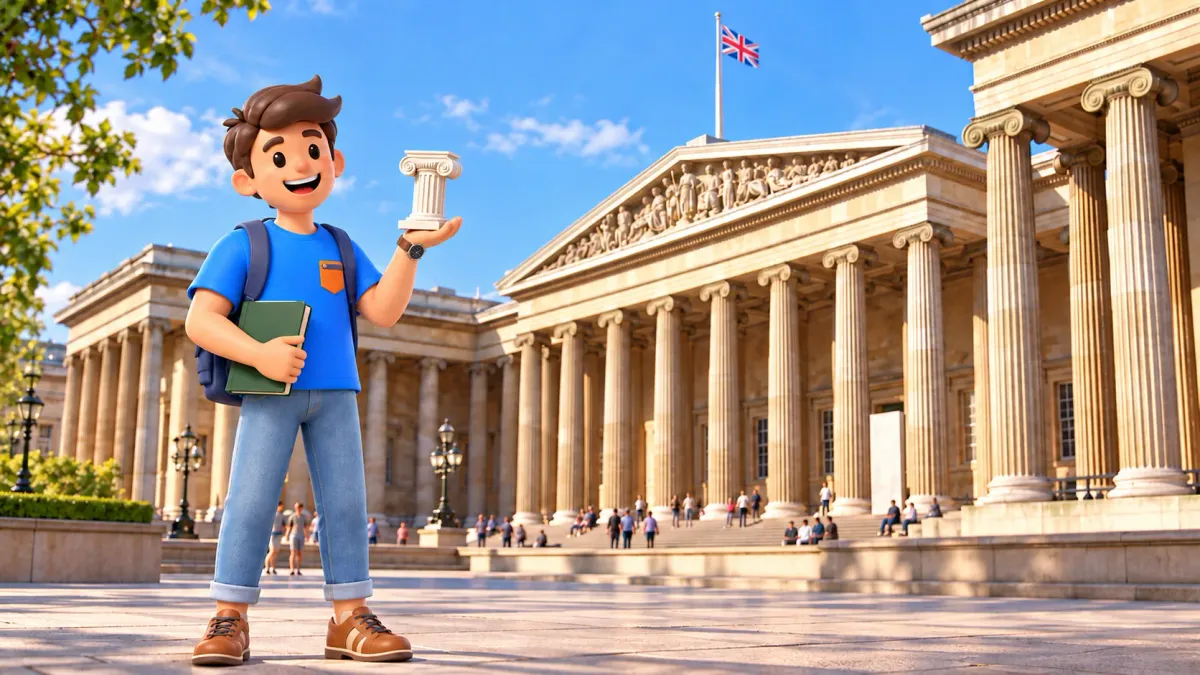
Walk towards the museum along Great Russell Street and find a position on the public pavement that leaves room for other pedestrians. Look across at the colonnade and triangular pediment, using the view actually available through the frontage. You do not need to enter the forecourt or join a security queue to make this exterior stop meaningful.
Robert Smirke designed the museum’s Greek Revival building in 1823, and the building was completed in 1852. Its classical appearance gives the institution a monumental public face, but the structure belongs to nineteenth-century London. The museum’s account also describes modern construction methods behind that ancient-inspired exterior. Thinking about that difference makes the columns more interesting than a simple resemblance to a Greek temple.
Notice how the repeated columns lead the eye towards the entrance, then compare that scale with the domestic windows around the square you have just left. You can use the contrast without counting every column or identifying every sculpted figure. The building announces a different kind of public space before you have seen a single object in its galleries.
If the collection is your priority, give it a separate block of time. General admission is free and advance booking is recommended; entry without a booked ticket depends on capacity. Security checks apply to visitors, so a free ticket does not remove every wait. Check the actual date’s arrangements, including special closures, before deciding how an indoor visit fits your day.
For a focused first visit, two or three additional hours can be a useful editorial allowance, rather than a promise to see the whole museum. Choose a few interests instead of assuming that a brief look at the façade can quietly become a complete gallery tour. The outdoor walk and an indoor visit can both work well when their time is acknowledged separately.
Senate House: the university in a different language
Continue around the western side of the museum using the public street network, then look towards Senate House around Malet Street and Montague Place. Stay with the permitted street view rather than looking for a route through university doors. This is the University of London’s setting, not a visitor complex where every hall and courtyard belongs to a sightseeing circuit.
Charles Holden’s Art Deco building was completed in 1937. Its Portland stone exterior and stepped tower offer a different architectural language from the museum’s colonnade. Both places are associated with knowledge, but they express their presence differently: one spreads across a long classical front, while the other draws attention upwards through a more severe arrangement of planes and windows.
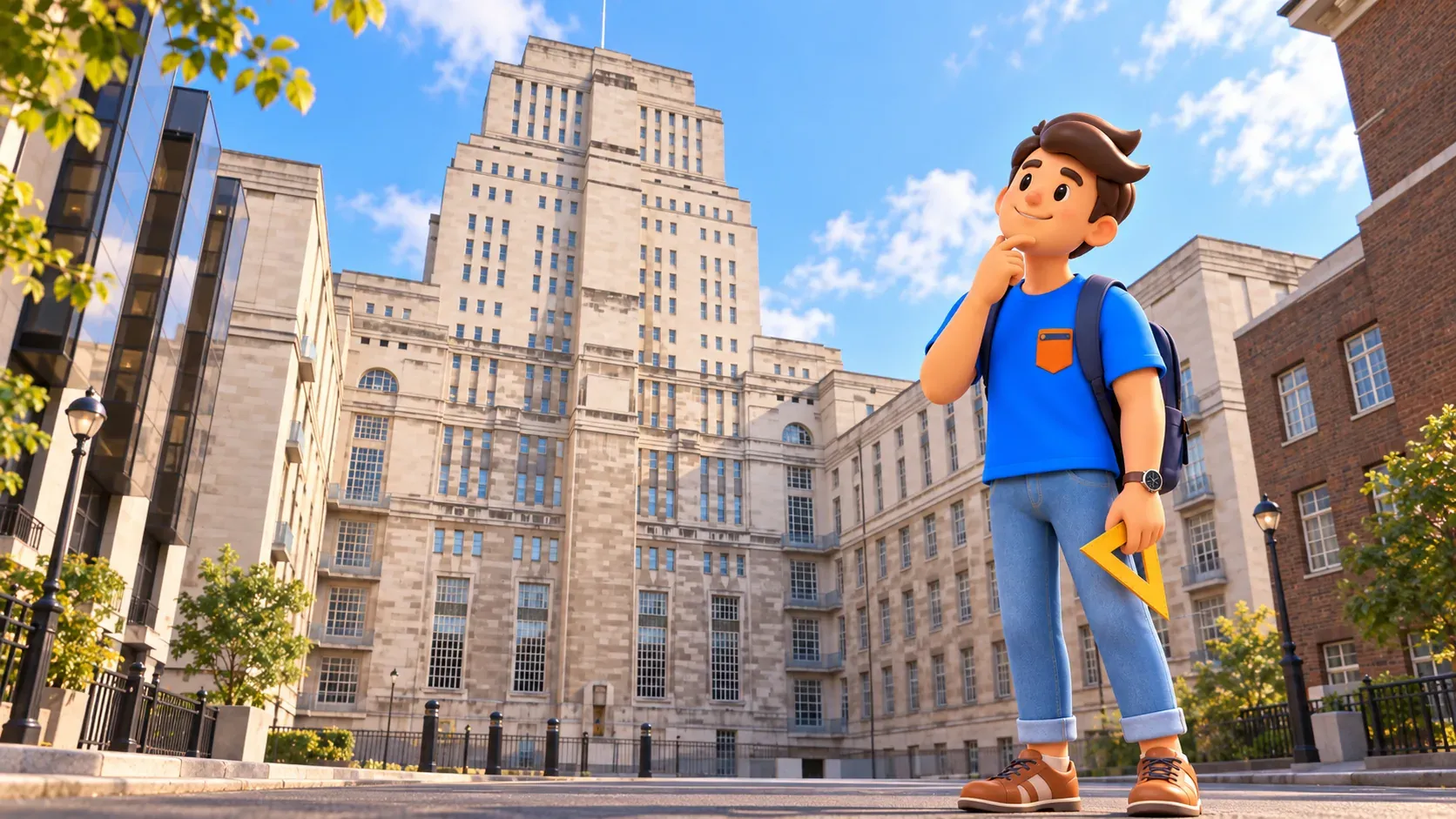
Try comparing the proportions rather than deciding which building you like more immediately. Where does the base end and the tower begin? How do the rows of windows change the apparent height? These are questions you can answer from the view in front of you. No interior access or specialist knowledge is needed to enjoy this part of the route.
Do not infer free access to the library, upper floors or a viewing terrace from the building’s university role. If an exhibition or organised visit interests you, check that particular programme separately. For today’s short walk, the exterior is the planned stop. It allows you to notice the academic character of Bloomsbury without promising a tour of an entire campus.
Russell Square: make room for a real pause
Follow the public streets east towards Russell Square and enter the garden through an open public gate. This is the point to slow the walk rather than immediately search for another institution. Choose an available bench or a comfortable place to stand, look at the paths and notice how planting changes your view of the surrounding streets.
The square is associated with landscape designer Humphry Repton and the early nineteenth century. Its present garden includes a central plaza and a water feature. Enjoy whatever is operating and visible during your visit, without depending on a photograph of active fountain jets. A garden’s value does not disappear because a feature is switched off or a section is being maintained.
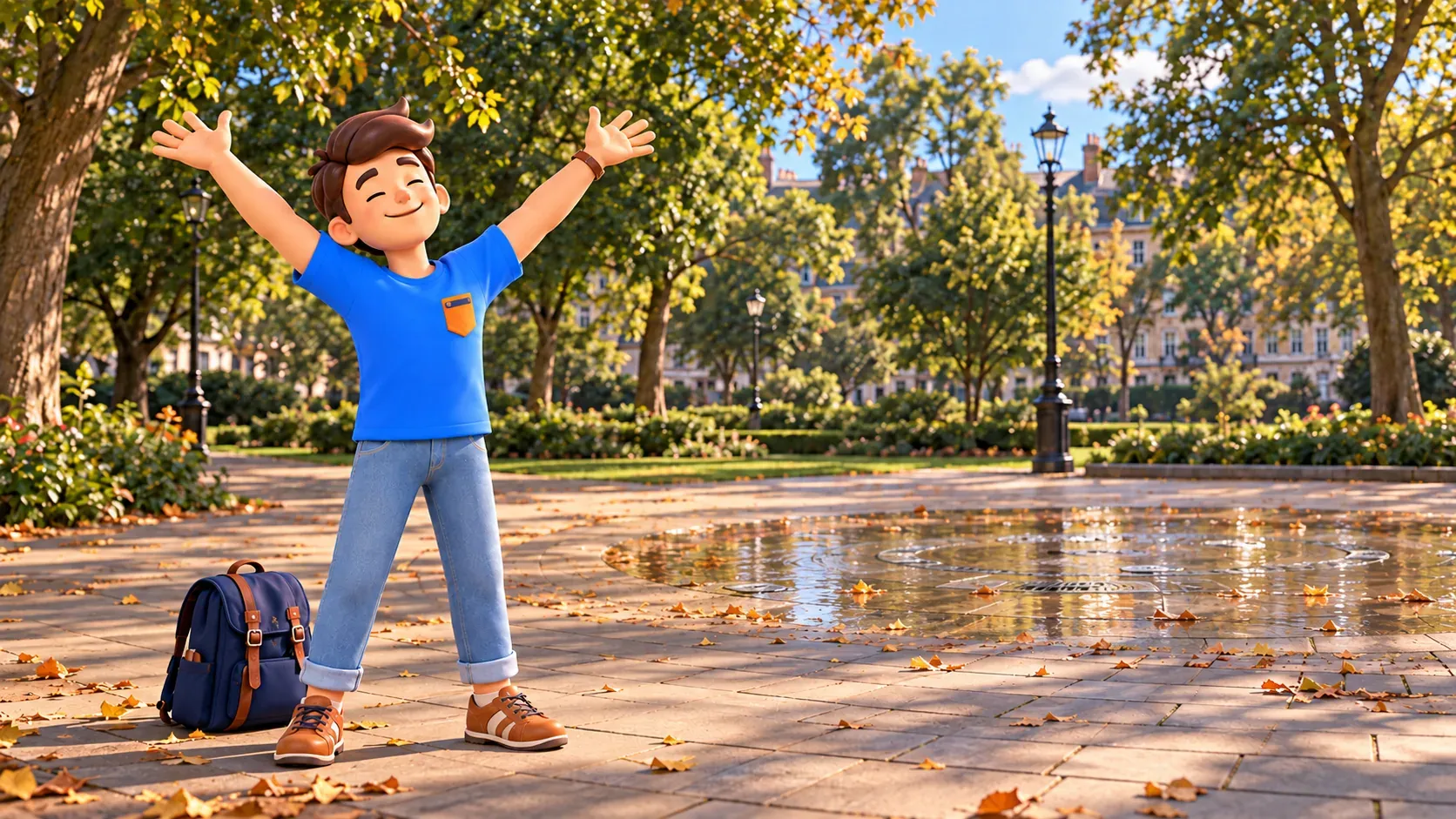
For this walk, daylight is the useful rule. Russell Square has specific opening and closing arrangements, and other nearby gardens follow their own schedules. Do not transfer one square’s hours to every green space in Bloomsbury. Current signs at the entrance are more useful for your pause than an itinerary that promises access simply because it calls the area public.
Take ten minutes without turning the pause into another task. Put away the camera, decide whether you want a drink afterwards and notice whether you would prefer a garden-led afternoon or a longer museum visit on another day. That small decision helps shape a trip around your actual interests rather than around the number of places you can fit into a list.
The Foundling Museum: a different kind of cultural story
Continue by the public streets around Bernard Street towards Brunswick Square and the Foundling Museum at number 40. The museum frontage makes a thoughtful final contrast with the British Museum. Its scale is more domestic, and the story it represents connects culture with the care of children. Look at the façade without mistaking its historical appearance for an unchanged eighteenth-century hospital building.
The Foundling Museum opened in 2004 in a building constructed in the 1930s, incorporating features from the earlier hospital. Thomas Coram established the Foundling Hospital in 1739. Those dates describe different stages: the charitable institution, the present building and the museum are not all the same age. Keeping them distinct helps explain why a newer building can still carry an older story.
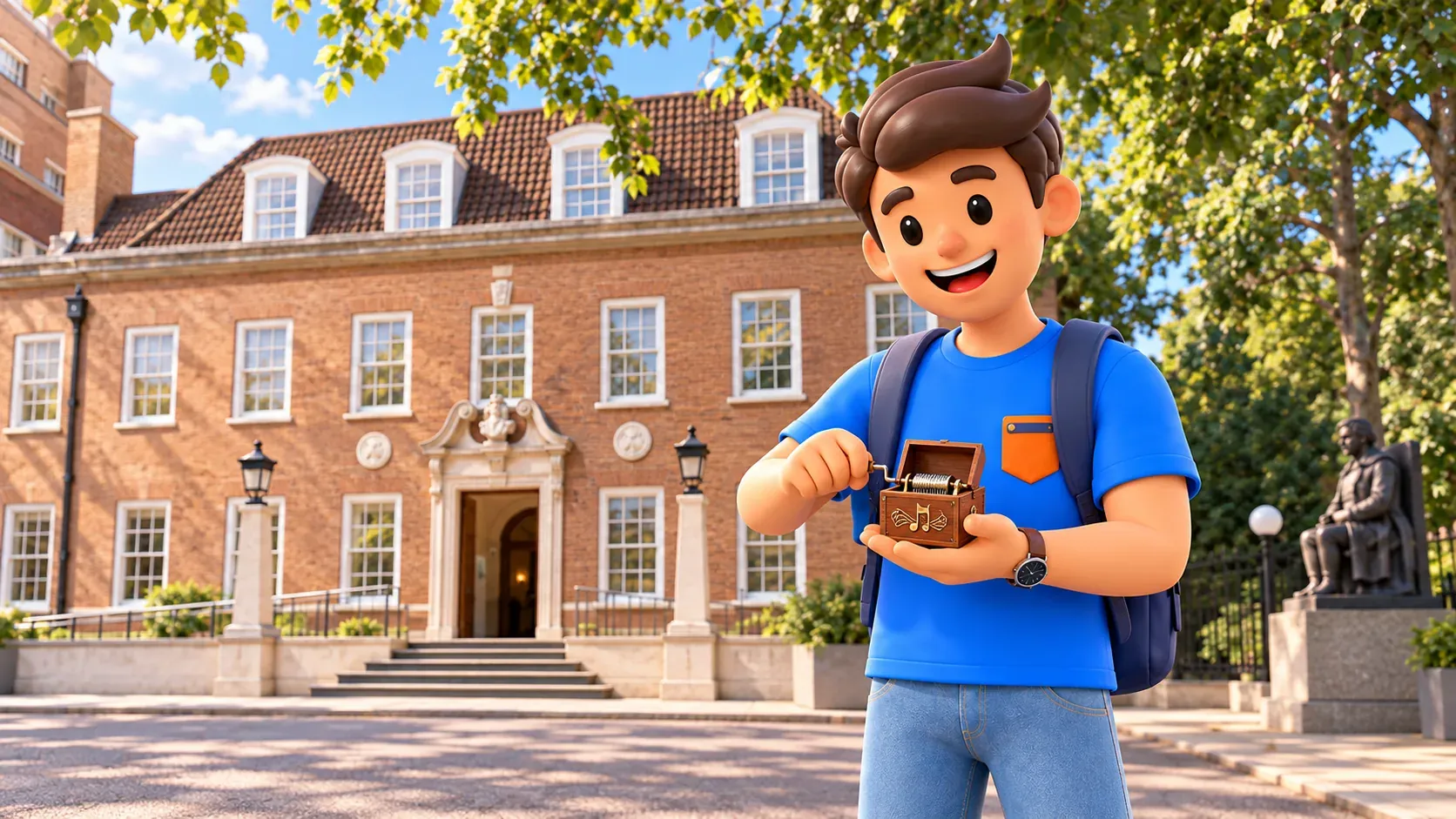
Artists and musicians helped support that charitable work: William Hogarth encouraged gifts of art and Handel gave fundraising concerts. This connection gives the last stop a human theme after the grand architecture earlier in the walk. The collection itself is indoors, so the exterior does not reveal its objects; it gives you a reason to decide whether you would like to return.
A museum visit is a separate ticketed addition, with reduced-price and free categories. The regular pattern is Tuesday to Saturday, ten to five, and Sunday, eleven to five, with Monday closure and possible exceptions. Check your date. Around ninety extra minutes can be a useful planning allowance for a visit; that is an estimate, not a requirement or a promise to see every exhibition.
The museum does not have a café, so do not make an indoor coffee break part of an assumed ticket benefit. Brunswick Square’s public garden can offer an outdoor pause when open. Nearby Coram’s Fields is a children’s park where adults need to be accompanied by a child; it is not a general shortcut or an interchangeable garden stop for every traveller.
With RoadMe, it is more convenient to turn those preferences into a complete personal trip plan. Let the app organise museum time, neighbourhood walks and rest across your days according to your interests, pace and budget.
Finish around Brunswick Square and check onward transport from your actual position. For a different historical walk on another day, our Clerkenwell and Smithfield route connects a living charity, market exteriors and a medieval church. Bloomsbury already gives you a complete short outing here: squares to pause in and institutions to understand before choosing which interiors deserve more of your time.


