
London’s Industrial Buildings: Three Different Second Lives
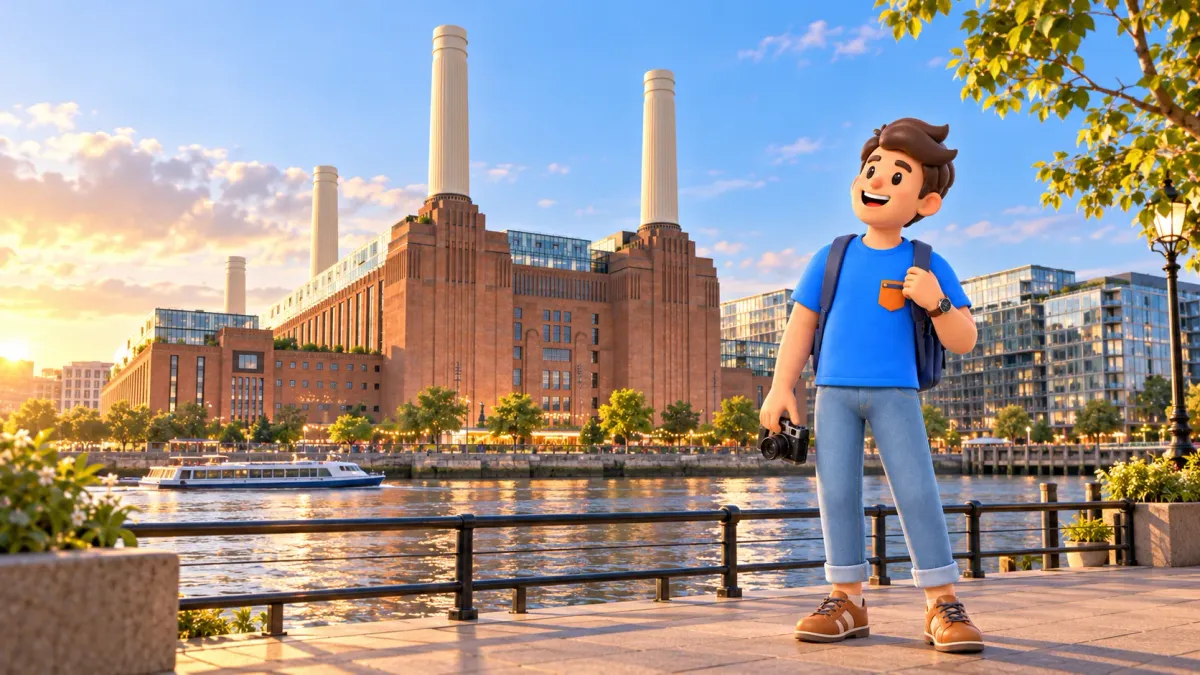
London’s industrial past is still visible in places where people now spend an afternoon looking at art, browsing shops or sitting beside the river. Battersea Power Station, Tate Modern and Coal Drops Yard offer three different examples. Their old structures help explain the spaces you enjoy today, even though their original work has ended.
Choose one as the focus of an outing rather than joining all three into a short walk. Battersea suits a look at a former powerhouse and its public halls, Tate Modern combines architecture with a selected art visit, and Coal Drops Yard makes a good introduction to a railway goods site reshaped for shopping and dining. The interest lies in the change of use as much as in the buildings’ appearance.
Choose the kind of second life you want to see
A large brick building can become a museum, a commercial destination or part of a new neighbourhood. These outcomes create different visits. At Tate Modern, art may take most of your time. At Battersea, the public interiors and riverside can be the main subject. At Coal Drops Yard, the relationship between old arches and a new roof is visible while you move through the yard.
Try RoadMe to develop a personal London plan around your dates, interests, budget and pace. In the app, it is more convenient to give the right industrial landmark a place in the whole trip, alongside museums, neighbourhoods and breaks that suit you.
These places occupy different parts of London. Battersea is southwest of the centre, Tate Modern is on Bankside, and Coal Drops Yard is at King’s Cross. A shared industrial theme does not make them neighbouring stops. Choosing one gives you time to look beyond a photograph, while travelling between them would require its own allowance.
Battersea: the scale of a working powerhouse
Battersea Power Station’s brick mass and pale chimneys were created for the production of electricity. The complex developed in stages through the twentieth century: the first part was completed in the 1930s, and the familiar four-chimney form was complete in the 1950s. Seeing it as one building made in a single year misses that gradual growth.
Power generation ended in 1983. A long period of uncertainty followed before the station opened to the public in its new role in 2022. Today it belongs to a larger district of homes, workplaces, shops, restaurants and public spaces. Opening the power station was an important stage in that transformation, rather than the moment every surrounding development became finished.
Begin outside, where you can compare the industrial building with the newer structures around it. Look at the vertical brickwork, tall windows and the bases supporting the chimneys. Their proportions make more sense when you remember that the original priority was machinery and production rather than a sequence of shops.
Restoration included rebuilding the chimneys to match their earlier appearance. Their recognisable outline therefore records conservation work as well as survival. This is a useful distinction for the whole article: keeping a place’s identity can involve carefully renewed material and contemporary additions, rather than leaving every surface untouched.
Inside Battersea: public space with a different purpose
Entry to the main public shopping spaces is free during opening arrangements. You can look at the former turbine-hall setting without making shopping the purpose of the visit. Give yourself a simple task: identify one feature that communicates industrial scale, then notice how people move around it today.
The change is not just decorative. A space once organised around production now has to accommodate people arriving, meeting, browsing and eating. Public circulation and the surrounding businesses belong to the new use. The old building remains a powerful part of the experience, even when the activity inside is thoroughly contemporary.
Keep your visit within the open public areas. Homes, offices, special interiors and ticketed attractions have their own access arrangements. A free entrance to the building does not include every experience. If the chimney viewpoint is important, check its separate tickets and allow additional time; the short architectural outing below leaves it optional.
Tate Modern: the power station becomes part of the art visit
Tate Modern occupies the former Bankside Power Station, whose original design is associated with Giles Gilbert Scott. Herzog & de Meuron converted the industrial building into a gallery that opened in May 2000. Here, the second life is cultural, and the building’s scale is part of the reason the visit feels different from a conventional museum.
The Turbine Hall is the clearest example. Its enormous volume gives you a sense of the earlier industrial purpose while accommodating the life of a public gallery. You can experience the relationship between people and the building before deciding how much of the collection to see. Current installations and events can change; an older photograph does not guarantee the same work will be present.
The conversion involved substantial architectural work. The surviving brick exterior does not mean an untouched power station was simply filled with paintings. New gallery spaces and routes were created within the old structure. Looking at the building as an adaptation helps you appreciate the decisions that made a different kind of public use possible.
The later extension, completed in 2016 by the same architects, added another layer. Its perforated brickwork uses a familiar material in a new way, while former oil tanks helped shape the development below. The project continued to grow after 2000. Old industrial fabric and new museum architecture are parts of a longer transformation.

Choose a manageable art focus alongside the building. A selected collection visit and time with the architecture deserve their own half-day space in your plans, especially with a break and arrival procedures. General gallery admission is free, while special exhibitions and events can have charges. Check the current programme and entry arrangements for the particular visit you want.
Coal Drops Yard: follow the logic of goods and levels
At King’s Cross, Coal Drops Yard tells a different industrial story. These mid-nineteenth-century structures were built to transfer coal arriving from northern England by railway. Wagons on elevated tracks released coal into storage hoppers; it could then be loaded onto horse-drawn carts for distribution. The changes in level were part of the work.
That background makes the long brick buildings and arches more interesting than a shopping façade alone. Think about the movement of goods through the site, then compare it with the movement of visitors. You are looking at a former goods-handling environment, rather than an old passenger station with its platforms simply turned into stores.
The buildings went through later uses, including storage, industry and nightlife. Heatherwick Studio’s transformation, completed in 2018, brought a new public yard and retail setting. The dramatic roofs rise towards one another and meet above a glazed upper level. That central gesture is contemporary architecture, deliberately added to the older brick structures.
Engineers also had to understand the surviving fabric’s capacity rather than assume it could carry any new load. The new upper structure was designed with its own supporting system. You do not need the calculations to enjoy the result: notice how the new elements connect the buildings while allowing their older forms to remain legible.
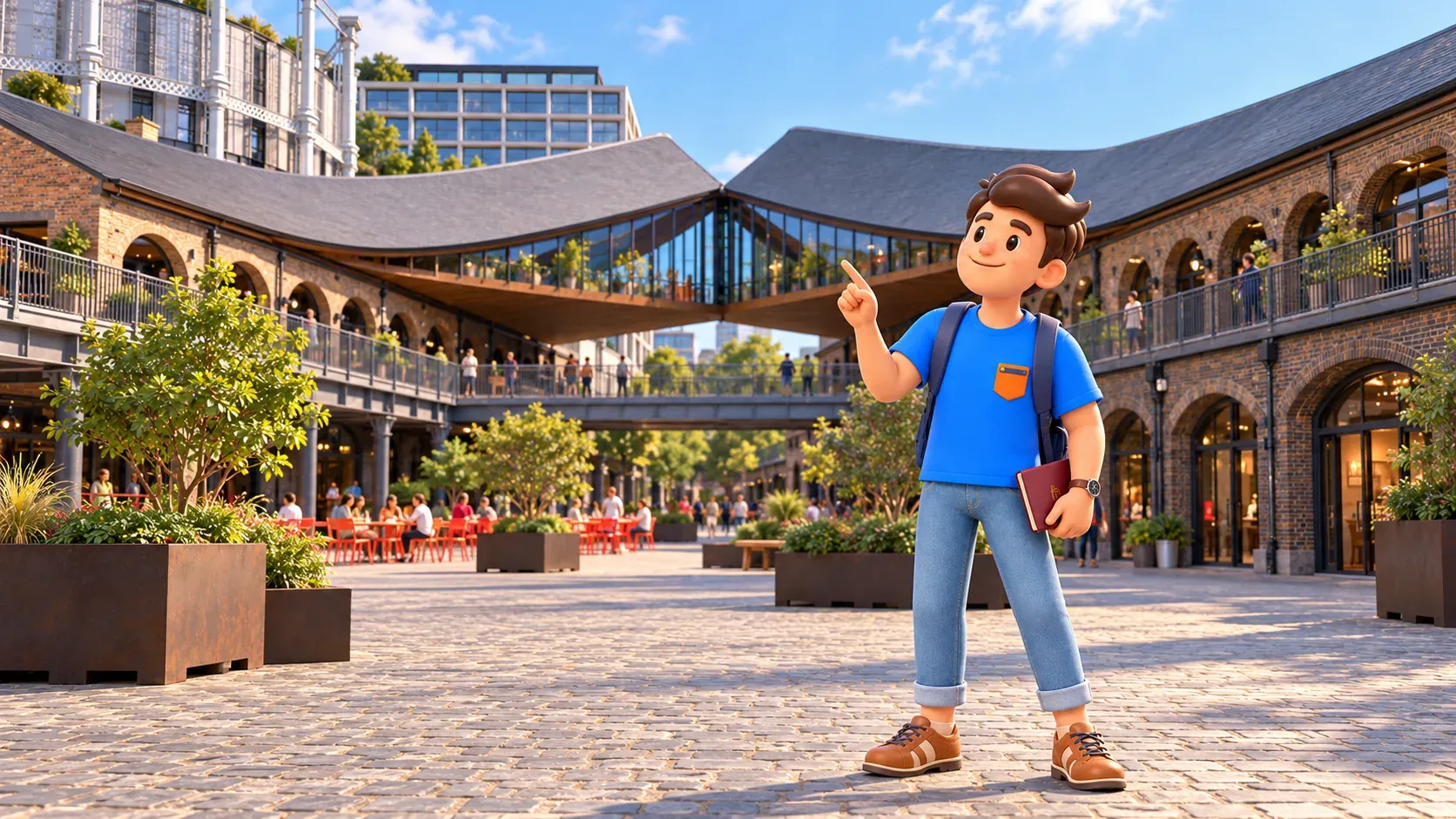
Give this place its own short outing if architecture, design shops and a relaxed break appeal. Around two hours can allow selected looking, browsing and coffee, with travel and a longer meal additional. Individual businesses have their own opening times. A public yard, a shop and a restaurant are different visitor spaces, so check the one that matters to your plan.
Look for what was kept, renewed and added
A useful way to visit any of the three places is to separate three questions. What helped the original building do its job? What has been retained or restored? What makes the new use work? You can answer with a few visible details rather than trying to identify every beam, window or brick.
At Battersea, the familiar chimneys connect a large-scale outline with a restoration story. At Tate Modern, the relationship between a vast hall and selected galleries explains how industrial scale can become a cultural experience. At Coal Drops Yard, the new roof and old arches make the meeting of periods especially clear.
These are different answers to the same broad challenge, not identical venues with different names. A museum and a shopping district ask different things of their visitors. Choose according to the experience you want today. You can appreciate the architecture without buying something everywhere or turning a brief look into a full survey of the whole development.

A focused two-hour option at Battersea
For a first architectural outing, start from Battersea Power Station Underground station and use the public pedestrian approach along Electric Boulevard. Allow fifteen minutes for the exterior, forty-five for selected public hall spaces, twenty for a short look along the riverside, thirty for coffee and ten as flexibility. That totals two hours.
This is a planning estimate, not a measured walking track. Travel to the area and onward afterwards, a full restaurant meal, prolonged shopping and a paid attraction are additional. The riverside section does not include a visit to Battersea Park or a walk to Albert Bridge. If those are your priorities, our Battersea half-day walk gives the longer outing its own time.
The station’s published ordinary hours are 10am to 8pm from Monday to Saturday and noon to 6pm on Sunday. Individual shops and food venues can differ, and some hospitality businesses open for longer. Check the current details before leaving. A daytime visit with the public halls open is the simplest fit for this outline.
Use the actual public approaches and ask the visitor team about any access requirements. Lifts within a destination do not confirm every part of your journey or every business entrance. Keep time for a seated break if it helps your group. Enjoying a large building does not require covering every floor.
With RoadMe, it is easier to turn your interest in architecture, art and everyday city life into a personal programme for the whole journey. Try the app to balance a focused industrial visit with the rest of London at your own pace.
The best discovery may be a new way of reading familiar-looking brick buildings. Former work still explains their scale and shape, while present uses keep changing what happens around them. Look for that relationship, and a power station or coal depot becomes a story you can spend time inside, rather than only a landmark to photograph.


