
London’s Engineering Stories: Post, Canals and Tunnels
London’s engineering history can begin with a letter, a load of ice or the problem of getting across the Thames. The Postal Museum, London Canal Museum and Brunel Museum make those everyday challenges visible. Their stories explain how the city moved messages, supplied businesses and created a crossing beneath a busy river.
Choose one as the focus of an outing. The Postal Museum suits an interest in communication and an underground railway experience; London Canal Museum connects waterways with working lives and the ice trade; Brunel Museum concentrates on the Thames Tunnel and its former entrance shaft. They occupy different areas and should not be joined into a short walking circuit.
Three practical problems, three different visits
These places are rewarding because their subjects begin with ordinary needs. A letter must reach another part of the city. A perishable load needs to be stored and delivered. People want to cross the river without obstructing shipping above. Engineering becomes easier to understand when you start with the job, then look at the machinery, spaces and people involved.
Try RoadMe to develop a personal London plan around your interests, dates, budget and pace. In the app, it is more convenient to give a focused engineering visit its place in the whole trip, alongside neighbourhood walks, larger attractions and proper breaks.
Pick the question you would enjoy exploring today. The museums share an interest in systems that helped London function, but they do not offer the same experience. A miniature passenger ride, a waterside warehouse and a tunnel shaft involve different access arrangements. Knowing that before choosing is more useful than collecting three addresses.
The Postal Museum: a railway for messages
The postal railway operated from 1927 to 2003. Its driverless electric trains carried mail between sorting facilities and railway connections beneath London. The point was to move messages, rather than passengers. Thinking about that original purpose helps explain why the system feels different from a conventional Underground line built for people travelling across the city.
Today’s Mail Rail visitor experience opened in 2017, following the redevelopment of postal heritage at Mount Pleasant. Visitors use trains made for the new experience. They are not simply placed in the original freight vehicles. Contemporary passenger equipment and interpretation allow people to encounter a part of the former working environment.
The museum and Mail Rail are in separate buildings across the road from one another. Give the site its own visit, with time for the gallery as well as the ride. Around two to three hours is a sensible starting allowance for selected exploring; travel, food and possible waiting come in addition. The train journey alone is not the whole museum visit.
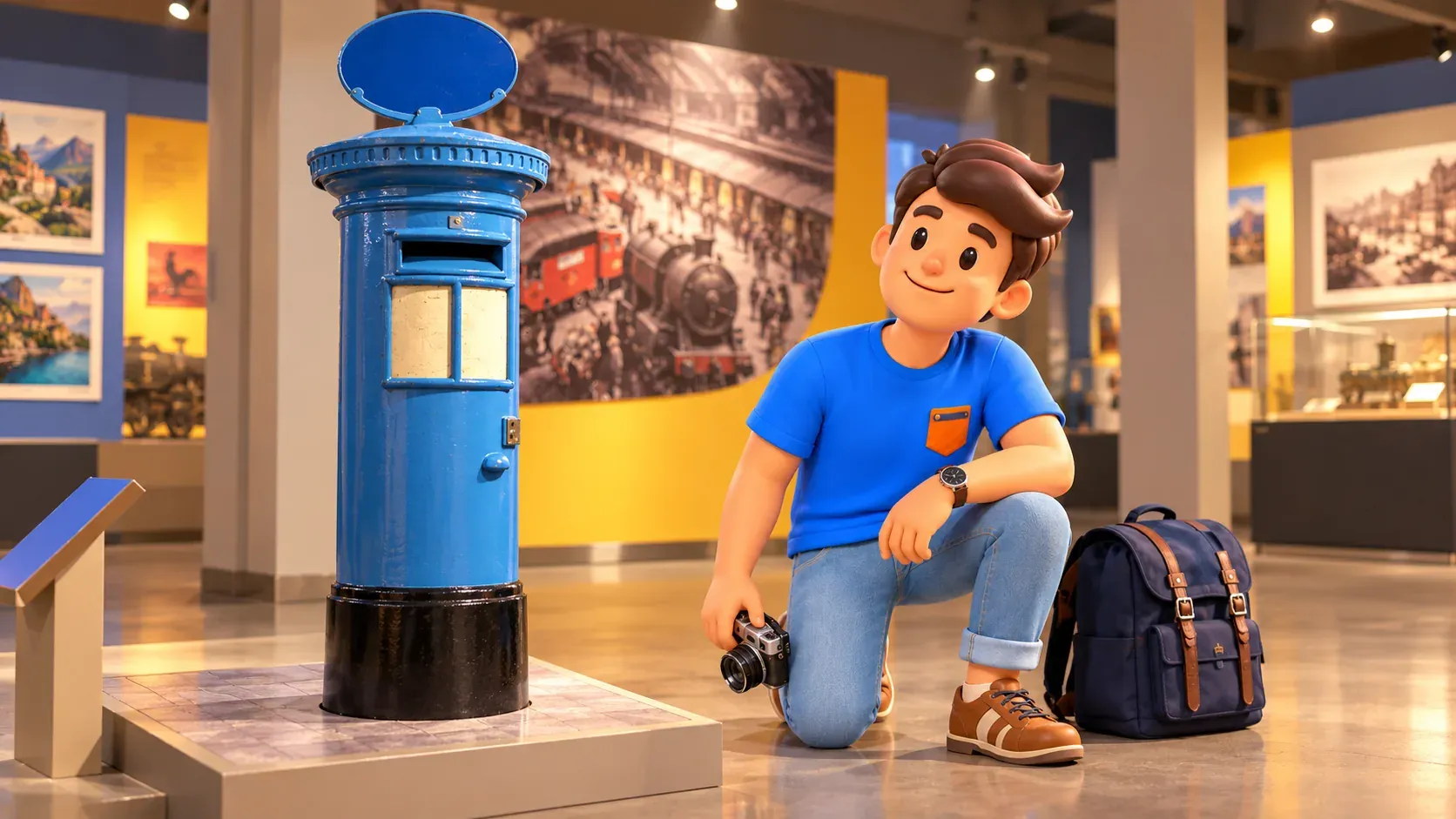
Look at the relationship between a message and the work needed to move it. A stamp or a postbox is the visible end of a larger process involving sorting, transport and people. You do not need to be a collector to find that interesting. The small item and the substantial infrastructure belong to the same story.
Admission is paid, and the current ticket and visit arrangements should guide your choice. A specially booked tunnel walk is a separate experience, rather than an unrestricted pedestrian route included in every visit. Check the date, ride arrangements and any boarding requirements that matter to your group. General museum facilities do not confirm that the train suits every visitor.
London Canal Museum: waterways meet the ice trade
London Canal Museum is at King’s Cross, beside Battlebridge Basin. Its building was an ice warehouse, constructed around 1862–63 for Carlo Gatti. This setting explains why a waterways museum also tells the story of ice and ice cream. Moving cargo and keeping it useful after arrival were connected parts of supplying the city.
Natural ice was imported from Norway and stored in large underground wells. It served businesses such as restaurants and fishmongers before electric refrigeration became widespread. A commodity that now seems easy to obtain once depended on storage, deliveries and labour. That makes the building itself part of the explanation, rather than merely a container for displays.
Keep the two themes together as you explore. The canal story includes boats, cargoes, horses, workers and the ways waterways functioned. The ice story asks what happened to a load after it reached the city. One concerns movement; the other adds storage and distribution. The relationship is a useful focus for a selected visit.
The museum normally suggests one to two hours inside. Choose a few subjects rather than trying to give every display equal time. You might compare the space needed for cargo with the human work of handling it, or consider how an ordinary business depended on a delivery system. A clear question helps the exhibits become a connected story.
Outside, the museum’s wharf provides a view of the basin. It offers a chance to connect the indoor explanation with the water. Use the areas opened to museum visitors and follow staff guidance. A view across a basin does not mean every surrounding mooring, boat or route through nearby buildings is publicly accessible.
A canal tunnel is not automatically a walking tunnel
Islington Tunnel adds an important distinction to the waterways story. It opened in 1820 and was part of the canal’s engineering. There is no towpath inside, so the passage is for boats. Following a line of water on a map does not create a continuous pedestrian route through the tunnel. Walkers need a suitable route above ground instead.
Boat travel through the tunnel can be arranged on selected museum trips, with its own booking and timing. The museum lists a summer programme from March to the end of October and separate winter outings. This is not a promise of a daily departure throughout the year. Choose an actual available sailing if the underground waterway is the part you most want to experience.
A boat trip needs more than the advertised cruising time. Allow for boarding, arrival requirements and possible delays, and check where your particular trip ends. Routes and durations differ. The compact visit below includes the museum and a wharf pause, leaving a cruise as an additional decision rather than silently fitting it into the same allowance.

Brunel Museum: the crossing and the entrance shaft
Brunel Museum in Rotherhithe tells the story of the Thames Tunnel, designed by Marc Isambard Brunel, father of Isambard Kingdom Brunel. It opened to pedestrians in 1843, although moving goods beneath the river had been part of the original ambition. Keeping the father and son distinct helps place this project within the wider Brunel story.
The museum visit includes the former entrance shaft and the Engine House, where displays explain the project. The shaft gives a sense of the scale involved in reaching the tunnel below. Its current visitor arrangement includes modern interventions, rather than preserving an unaltered nineteenth-century public entrance. The space has continued to change after its original use.
The Thames Tunnel itself has carried trains since 1869 and is not part of a normal walk through the museum. Do not arrive expecting to stroll from Rotherhithe to Wapping underground. The railway tunnel and the museum’s shaft are connected historically, but they are different visitor experiences today. That distinction is central to planning the visit properly.
The museum suggests around forty-five minutes for its two main spaces. Give travel and a local break additional time. Ordinary opening is Friday to Monday, 10:30am to 3:30pm, with last admission at 3pm; school holiday arrangements can differ. Check your date before travelling. A small museum with a limited weekly calendar needs a deliberate place in the day.
Admission is paid. For access needs, the shaft involves three flights of stairs, with a viewing position at the top for visitors unable to descend. The upper main exhibition in the Engine House also has stairs. Ask the museum about the arrangements that suit you rather than assuming the whole historic site is step-free. There is no on-site café or luggage cloakroom.
A two-and-a-half-hour option at London Canal Museum
For a manageable first outing, choose London Canal Museum and leave the other two for separate days. From King’s Cross Square, use the public street approach via York Way, Wharfdale Road and New Wharf Road. This is a different direction from the familiar walk towards Granary Square and Coal Drops Yard; following canal signs alone is not the simplest way to the museum entrance.
Allow twenty minutes for the local approach, seventy-five for selected indoor displays, twenty for the wharf and basin view, twenty-five for a nearby coffee and ten as flexibility. That makes two and a half hours. It is an editorial planning estimate, not a measured walking track or a requirement to spend exactly that time at each part.
Travel to King’s Cross and onward afterwards, a full meal, longer gallery exploring and a boat trip are additional. Coffee is a nearby stop, not an assumed full café inside the museum. If you would rather stay outdoors and focus on station façades and reused goods buildings, our King’s Cross two-hour walk is a separate option with its own time.
The canal museum normally opens Tuesday to Sunday from 10am to 4:30pm, with last entry at 4pm, and also opens on bank holiday Mondays. General admission is paid on arrival without ordinary advance booking; boat trips and some events work differently. Check special dates and holiday notices. Start with enough time to enjoy the indoor portion before closing.
The museum describes level entrance access, lift alternatives to its stairs and seating on both floors. Those facilities are useful, but they do not confirm every approach from the station or the access arrangements of a particular boat. Match the outing to your group’s needs. A wharf pause can be shortened when weather makes standing beside the water less comfortable.
With RoadMe, it is easier to turn curiosity about hidden transport, waterways and engineering into a personal programme for the whole journey. Try the app to plan London around your interests and comfortable pace, giving each unusual visit enough room.
Leave with one practical discovery: how a message moved, why ice needed a warehouse, or what a tunnel entrance made possible. These stories add another layer to the London you see outdoors. Everyday needs become visible again, and a small museum can change the way you understand the working city.


