
Mammoths in the City: Why Stop at La Brea?
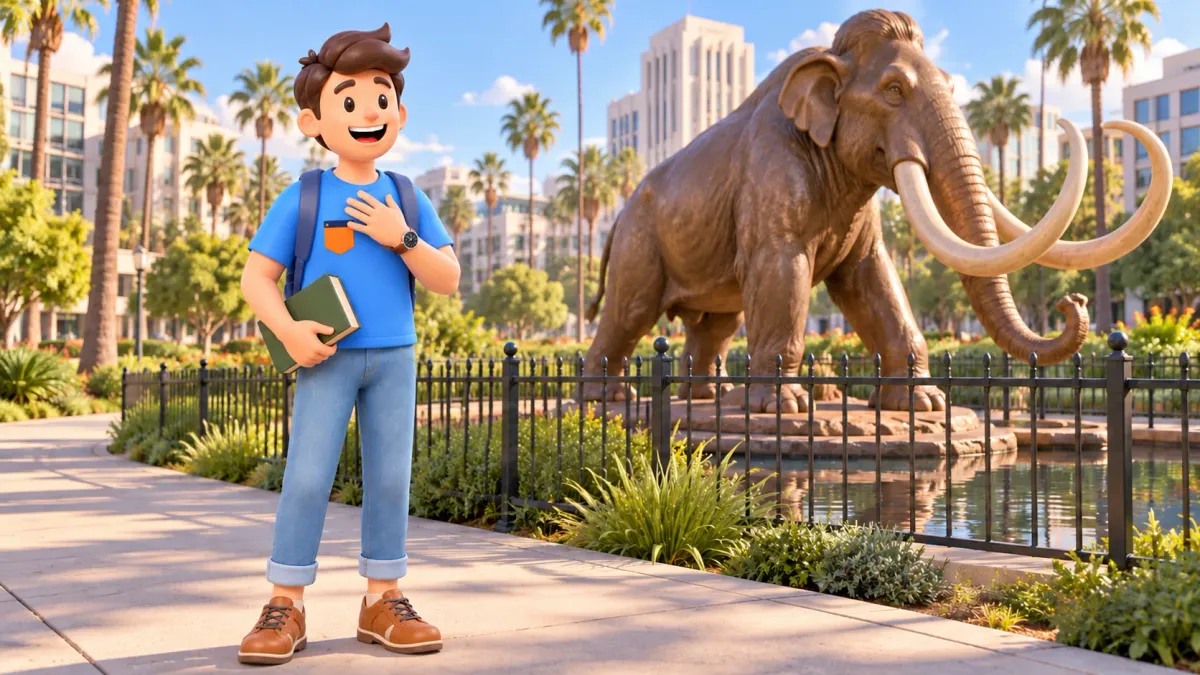
At La Brea Tar Pits, Los Angeles unexpectedly becomes an Ice Age city. Beside Wilshire Boulevard and the museum setting of Miracle Mile are mammoth models, the dark surface of the Lake Pit and a story of animals that lived here long before today's streets. A short stop changes the scale of time: the familiar metropolis becomes just one layer in a much longer history.
Start with the present conditions. The museum at La Brea Tar Pits is closed for construction; indoor exhibitions and ordinary public museum admission are paused. Parts of the outdoor Hancock Park grounds remain open, with current instructions determining the accessible sections. This plan is an outdoor introduction, without a promise of closed galleries, the laboratory or every excavation area.
Why stop when time is limited?
The main value is the meeting of two scales: a modern city and evidence of its distant natural past. Mammoths offer more than an unusual photograph. They invite a question about what existed before roads, buildings and familiar landscaping. For an introduction, see an accessible part of the site, understand the role of natural asphalt and remember that scientific work did not end with the earliest discoveries.
Let RoadMe develop a complete personal trip plan around your interests, dates, budget and pace. The app makes it much easier to connect unusual city stories, walks, main visits, meals and rest into one journey than to assemble a day from individual attractions.
This stop fits particularly well when your day already involves Miracle Mile. There is no need to cross the city for a compulsory photograph if natural history does not interest you. Near art or film, however, it offers a striking change of subject. One area can show human-made images and traces of a world preceding them. That contrast is what makes the place memorable.
You do not need to study all paleontology during a walk. One clear understanding is enough: evidence of earlier ecosystems remains beneath and among city buildings. That impression has substance on its own. A detailed encounter with collections, methods or a special programme is another level of interest, requiring separate time and an actual opportunity to visit rather than being assumed as part of any outdoor stop.
What the familiar word tar describes
The name uses tar, but the substance discussed by the museum is natural asphalt. Sticky seeps trapped animals, plants and insects of the past; preserved remains became sources of scientific information. A visitor does not need a chemistry lecture. The useful shift is recognising that the dark surface belongs to a real natural process and a history of discoveries, rather than to an ornamental pond.
Do not imagine a volcanic lake of boiling lava. Bubbles and an unusual surface do not turn this into a fantasy attraction. Observe from permitted areas without testing the material with a hand or stick. Scientific interest needs no physical experiment in stickiness. Explanation is more useful than trying an independent activity for which the grounds are not intended. Keep the experience observational and follow the boundaries provided.
That small correction changes the view. A striking image catches attention first; then you understand why collections developed here. The animals were not assembled for a modern urban exhibition: researchers study real remains of past life. Today's models are a separate way to tell the story. Do not confuse them with discoveries themselves or assume their arrangement literally reproduces how the animals were found.
Mammoths at the Lake Pit: models and a real context
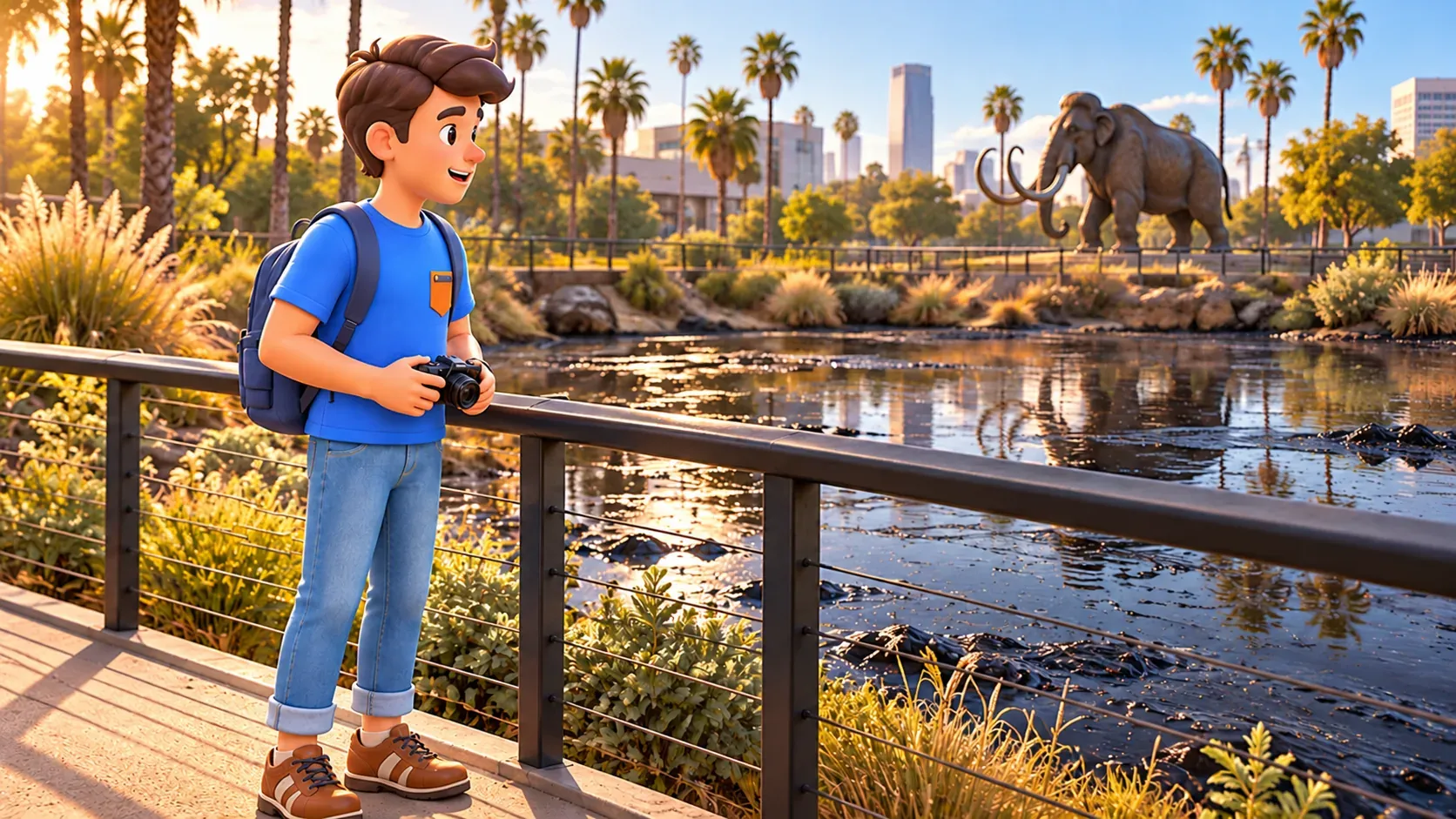
The famous Lake Pit scene is an artistic reconstruction using animal models, rather than living mammoths or skeletons standing in the water. It helps introduce the natural-trap story while remaining an explanatory image. Say that clearly during a family visit: a child can enjoy the scene and understand the difference between a representation of the past and scientific evidence. Both can spark curiosity in different ways.
The Lake Pit adds another unexpected detail: the present depression comes from nineteenth-century asphalt extraction. Rain and groundwater collected above the asphalt to form a small lake. The water visible today should therefore not be described as an unchanged prehistoric pond. Natural processes, industrial history and a contemporary way of presenting the site intersect here, giving even a short look several layers of meaning.
That knowledge does not diminish the impression. It adds questions beside the sculptures: what is natural, what reflects human work, and what was made to tell a story? A walk needs only to distinguish those layers, without a detailed quarry-development diagram. Everyday looking becomes more attentive when a familiar surface can hold several different histories rather than one simple postcard explanation.
An Ice Age world rather than a dinosaur park
La Brea tells stories of mammoths, giant ground sloths, saber-toothed cats and other Ice Age inhabitants. Do not promise a child a dinosaur walk merely because the subject is ancient animals. An introduction needs no full timeline. Name the subject correctly and choose one image to suggest the earlier landscape without merging different periods into a single imaginary scene. Clear expectations help preserve the pleasure of discovery.
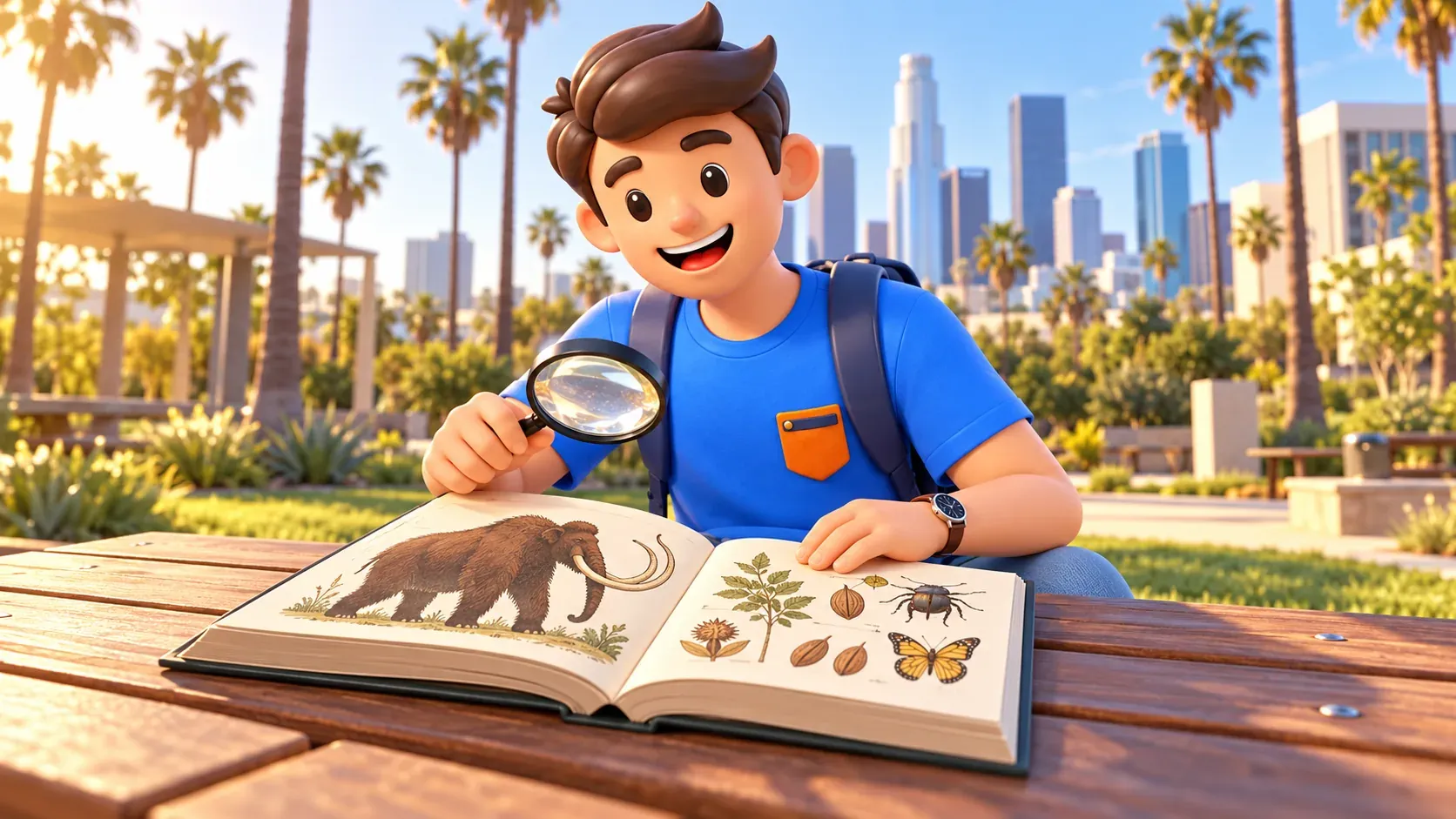
A mammoth is an effective starting point: a large animal immediately changes the sense of scale. The scientific importance does not stop at impressive bones, however. The museum emphasises microfossils, tiny remains of plants and animals that help investigate earlier ecosystems and climate. This is a useful small fact: a large story comes from easily missed material as well as from memorable giants.
A single stop does not require your own conclusion about precisely why every species disappeared. The site can show questions scientists ask without supplying the whole natural past as one simple formula. You may leave curious rather than with a list of certain answers. For travel, that is useful: the city becomes a reason to learn more while keeping observation distinct from an explanation you have not established.
A little history: remains became subjects of research
Human interest in asphalt long preceded scientific excavation. La Brea's materials describe Indigenous use as an adhesive and caulking substance. Calling the nineteenth century the first discovery of the place would therefore be inaccurate. Scientific identification of fossils is a separate chapter, without cancelling earlier knowledge of the land or practical use of its natural materials. The distinction gives the research history a more honest beginning.
William Denton identified animal remains as fossils in 1875. Large investigations developed in the early twentieth century, including James Z. Gilbert's work with students in 1909 and later museum excavations. A short visit needs only this direction: from a substance known to people and remains found within it towards systematic study. There is no need for a complete list of researchers or every excavation date.
The involvement of ordinary urban education alongside science is interesting. A teacher and students show that investigating the past need not begin with an already monumental institution. Do not turn the historical example into a promise of participation today, though. Visitors cannot independently dig, collect objects or enter work areas. Educational involvement exists through the organiser's announced conditions, rather than through the simple decision to explore a park.
Why work continues and what is accessible now
La Brea remains a research site rather than just a monument to earlier discoveries. Methods and questions change; small finds help reconsider environments once imagined mainly through large animals. That gives an outdoor stop meaning without a gallery. You are beside a place where knowledge continues developing rather than merely being repeated in attractive displays. The visible setting can introduce that work without pretending to show every stage.
Research activity and public access are different matters. An active site does not guarantee excavators at the moment you arrive or access to every process. During construction, selected outdoor areas are accessible while indoor exhibitions and ordinary museum experiences pause. Keep the plan flexible, respect barriers and do not turn an older account of the laboratory into a promise of entry today. Current instructions take priority over an attractive previous description.
The operator offers separate Insider Tours during the work. For a deeper format, read actual dates, tickets and programme contents. An advertised offering does not mean unrestricted joining without reservation or automatic inclusion with a park walk. It is optional for a short stop. Choose through curiosity, without feeling that an exterior visit lacking a tour is somehow less genuine or unsuccessful.
Connect natural history with a Miracle Mile day
La Brea can be a short episode before food or after the day's main visit nearby. If LACMA interests you, its galleries require a separate admission decision. Urban Light is another exterior experience: Chris Burden's 2008 installation concerns art and urban form. It is not part of the paleontological collection and does not explain it by itself. The contrast can be appealing without merging the two into one institution.
Film enthusiasts may separately choose the Academy Museum. Several museums need not become a compulsory marathon. Establish the day's main subject, then decide whether La Brea adds an interesting contrast. Art, cinema and natural history can share a trip while each requires attention, travel and ordinary pauses. Being in one general area does not remove personal pace or make every available interior visit necessary.
For a family, a simple conversation helps: what do you see now, what is a model and what did scientists actually find? Correct Latin names and a lengthy lecture are unnecessary. Let a child select one question and adults one unexpected fact. Different levels of interest can share a short stop comfortably if nobody promises closed exhibitions or impossible encounters with living animals from the past.
Keep permission to finish after the general impression. Substance is not measured in hours: understanding the natural basis and seeing it alongside modern buildings may be enough. If curiosity grows, return later to educational material or choose a special programme. A brief stop can begin an interest without becoming a complete course in paleontology that same day. Leave time to remember the question rather than immediately rushing to another one.
In RoadMe, getting a fully developed personal itinerary or whole-trip plan around your interests and pace is much more convenient. Let the app connect unusual stops, main visits, meals, travel and rest, so natural history and cultural Los Angeles become parts of your journey without constant scheduling along the way.

Stop at La Brea for a straightforward surprise: within a metropolis is a connection to mammoths, plants and small Ice Age creatures. Models open the conversation, natural asphalt explains the location and research gives it a continuing future. Account for the museum closure and available outdoor sections, and even a short exterior encounter can add another scale of time to the trip.


