Koyasan Temple Stays: Choosing a Shukubo and Understanding the Programme
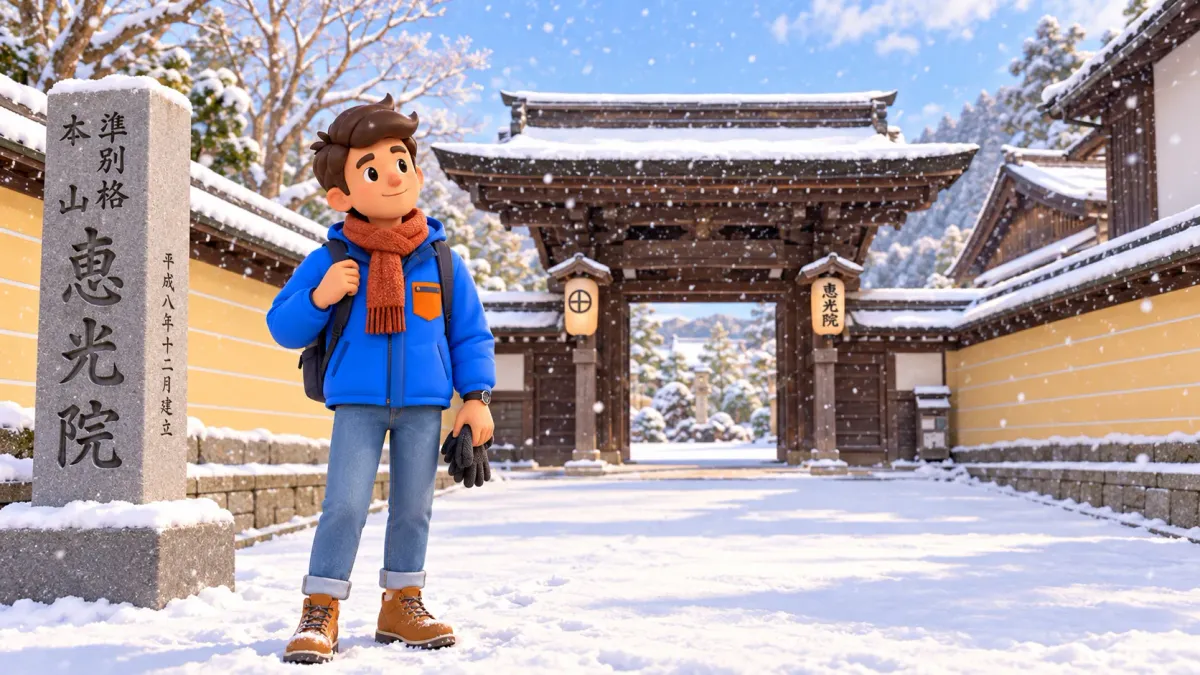
A Koyasan temple stay is best chosen by the room, meals, arrival deadline and activities actually included in your booking. The word shukubo describes temple lodging; it does not promise a private bathroom, a particular ceremony or the same timetable at every temple. Start with the experience you want, then check the exact accommodation plan.
You can spend the night in a religious setting without treating it as a retreat with a compulsory programme. Equally, this is a working temple, so its services, shared spaces and meal arrangements deserve respect. This guide explains how to compare stays and prepare; official temple and association information was checked on 28 October 2026.
Choose the stay you want before choosing a famous name
Decide what makes the overnight worthwhile: a traditional room, Buddhist cuisine, a morning service, meditation or time in a quiet garden. Choose two priorities and one practical requirement, such as a bed rather than floor bedding. A beautiful entrance cannot tell you whether the room will suit your body or the timetable your travel day.
Try RoadMe to work out a complete personal trip plan around your interests, pace and overnight commitments. Using the app is more convenient than collecting disconnected recommendations, and helps give the temple stay the time it deserves.
Koyasan is a major centre of Shingon Buddhism, and temple lodgings grew from hospitality to pilgrims. That background explains why worship, food and the building itself matter alongside the bedroom. The value is the opportunity to encounter a place with a continuing religious life, rather than a promise of luxury or a private audience with monks.
| Priority | Look for | Confirm before paying |
|---|---|---|
| Traditional atmosphere | Tatami room and temple surroundings | Bedding, room category and shared facilities |
| Comfort | Beds or an accessible room | Stairs, bathroom layout and heating |
| Religious experience | A named service or meditation | Dates, guest access, language and separate booking |
| Food | A plan including shojin ryori | Meals, ingredients and dietary response |
| Flexible evening | Compatible dinner and return rules | Last entry and actual activity finish |
Shukubo, ryokan and hotel: what changes
A shukubo is accommodation associated with a temple. A ryokan is a Japanese inn; tatami, futons or a communal bath can appear in either, but the religious setting is a meaningful difference. Use our guide to choosing a ryokan for the wider room and meal vocabulary, then check this temple's own plan.
Do not assume that every shukubo is austere, or that a high price means a modern hotel experience. Some properties offer several comfort levels within one complex. The same temple name may appear above a simple room with shared facilities and a suite with a private bath.
Read reviews for the booked category and for the issue you care about. A report about a renovated suite says little about the sound insulation or bathroom access of a basic room. Look for repeated practical details rather than deciding from one guest's spiritual reaction.
Read the room category: private bedroom is not a private bathroom
Separate four questions: who shares the bedroom, where the toilet is, where you wash, and what you sleep on. A private guest room may still use shared toilets and a communal bath. A room with a private toilet may not include a shower or bath. These are different specifications.
Ekoin's official room list illustrates the range: its General Japanese-Style Room has no en suite bath or toilet, while higher categories include private facilities and some have beds. This is an example from one temple, not a classification system that all Koyasan lodgings follow.
If floor sleeping is uncomfortable, ask for a confirmed bed category. If stairs are difficult, ask about the entire route from entrance to bedroom, toilet, dining space and service hall. A room on a convenient floor is not enough if an essential part of the stay requires steps.
Check photographs against the exact category, including the bedding and storage space. Travel with luggage you can manage without dragging it over tatami. Ask where shoes and larger cases should go instead of assuming a hotel-style luggage stand or lift.

Booking: an instant confirmation and a request are different
The official Koyasan Shukubo Association booking website offers instant reservations for listed plans and a request service for other stays. With a request, keep following the stated confirmation process; submitting preferences alone is not proof that a named temple or room is reserved.
You may also find a temple's own booking system and accommodation platforms. Compare the same dates, number of people, meals and cancellation terms. A lower headline price may refer to a different room or fewer inclusions; a higher one may reflect solo occupancy rather than better facilities.
There is no single opening date for every calendar. The association's FAQ describes an approximate six-month window depending on the plan; Ekoin's current official site allows reservations up to eleven months ahead. An empty calendar can mean dates are not open, not necessarily that every room is sold out.
- Choose dates and the actual number and ages of guests.
- Select the exact room and meal plan.
- Check whether the next step confirms a booking or sends a request.
- Resolve essential dietary, access and arrival questions.
- Save confirmation, cancellation terms and a contact method.
After a payment error, check the reservation account or contact the provider before submitting again. The association specifically warns that an error may appear even when a reservation has been made. This simple check can prevent two reservations for the same night.
Compare the total price, not a universal temple-stay rate
Prices vary by date, occupancy, room and meals. Check whether the displayed amount is per person or per room, whether taxes are included, and what each child's plan provides. A family cannot safely multiply one adult headline rate without checking the actual offer.
For two people, compare the final total for both guests on the same night. Put included dinner, breakfast, private facilities and chosen activities beside that total. If one option has fewer meals, account for the real alternative rather than assuming food will be available whenever you arrive.
Check how the reservation is paid and how extras are paid separately. The association offers online card payment for applicable plans and describes cash payment for local extras. This does not mean every temple accepts every card on arrival, or that a card supplied as a guarantee has already paid the bill.
Keep a realistic cash allowance in yen for items confirmed as cash-only. For a card issued outside Japan, verify that it can actually complete this transaction; acceptance of a card network does not guarantee acceptance of every issuer. Avoid making essential accommodation depend on an untested payment assumption.
Arrival time can determine which experiences you get
Plan backwards from the earliest commitment you want to attend, not the latest advertised check-in. At Ekoin, the official lodging page lists check-in from 14:00, meditation at 16:30 and dinner at 17:30. Arriving before the final check-in time is therefore not the same as arriving in time for every activity.
Other temples have different arrangements. Kodai-in's standard plan lists a 15:00–17:00 check-in window, with dinner times described in the plan. Save your own confirmed timetable rather than borrowing a schedule from a blog or another temple.
Allow for the final local journey and finding the correct entrance. Do not schedule arrival to the minute if dinner is fixed. If delayed, contact the lodging promptly and ask what can still be provided; do not assume a late meal will be held or refunded.
Use our independent trip planning guide for the wider preparation. For this overnight, the useful first decision is whether the travel day leaves a calm afternoon or turns the stay into a rushed bed between connections.
Shojin ryori: choose the food plan, then discuss ingredients
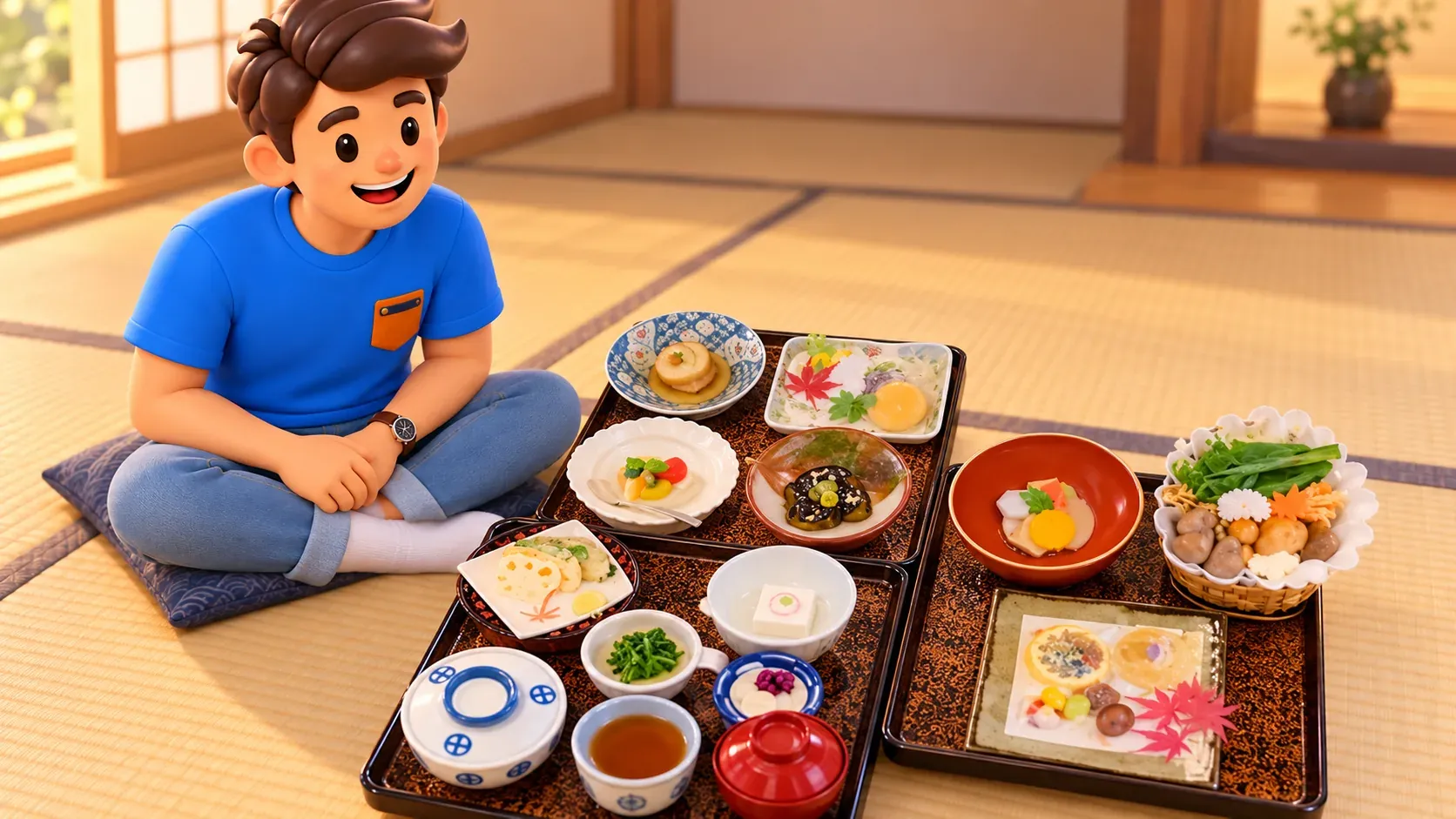
Shojin ryori is Buddhist vegetarian cuisine. Seasonal vegetables, tofu and other plant ingredients are part of its appeal, and presentation can be an experience in itself. Do not assume every booking includes it: read whether dinner, breakfast, both or neither are included.
A representative photograph does not guarantee the same dishes on your date. Menus can change with the season and the selected plan. Ask whether meals are served in the room or a dining space, and whether the dining arrangement suits anyone unable to sit on the floor.
Vegetarian does not mean suitable for every allergy. Explain the actual ingredient and severity before booking. Ekoin publishes a policy describing a shared kitchen and limits for severe allergies, and asks for advance contact. A dietary note in a booking box is not the same as an accepted accommodation.
Children's meals also need checking separately. Kodai-in's plan describes a younger-child menu that differs from its Buddhist vegetarian adult meal. If the whole party needs plant-based food, confirm each person's meal rather than relying on the temple's general description.
Morning service, meditation and a night tour are separate choices
The morning service is part of religious life, not a show staged for a photograph. Ask when guests should arrive, where they may sit and whether observation is appropriate for your party. Tell the host about seating needs rather than feeling obliged to kneel through discomfort.
Ajikan meditation, sutra copying and the goma fire ritual are distinct practices. Their presence in a destination guide does not prove that your temple offers them during your stay. Confirm the activity, guest eligibility, language, cost if any and whether booking is required.
Ekoin is one example with named guest experiences: its official programme lists morning service, goma, ajikan and sutra copying. The Okunoin night tour is separately reserved and is not included in the accommodation plan. A booking for the room therefore does not automatically reserve the tour.
Avoid treating every experience as compulsory just because it appears on a sample schedule. Equally, do not assume that every activity is optional under every special package. Read what you have bought and ask how a quiet observer, a child or someone arriving late can take part.
Evening rules, bathing and respectful clothing
Check the actual gate and return rules before booking an evening outing. Ekoin says it has no curfew, whereas Fugen-in's plan describes a 21:00 curfew. Neither rule should be applied to every shukubo. A closed main gate may also require property-specific instructions, not guesswork on arrival.
Bathing hours and access differ from the bedroom schedule. Ask whether morning bathing is available and how shared facilities are arranged. Follow the posted washing instructions and keep soap out of the communal tub. For tattoos or private bathing needs, request the actual policy rather than importing a rule from another inn.
Kongobu-ji's official visiting guidance asks for appropriate clothing and says the supplied shukubo yukata is for indoor use. Change into regular attire for the main hall or morning service, and do not use it as sightseeing clothing in sacred areas. Pack a suitable layer that is easy to put on early.
Observe signs about photography and ask before recording a service or other guests. Permission in one hall is not permission throughout Koyasan. Keep voices low, avoid blocking shared passages with cases and follow footwear instructions at each threshold.
A practical final check before committing
Send one concise enquiry covering any unresolved essentials: the exact room, bedding, toilet and bath; arrival and dinner; your selected activity; dietary needs; payment; and the cancellation deadline. Ask for specific confirmation rather than a general reassurance that the stay will be comfortable.
For a solo traveller, check availability and the full solo price. For a family, check the permitted activities, bedding and meals for each child. For limited mobility, ask about steps and seating across the whole property. The same picturesque temple can be a good fit for one party and inconvenient for another.
In RoadMe, develop a personal plan for the whole trip with time for your interests, meals and rest. It is an easier, more effective way to connect this special overnight with the rest of your journey without filling every free hour.
Choose a shukubo whose confirmed conditions make the experience enjoyable in practice. A suitable room, a manageable arrival and one meaningful activity are a stronger basis for the stay than a long list of experiences you cannot comfortably fit in.