
Kowloon with kids: science or space, then the harbour

A rewarding family day in Kowloon does not need two museums in succession. Choose one main event, either hands-on science or a closer look at space, then add a proper meal and a short harbour walk. That leaves a child time to talk about what they discovered and gives adults something more enjoyable than managing a continuous timetable.
Allow roughly four to six hours including food, urban links and breaks. This is a planning estimate, not a measured route. The main choice is the Hong Kong Science Museum or the Hong Kong Space Museum; Kowloon Park and the former railway Clock Tower provide variety without becoming compulsory items on a long checklist.
Choose according to what your child enjoys doing
Start with interests rather than an age label alone. If your child enjoys testing ideas, comparing results and asking why an object moves, the Science Museum is a sensible starting point. If planets, rockets and exploration dominate conversations at home, the Space Museum may be more compelling. A venue's popularity does not decide which will suit your family.
Use RoadMe to develop a personal trip plan around your family's interests and comfortable pace. Planning the whole route in the app makes it easier to combine the main experience with food, a walk and enough time to rest.
Separate an adult's wish to provide an educational day from a child's actual curiosity. A smaller exhibition that prompts questions can work better than a large collection of interactive stations. Offer a clear choice between two themes and accept the answer. It is easier to sustain interest when the main purpose already feels like the child's own decision.
Also consider comfort with darkness, loud sound, queues and sitting still. A spectacular-looking show need not become compulsory. For a child who needs frequent movement, an open-ended visit to a few galleries may be more comfortable than a session with a fixed start and running time. The choice concerns how you spend the day as much as its subject.
The Science Museum: leave room for a question
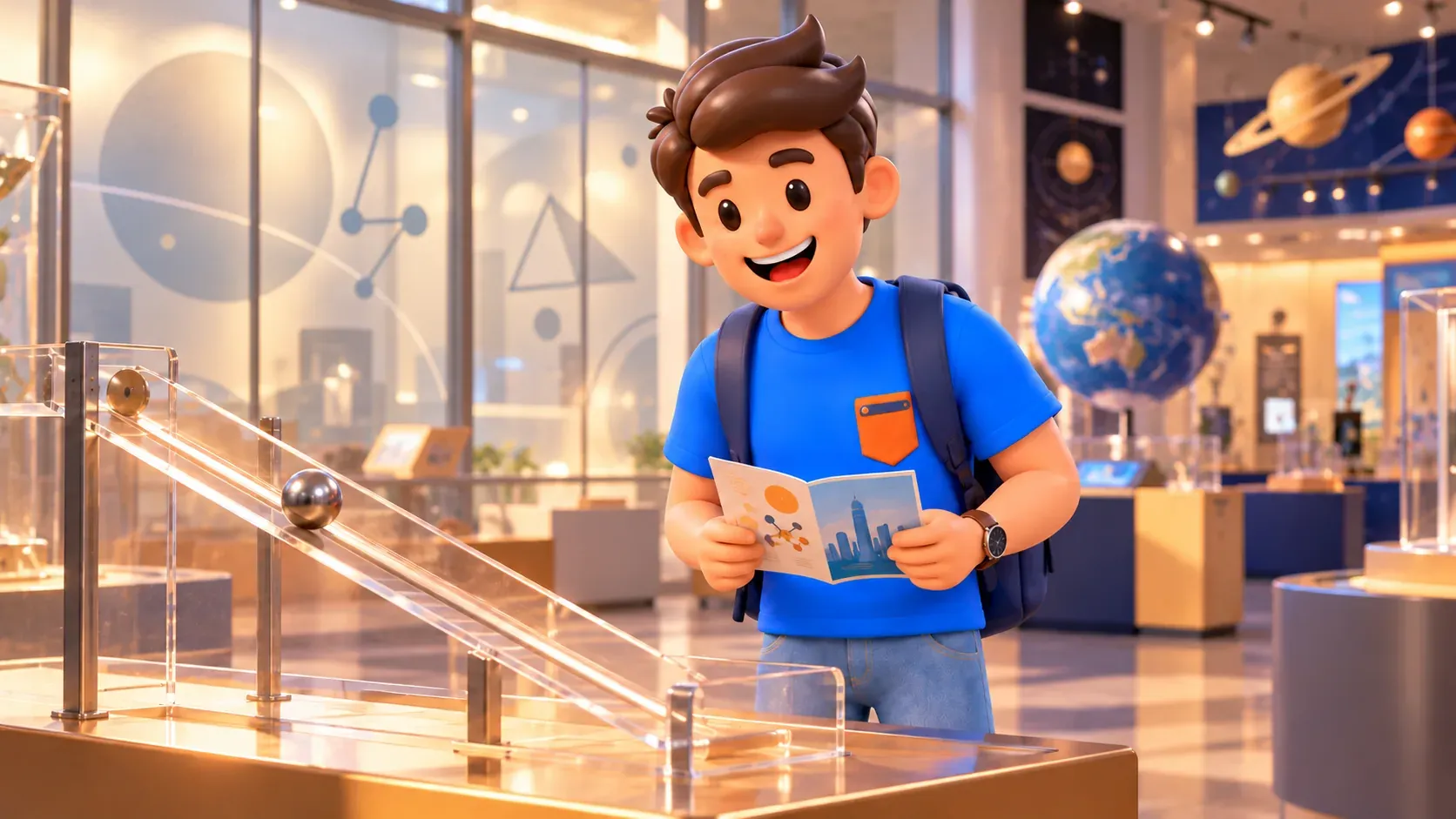
The Science Museum is in Tsim Sha Tsui East and works well as a morning main event. Its appeal is the opportunity to connect an explanation with an observable result. You do not have to know every answer in advance. Asking what might change, then looking together, is often more productive than providing a lecture at every station.
Select a few available activities your child can approach through action or observation. Make a prediction, see the result and discuss the difference. When something catches their attention, resist moving on simply to cover another floor. One phenomenon they want to revisit can become the day's strongest memory, even if other displays remain unseen.
Exhibitions change: in 2026 the museum introduced new galleries dealing with everyday technology, innovation and artificial intelligence. Older photographs and lists of favourite activities therefore should not be treated as an availability promise. Check the current programme if one particular device is the reason for your trip. This plan does not depend on every well-known exhibit being in operation.
There is no need to cover every scientific subject in one visit. Tiredness from noise, information and choices can arrive before physical fatigue. A useful time to leave is when there is already something to discuss but still enough energy for the rest of the day. Lunch should be a proper break, not a reward earned by reaching the last gallery.
The Space Museum: galleries and a show are different plans
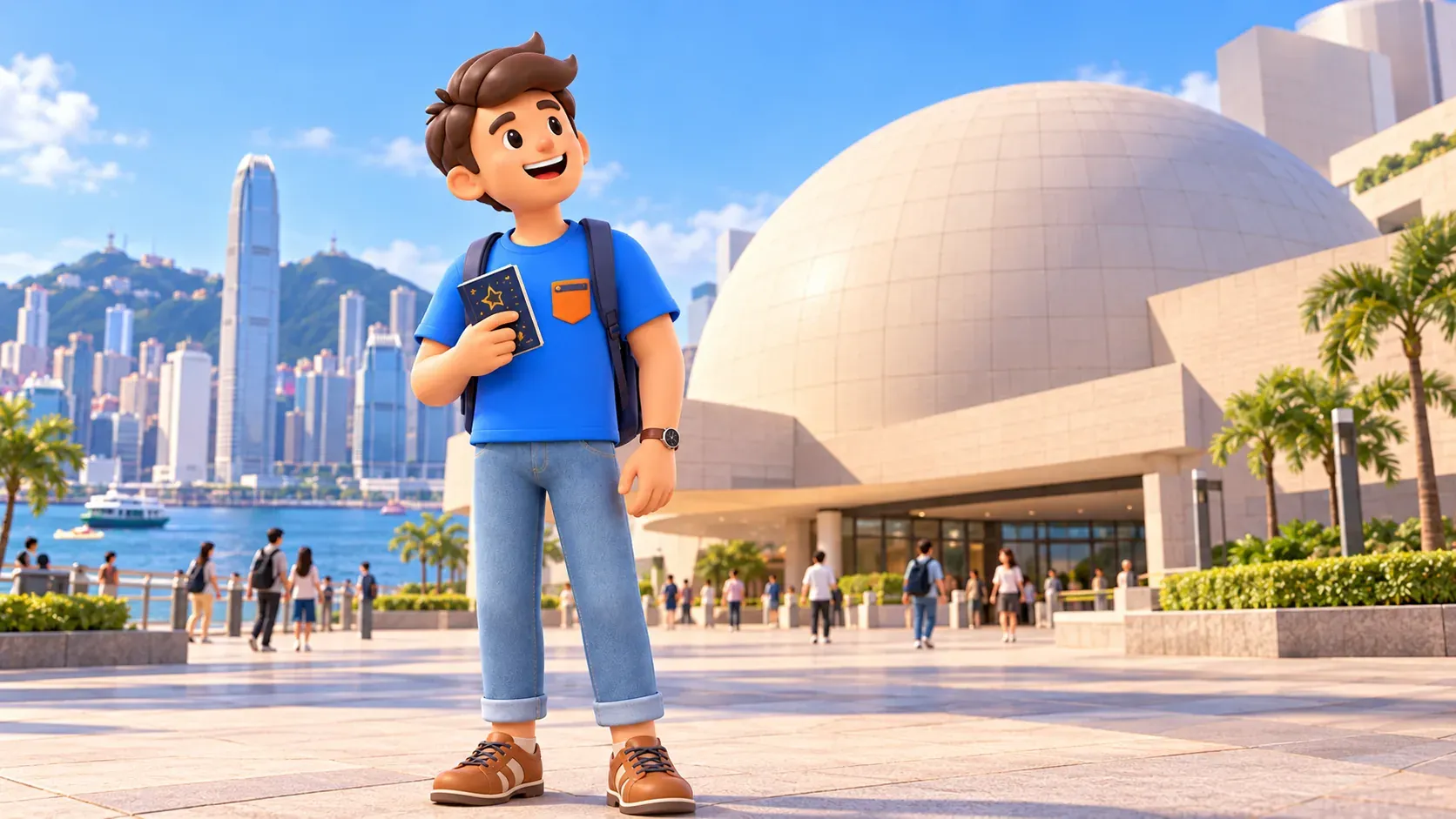
The Space Museum's pale hemispherical dome is an easy landmark in southern Tsim Sha Tsui. Its Space Theatre has served visitors since 1980, and the building's shape can itself begin a conversation about the sky. However, a striking dome does not make a theatre show compulsory. The exhibition halls and theatre require separate planning.
In the galleries, choose one line of enquiry, such as how people explore space or how to imagine distances between celestial bodies. You do not have to read every label. Begin with a question your child understands, then look for material that helps answer it. If an explanation is too advanced, preserving curiosity is enough; immediate mastery is unnecessary.
For the Space Theatre, find an appropriate session and check its ticket conditions separately. Consider the language, content, duration and your child's comfort in a dark auditorium. Information checked in October 2026 excludes children under three from theatre shows. That rule belongs to the theatre and should not automatically be applied to all museum exhibition spaces.
When a session has a fixed time, allow a margin for arrival and practical needs. Avoid putting a meal immediately beforehand if you would have to rush it. If there is no suitable show, the galleries can still provide the day's main event. Missing a theatre ticket is not a reason to add another large museum automatically.
Let the calendar shape the day
The museums have different normal closure days. The Science Museum closes on Thursdays except public holidays; the Space Museum closes on Tuesdays with the same exception. Both close for the first two days of Lunar New Year. Check the latest date-specific notice before promising a child a particular programme, especially around holiday periods.
The starting time also matters. The Science Museum normally opens at 10am. On ordinary weekdays when open, the Space Museum starts at 1pm; weekend and public-holiday openings are in the morning. The same museum-after-breakfast schedule therefore does not work for both choices on every date. Build around the actual visit rather than a generic family-day template.
A building's opening hours are not a show's starting time or an invitation to arrive just before closure. Ticket counters, galleries and theatre sessions serve different purposes. A comfortable visiting window matters more than using every possible hour. If the only available visit follows an exhausting morning, reconsider what comes before it instead of assuming your child will find fresh energy.
Exhibition-hall tickets, special exhibitions and shows can have different conditions. Free entry to one part should not be treated as access to every event. Check each family member's relevant category and the content of the visit you choose. This is more useful than calculating from an old leaflet, particularly when student concessions or age limits may apply.
Two workable sequences, with only one main museum
For the science version, arrive calmly in Tsim Sha Tsui East, make the museum the main visit, have lunch, then take a short walk towards the harbour. Add Kowloon Park only if greenery is something you want and the extra urban link suits everyone. It is not inside the museum or waterfront and need not become a compulsory connection.
For the space version on an ordinary weekday, consider a little park time in the morning, an unhurried lunch, then the museum after opening and a short waterfront finish. A reserved show takes priority in the timing. On a weekend, an earlier museum visit can release more of the afternoon for an easy return or another rest.
In either version, leave just one light task after the museum. Watching ferries, finding the clock face or choosing a place to pause is enough. A ferry trip can be a separate decision, but it is not required to complete this walk. The harbour is interesting from the shore, without another queue or transport commitment.
If your child becomes more absorbed than expected, reduce the later programme rather than cutting curiosity short. If they tire early, end the museum visit. A plan gives the day a useful direction; it does not demand the same stamina from every family. Walking links and waiting also use energy, even when they are not labelled as activities.
Park time and lunch deserve their own space
Kowloon Park offers a change from exhibition noise and information to trees and slower observation. The site became a public park in 1970 after military use, a small piece of context that helps reveal how city spaces change. A family break does not require a complete tour of every garden and path within it.
Choose a limited area and a clear exit towards the next part of your day. Do not turn rest into a search for every bird, sculpture and plant named in a guide. If your child simply wants to sit or walk without explanations, that is a useful outcome. The green stop is a change of rhythm, not another test.
For the whole holiday, RoadMe can develop a personal plan based on your interests and available days. It is a convenient way to distribute appealing places across the trip instead of squeezing everything into one overloaded family route.
Give food its own time. A clear menu, somewhere to sit, suitable access and a tolerable noise level may matter more than a famous name. Do not assume eating is permitted beside any exhibit. A break between museum and waterfront also lets everyone reassess their energy and decide how much of the outdoor continuation still sounds enjoyable.
The harbour and Clock Tower make a short finish
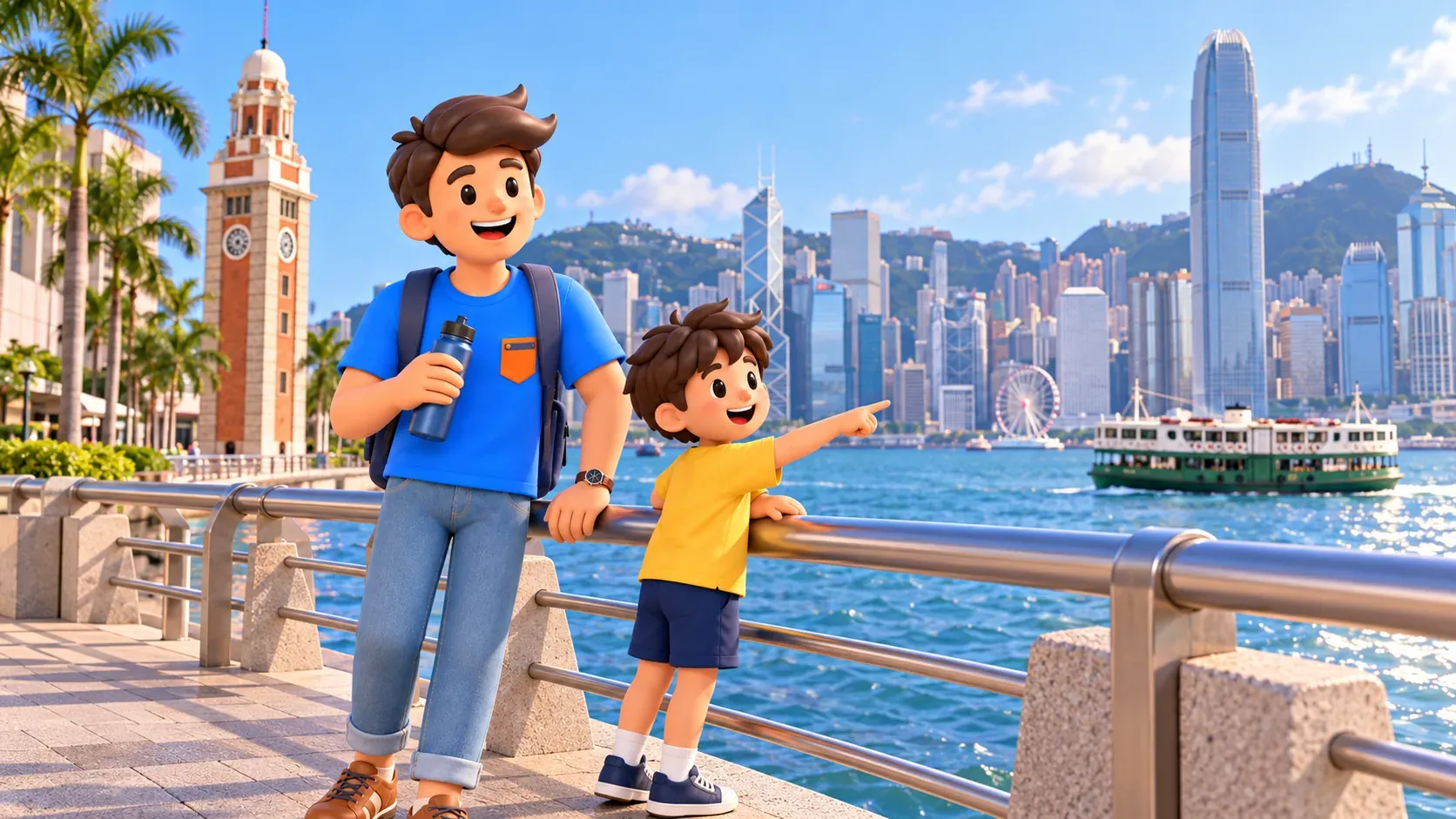
At the waterfront, simple observation can continue a museum conversation. How does a ferry differ from another vessel? Why does the opposite shore seem clearer on some days? Which buildings stand out in the skyline? You do not need a prepared scientific answer to every question. Looking together is already a worthwhile way of noticing a place.
The former Kowloon-Canton Railway Clock Tower, completed in 1915, adds a compact historical theme. It now reads as a separate landmark, but once belonged to a station complex. For children, begin with the idea of meeting: how did travellers arrange to find each other before messages on phones, and why were large public clocks useful?
This route assumes an exterior look at the tower. Do not promise a climb inside or a performance by historic machinery. Looking at the brickwork, pale details and clock face is enough before returning your attention to the water. History becomes part of the walk without another ticket or a long stretch of standing still.
Choose an ending that everyone can recognise
Decide when to return to transport: after a short waterfront section, a pause or the exterior tower stop. A clear finish can be more useful to a family than another suggestion that is only a little farther away. There is no need to wait for evening lights if the main experience has worked and your child is tired.
With a pushchair or wheelchair, confirm the particular museum entrance and accessible route, then assess the streets separately. In heat, heavy rain or relevant weather warnings, change the outdoor part according to the day. A gallery and a harbour walk need different decisions even within one district, and neither requires you to keep an uncomfortable plan.
For the rest of the trip, use the three-day Hong Kong plan. One museum and time to keep talking about it are enough for this family day in Kowloon. Save the second museum for a day when there is fresh interest in discovering it.


