
Komaba in Half a Day: Folk Crafts and the Maeda Residence

Komaba makes a good half-day outing if you enjoy looking at the way objects and rooms shape everyday life. The Japan Folk Crafts Museum and the former Maeda residence in Komaba Park are close enough to form a compact visit, yet they ask different questions. At the museum, a useful object becomes worth looking at carefully. At the residence, rooms and architectural choices reveal how a particular household presented itself and received visitors.
Give the museum the main place in the plan, choose the parts of the residence that are actually open and leave a pause in the park. You do not need to add another district, a long shopping detour or a tour of the university to make the half day complete. The connection is the change of scale from something held in the hand to the buildings and gardens around daily life.
Start with calendars, then choose the order
Komaba-todaimae on the Keio Inokashira Line is a useful starting station. Plan the whole journey from your accommodation and identify the public walking route. The museum and Komaba Park are separate places reached through ordinary neighbourhood streets. Do not confuse Komaba Park with the similarly named Komabano Park, or assume that a route can cut through university land without checking current public access.
Try RoadMe to build a personal itinerary around your interests, dates, pace and budget. A quiet half day of craft and architecture fits more naturally when the rest of the Tokyo trip has its own clear rhythm.
Allow roughly three to four hours locally, including the main museum, selected parts of the residence and a proper pause. This is a planning estimate, not a measured route time. Add transport separately. If your exhibition visit tends to take longer, choose one residence building rather than pushing both into a narrow remaining window. A complete look at fewer places gives the outing more coherence than a rushed final doorway.
Check each calendar before deciding which comes first. The Maeda interiors can close earlier than the museum, so a later start may favour the residence before the exhibition. The two residence buildings do not share every open day, and the museum can close between exhibitions. Treat the opening arrangements as part of the route design instead of discovering them after a long lunch.
At the museum, begin with an ordinary object
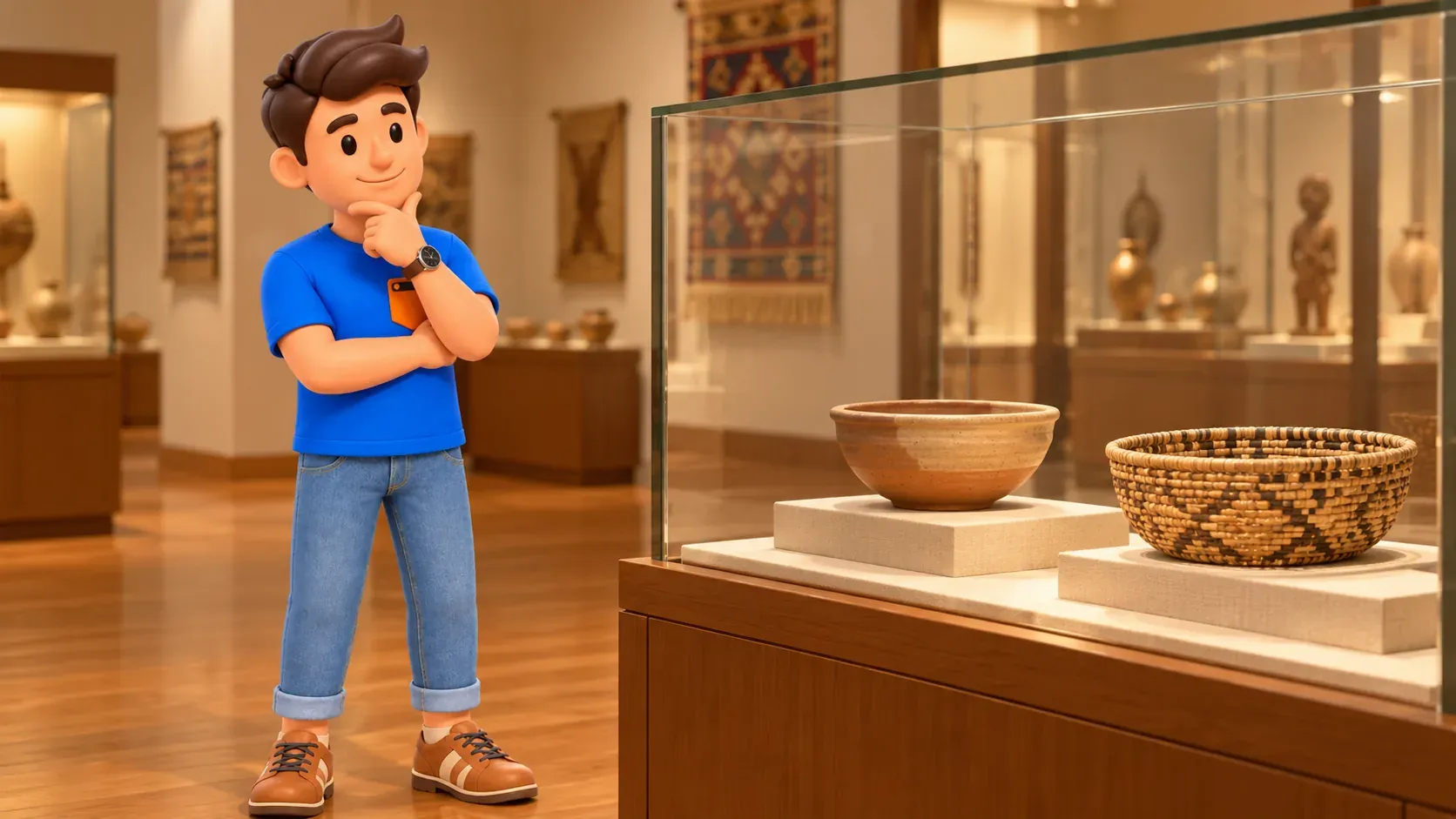
The Japan Folk Crafts Museum opened in 1936 under the initiative of Yanagi Soetsu, also known as Yanagi Muneyoshi. Its central idea invites attention to the beauty of everyday craft. That makes it different from a visit built only around famous individual masterpieces. You do not need specialist knowledge to begin: a bowl, textile or useful vessel can raise questions about material, shape and the way something might be held or used.
Look first at one object that seems familiar. Ask how its form serves its task and what catches your eye before reading the label. Then use the explanation to distinguish material, origin and context. This does not mean inventing a rural history for everything that looks handmade. Let the display tell you what is known. A careful first impression and a reliable label can complement one another.
The word mingei is not a reason to treat all craft as the same timeless category. Different places, makers and uses remain important. Compare two objects where the exhibition allows it: a repeated pattern and an irregular surface, a strong handle and a thin rim, or a restrained colour beside a more decorative one. You can notice these relationships without trying to turn the whole collection into a lesson in terminology.
Let the current exhibition guide the visit
Check the programme for your dates rather than expecting every object from the collection to be visible. A particular show can give the visit a more useful focus than a general intention to see traditional Japan. Read a short introduction, choose a few things to examine closely and allow the display sequence to set the pace. It is reasonable to spend more time on a material that interests you than on a subject you find less engaging.
Do not plan to photograph everything as a substitute for looking. The museum permits photography only in designated areas, so check the actual signs. Follow the instructions on shoe covers and bags, keep voices low and avoid touching objects. Food and drink belong outside the exhibition halls. These details help the visit stay comfortable and protect a setting where the rooms themselves are part of the experience.
If step-free access matters, ask the museum about the complete route. Its older building does not work like a new purpose-built gallery with every movement immediately obvious. Assistance and accessible arrangements should be confirmed rather than inferred from the presence of an entrance ramp. The right question is whether your planned visit can be made comfortably, including the floors and rooms that matter to you.
Do not confuse the museum's West Hall with the Maeda house
The museum's West Hall is associated with Yanagi's former residence and has a separate, limited opening calendar. It is not automatically included as an open house every day the main museum operates. Check the published dates if it is important to your interests. A main-hall exhibition and a special opening of the residence are different possibilities, even when they belong to one museum organisation.
This outing's second main setting is the former Maeda residence in Komaba Park, which is another place altogether. Keeping the names clear prevents a common planning error: arriving at one historic house with information about another. Use the full name and address when checking the calendar, sharing a meeting point or navigating. A small amount of preparation avoids spending the flexible part of the half day on the wrong gate.
If the West Hall happens to be available and appeals to you, decide what it replaces or how much longer you want to stay. Do not add it automatically on top of every Maeda room. The useful connection is attention to living spaces, not the largest possible count of interiors. Sometimes the better choice is the main exhibition, one residence building and a relaxed park pause.
At the Maeda residence, compare two architectural languages
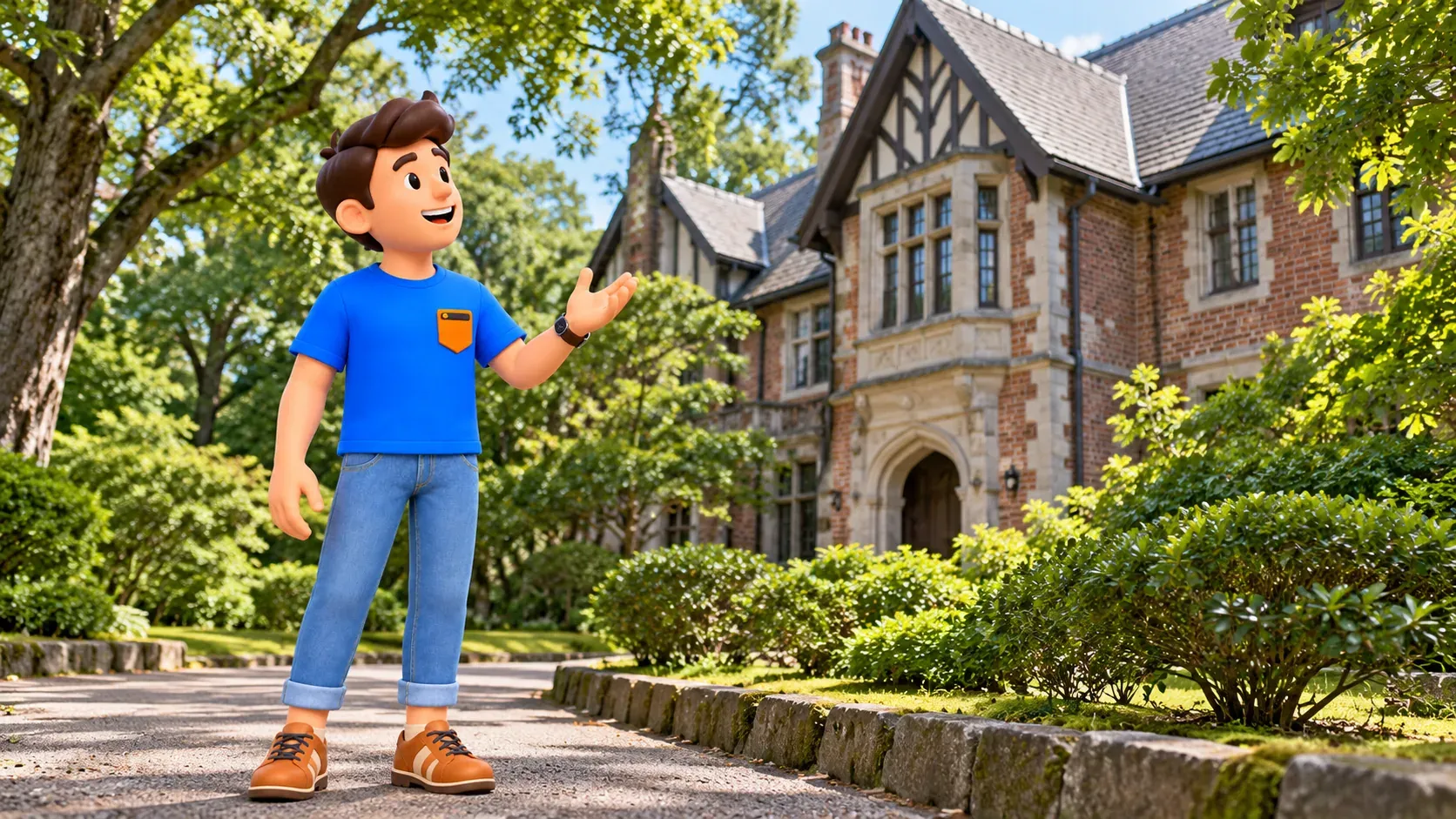
The Maeda residence combines a Western-style building completed in 1929 and a Japanese-style building completed in 1930. Both belong to the early Showa period, not to an unchanged medieval estate. That distinction makes the comparison more interesting: different architectural approaches were brought together within one modern household. Look at how they offer different ways to move, receive guests and relate to the garden.
In the Western-style building, concentrate on what is visible in the open rooms: the sequence of spaces, the proportions of windows and the relationship between formal reception and domestic use. You do not need to name every stylistic feature. Read the information provided before deciding that a decorative element was imported or a particular room served a purpose that its appearance merely suggests.
In the Japanese-style building, give the relationship between interior and garden a little time. Observe the framing of the view and the height from which the room was intended to be experienced. Follow instructions about shoes and restricted rooms. A visible garden is not necessarily a garden you may walk through, and a room associated with tea does not mean that a tea service or ceremony is included in an ordinary visit.
RoadMe can arrange a personal plan around your balance of craft, architecture and rest. Give the parts that interest you enough time instead of making every neighbouring interior compulsory.
Check the two residence buildings separately
The Japanese and Western buildings have different ordinary weekly opening patterns, as well as holiday and year-end exceptions. For the Western building, the published pattern generally centres on Wednesday to Sunday and holiday openings. Do not assume a Tuesday visit will provide the same combination as another weekday. Check the current official calendar for both buildings and any temporary restrictions before choosing the day.
The park also has its own gates and closing arrangements. Being outside the houses does not mean you can remain in the grounds all evening. Leave a comfortable margin to finish the rooms, retrieve belongings and use the public exit. If one building is closed, decide whether the other and the grounds give you enough interest. An exterior view can be worthwhile, but describe it honestly as an exterior visit.
With children, choose a simple shared question, such as which object seems useful or how a garden looks different from two kinds of room. Older interiors require care around surfaces and displays, so a longer free pause in the park may be preferable to adding more rooms. Accessibility, seating and any restrictions should be checked for each building, not assumed to be identical across the site.
End with the neighbourhood at its ordinary scale
Take the remaining time for a permitted park pause or a short public-street return towards the station. A residential lane deserves the same consideration as the museum: do not block entrances, photograph into private homes or treat an open gate as an invitation. The quiet part of Komaba comes from ordinary use, not from being a stage arranged for the visitor.
In rain, shorten the outdoor connection and keep the indoor parts that are open and comfortable. If a closure leaves only one place you really want, reduce the outing rather than filling it with unrelated stops. Komaba works because useful objects, historic rooms and a little green space can explain one another. Leave when that small sequence feels complete, with time for an easy journey onward.


