
Köpenick in half a day: town hall, palace and waterside streets
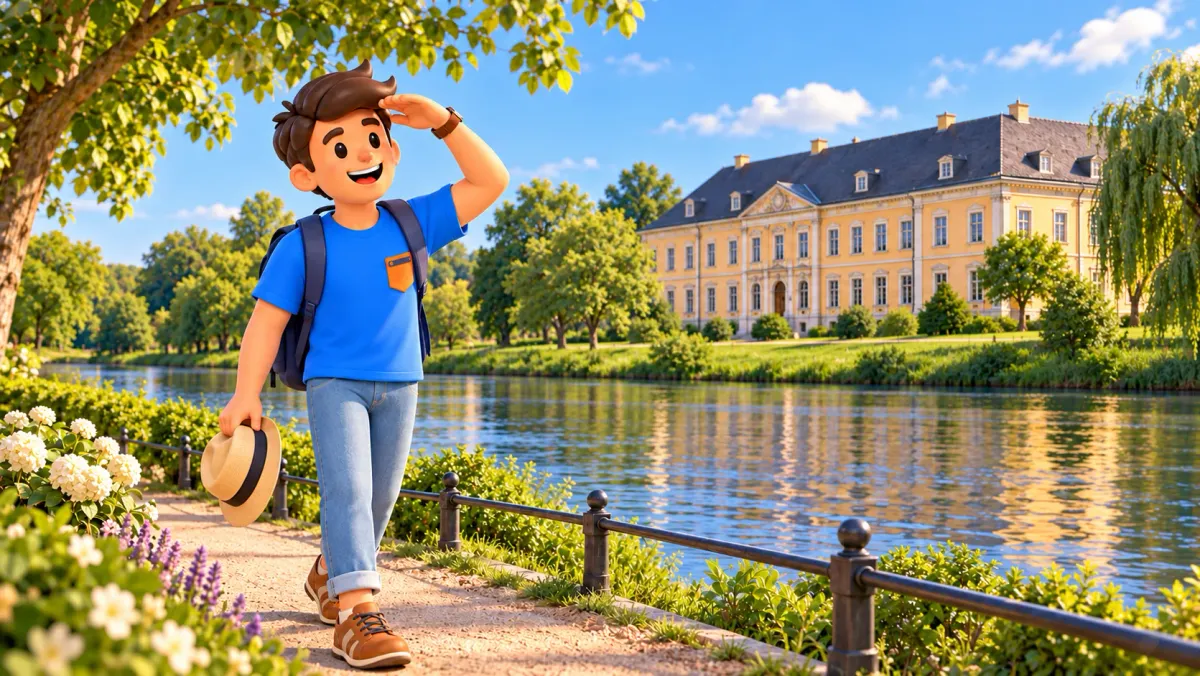
Give Köpenick half a day: begin with the palace and its island, then visit the town hall, small old-town streets and the Dahme waterfront. Allow about four hours locally, with travel from central Berlin counted separately. The Schloßplatz Köpenick area is the start and finish. The main version includes the palace museum, so choose a day when it opens. If you prefer exteriors or the museum is closed, make a shorter waterside walk instead; there is no need to fill the same four hours with more compulsory stops.
This outing compares two kinds of public display: princely and civic. A restrained Baroque palace contains decorative arts, while a red-brick town hall carries the story of a man who exploited the authority of a uniform. Everyday life continues between them in a small historical centre. Water connects the subjects without requiring a museum marathon. Come for Köpenick’s own rhythm, rather than expecting a miniature version of central Berlin. A coherent half day lets you enjoy its differences and leave with a personal reason to remember the place.
Decide whether the palace museum is your priority
The order is Schloßplatz, the available entrance to Schlossinsel, the palace at Schloßinsel 1, open island paths, a break, the town hall at Alt-Köpenick 21, a small loop around the open streets near Rosenstraße, and the Dahme at Luisenhain. Return to Schloßplatz by available public connections. Follow signs on site, as construction in the old town can change approaches. Check the journey from your accommodation for your actual date rather than assuming a familiar tram always follows its usual route. The local walk does not depend on a particular service number.
RoadMe makes developing a personal plan for the whole trip much more convenient, matching your dates, interests and preferred pace. Try preparing your Berlin days in the app so Köpenick’s palace museum, short walks and waterside breaks each receive an appropriate place in your journey.
Allocate 10 minutes to orientation and approach, 75 to the museum, 30 to the island and 30 to a break. Then allow 30 for the town hall and its story, 30 for the old-town streets, 20 beside the water and 15 for the return. These add up to 240 minutes, including short connections within sections. They are editorial estimates without a measured track or promised distance. There is no separate reserve: queues, diversions or a long lunch call for a smaller next section or a longer outing. Seventy-five minutes is a selective museum visit, not a complete-collection benchmark.
During the winter half-year, October to March, the palace opens Thursday to Sunday, 11am–5pm. Starting around 11am leaves the outdoor stages for the remaining daylight. Other months have a seasonal schedule; check holiday exceptions before travelling. Museum admission is paid, and a day ticket applies to the selected date. Booking ahead helps organise the visit but does not mean every room can be entered at any time. Keep the museum visit and the outdoor island walk distinct when deciding how much of the day each deserves.
The island palace: begin with its setting
On the way to the museum, first notice where the building stands. Schlossinsel is a small island beside the old-town core, with the Dahme giving the palace its waterside setting. Do not immediately search for a perfectly symmetrical photograph. Look at how the facade relates to nearby trees and open space, then enter if the museum is part of your plan. We leave the slower island walk until after the galleries, allowing interior impressions and outdoor views to have separate moments rather than competing for attention at the entrance.
The present Baroque palace was built between 1677 and 1690 for Prince Friedrich, later King Friedrich I in Prussia. Its period and purpose are enough historical background for a first visit. Inside, the interest lies less in finding a single famous object than in seeing relationships between rooms, furnishings and representative living. The regular exterior does not explain everything awaiting in the galleries. Entering therefore changes the scale of your attention: you move from the building’s outline to materials, details and the choices involved in creating an interior.
Choose a decorative-arts subject inside
The palace houses part of the Kunstgewerbemuseum, the Museum of Decorative Arts. Its permanent display concerns interior decoration from the Renaissance, Baroque and Rococo periods. Start with a choice: wood and surface finish, textiles, ceramics, or how objects work together in a room. That makes close looking easier than trying to read every label with equal attention. Our seventy-five minutes assumes a selective introduction. If decorative arts are your main reason for coming, enlarge the museum allocation and shorten the street walk rather than treating your strongest interest as an interruption.
Pause with one object and ask a few simple questions. Was it intended for everyday use or to make an impression? How does its material shape its form? Where does convenience meet ornament? Look for answers in the object and its museum explanation, avoiding invented stories about former owners. A few such observations can leave you with more than a photograph of a room: they offer a way of looking differently at ordinary things afterwards. You do not need to know every style name or technical process before starting.
Follow the museum’s photography rules and do not touch exhibits. The illustration in this article expresses an interest in craftsmanship; it is not a documentary picture of a particular gallery or collection object. If your companion is less interested in decorative arts, agree on a finishing time and a few shared stops beforehand. One person can then study more detail without making the other feel trapped in an endless lecture. A short museum visit can still be substantial when it has a clear subject and a comfortable boundary.

Return your attention to the island and water
After the galleries, keep about half an hour for the open part of Schlossinsel. Use available paths, without treating lawns as shortcuts or assuming a complete circuit is possible under every restriction. It is interesting to look back at the palace after seeing inside: the familiar outer form now connects with details you have noticed. Alternatively, simply pause at an open permitted water view.
If the museum is closed, an exterior look is not the same experience. It remains a good but different outing: island, facades, old town and river. That version may take roughly ninety minutes to two hours, depending on breaks and available approaches. Interior enthusiasts should choose an opening day; people mainly seeking a walk need not make every decision around the galleries. Being clear about which visit you want prevents disappointment. You can enjoy a smaller plan fully instead of describing a closed museum as though it had been visited.
A pause before the town hall story
Set aside about half an hour to rest before the town hall. Choose an available place on the island or in the old town: a bench, a café with space or another suitable stop. A specific menu, price and absence of a queue are not guaranteed. A substantial lunch needs more time. The break separates decorative arts from a quite different story. Discuss one memorable material or object if you wish, then put the museum notes away and look around without immediately collecting more information.
The town hall and its false captain
Reach Rathaus Köpenick at Alt-Köpenick 21 by open public routes. The red-brick building with Gothic forms was inaugurated in 1905. Its historic appearance should not be mistaken for medieval construction. Compare its civic display with the palace’s princely setting: the authority and urban purpose are different. An exterior look, a short story and the surrounding space are enough for our basic stop. An administrative building should not be treated as a museum where any room is always open to visitors or where a tower climb comes automatically with arrival.
On 16 October 1906, cobbler Wilhelm Voigt occupied the town hall in a captain’s uniform, ordered the mayor’s arrest and obtained the municipal funds. The “Köpenickiade” made the place famous well beyond the district and later became material for literature and theatre. This brief account explains the false captain’s memorial by the entrance. The striking idea is the power of an identifiable outward sign: the uniform helped secure trust and obedience. Our walk does not require every detail of the trial or a catalogue of later adaptations.
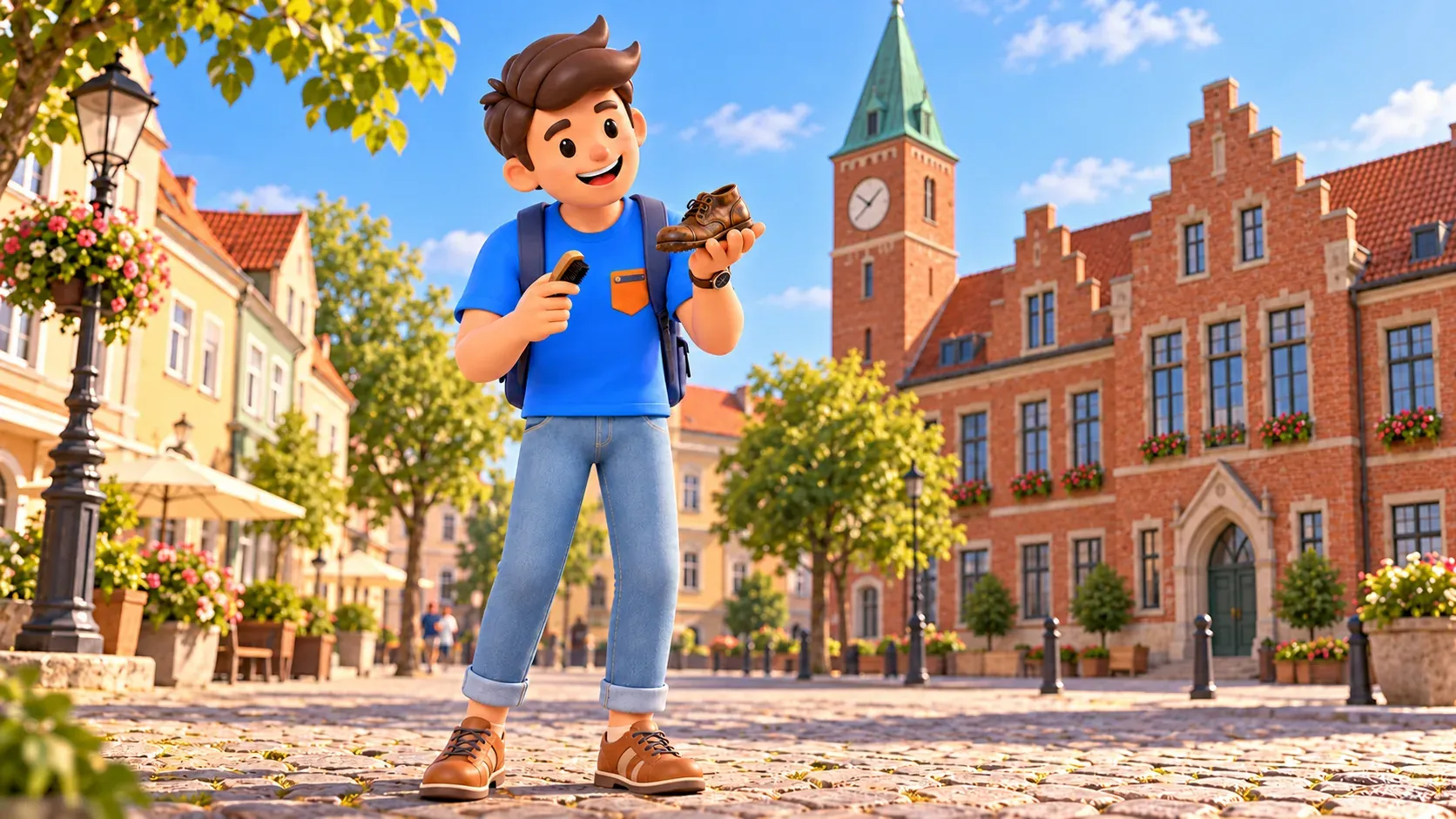
You can pursue the subject in the captain exhibition when access suits your visit, using part of the town-hall allocation or extending it. The exterior stop does not include a compulsory interior circuit or promise a tower ascent. If this story interests you more than palace objects, take that as useful information for the rest of the trip. Urban biographies and unexpected everyday histories may be what you want next. Companions need not prefer the same subject; understanding which interest to continue is already a worthwhile outcome of a varied half day.
Small streets and the Dahme at Luisenhain
Make a short loop from the town hall through open streets around Rosenstraße, then choose a public connection to Luisenhain. The old centre sits among waterways at the meeting of the Dahme and Spree; Köpenick became part of Berlin in 1920. Those two anchors explain its distinct town character more usefully than a long chronology. Notice small frontages, turns in the street and the proximity of water. Where construction changes a connection, follow current signs rather than insisting on a planned loop through an enclosed work area.
At Luisenhain, leave twenty minutes for an available Dahme view and a short rest. Müggelsee, a boat excursion and the fishermen’s quarter need their own time and are not added to this basic outline. Compare the river beside the town hall with its role near the palace: one setting frames a former residence, while the other belongs to an everyday town walk. Even without a special event, the transition helps Köpenick feel like a connected place instead of two famous buildings with a hurried transfer between them.

Finish without expanding every possibility
The museum describes the palace visitor entrance as wheelchair-suitable, but that does not establish identical conditions on every cobbled street or temporary approach. Match the required entrance and actual paths to your companions’ needs. In poor weather, reduce the riverside part; if galleries become tiring, shorten the selective museum visit. Make the main choice before travelling, leaving small adjustments on site as ordinary decisions rather than reasons to spend the day chasing an original checklist. A focused half day should feel manageable as well as interesting.
With RoadMe, creating a personal plan for the entire trip around your interests and pace is easier and more efficient. Try arranging your days in the app so Köpenick becomes a thoughtful part of the journey, with enough time for art, history and rest.
Return to the Schloßplatz area by open public routes, keeping fifteen minutes to conclude the local walk. Our first-time Berlin planning guide can help with the other days. If this half day has offered palace craftsmanship, an unusual civic story and water, it has done its job. A good ending is a calm return to transport with a clear impression of Köpenick, rather than another rushed addition simply because a nearby place also looks appealing.


