
Half a Day in Kiyosumi-shirakawa: Garden and Everyday Edo
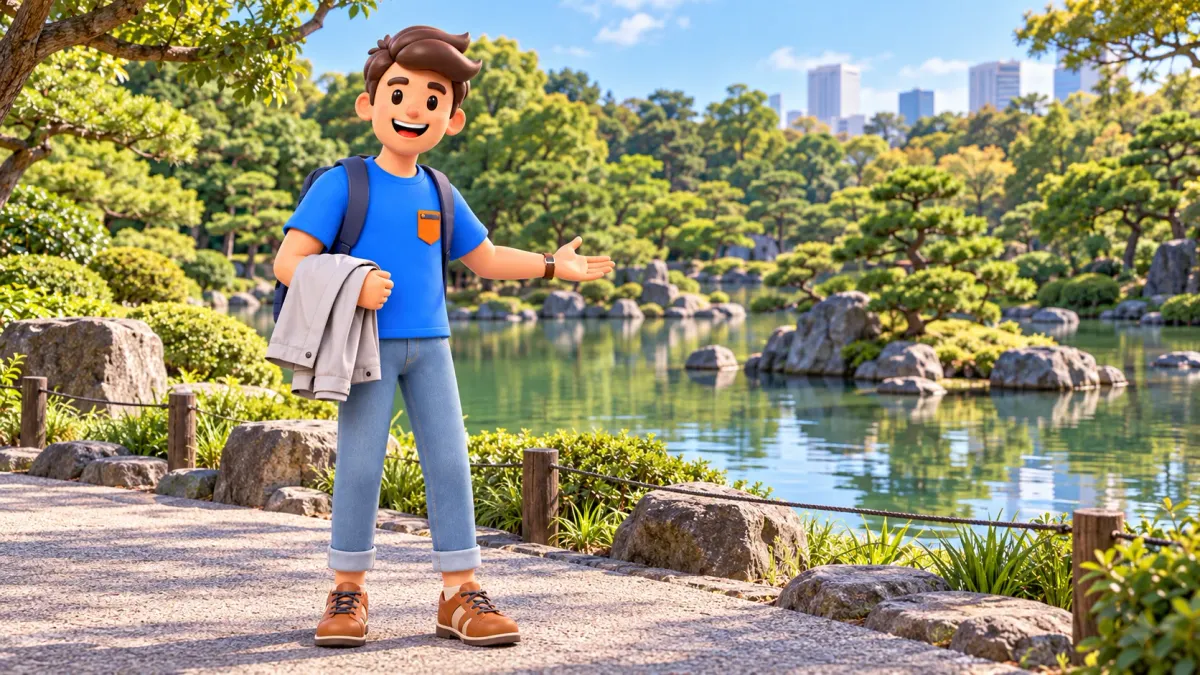
A half day in Kiyosumi-shirakawa can bring together two very different ways of understanding Tokyo: everyday life reconstructed inside Fukagawa Edo Museum and a landscape composed around water and stones at Kiyosumi Garden. Give each visit real attention, keep a meal or drink pause between them, and treat the walk toward Kiyosu Bridge as an optional ending.
This is a local plan, not a survey of eastern Tokyo. You do not need to add another major museum, a long river circuit or every celebrated cafe. The useful contrast is already here: compact spaces for daily living, a garden designed for changing views, and the wider city beyond. A generous half day is an editorial allowance rather than a measured promise.
A manageable sequence with two main visits
Use Kiyosumi-shirakawa Station as the neighborhood anchor and choose actual exits from a current map. Start with Fukagawa Edo Museum when its calendar permits, pause for food, then continue to Kiyosumi Garden. If time and conditions remain comfortable, head toward Kiyosu Bridge for a limited river view. Travel from your accommodation is additional, and the bridge does not have to be crossed.
For a personal trip that is easier to organize and use, try RoadMe: the app builds a day-by-day itinerary around your interests, dates, pace and budget. Give this garden-and-history half day a practical place in the wider journey instead of trying to combine several separate lists yourself.
| Part of the outing | Main purpose | What to keep optional |
|---|---|---|
| Fukagawa Edo Museum | Understand a little of everyday Edo | Reading every panel or adding another exhibition |
| Neighborhood pause | Eat, drink and reset attention | A queue at one particular cafe |
| Kiyosumi Garden | Look at water, stones and changing views | Every path or every named feature |
| Kiyosu Bridge area | A shorter river ending | Crossing or continuing along the whole waterfront |
The order is a useful default, not a rule. A confirmed opening or a weather change may justify reversing the main visits. Keep them together as one neighborhood block, with a pause preserved. If the afternoon has a fixed onward appointment, decide in advance that the river extension will be removed first.
Check the museum calendar before choosing the day
Fukagawa Edo Museum does not open every Monday. Its usual closing days are the second and fourth Mondays, except public holidays, with year-end and temporary exceptions. A notice checked on October 23, 2026 states that the permanent exhibition will be closed on December 21, 2026. Other parts of the building remaining open that day does not provide access to the main display.
Check the exhibition's access rather than simply finding the building's office or theater hours. Those are different uses of the same facility. The regular last admission to the exhibition is 4:30 p.m.; do not turn that into your target arrival for a substantial visit. A museum deserves time after entering, not just a successful ticket purchase.
Both the museum exhibition and the formal garden normally charge admission. A stroll through the neighborhood does not create a combined free ticket. Check current categories and arrangements for your own visit instead of assuming that a park-like setting is always unrestricted. The plan deliberately avoids a fixed spending total that would depend on your meal and ticket conditions.
Fukagawa Edo Museum: enter with one question
The museum contains a life-sized reconstruction of Saga-cho in the late Edo period. It is a way to imagine the scale of daily life: streets, domestic surroundings and the relationship between living and working space. You are looking at a museum reconstruction, not an untouched original neighborhood preserved indoors.
Choose one question before the display becomes a collection of attractive details. How much room did a household have? How did a place of work relate to the home? What objects made sense in that amount of space? Following one thread makes the visit more coherent than trying to read every explanation with the same intensity.
Look first at how spaces connect, then at individual items. A small object means more once you can imagine where it belongs. You do not need to memorize a full chronology of Edo to notice this. The value is a clearer picture of daily arrangements, not a test of how many historical facts you can carry out of the building.
Follow staff instructions about places and objects visitors may approach. A reconstruction should not be interpreted as permission to handle everything. If a room or activity is unavailable, keep the main question and continue elsewhere. The day does not depend on one exact display interaction or a particular performance being offered.
With children, ask one observable question and allow time for an answer. With adults, agree whether you want a shorter introduction or slower reading. Those are different visits, and neither is automatically better. A realistic shared expectation is more helpful than discovering at the exit that half the group wanted to stay twice as long.
Keep the pause between visits intact
After the exhibition, give attention a break before entering the garden. Lunch or a drink is part of the plan, not a delay to recover later by walking faster. Choose a place that is open and suits the day's appetite. One celebrated cafe is not essential to understanding the neighborhood.
If there is a long queue, decide whether that particular stop matters more than the garden time. You can choose it, but make the trade consciously. Do not assume every wait can be absorbed by the optional river ending while the rest stays unchanged. A long meal may make the two main visits the entire outing, which is still a complete half day.
The connecting streets also deserve ordinary consideration. Keep residential entrances clear and do not enter a private yard for a photograph. A few facades and everyday movements are enough; there is no need to manufacture a hidden-city discovery at every corner. The museum has already given you a useful way to think about urban life.
Kiyosumi Garden: change the kind of attention
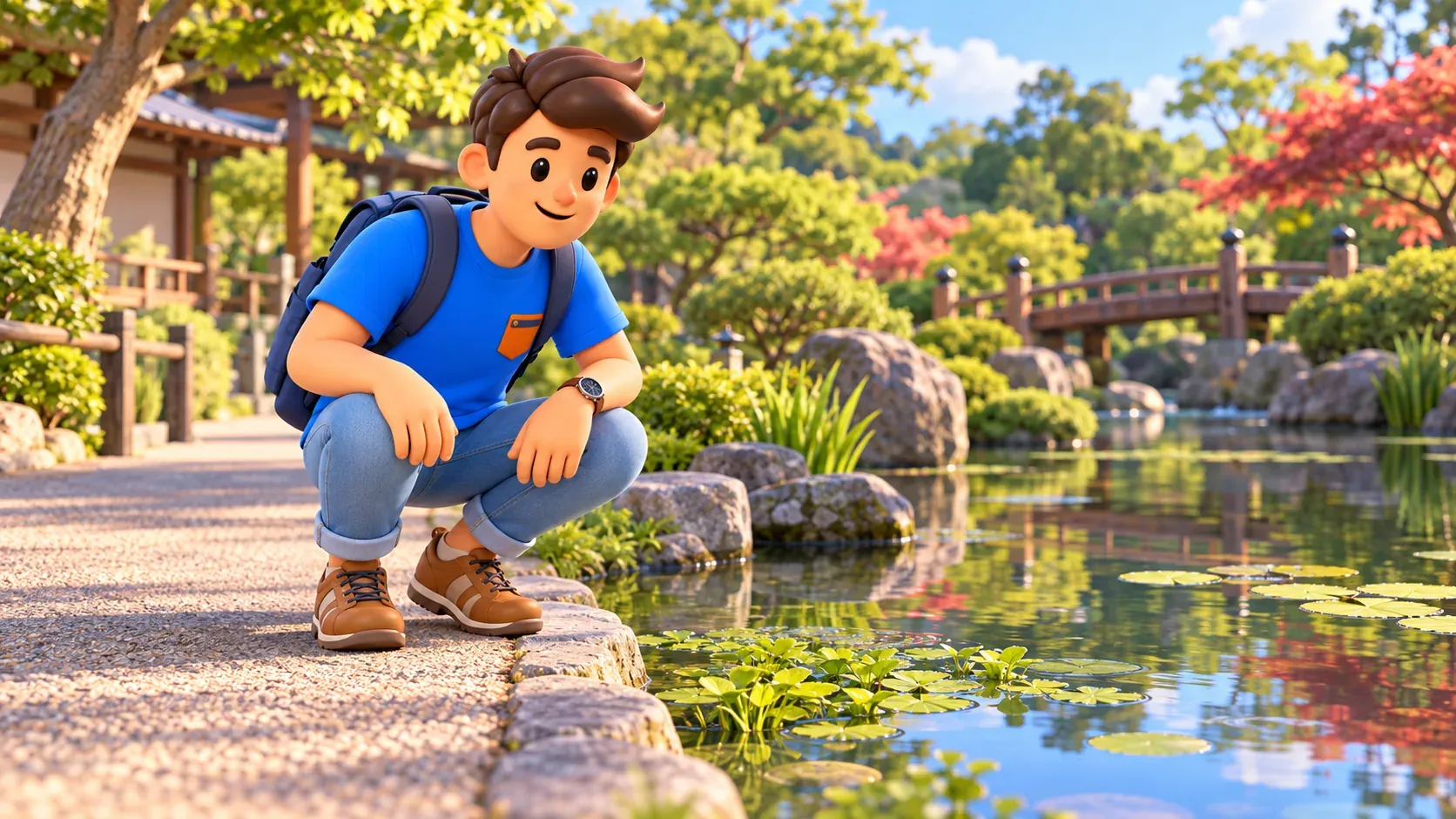
Kiyosumi Garden is composed around a pond, stones and successive views. Its Meiji-era development is associated with the Iwasaki family. That short context is enough to begin: the landscape is designed, not simply a patch of greenery that happened to remain between buildings.
Let the museum's close domestic spaces give way to a different scale. Look at the water's surface, the relationship between shore and trees, and how a stone changes the foreground. Move, pause, then look again. The same garden can feel different from the next available viewpoint without requiring another named attraction.
Do not make every feature compulsory. Choose a manageable permitted route and spend time at a few views that appeal to you. The point is not to finish an inventory. Someone interested in materials may notice stones, while another traveler follows reflections or planting; both are sensible ways into the same landscape.
The formal garden has gates and a last-entry time, unlike adjacent open park space. Regular last admission is 4:30 p.m., before closing. The year-end closure runs from December 29 through January 1, inclusive. Temporary notices can restrict individual paths, so a photograph is not a promise that every waterside passage will be open.
Follow the authorized path and keep footing in mind, especially after rain. You do not have to step onto every stone beside the water. With a stroller or anyone who finds uneven surfaces difficult, consult the current garden route information and choose suitable paths. A shorter, comfortable visit is more useful than forcing the same line on everyone.
Use weather and energy to choose the ending
By the end of the garden, decide whether the group wants another outdoor section or a return to the station. The core of the day is already complete. Keep the river if the weather, available daylight and attention make it appealing; remove it when it becomes a task rather than a pleasure.
In heat, a shorter walk and a proper indoor pause may be the better choice. In strong wind or heavy rain, a waterfront finish is not compulsory. Reversing the two main visits can sometimes help, but it does not remove access restrictions or make an unavailable museum open. Check the calendar before using the exhibition as a fallback.
To fit this half day to the rest of your holiday, set your interests and preferred pace in RoadMe and let the app prepare a personal plan for each day. It makes combining gardens, history and rest more convenient, without squeezing every appealing experience into one overloaded route.
Optional river finish: a view of Kiyosu Bridge
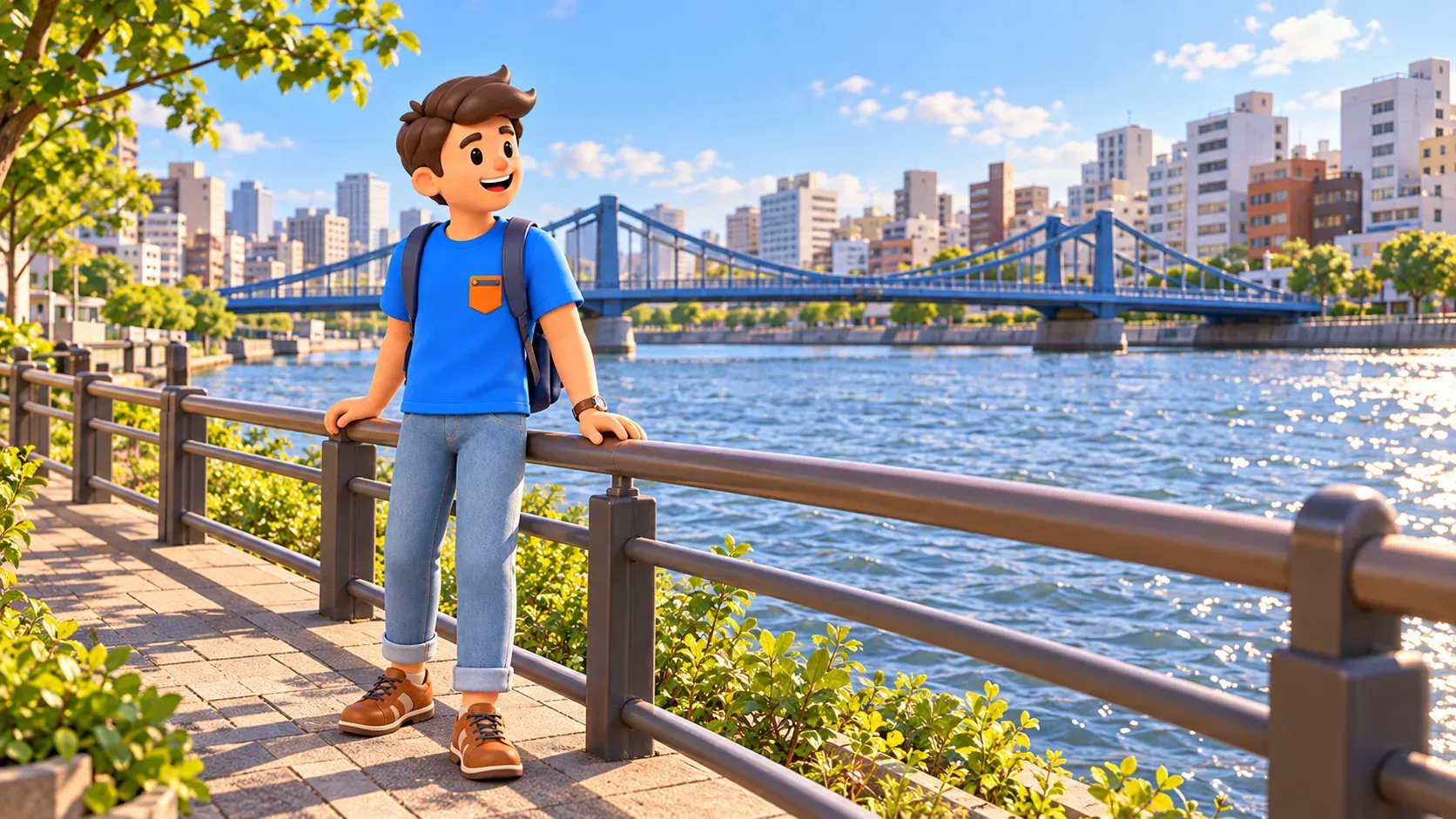
Kiyosu Bridge gives the outing a wider urban ending. Completed in 1928 as part of reconstruction after the Great Kanto Earthquake, it belongs to a different layer of Tokyo history from the museum's Edo setting. A short look at its structure and the river is enough to make that change in period visible.
Head toward the river only after choosing a useful return route. Viewing the bridge does not require crossing it or committing to a long promenade. Pick an accessible public viewpoint and keep pedestrian movement clear. If a lower riverside path is restricted, do not treat the absence of that exact view as a reason to bypass barriers.
Remember the distance from your last view to the station, not just the walk out to the water. This is where an optional addition can quietly lengthen a half day. Keep enough margin for the return and any meal still needed. There is no promised sunset or illumination schedule in this plan; daytime can be a satisfying ending.
Keep a local half day local
Do not automatically continue toward every eastern Tokyo attraction after the bridge. A second large museum or another district changes the outing's scale. If you are deciding between neighborhoods for a longer stay, use the return-visit neighborhood choices to give each direction its own space.
Before setting out, confirm the main exhibition, the garden's current access and your likely finish. Keep meals in the plan, distinguish garden gates from open park space, and remove optional parts first when time shrinks. The useful result is not a fully exhausted map but a day whose transitions make sense.
Kiyosumi-shirakawa works because the experiences differ without needing a complicated journey between them. Everyday Edo, a composed landscape and, if desired, a broader river view give the half day a clear rhythm. Give those contrasts enough time and the neighborhood can feel like a complete destination rather than a brief gap between famous sights.


