
Europe and Asia in One Day: Karaköy to Üsküdar by Ferry
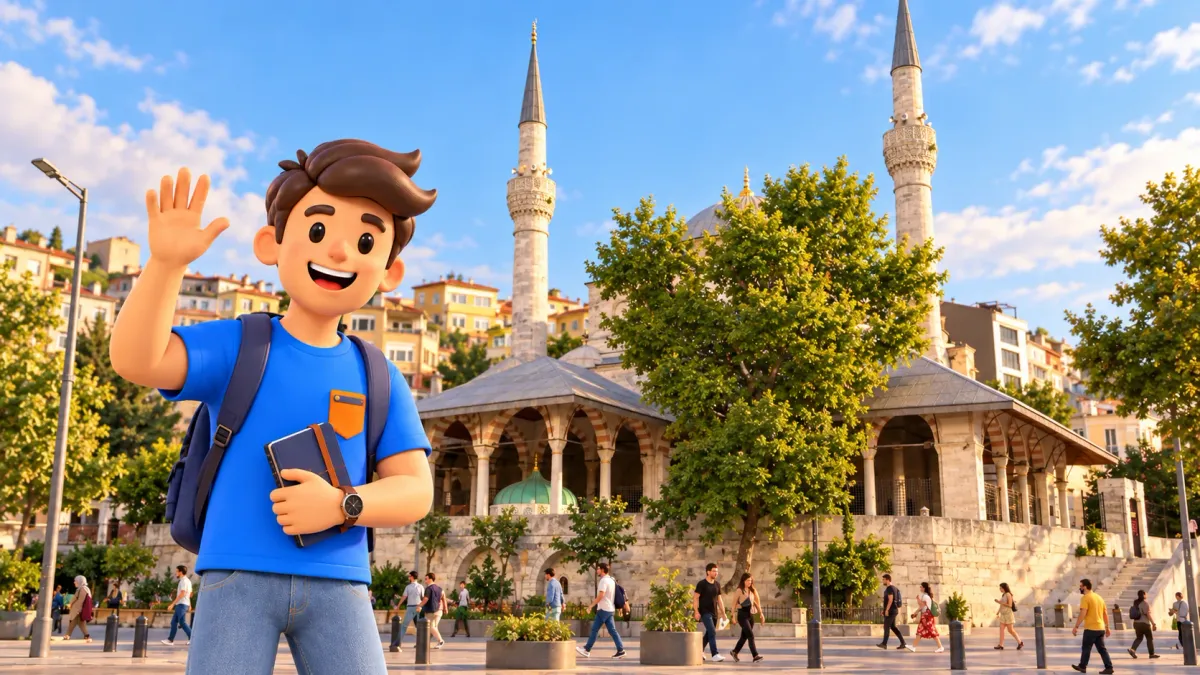
Breakfast on Istanbul's European side, a ferry across the Bosphorus and an afternoon in Asia make a satisfying idea for a day out. Keep that idea manageable by choosing just two areas: Karaköy and Üsküdar. Their streets, cultural buildings and waterfronts offer enough variety without making every hour depend on another journey.
This itinerary starts in Karaköy and finishes in central Üsküdar. Allow roughly six to seven hours for walking, lunch, pauses and one public ferry crossing, excluding travel from and back to your accommodation. These are planning estimates rather than measured timings. Waiting for a boat, spending longer in an exhibition or taking shelter from rain can change the day.
Give each shore a clear part of the day
Use the morning for Karaköy's streets around Bankalar Caddesi and an optional visit to SALT Galata. Cross the Bosphorus around lunchtime, choosing whether to eat before or after the ferry. In Üsküdar, concentrate on the Mihrimah Sultan Mosque, the nearby Fountain of Ahmed III and the small waterfront Şemsi Pasha Mosque.
Turning these ideas into a complete personal trip is much more convenient in RoadMe, which develops an itinerary around your interests, available days and pace. Choose the balance you want between architecture, culture and relaxed walks, so this day fits naturally into the rest of your journey.
A tower admission, a substantial museum visit and another Asian neighbourhood would overload this particular plan. If Galata Tower is your priority, give it a separate slot or replace the cultural stop with it. Keep some unassigned time. An attractive place encountered between named sights can deserve attention without becoming another obligation.
Two geographical distinctions matter here. Galata Bridge crosses the Golden Horn, so walking over it does not take you between Europe and Asia. The intercontinental crossing in this plan is the ferry over the Bosphorus. That public crossing also serves a different purpose from a longer cruise along the strait: it joins your two walking areas.
Morning in Karaköy: streets before an interior
Karaköy stop and the nearby waterfront provide useful starting references. Arrive around ten if you want an unhurried walk before a cultural visit. Check the particular exit and approach you need. A transport stop, a ferry terminal and the edge of the water can share a district name without sharing an entrance.
Walk towards Bankalar Caddesi rather than trying to cover all of Beyoğlu. Here, the waterfront's everyday commercial life gives way to substantial buildings associated with the former banking district. Look at doorways, stone facades and upper windows. This is a useful reminder that Istanbul's history includes business and working streets alongside its imperial monuments.
Allow about forty-five minutes for the approach and some observation. A few carefully chosen photographs will leave more time to notice details than stopping at every facade. Street activity continues around visitors, so stand somewhere that keeps the pavement clear. The neighbourhood's ordinary movement is part of the experience rather than an inconvenience to edit out.
SALT Galata is at Bankalar Caddesi 11, in the former Ottoman Bank headquarters. It became a cultural space in 2011. The change of use is interesting in itself: a building once devoted to finance now accommodates a different kind of public life. You do not need a detailed history of banking to appreciate that connection.
If exhibitions or urban culture appeal to you, set aside around an hour for the spaces available on your visit. Look at the current programme first. A cultural institution's name does not guarantee that a particular exhibition or every room is open. Research areas, museum spaces and galleries can have different access arrangements.
Normal SALT Galata hours are eleven to seven from Tuesday to Saturday, and eleven to six on Sunday. It closes on Mondays, with additional holiday closures possible. On a Monday, use the building as an exterior reference and give more time to the streets. The two-shore itinerary still works without this interior.

Choose a lunch pause before choosing a departure
After the cultural stop, head back towards waterfront Karaköy and decide where lunch belongs. You can eat here and cross afterwards, or have a small snack and leave a proper meal for Üsküdar. Either approach needs approximately an hour somewhere in the day. Avoid treating the meal as time that can always be recovered later.
Choose somewhere that suits your menu preferences, the atmosphere you want and the prices displayed that day. There is no need to turn this walk into a search for one supposedly essential restaurant. For a group, agreeing on a simple lunch format in advance can save repeated discussions and leave everyone with more attention for the city.
Before the ferry, check your phone battery, water and weather protection. An open deck can feel different from a sheltered street. Carry an extra layer if conditions call for it, and leave bulky purchases until later. A heavy shopping bag changes the practical experience of boarding and several hours of walking.
If you have started late, shorten either the street walk or the interior visit. Trying to rescue every morning stop by missing lunch or hurrying around an unfamiliar pier makes the afternoon less enjoyable. The important parts of this day are a comfortable crossing and enough time on the other shore, with the morning shaped around them.
One public ferry from Karaköy to Üsküdar
Şehir Hatları lists an Üsküdar–Karaköy–Eminönü line. Check the current timetable and identify a departure from Karaköy towards Üsküdar. Seeing both names on a network map does not establish the direction of the next boat. Confirm the destination on the departure information and at the appropriate entrance before joining a boarding queue.
Allow approximately forty-five to sixty minutes for the whole transfer between walking areas. That includes reaching the pier, waiting, boarding, sailing and leaving the terminal. It is not a claim about the boat's sailing time alone. If the next departure leaves a longer gap, adjust the afternoon calmly rather than assuming an immediate alternative.
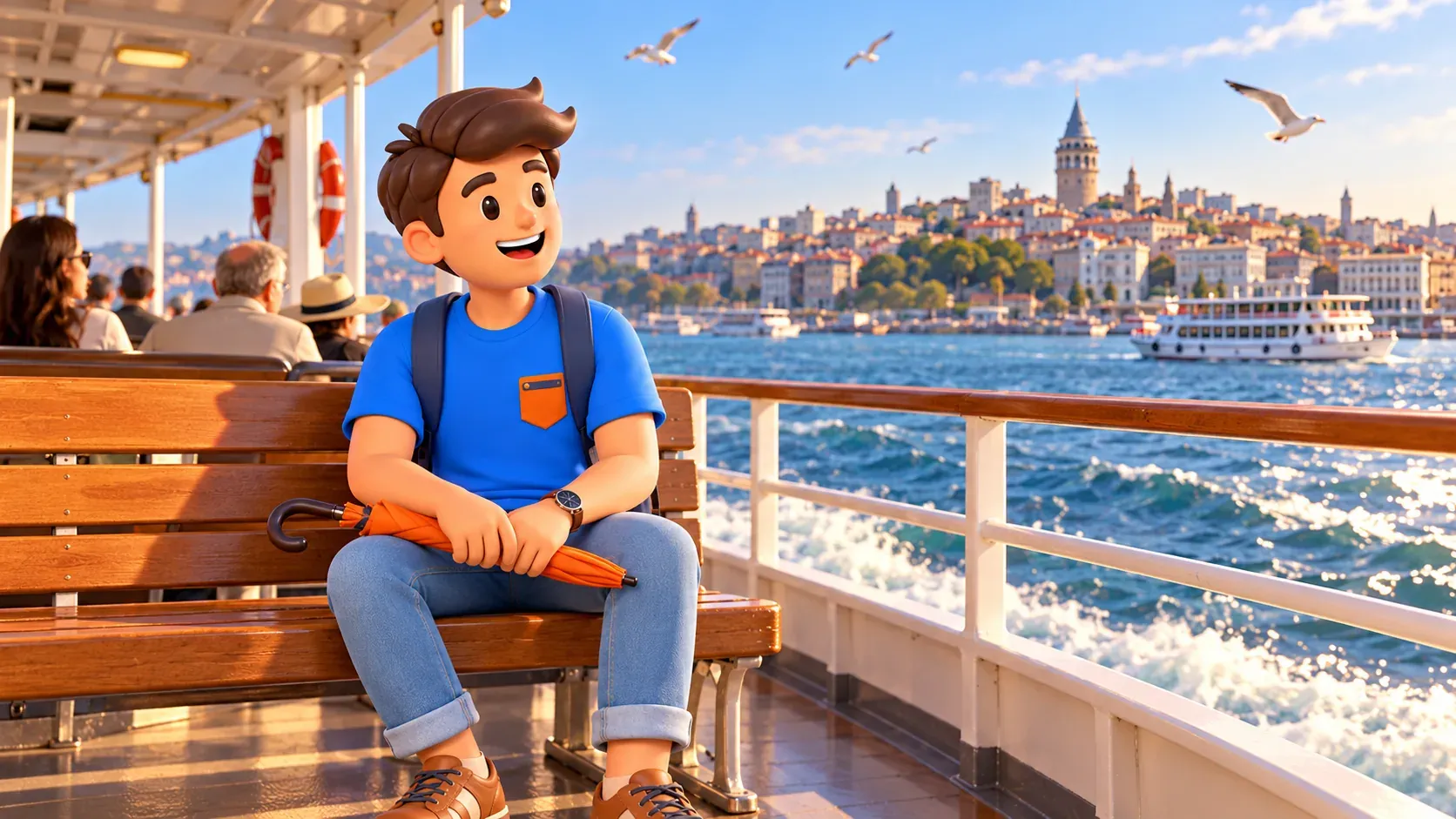
On board, settle somewhere comfortable and watch how the European shoreline changes. You do not have to keep moving between sides for photographs. The relationship between water, hills and arriving boats becomes clearer from a seated viewpoint too. This ordinary journey can give the day a strong sense of place without needing a lengthy guided commentary.
If the suitable service is cancelled, keep the walk on one shore or move the second part to another day. If reaching Üsküdar matters more than taking the ferry, investigate a separate approach to Marmaray. That would be a changed transport plan; do not continue counting a boat experience that has not actually taken place.
Üsküdar: a mosque and a public fountain
After landing, first identify a clear reference for your return, such as the terminal name or the station entrance you expect to use. Then turn to Mihrimah Sultan Mosque. Üsküdar is a large district, while today's walk covers its central waterfront area. Reaching distant neighbourhoods is unnecessary for a worthwhile afternoon on the Asian side.
The sixteenth-century mosque was built by Sinan for Mihrimah, daughter of Sultan Süleyman. From the square, notice its raised position and the transition between busy public space and the approach to worship. The building helps explain the shape of this part of the city, rather than simply providing a backdrop for a photograph.
It remains an active mosque. Go inside only when visitor access is appropriate, follow local instructions and wear suitable clothing. Worship can change what is possible at a particular moment. If entry is unavailable, an exterior visit still fits the itinerary. Do not follow worshippers through an entrance simply because it appears to be open.
Nearby stands the early eighteenth-century Fountain of Ahmed III. This is a different fountain from the one beside Topkapı, despite the shared name. Carved marble and a broad projecting wooden roof show how public infrastructure could also be ceremonial architecture. Its historic water-supply role is not a recommendation to drink from it today.
Allow around an hour for the square, both exteriors and a possible short mosque visit. Compare their scales: the mosque's larger silhouette, the fountain's closer details and the movement of everyday passengers. A few observations can make this part of the walk memorable without requiring an architectural vocabulary or a long list of dates.
A smaller waterfront finale at Şemsi Pasha
Continue towards Şemsi Pasha Mosque along the central waterfront area. Keep this as a compact final stop rather than extending the programme to every familiar Maiden's Tower viewpoint. Choose the approach according to current paths and crossings. If a passage is blocked, return to a clear public street rather than trying to bypass a barrier.
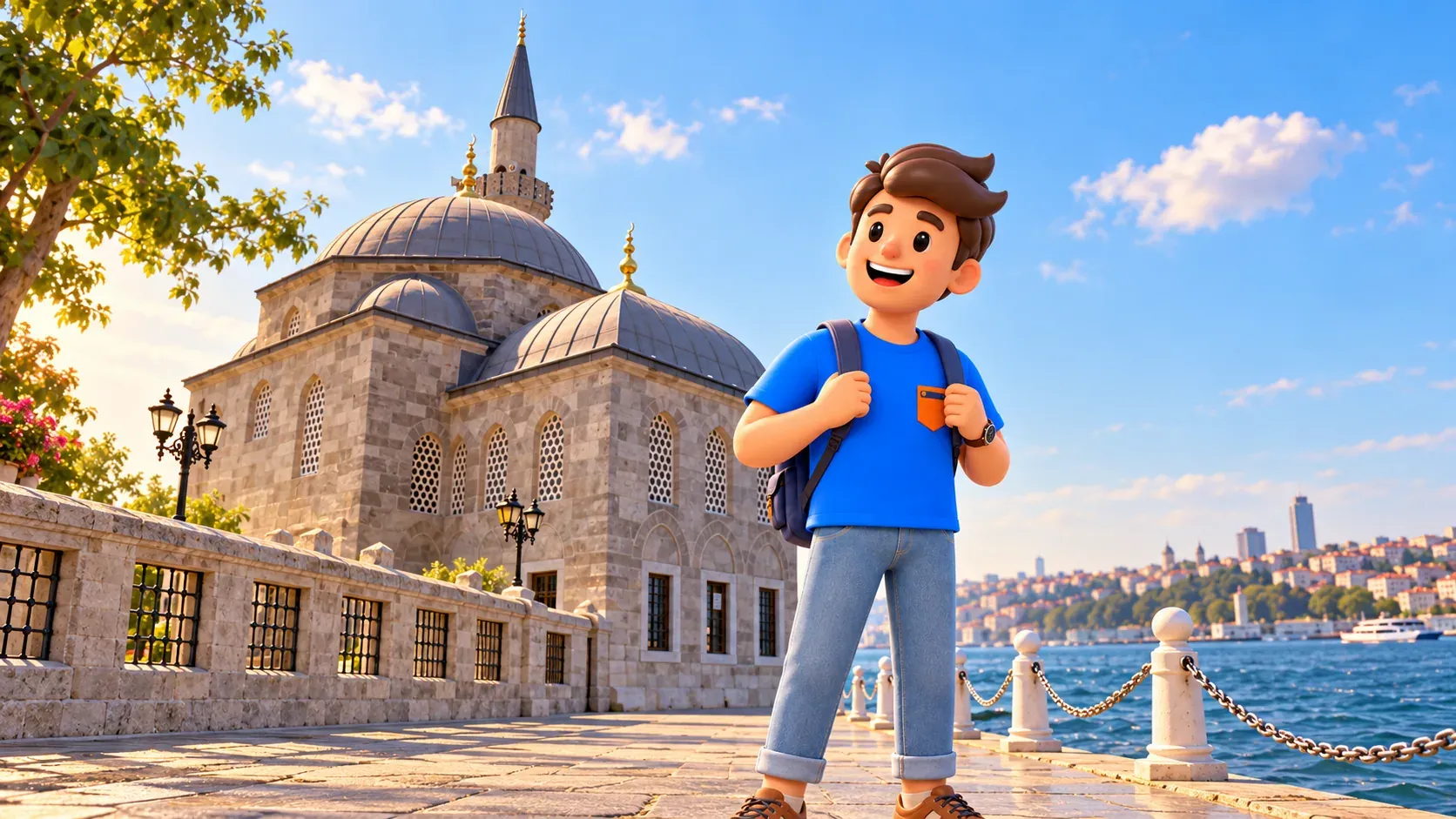
Sinan built the small mosque in 1580. Where Mihrimah's complex stands raised above its surroundings, Şemsi Pasha makes the closeness of the water especially apparent. A dome, a minaret and a restrained silhouette offer an accessible comparison between two works by the same architect. Their different relationships to the city are enough to begin with.
Spend twenty to thirty minutes here, or longer if you want a seated pause nearby. Interior access remains dependent on worship and local arrangements. A quiet exterior visit and time looking across the strait make a satisfying end to the planned sightseeing. The number of places still saved on your phone does not need to determine the finish.
If you ate lunch in Karaköy, a drink or small snack may be enough in Üsküdar. If the morning only included a snack, have a proper meal here before visiting the mosques. The order of nearby stops is flexible. Rest should not depend on how quickly you managed to cross the square after arriving.
Finish in Üsküdar and return at your own pace
The route ends in central Üsküdar. For a return to Europe without taking a second ferry, consider Marmaray: Sirkeci follows Üsküdar in the European direction. Choose onward connections according to your accommodation and current services. The journey back is outside the walking-day estimate, so leave time for entrances, transfers and reaching your final destination.
Using the whole personal trip plan is more convenient in RoadMe, where your interests, available days and places form one itinerary. Download Istanbul beforehand while connected to the internet to use maps and navigation offline afterwards.
If energy runs low, shorten the morning interior or finish sightseeing around Mihrimah. With children, allow more time for lunch and boarding. If step-free access is essential, check the particular entrances and piers you will use: proximity to the waterfront does not describe every approach. Let those practical needs shape the amount you attempt.
For a longer stay, our five-day Istanbul itinerary provides a framework for the remaining days. Karaköy and Üsküdar are different enough to make the crossing meaningful and compact enough for one outing. Leave some space between their main sights, so the day can develop a character of its own.


