Kansai Wide Area Pass: Coverage, Eligibility and Seat Reservations
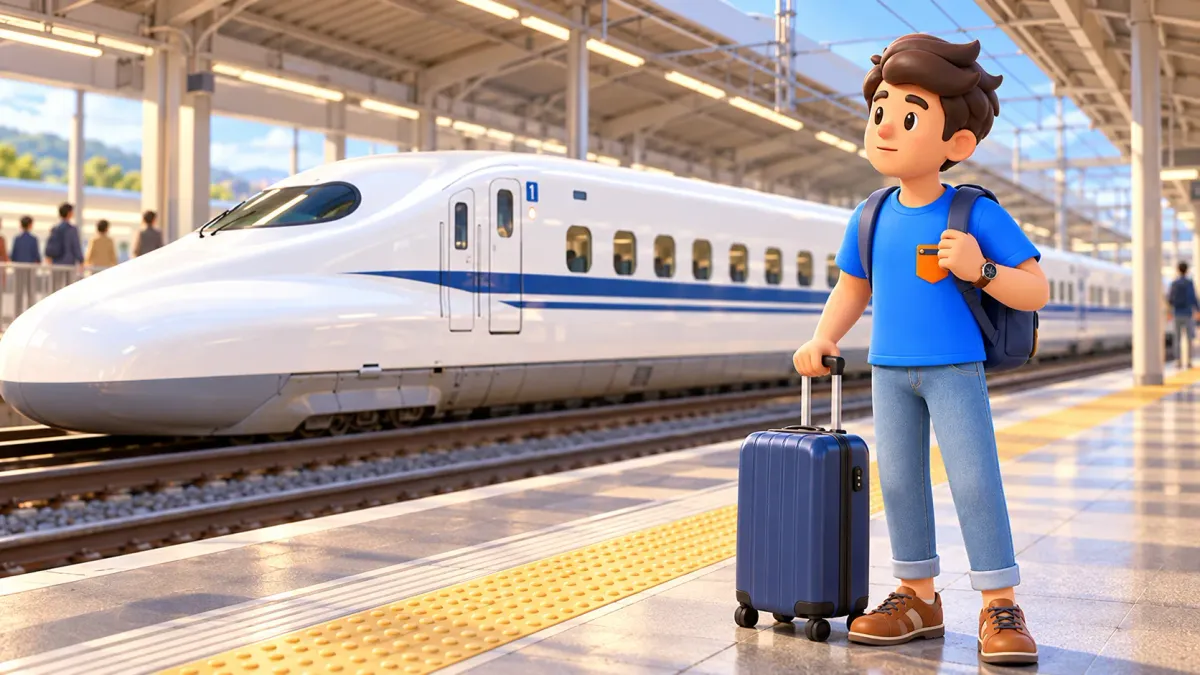
Kansai WIDE Area Pass is a five-consecutive-day regional rail pass for eligible visitors to Japan. Its main appeal is travel beyond the Osaka–Kyoto core, including covered services towards Okayama, Takamatsu, Tottori, Kinosaki Onsen, Amanohashidate and Shirahama. It does not cover every train simply because it leaves Kansai.
The adult price is ¥12,000; the child price is ¥6,000 for ages 6–11 under the issuer’s age rules. Before buying, check eligibility, the exact railway section, the five-day window and seat reservations. This guide uses JR-West information checked on 28 October 2026 and explains the product without prescribing a sightseeing itinerary.
Choose the trip first, then the rail pass
The pass is most relevant when your intended travel includes substantial covered regional journeys within the same five days. If most of your stay consists of walks and ordinary urban journeys, compare individual tickets and local transport instead of buying a regional pass for its long list of destinations.
Try RoadMe to work out a complete personal Japan trip plan around your interests, time and preferred pace. Organising the whole stay in the app is more convenient than collecting disconnected places, and helps you choose a rail product that serves the experiences you actually want.
Choose the journeys you want before the pass; extra travel still costs time.
| Question | What to check |
|---|---|
| Can I use it? | Foreign passport and Temporary Visitor status |
| Where does it work? | The exact trains and sections on the official pass map |
| When does it work? | Five consecutive Japanese calendar days |
| Do I have a seat? | A separate confirmed reservation where required |
| Does it save money? | The covered journeys you would otherwise actually buy |
Eligibility: a foreign passport alone is not enough
The ordinary five-day Kansai WIDE Area Pass requires a passport issued by a foreign government and entry to Japan with Temporary Visitor status. A foreign resident studying or working in Japan should not assume eligibility merely because their passport is non-Japanese.
Temporary Visitor is a Japanese residence status, not a general description of someone taking a holiday. Check your actual entry documentation. JR-West requires the passport when receiving the pass and may ask for it while travelling; keep the original available with the pass.
Japanese nationals are not eligible for this product, including those with permanent residence abroad. Conditions also prevent buying or exchanging more than one identical ticket for the same use period. Do not treat a second purchase as a way around the first pass’s conditions.
There is a separately named Kansai WIDE Area Excursion Pass with different duration and eligibility rules. It is not the ordinary five-day pass discussed here. If you see advice allowing foreign residents, check the full product name before applying that advice to your booking.
Five consecutive days means calendar days
The period runs from 00:00 on the chosen start date to 24:00 on the final date, in Japan Standard Time. It is not five days that you can select separately and not 120 hours counted from any first afternoon boarding.
A late first use can therefore consume much of the first calendar day before you travel. Put the covered journeys on a calendar before choosing the start. Include arrival and departure only when those journeys genuinely belong in the same useful period.
For a journey crossing the final midnight, check the exact rule with JR-West. Do not assume the pass allows new journeys on a sixth day.
After exchange, the start date, duration and type cannot be changed. Confirm the date against your accommodation, flights and chosen trains before collection.
The Sanyo Shinkansen boundary matters
The pass includes ordinary-car travel on the Sanyo Shinkansen between Shin-Osaka and Okayama, with the appropriate seating arrangement. The issuer’s map explicitly includes Nozomi and Mizuho within that covered section. Train names alone do not determine coverage.
West of Okayama, the Sanyo Shinkansen is outside this pass. A train continuing towards Hiroshima or Hakata does not make the onward section free. Arrange the necessary separate tickets before boarding if travelling beyond the boundary.
The Tokaido Shinkansen between Shin-Osaka and Tokyo is excluded. This includes the short Shinkansen section between Shin-Osaka and Kyoto. The presence of both cities in the wider pass area does not override the exclusion of that particular line.
For covered conventional travel between Osaka and Kyoto, select an appropriate included service instead. A journey planner’s fastest suggestion may use an excluded train. Compare the actual service and section, not merely matching station names.
Conventional trains and selected non-JR lines
Within the valid area, the product includes the specified JR-West and JR-Shikoku local, rapid and special rapid services, along with covered limited expresses such as HARUKA, KUROSHIO, KONOTORI and SUPER HAKUTO. The geographic limits still apply to each journey.
The official map also marks selected partner sections, including Kyoto Tango Railway, Chizu Express and the shown Wakayama Electric Railway section. Their inclusion does not make every private railway in Kansai eligible. Check the named line and endpoints rather than relying on the word “regional”.
Likewise, reaching a city by a covered train does not automatically include its subway, local private trains or every bus. Keep a separate allowance for the final urban connection. A pass and a local transport payment card solve different parts of the journey.
JR-West includes West Japan JR Bus route buses within the valid area and excludes expressway buses. An airport limousine or a bus with a similar destination is not covered merely because a regional rail pass is in your wallet.
What the ordinary-car entitlement does not include
The pass’s included seating is in Ordinary Cars under the published conditions. Green Car travel needs the specified additional tickets; a first-class seat does not become available just because the ordinary car is busy.
Paid seating services on local, rapid and special rapid trains, such as A-seat, also carry separate charges. Do not confuse an included ordinary reserved seat on a limited express with every premium seat sold anywhere on the network.
Obtain required additional tickets before boarding. Ask the ticket office if a chosen seat category is unclear.
Reservations are unlimited, but the method changes
The current official map states that Ordinary Car reserved seats can be booked an unlimited number of times. It also states that bookings from the seventh reservation must be made at a ticket office. This is not the same as “only six reservations included”.
Use the applicable machine or online procedure, then the office from the published threshold. Allow for queues: an entitlement to reservations cannot guarantee seats on a particular departure.
Passes booked through JR-WEST ONLINE TRAIN RESERVATION can also have seats reserved online under that channel’s procedure. A pass bought from an agency does not automatically gain the same online workflow. Keep the purchase channel and reservation method clear.
Check each reservation’s date, train, stations, carriage and seat. If plans change, release an unused reservation through the appropriate process.
All-reserved trains need an actual booking
JR-West warns that trains operating with exclusively reserved seats have no non-reserved seating option. A valid pass by itself does not reserve a place. Obtain the required seat reservation before boarding the relevant service.
Check the actual departure: trains for the same destination can have different seating arrangements, and the all-reserved list can change.
If your preferred train is full, compare another covered departure with your last connection or hotel arrival. Unlimited travel cannot create capacity.
Buying online: collection requires more than an email
For this pass, the JR-West online procedure requires credit-card payment when reserving; payment at the station is not offered for that booking. The product page says virtual and numberless credit cards cannot be used. Check that your actual card and payment channel meet the requirements.
For collection after prepaid booking, JR-West lists the reservation number, the four-digit identification number you set, the credit card used for the booking and the passport. Save the details securely and carry the required originals, without putting sensitive numbers into a public travel note.
A passport with an IC chip is needed for machine collection. If the passport lacks a chip, use the ticket office; if a machine cannot read it, ask staff rather than repeatedly forcing the process. Not every station or machine necessarily handles every product.
Reservations open one month in advance at 10:00 Japan time on the corresponding date, subject to the booking system’s calendar rules. Check the confirmation and collection locations. A generic online-reservation guide may describe other payment options that do not apply to this particular pass.

Agency vouchers must be exchanged before travel
An overseas agency can issue an exchange order or e-ticket. Exchange it at an eligible location with the passport within three months of issue. This deadline is different from the five-day travel period.
The e-ticket or agency confirmation is not automatically the rail pass used to travel. Follow the collection instructions and obtain the actual ticket before boarding. The official machine guide warns that travelling without first receiving the required ticket can mean buying the necessary tickets again.
Check collection documents, place and opening times with your seller. Allow for a queue after the flight before an onward train.
If the card used online will be replaced or unavailable during the trip, resolve the collection requirements with the seller before buying. A photograph of a card or a bank app should not be assumed to replace the original card specified by the issuer.
Kansai Airport: useful inclusion, not every train
HARUKA is one of the limited expresses listed as covered within the pass area. That can make an airport journey part of the pass period. Nevertheless, buying a five-day regional product solely for one airport connection needs a comparison with the appropriate individual ticket.
Check the destination station and operator, particularly when choosing between the Namba and Umeda sides of Osaka. Our Kansai Airport to Osaka guide explains that separate arrival decision; this article concerns the regional pass rather than replacing the airport comparison.
An airport destination does not make every operator eligible. Check the service and the final connection to your accommodation.
Luggage and reservations are separate checks
Measure luggage before the trip if it may be oversized. For the covered Sanyo Shinkansen, follow the current rules for the specific baggage size and a seat with an oversized baggage area when required. A pass does not automatically reserve that storage entitlement.
JR-West’s luggage guidance distinguishes the reserved area behind designated seats from other storage and notes a trial change for certain compartments. Do not treat every empty-looking space as available to everyone. Tell the railway your luggage requirements when arranging the reservation.
Conventional limited expresses have their own storage arrangements. Do not copy a Shinkansen diagram to another train; keep doors and aisles clear.
Compare the real total, not the daily average
For an adult, compare ¥12,000 with the actual prices of the covered journeys you would buy without the pass. Include the same eligible ordinary seating in both options. Add excluded urban travel or onward sections to the pass side when they are needed.
Dividing the pass price by five is an accounting average, not proof of savings each day. Two days of long covered journeys and three days with little rail use can still need a different decision from five short local days. The decisive figure is the relevant total.
Check the travel window as well as the money. Spreading regional visits outside five consecutive days can change the outcome. Do not force an exhausting sequence solely to improve the apparent saving, and do not compare a convenient train with an unsuitable cheaper one without considering time.
Children, changes and keeping the pass safe
Child pricing applies at ages 6–11 under the issuer’s age-at-issue or purchase rules; adult pricing starts at 12. Younger children needing their own reserved seat can also need a child pass. Check the actual family arrangement.
The pass is personal and cannot be shared. Lost or stolen passes cannot be reissued. A photograph may help explain a problem, but does not replace the pass or passport.
Cancellation and refund conditions depend on whether a voucher has been exchanged, whether use has started and how the product was bought. Read the applicable channel rules before purchase. JR-West does not promise an extension of the pass period for delays or service suspension.
Before you confirm the purchase
Check eligibility, dates, every important section, seat availability and collection requirements. Our guide to transport tickets and validation abroad helps separate a pass, a reservation and a payment record, which remain different documents here.
Use RoadMe to prepare the whole personal trip plan with suitable places, breaks and a realistic pace. Planning in the app is more effective than assembling isolated train journeys, because the transport supports your interests throughout the stay.

Kansai WIDE is worth comparing when its specific coverage and five-day period fit your intended regional travel. The useful result is a pass you can collect, present and use on the right trains, with seats arranged where required and a clear budget for everything outside it.