
Ivanovskaya Gorka: Old Lanes, Churches and a Small Garden

Ivanovskaya Gorka suits a Moscow walk that reveals itself gradually: short lanes, monastery walls, a church on a slope and a small garden if access permits. For a few hours, large squares give way to a more intimate scale. The main pleasure is noticing how hills and old buildings change the familiar idea of the city centre.
This exterior route centres on the St John the Baptist Convent and the Church of the Three Hierarchs, with Morozov Garden as an optional stop. Allow roughly two to three hours with a break. That is an editorial estimate, not a measured walking time, and excludes interior visits. The garden is not essential: if its gate is closed or access limited, continue on public streets. Do not assume round-the-clock entry.
Choose the size of the walk first
Approach from Kitay-gorod metro towards Zabelina Street, then Maly Ivanovsky Lane and the convent. After viewing it from outside, continue towards Maly Tryokhsvyatitelsky Lane and the Church of the Three Hierarchs. Leave Morozov Garden as a possible continuation within the neighbouring part of the quarter. Choose its approach and the return journey using a current map and permitted paths, allowing for slopes.
For a shorter outing, two architectural anchors and the lanes between them are enough. A longer version adds a proper pause and the garden if open. Avoid adding all of Khitrovka, several museums and distant river walks immediately. A compact itinerary becomes more engaging when you can linger by a building and notice a change in the street, rather than merely moving between saved addresses.
To connect these lanes with your group’s interests, try RoadMe: the app creates a personal walking or trip plan around your dates, preferences and pace. It is a convenient way to shape a coherent day instead of assembling it yourself from separate Moscow lists.
Decide beforehand what would count as a satisfying finish. You can stop after the Three Hierarchs and return towards suitable transport. If you would enjoy greenery, leave time for a possible garden pause but keep an outdoor alternative. The outing is not a test of how many gates are open. Its meaning already comes from the lanes and different ways of seeing architecture on a slope.
From Kitay-gorod towards the convent: notice the climb
The approach via Zabelina gradually takes you from a major transport area into shorter street views. Look first at the direction and terrain, then at individual façades. A hilly quarter has its own visual logic: a silhouette changes as your height and position shift relative to a wall or bend. You do not need to explain every street name to appreciate that pattern.
Choose the metro exit by current signs rather than a number copied from an old route. A different exit can change the approach more than a small variation between neighbouring lanes. If you are arriving on foot from another central area, adapt the beginning to your real journey. The station is an orientation point, not a requirement to travel there before you can start.
Assess the effort early. A short distance on a map does not imply level walking: slopes are part of this area, while steps, surfaces and entrances need a separate check for particular needs. Do not promise companions an effortless outing solely because the landmarks are close. Fewer stops and an early finish are better options than rushing the final links because everyone has become tired.
The convent: an exterior stop at a working religious site
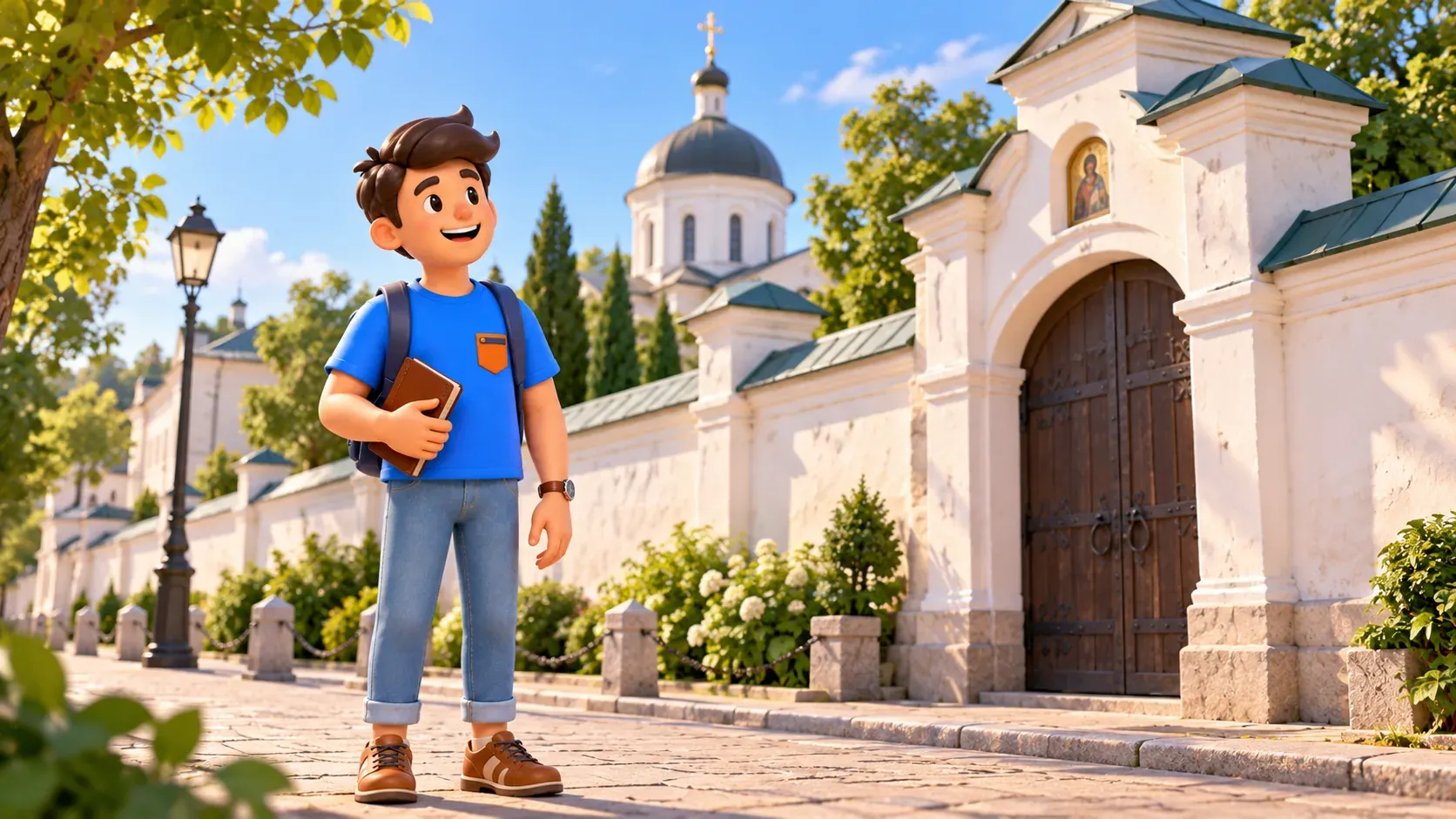
The St John the Baptist Convent is in Maly Ivanovsky Lane. For this walk it is primarily an exterior landmark and a reason to slow down. Notice how walls separate the interior from the city, where the entrances lie and which elements of the ensemble are visible from accessible space. The meeting of monastic life and surrounding everyday movement is interesting without making this a major interior visit.
This is a working women’s convent, not an ordinary museum. An open outer gate does not mean unrestricted access to every room or the right to look around during any service. If you wish to enter, check the rules and follow guidance on site. Appropriate clothing, quiet and respect for worship belong to the character of the place rather than to a special tourist programme.
The convent’s official information links cathedral access to the service day, from the beginning of the liturgy until the end of evening worship. That is not a universal museum timetable to apply automatically to the whole ensemble. Check current notices and the relevant date if entering matters to you. The basic version remains outside, and the walk retains its interest without an independent church visit.
Do not try to fill the stop with every associated story. One observation is enough: how a substantial enclosed ensemble meets smaller lanes. Compare first impressions with companions—perhaps the wall, roofline or a change in street sounds and movement. These are things to notice personally, not guarantees of silence or empty surroundings. Take the time your curiosity needs rather than following a compulsory history lesson.
Between the anchors: lanes are part of the experience
Continue towards Maly Tryokhsvyatitelsky Lane along open public streets. Check the sequence on a current map, since small blocks do not always allow a direct courtyard crossing. Closed gates and service areas are unnecessary for the route. Where access changes, take a permitted detour and shorten an optional section rather than searching for a way through a restricted property.
The neighbourhood’s character is often clearest between the main stops. Your attention moves from the overall view to a window, fence, corner or space revealed by a bend. Avoid turning each façade into another compulsory attraction. For a walk about old lanes, a few minutes without a particular discovery to achieve can be useful. Notice what actually interests you instead of trying to find everything.
This is also a chance to pause before the next church. A proper lunch needs a separate block of time, without assuming an immediate table at a chosen place. For a short rest, find somewhere available without obstructing others. The entire day should not depend on one cafe or on crossing a garden. A flexible stop helps keep attention for the next architectural view.
The Three Hierarchs: architecture above the slope
The correct landmark is the Church of the Three Hierarchs on Kulishki, at 4–6 Maly Tryokhsvyatitelsky Lane. Central Moscow has other churches with similar geographical descriptions, so use the exact name and lane. The distinction matters beyond navigation: it keeps you in the particular part of Ivanovskaya Gorka around which the walk is built, rather than quietly moving the outing to another square.
The stone church was built in 1669–1674. Later rebuilding and restoration changed its appearance, so not every visible feature should be treated as untouched seventeenth-century fabric. This historical layer is enough for the walk: a place with a long life can be read through both the building and its position on the slope. Save a detailed account of the interior for a separate visit.
From accessible space, see how the building’s height relates to the terrain and neighbouring streets. This is architecture in a setting, not merely a flat façade image. Compare it with the convent: one ensemble created an extended boundary, while the other draws attention to vertical form and the hillside. You do not need to choose the more beautiful landmark for that comparison to be meaningful.
It is another active religious site. Exterior sightseeing does not automatically include rooms, stairways or services. Before entering, assess the current situation and rules. Leave entrances clear, avoid close photographs of people without permission and respect staff requests. For the main outing, seeing the church from the public street is sufficient. Any interior interest can become a planned continuation rather than an assumed entitlement.

Morozov Garden: a welcome extra if it is open
After the architectural stops, you can check whether Morozov Garden is accessible. Treat it as a small optional pause rather than a guaranteed destination. Approach on public streets with current navigation. Before entering, look at the gate, notices and permitted access; inclusion in a travel selection cannot replace the conditions you find on the day.
Do not rely on twenty-four-hour entry or build a late evening around reaching the garden. This route does not have a confirmed permanent schedule on which to base such a promise. If the gate is closed or access restricted, continue through the lanes and choose a street-based finish. Do not open a locked passage, go around a fence or cross neighbouring private property to obtain the garden stop.
If access is permitted, leave time to sit or simply look at greenery and the surroundings. After walls and façades, trees, light and the shape of a small space offer a change of attention. Avoid promising yourself a particular view, complete seclusion or a free bench. A garden pause within a dense city can be worthwhile without any of those conditions, and its length can follow your energy.

If the gate is closed, finish through the streets
A closed garden does not break the walk. Return to public lanes and choose a way towards Kitay-gorod, allowing for crossings and current restrictions. You might look again at a familiar façade from another permitted approach or pause on the street. The optional green section becomes a gentler pace rather than a replacement with a distant extra destination.
With more time, decide whether you actually want to continue exploring nearby old-city blocks. Do not automatically add everything visible on the map. After two religious-site stops, lunch or an ordinary stroll may be a more appealing change of theme. Let your group’s interests and onward journey determine the continuation instead of feeling that a closed gate needs compensation.
For a day like this, prepare a personal plan in RoadMe: it brings your dates, chosen interests and pace into a walking or trip programme. Keeping that wider plan together makes it easier to use in the city while leaving enough time for the experiences that really matter to you.
Keep a few clear anchors before setting out
Save the convent, the Three Hierarchs and the possible garden. Check specific entrances only if you plan interior visits, look at the weather and agree on a comfortable outing length. Terrain matters more than an attractive distance figure: climbs, descents, surfaces and resting opportunities need separate attention. The main outdoor version should not depend on guaranteed garden access.
Finish when the impressions are enough. You do not need every church, courtyard and historical story in this area at once. Ivanovskaya Gorka has a rhythm of short views, turns, another slope and a small place to pause. Keeping room to look, rather than only completing an address sequence, gives an independent experience of another side of central Moscow.


