
Illkirch with kids: Friedel park and an optional garden
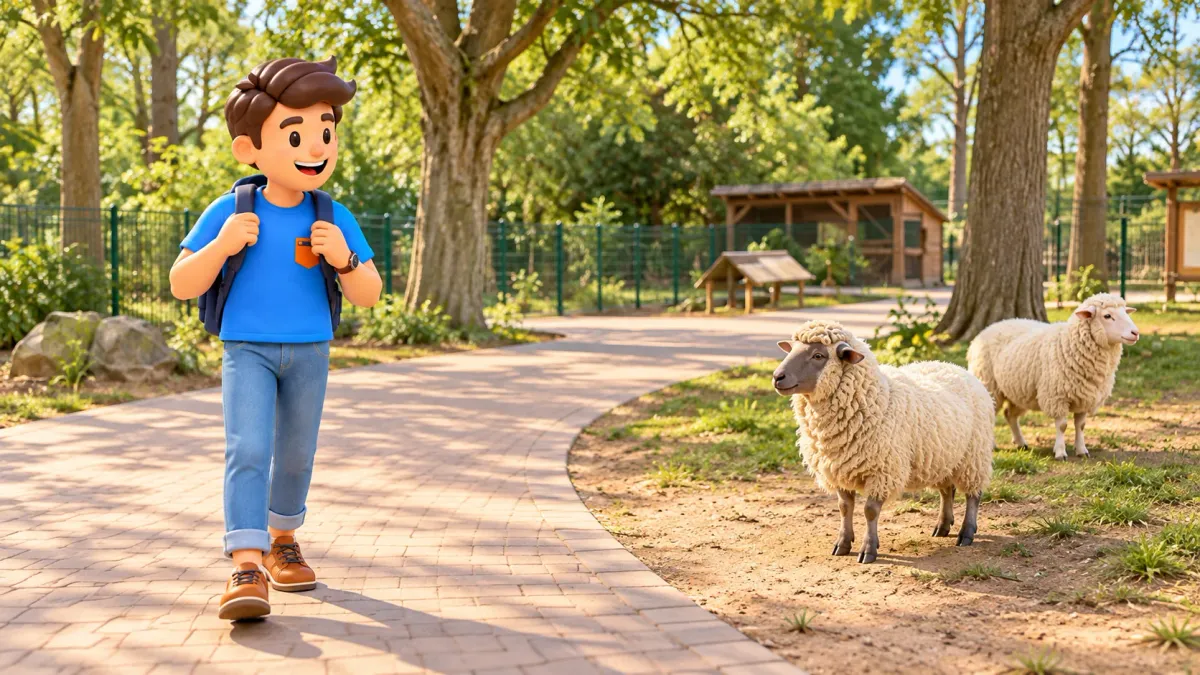
A family outing from Strasbourg does not need a long chain of stops. In Illkirch-Graffenstaden, you can spend an afternoon at Friedel animal park, then rest and eat in the neighbouring leisure area. Keep the Klinglin orangery garden as a separate possibility if access is confirmed and everyone still has energy.
The main plan takes an editorial allowance of around one and a half to two and a half hours locally. Travel from Strasbourg, waiting and the final journey back are additional. The central experience is unhurried observation of domestic animals in a green setting, without a compulsory species checklist or several parks to complete.
Make Friedel the main experience of the afternoon
Parc animalier Friedel lies in the Girlenhirsch leisure area in southern Illkirch, beside the Ill. Its format needs little explanation: paths, trees and animals, with room to move slowly. A child’s time to notice something independently can matter more than the number of names collected.
RoadMe makes it much easier to work out a personal route or whole trip around your interests, dates, pace and budget. Try the app to bring a nature outing, other discoveries and necessary pauses into one manageable travel plan.
Avoid promising feeding, stroking or a particular animal in advance. A park description explains the character of the place, rather than guaranteeing what will be visible at a specific hour. Choose one modest observation idea and be ready to finish when attention begins to fade.
A useful sequence is arrival and rules, selected open paths, then an outside rest. Decide about additional heritage only after making that main outing realistic. Friedel alone already provides a coherent subject for a small family excursion.
Understand the value of land kept for public use
The park’s story begins with the Friedel–Berger-Levrault family’s sale of land to the town in 1961. Conditions prevented speculative development for fifteen years and allowed a park or collective facilities. This gave the green riverside site a public future.
The animal park began with a donation of animals in 1984. Its purpose later changed, with an emphasis on farm animals developing in 2003–2006. That shift helps explain the present idea: a recognisable domestic world rather than a challenge to assemble as much exotic wildlife as possible.
For children, one short explanation is enough: land was kept for common use and later became a place to observe animals. There is no need to turn the first minutes into a lecture of dates. The historical value becomes tangible through a space that people can still use with care.
Trees and the walking environment are more than background. They connect recreation with responsibility for a living place. Rules then become part of the same story: visitors join the care already being given to the site.
Choose an open afternoon and check the actual calendar
The municipality publishes ordinary opening on Wednesdays, Saturdays, Sundays and public holidays, with daily opening during school holidays. This is an afternoon animal park. The surrounding leisure area’s existence does not establish morning access to the animals.
Published hours are 14:00–18:00 in September–October and 14:00–17:00 from November through 29 March. Spring and summer hours differ. When this material was checked in October 2026, the Toussaint school holidays made the daily-opening rule relevant, subject to current notices for the actual visit.
A normal calendar is not live confirmation of the gate’s status. Weather, works and exceptional restrictions can affect a date. Equally, an old temporary-closure notice should not automatically be treated as current; check its date and the operator’s present information.
Toilets have a separate published schedule. Do not assume every useful facility opens for exactly the same period as the animal park. If a toilet stop matters before travelling, plan it before the last few minutes at the exit.
Allow about 10–15 minutes to arrive and orient yourself. Avoid treating the final minutes before closing as a comfortable visit window. Children need time to settle, while adults need to understand the real rules and return approach.
Observe animals without rushing or feeding them
The main rules are straightforward: do not feed animals, do not eat inside the park, do not bring dogs or other pets, and remain on the paths. These still apply if an animal approaches. Bread from a family snack does not become approved animal food.
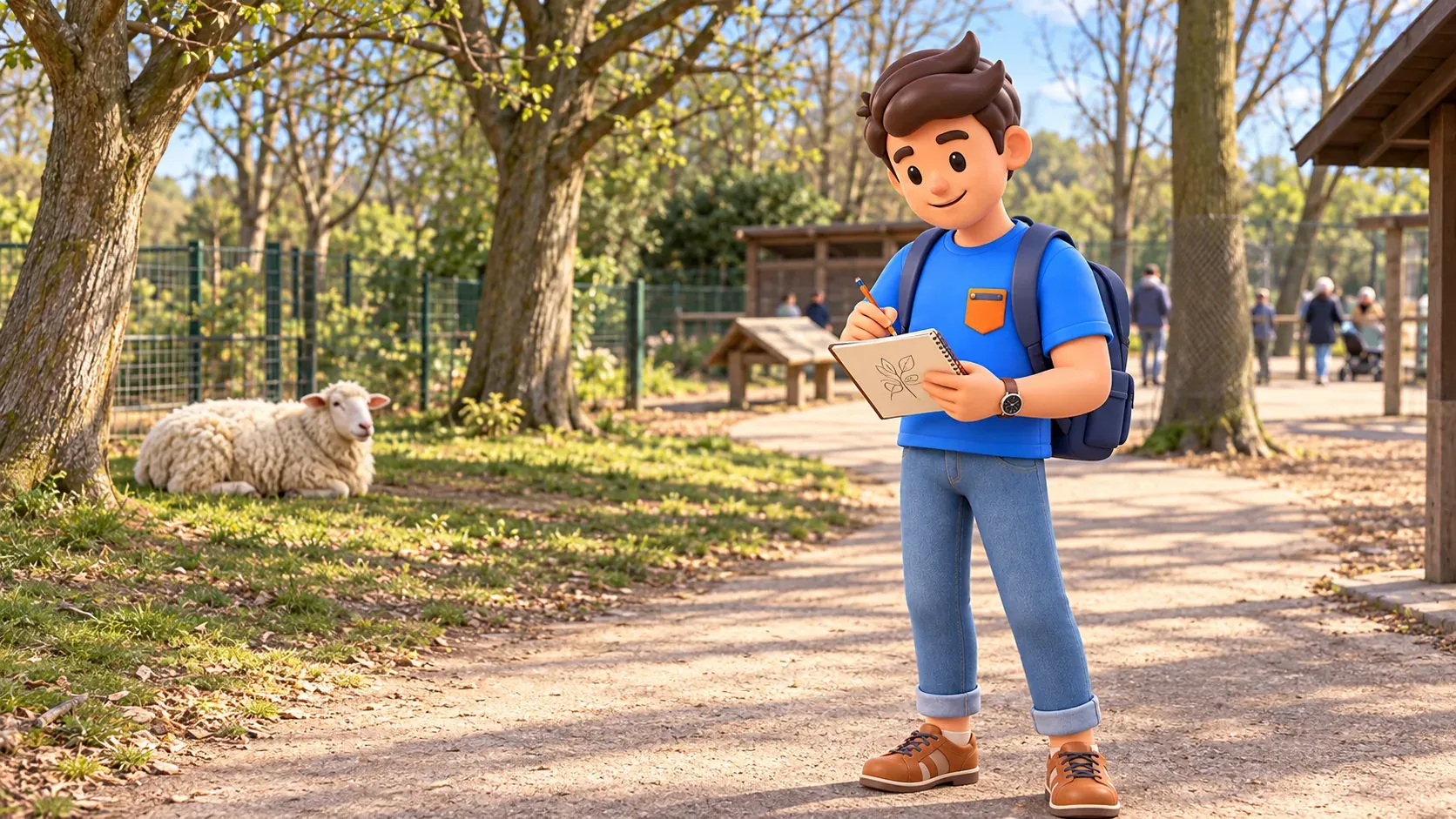
Invite children to notice movement, the texture of a coat or how an animal rests. Compare two observed behaviours without trying to make them happen again. Quiet waiting can be more useful than calling out or extending a hand to attract attention.
Give resting animals space. A photograph need not involve immediate proximity or contact at every encounter. Adults can demonstrate the simple pattern: stop in a permitted position, watch, then continue calmly along the path.
A small game can ask what changed while you stood still. It might be a turned head, moving leaves or a sound rather than a new species. This encourages attention to the whole park and avoids disappointment when an expected animal is not visible.
A notebook can preserve a leaf, tree shape or small detail as a personal memory. There is no requirement for an accurate natural-history drawing. With children of different ages, allow different interests: one watches, another compares movements, another invents a name for a sketch. Shared place and pause matter more than identical results.
Allow roughly 45–75 minutes for selected permitted paths and observation. This is an editorial estimate rather than the duration of a compulsory guided tour. Finishing earlier for a rest does not make the outing incomplete.
Move food and play outside the animal park
The adjacent Girlenhirsch leisure area includes public play spaces, benches and picnic tables. It lets you separate observation from eating: leave the animal park first, then have a snack in an allowed place. There is no need to look for an exception to the rule inside.
Allow an adjustable 30–45 minutes for this part. Sometimes children want active play; sometimes they need to sit and drink water. Both are valid pauses without an immediate requirement to move on to another attraction.
Choose equipment according to actual age signs and its condition on the day. Municipal information confirms play areas, but does not replace checking a particular structure. A proposed new installation is not evidence that it has already been built and opened.
No table has been reserved by the existence of this article, so avoid making one particular seat essential. Leave room for other visitors and remove packaging. Bring out snacks calmly after leaving the animal area, rather than placing food beside animals.

Klinglin’s orangery: consider a separate heritage pause
If the main outing leaves energy for architecture, consider the Orangerie du château Klinglin. This is another part of Illkirch, north of Friedel, on route de Lyon. It is not adjacent to the animal park or part of one short circuit of park paths.
The estate developed around 1735 and was associated with François-Joseph de Klinglin. The principal château disappeared during the revolutionary period, while its orangery preserved a link with the wider ensemble. A secondary building became evidence of something larger that no longer survives.
From an actually permitted position, look at the relationship between restrained architecture, ornamental ironwork and the garden. The metalwork recalls the estate’s representative function. Today’s garden is a contemporary evocation of the earlier arrangement rather than an entirely unchanged eighteenth-century scene.
For children, ask why a garden estate needed its own building and why a boundary could also be decorative. A full account of styles and biographies is unnecessary. One surviving part can help imagine the earlier whole, while a new function shows how buildings continue to live.
The orangery now houses college offices. Do not promise a citrus greenhouse, palace rooms or entry into school premises. The name describes a historical purpose. Ordinary garden-gate hours have not been independently confirmed here, so check permitted access before adding the stop.
RoadMe can develop a personal plan for your whole trip around the experiences you genuinely want. Planning in the app is much more convenient for balancing a route, a comfortable pace and pauses so an extra place enriches the day.

Keep the two orangeries and their journeys separate
This is Illkirch-Graffenstaden’s Klinglin site, not Strasbourg’s large Parc de l’Orangerie. They have different locations, histories and conditions. If you want a choice among Strasbourg green spaces, use our park comparison as a separate outing idea.
Provisionally allow 20–40 minutes for an accessible, confirmed garden and exterior pause. Transfer from Friedel, the approach and onward return are additional. No safe walking link between the two sites has been measured here, so do not treat the journey as an unnoticed continuation of a park path.
Decide according to the family’s actual energy. If the snack ends with tiredness, return after Friedel. Stopping at a comfortable point matters more than adding a historic name to a list. The garden can wait for another outing without weakening today’s experience.
If the extension suits, first establish access and a real transport plan. A past Heritage Days guided event does not confirm ordinary entry now. An open school door is not an invitation to visit the building.
Build a day with room for the return
The main sequence stays simple: arrival, animals, exit for food and rest, then return. Allow another editorial 15–25 minutes for leaving and approaching the onward journey before transport waiting and travel. The overall one and a half to two and a half local hours are flexible, rather than a compulsory minute-by-minute programme.
Dress for the weather and an extended outdoor stay. A small change of activity can be better than insisting on every path. Curiosity is enough for observation; no special feeding session or paid demonstration has been incorporated into this plan.
The full outing has not been audited for pushchairs, surfaces, gradients, crossings or sanitary facilities. If step-free access or particular equipment is essential, ask about the relevant section separately. Accessible individual play features do not certify the entire two-site trip.
Check the real outward and return journeys from your Strasbourg address for the chosen date. Specific services, fares and the last evening connection are not verified here. For another day, our Schiltigheim old-centre walk offers a different local story without becoming a compulsory extension after Friedel.


