
Île Saint-Louis: A 90-Minute Walk Along Quays and Mansions
Île Saint-Louis is a good place to give a Paris day some breathing space. Its quays, old mansions and central street make a compact walk, with the Seine providing a natural thread between stops. You can enjoy the island without committing to a museum visit or turning every doorway into a separate sightseeing task.
This route takes about 90 minutes at an unhurried pace. It starts at Pont Saint-Louis, follows the northern waterfront past the Lauzun and Lambert mansions, returns through rue Saint-Louis-en-l’Île and finishes near Pont de la Tournelle. The buildings are exterior stops. A sit-down meal, shopping or an indoor visit needs additional time.
Choose the kind of walk you want
The island works particularly well when you want architecture, river views and a little history in the same outing. There is no need to decide whether you are an architecture enthusiast before coming: looking at doors, balconies and the relationship between houses and water is enough to start noticing its character.
For a first visit, follow the whole route and choose two places where you will linger. For a return visit, concentrate on one interest: the riverfront, mansion façades or the small details along the central street. This gives the walk a purpose without requiring a long checklist. Travelling with someone else? Agree on the main interest before setting off, so a photography stop does not compete with a promised café break.
For a walk tailored to your interests, it is easier to use RoadMe: the app offers a two-hour route from your location with a theme you can choose. Try a personal programme that gives architecture, history or river views the attention you want.
The 90-minute itinerary below is a starting point for exploring this particular island. Keep it as a relaxed part of the day, especially if you have already spent several hours inside a major attraction. Arriving with enough energy to look around matters more than adding another stop.
Begin at Pont Saint-Louis and follow the quays
Pont Saint-Louis links Île Saint-Louis with Île de la Cité. Before starting, take a moment to distinguish the bridge from the waterfront streets: the bridge is your arrival point, while the first walking section stays on Saint-Louis. The quays help you keep your bearings, and the church will become a useful landmark later.
Head along quai de Bourbon towards Pont Marie, then continue along quai d’Anjou. This opening stretch is about getting a sense of the island rather than reaching a building as quickly as possible. Look across the river, then back at the houses. The changing angle makes it easier to notice how the waterfront and the façades form one scene.
Stay on the upper waterfront streets for the main route. A descent to the river is an optional detour, with its own access conditions and steps; it is not necessary to enjoy this walk. If a public passage is temporarily blocked, follow the signs rather than trying to preserve every metre of the suggested line.
Leave room for a brief pause before the mansion section. It helps separate the broad view of the Seine from the closer attention needed for architectural details. You do not need to photograph every bridge: choosing one river scene usually leaves more time to enjoy the next part.
Look at Lauzun and Lambert from the street
On quai d’Anjou, Hôtel de Lauzun introduces the island’s mansion architecture. Hôtel particulier is the French term for a private urban mansion; a sign containing the word hôtel does not automatically describe tourist accommodation. That small distinction helps make sense of the buildings you are passing.
Lauzun dates from the seventeenth century. Its restrained street façade conceals richly decorated interiors, so the outside tells only part of the story. Look at the entrance and balcony, then consider the contrast between what a passer-by can see and what remains private. You can understand that contrast without a room-by-room account of the building.
Continue towards Hôtel Lambert at the eastern end of quai d’Anjou, beside the beginning of rue Saint-Louis-en-l’Île. This seventeenth-century mansion is another useful architectural anchor. Treat it as a place to observe from public space, rather than an attraction with an assumed entrance queue.
Access is important here. At the time of checking, the City of Paris says Lauzun is closed to the public until further notice, and Lambert is not a standard walk-in visit. The route therefore includes neither interior. A closed doorway does not disrupt the plan: the value of this section lies in the waterfront setting and the exterior architecture.
Keep your observation simple. Choose one detail from each mansion that interests you, rather than attempting to identify every decorative element. An entrance, a balcony or the outline against the sky can be enough to give the place a distinct memory.
Return through the island’s central street
From the Lambert end of the walk, return along rue Saint-Louis-en-l’Île towards the church. The change from open waterfront to a street lined with shops and restaurants creates a different pace. Here, look ahead along the street as well as at individual windows, and leave space for residents, deliveries and other pedestrians.
At Saint-Louis-en-l’Île church, look for the clock projecting perpendicular to the façade. Its position makes it visible along the street, like a sign. It is a small architectural detail, but noticing it gives this stop a clear purpose even when you are not going inside.
An interior visit can be an optional addition if the church is open and the activity inside allows it. A place of worship has its own rhythm, so keep the main itinerary independent of that possibility. If you enter, give it a separate time allowance rather than expecting the rest of the walk to become faster.
This is also a sensible section for a short food stop. Choose whether you want a quick takeaway or a seated break before joining a queue. They are different experiences, with different effects on your schedule. A long lunch can make a pleasant afternoon, but it changes the original 90-minute plan.
Finish near Pont de la Tournelle
Take rue des Deux-Ponts towards Pont de la Tournelle. The waterfront becomes the main focus again, giving the walk a clear ending after the central street. Pause before deciding whether to cross to the Left Bank or continue elsewhere; you do not have to choose the next district while still moving.
This final stop is useful for comparing what you enjoyed most. Was it the river, the mansion façades or the street details? That answer can guide the next part of your Paris trip. It is more useful than judging the island by the number of attractions you managed to collect.
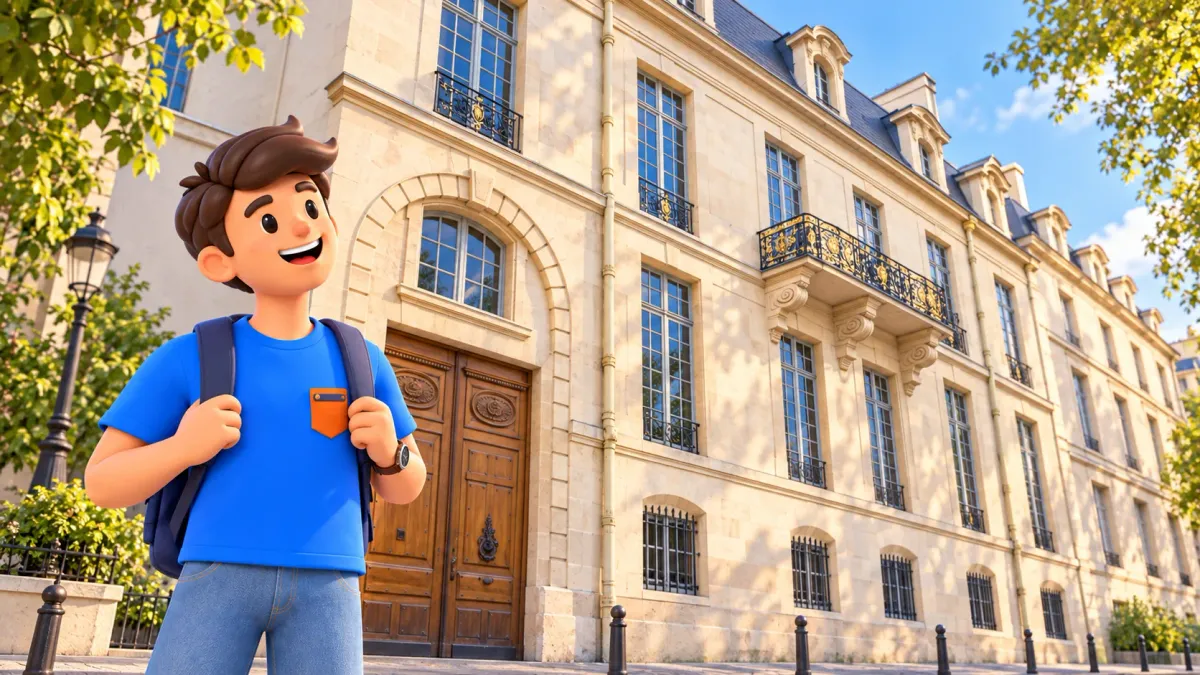
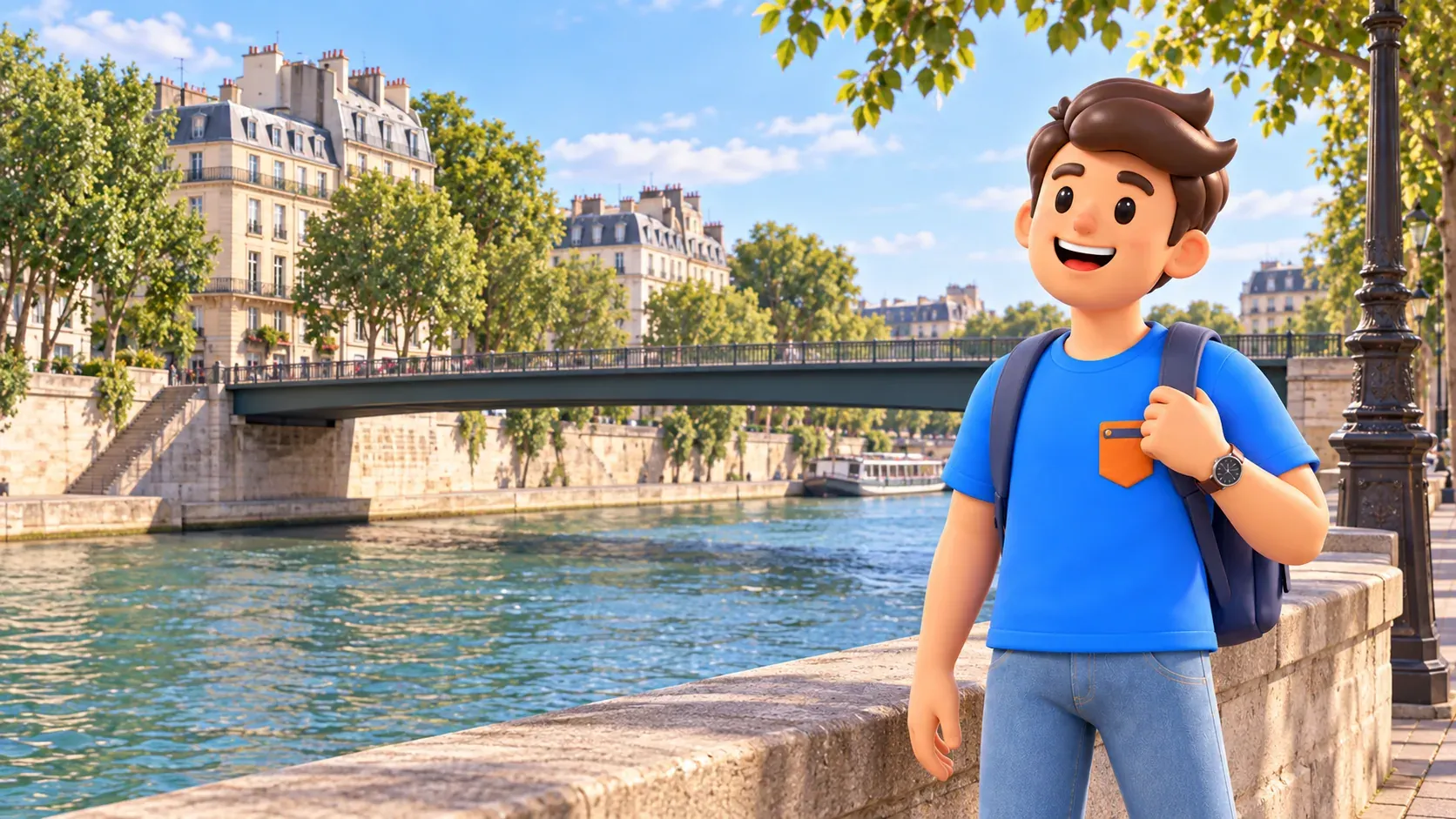
For photographs, try one wider river composition and one closer architectural detail. Move to a suitable public position and keep the pavement and crossing clear. The illustrations accompanying this article suggest the atmosphere of the walk; use the street names and actual signs for navigation.
Keep the timing comfortable
When walking with children or someone who needs frequent rests, let their comfort determine the pauses. You can spend longer beside the river and less time studying façades. If somebody wants to finish early, agree on a suitable next step for the group before continuing. A brief conversation is more useful than persuading everyone to complete another section. Keep a little unallocated time, so enjoying a view or recovering your energy can remain part of the outing rather than becoming an interruption.
Allow approximately 30 minutes for the walking itself and about an hour for façades, photographs and pauses. These are planning estimates, not timings measured on the ground. Your pace, street conditions and the time spent looking will change the total. Begin counting at Pont Saint-Louis; travel from your accommodation comes before this allowance.
If you have less time, decide which part matters most before starting. River views and the mansion section can be the focus of one visit; the central street and church detail can belong to another. With more time, a café or an indoor visit can turn the outing into a longer afternoon without extending the sightseeing list.
On a windy or wet day, keep the exposed waterfront pauses shorter and allow time to get comfortable indoors elsewhere. For travellers who prefer fewer steps, the upper streets are the basis of this route; it makes no promise of a fully step-free journey from transport or accommodation. Check any specific access requirement separately.
Make Saint-Louis part of your Paris trip
Saint-Louis fits naturally beside a visit to the neighbouring island. Our Notre-Dame to Pont Neuf walk on Île de la Cité is a separate two-hour outing. Combining the two means allowing both walking blocks, time between them and a proper rest; entering major monuments changes the schedule again.
You can also keep Saint-Louis for a different day. It works well as a compact outdoor break between larger visits, especially when your interests call for a change of scale. A trip built around art, architecture or food will not need exactly the same programme, even when everyone wants to see the Seine.
For the whole stay, it is more convenient to let RoadMe work out a personalised day-by-day plan around your interests, dates, pace and budget. Try turning your preferred themes into a coherent Paris trip instead of arranging each day separately.
Before leaving, settle on your next destination and the time available for it. The island walk has already done its job if you have enjoyed the waterfront, recognised a few buildings and found a detail worth remembering. Leave some unallocated time in the day so that a place you genuinely like can hold your attention a little longer.


