
Ikegami in Two Hours: Temple Tokyo Beyond Asakusa
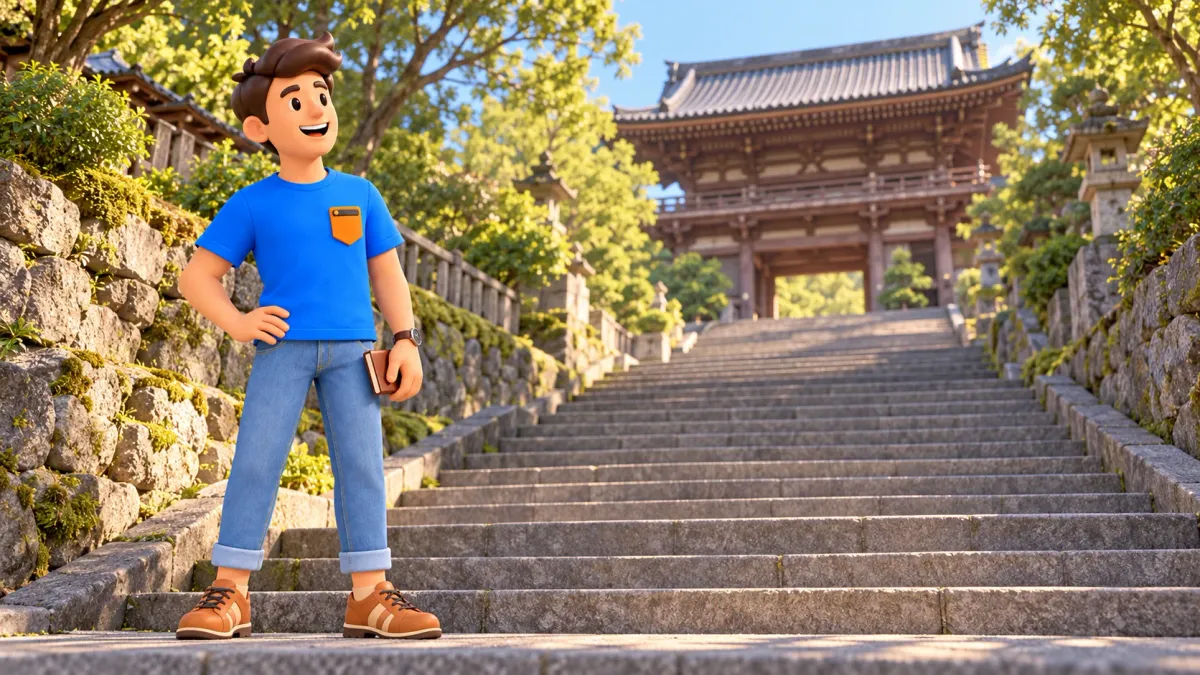
Ikegami offers a compact way to spend two hours with temple architecture beyond Tokyo's most familiar sightseeing districts. The main reason to come is Ikegami Honmonji, a Buddhist temple on a hill in the south of the city. Its approach, broad precinct and five-storey pagoda form a coherent local visit. Add a short pause in the neighbourhood rather than stretching the outing into a tour of every temple, garden and historic marker nearby.
Two hours means time in Ikegami itself. Your journey from the hotel comes separately, so the outing may occupy a larger part of the day. Choose it because the temple interests you or fits your wider route, not because a quieter location must automatically be more authentic than a famous one. Ikegami is a living religious and residential place, with ordinary visitors, worshippers and local routines.
Start with the station and a realistic climb
Ikegami Station is on the Tokyu Ikegami Line. The temple also publishes an approach from Nishi-magome on the Toei Asakusa Line. Compare the full journey from your accommodation and the route you will take on foot. The nearest-looking station is not always the most comfortable choice when transfers, luggage or steps matter. For a straightforward local outing, arriving and leaving through Ikegami keeps the plan easy to understand.
Try RoadMe to include Ikegami in a personal itinerary based on your interests, dates, pace and budget. A focused two-hour temple visit works best when the journey fits the rest of the day.
The front approach includes a substantial stone stairway. Treat it as part of the visit rather than a small detail omitted from the timing. Walk at a comfortable pace, pause clear of other people and keep a hand free if you need the rail. In rain, consider the surface before continuing. A photograph of the view from the top says little about whether the climb suits every person in your group.
The temple publishes an alternative using the lift in Ikegami Kaikan for people who find the steps difficult. Check its current opening arrangements and the complete public route before relying on it. A nearby lift does not mean unrestricted access at any hour. If a step-free visit is essential, confirm both the approach and the movement within the precinct rather than assuming the entire hill works like a modern station concourse.
Understand why Honmonji belongs here
Honmonji is closely connected with Nichiren, the Buddhist teacher who died in Ikegami in 1282. That association explains the temple's religious importance and provides enough context for a first visit. You do not need to learn the full history of every Buddhist school before looking at the place. Begin by distinguishing a major temple associated with a particular teacher from a generic picturesque building.
The age of the institution does not mean that every structure you see has survived unchanged since the thirteenth century. Much of the complex was destroyed during the bombing of 1945 and later rebuilt. The present precinct therefore contains different historical layers. Keep that distinction in mind when looking from a large reconstructed hall towards an older surviving building. A broad founding date should not be applied indiscriminately to every roof and gate.
Use the temple's current map to identify the main public areas and choose a small route. Start with the principal halls from permitted viewpoints, then decide whether to continue towards the pagoda. You do not have to visit every branch or commemorative marker. Leaving a clear margin makes it easier to stop where a detail catches your attention and to return without turning the final minutes into a hurried descent.
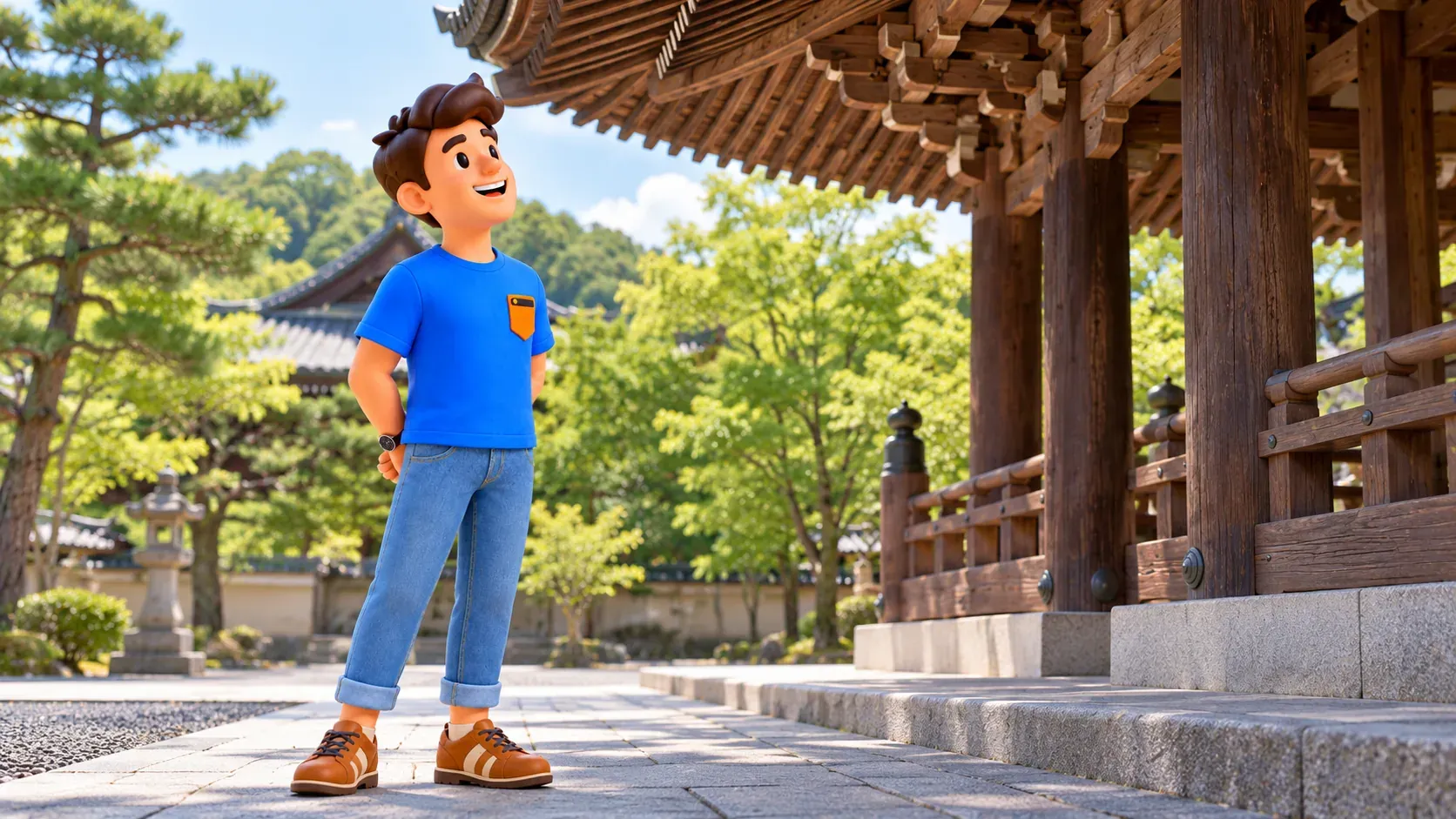
Look at the buildings without assuming every door is open
Religious grounds, hall interiors, reception services and special events have different access arrangements. An open approach does not guarantee that every room is available for sightseeing. Follow the signs and staff guidance on the day, especially during services. If a hall cannot be entered, the exterior and the relationship between buildings still offer a worthwhile introduction. Do not treat a closed door as an invitation to try another unmarked entrance.
Choose a few visible details: the line of a roof, the depth beneath the eaves or the way a gate controls the transition into the next space. Look first, then read the explanation where available. A small amount of attention reveals more than collecting a photograph from every angle. Avoid attaching an invented religious meaning to a decorative shape when no reliable explanation is available.
Photography rules can change by location. Check notices before raising a camera, and do not assume that permission outdoors includes images inside a hall or of people taking part in worship. Stand clear of movement and keep voices low. You can enjoy the site without participating in religious actions; calm observation and respect for the people who use it are sufficient.
Give the five-storey pagoda its own brief stop
The five-storey pagoda dates from 1608 and is an important surviving feature of the complex. It helps make the difference between the temple's long institutional history and the dates of individual structures visible. Look at the stacked roofs and changing proportions from an authorised exterior viewpoint. You need not climb, enter or get directly beneath the eaves to appreciate the form.
Do not interpret a pagoda on a visitor map as a promise of an open interior. This two-hour plan works with an exterior visit. Respect barriers and do not step into planting or other restricted areas for a cleaner photograph. If another group is looking from the same place, share the space and move on naturally rather than treating the viewing point as a private photo session.
A good small task is to compare one older building with the broader reconstructed precinct. Notice differences in scale, timber and surface without trying to diagnose the exact age of every part yourself. Repairs belong to the history of a living temple as well. The pleasure comes from observing a place used across generations, not from insisting that only untouched materials can have meaning.
Leave time for an ordinary neighbourhood pause
After the main precinct, return by a suitable public route and take a short break in the neighbourhood. Choose an open café or food shop according to what you actually need, not a promise that a particular business will be serving at every hour. A drink, a simple snack or a seated pause can be enough. The break is useful for restoring attention after the climb and before the journey onward.
RoadMe can build a personal plan around your preferred mix of temples, local streets and rest. Try keeping Ikegami as one focused visit instead of adding distant attractions simply to fill the afternoon.
Use the walk to notice the transition from religious space back to residential and commercial streets. Keep to public routes and respect privacy around homes, small temples and memorial areas. A quiet lane is not a staged set, and a partly open gate does not necessarily invite entry. You can understand something of the neighbourhood without turning every side street into an exploratory detour.
If someone is tired, use the pause to decide whether the planned return still feels comfortable. Extra time is best kept as a buffer rather than immediately assigned to another stop. Two hours can be enough for the approach, the main precinct, the pagoda and a small rest, but the estimate should bend around the people visiting rather than the other way round.
Separate an ordinary visit from a festival day
Honmonji is associated with the Oeshiki memorial observances in October. A major event produces a different visit from the quieter two-hour outline described here. Check the published programme and local access instructions if your date falls around the observances. Do not expect the same pedestrian movement, atmosphere or ease of stopping for photographs as on an ordinary day.
The same principle applies to other services, weather disruptions and temporary restrictions. Confirm any interior, ceremony or special facility that is essential to your plans before travelling. This route does not depend on a seasonal flower display, a festival procession or entry into the pagoda. Keeping those experiences optional makes the core visit more honest and less vulnerable to one unavailable feature.
Finish with enough time for the way down
Before heading back, check the public route to your chosen station and allow time for the descent. The outward climb is not the only movement that belongs in the schedule. If wet surfaces, fatigue or the alternative lift route change the timing, omit the extra street loop. A comfortable return matters more than reaching a final marker at the edge of the area.
Ikegami works as a short outing because one temple gives the visit a clear centre. The approach, religious story, older pagoda and ordinary neighbourhood complement one another without needing a large collection of distant sights. Leave when that experience feels complete and return to the next part of your Tokyo day with enough attention left to enjoy it.


