
Ice Age Fossils: A Short Visit to Ancient Las Vegas
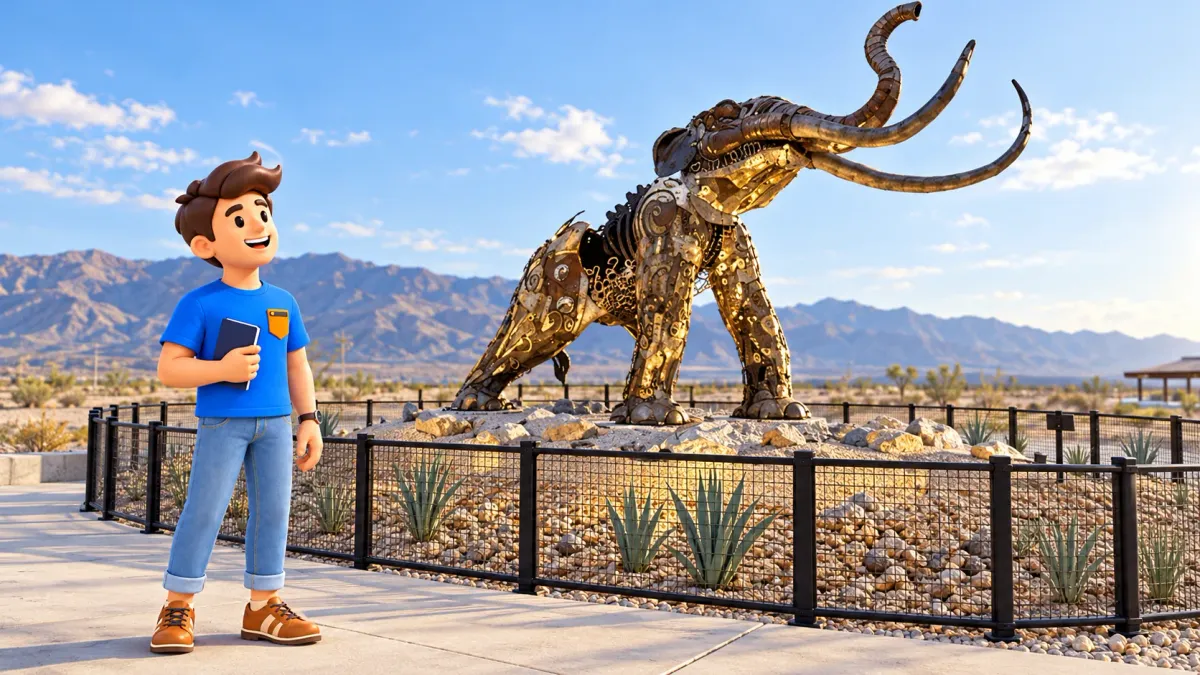
Ice Age Fossils State Park offers a very different Las Vegas outing: a visitor center, open desert views and a monumental mammoth made from salvaged metal. The attraction is not a hunt for a souvenir fossil. It is a chance to connect a small amount of interpretation with a manageable walk through a landscape that has changed greatly over time.
For a first visit, keep the plan simple: start at the visitor center, ask which paths are open, choose a short permitted walk and look at Monumental Mammoth if its approach is available. There is no need to complete every trail or add the neighboring national monument to make the trip worthwhile.
Check the current trail situation first
As checked in October 2026, the park has an active notice dated October 14 stating that parts of the Las Vegas Wash Trail are closed after storm damage. Staff provide the available route options when visitors check in at the visitor center. Do not plan a guaranteed full loop from an older trail description.
RoadMe makes it much easier to prepare a personal Las Vegas trip around your interests, available time and pace. Use the app to give this desert outing an appropriate place in the wider plan, while checking current trail access with park staff.
Allow roughly an hour and a half to two and a half hours on site for the center, a selected short walk and a pause. This is an editorial planning estimate, not a measured itinerary. It excludes the journey from your accommodation and does not include a long hike or a second destination.
If available routes are more limited than you expected, let the visit become shorter. The center and the permitted nearby viewpoints can still provide a coherent introduction. A closed section is not an invitation to invent a shortcut across the wash.
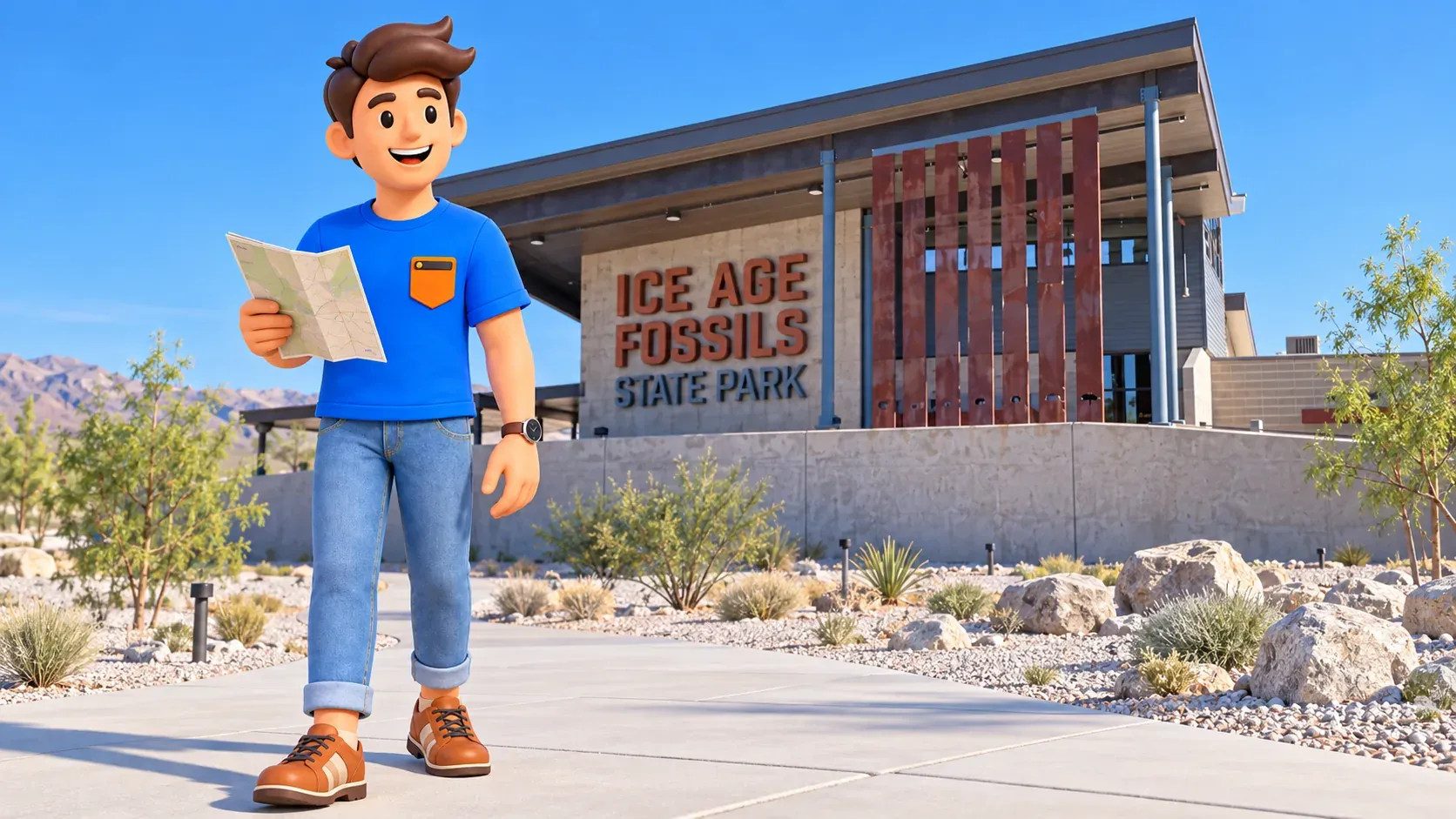
Arrive at the state park’s visitor center
The address is 8660 North Decatur Boulevard in North Las Vegas. Navigate to Ice Age Fossils State Park and its visitor center, not simply to a broad pin in the middle of the surrounding landscape. The park, the center and Monumental Mammoth are parts of one visit, not three separate cross-city stops.
Regular published hours are Wednesday to Sunday, 8 a.m. to 4:30 p.m. Check the park’s current notices and schedule for your date, and arrive early enough to return from any walk before closing. A late arrival is a reason to choose less, not to rush a trail.
This is a Nevada state park with paid admission; children aged twelve and under receive free entry under the published conditions. Check the current charge before traveling. The federal America the Beautiful pass is not accepted here, so do not assume a national-parks pass covers the state park.
Plan arrival and departure together. The landscape is outside the main tourist corridor, and a spontaneous onward ride should not be the only element you have left to arrange. Confirm your chosen transport and give the actual journey its own place in the day rather than relying on an optimistic fixed driving time.
Use the center to make sense of the landscape
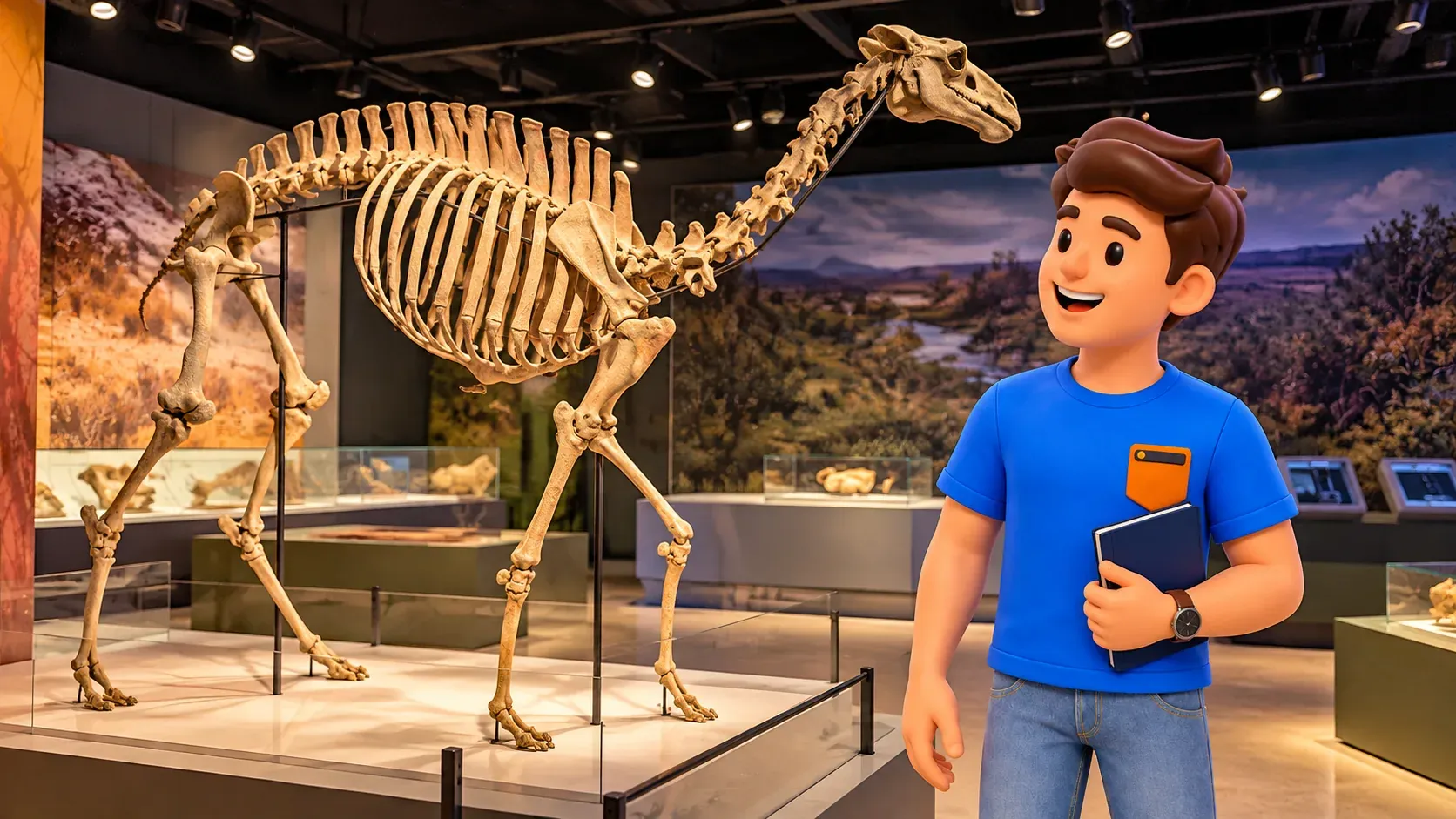
Start indoors with a selective look at the natural-history displays. The center offers a much clearer introduction than searching the ground for something you cannot reliably identify. A few exhibits can help explain why a dry-looking landscape preserves evidence of a much wetter past.
During the Ice Age, this area supported wetlands and large mammals, including mammoths and camels. Keep that broad contrast in mind without trying to learn every species or geological date during a short visit. The practical aim is to see the terrain outside with a more informed eye.
The park is also connected with the scientific history of the Big Dig expedition of 1962–63. For this first outing, that is useful context rather than a reason to add every excavation-related trail. Ask a question that interests you, then choose how much outdoor walking you actually want.
The visitor center has restrooms, drinking water and covered outdoor seating. Use those facilities before heading out and ask staff about the condition of the paths, the return route and any particular access needs. A short named trail does not automatically suit every visitor in every condition.
With children or companions who prefer shorter exhibits, choose one theme to carry outdoors: the scale of an animal, the role of water or the difference between a sculpture and a fossil. You do not need to turn the center into a long lesson before the walk begins.
Choose one short walk, not every trail
The Megafauna Trail is the natural short option to ask about. The park describes it as 0.3 miles, approximately half a kilometer, beginning near the visitor center’s rear patio and featuring life-size animal sculptures. Confirm that its current route is available before setting off.
Those figures help visitors imagine scale and behavior; they are interpretive sculptures rather than live animals or fossils lying where they died. Give yourself time to look without treating the route as a race between exhibits. Remain on the designated paths and follow the instructions you receive at check-in.
The longer Las Vegas Wash and Big Dig routes are different commitments. Their named lengths should not be treated as the complete distance from the center, because access connections and the return journey also matter. This short introductory plan does not require either trail.
In particular, the current storm notice affects parts of the Las Vegas Wash Trail. A general trail listing or a future guided event does not by itself confirm that a full self-guided loop is open today. Let the current staff advice determine what you can walk, and respect every closure.
Choose the shorter version if heat, wind, limited energy or access requirements make it more comfortable. The value of the outing lies in the connection between interpretation and landscape, not the number of kilometers completed.
Monumental Mammoth: art with a conservation story
Monumental Mammoth gives the visit a memorable visual focus. Its raised trunk and large curved tusks stand out against the desert, but look more closely at its metal surface. This is a contemporary artwork, not an excavated skeleton or a reconstructed animal made from fossil bones.
Artist Dana Albany describes the project as originating with Girl Scout Tahoe Mack, with Albany, Luis Varela-Rico and Protectors of Tule Springs contributing to its realization. Repurposed metal gathered through cleanup efforts became part of the sculpture’s skin. The work links a prehistoric subject with present-day care for public land.
Visit it by a permitted approach confirmed by staff. The fact that a longer trail begins near the mammoth does not mean you must walk that trail, nor does an open viewpoint establish that every path beyond it is accessible. Stay outside barriers and avoid climbing or handling the artwork.
A photograph from the visitor area can be enough. Notice the contrast between the animal’s silhouette and the patchwork material, then leave the viewpoint available for other people. The sculpture works well as a selected stop rather than the starting signal for an unnecessarily long hike.
Keep the neighboring national monument separate
Tule Springs Fossil Beds National Monument and Ice Age Fossils State Park share a broader story, but they are not one interchangeable destination. The state park’s visitor center displays fossils associated with Tule Springs and can complement a separate monument visit.
The national monument has its own access points and conditions. Do not follow a generic Tule Springs pin and expect to arrive at this state-park building, or assume that leaving the center places you on an equipped national-monument route. This article stays with the state park’s manageable visitor-center outing.
If you want to explore the monument later, plan it as its own trip. Adding another desert walk automatically can make a short outing much more demanding than expected. Keeping the destinations separate is a practical choice, not a missed obligation.
Leave time for water, shade and a clear finish
Choose a cooler part of the day when possible and carry water for the outdoor section. Covered seating near the center provides a useful place to pause, but you should not assume that shade continues along every trail. Check current weather and route conditions before deciding how far to go.
RoadMe can work out a personalized route or whole trip based on your interests, time and pace, making separate outings much more convenient to organize. Use the app to balance a desert visit with the rest of your stay instead of forcing another long stop into the same day.

The pause illustration is a conceptual scene, not a guarantee of a particular table or building viewpoint. The real visitor-center guidance determines where you can rest and which path is suitable. Plan the return before beginning, with enough margin to be back comfortably within opening hours.
Do not dig, collect or disturb fossils, stones or other protected features. Stay on marked routes and leave discoveries in place. The experience is about learning to read a landscape, not taking pieces of it home; a drawing or photograph makes a more appropriate reminder.
Finish after the selected walk and viewpoint, or earlier if that feels right. A little interpretation, a permitted route and the mammoth’s distinctive silhouette are enough for a satisfying introduction to ancient Las Vegas. The deeper natural-history story can wait for another article or a longer, separately planned visit.


