How to recognise Pisan Romanesque architecture on a walk
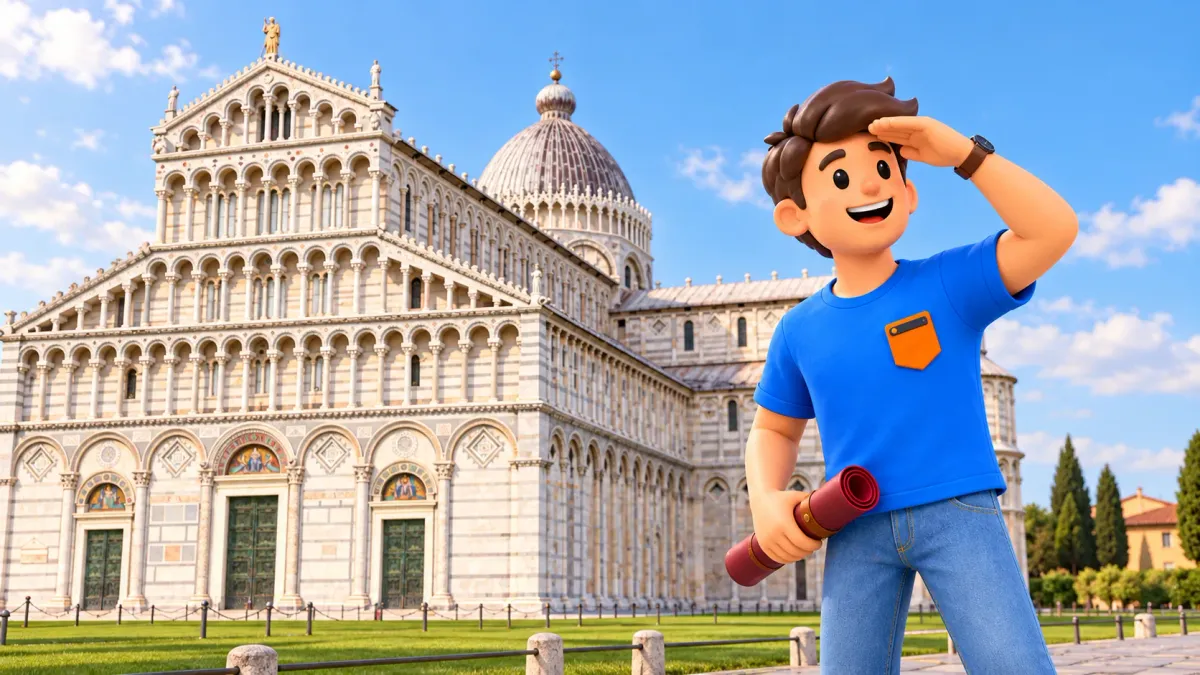
Pisa is usually recognised by the lean of its tower. But the city has another, more widespread signature: repeated arches, pale stone, dark bands and small geometric inserts arranged into an expressive system. This architectural language is known as Pisan Romanesque. You do not need a long vocabulary lesson before you can begin to recognise it. A few questions will help: where does the wall remain solid, where do columns reveal depth, and how do small details organise a large building? Familiar scenery starts to explain its own construction instead of remaining a beautiful backdrop to a photograph.
The Cathedral of Santa Maria Assunta is a useful starting point, but the lesson continues beyond Cathedral Square. Related devices appear in other churches, at different scales and in different settings. This is a way of looking to take into a walk you have already chosen, rather than a complete monument catalogue or a test in identifying styles from a photograph. A building can have a Romanesque foundation, a later upper section and replaced details. Noticing those combinations is more useful than giving every church one final label and assuming there is nothing else to ask about it.
Begin with the whole facade
RoadMe develops a personalised walk or whole-trip plan around your interests, time and preferred pace. Using it in the app makes connecting architectural discoveries with Pisa’s other experiences much more convenient and effective, with a day that suits you rather than a universal list of churches.
In front of the cathedral, begin far enough back to see the main levels together. The lower part looks more solid; above it are lighter rows of columns and arches. Notice how the broad base gives way to a narrower upper section. Do not try to inspect every capital immediately. First see the order that holds the whole building together. Then move closer and ask whether the different levels work in the same way. Moving from the whole to the detail is less tiring than studying every ornament without understanding how it relates to the larger composition.
The medieval cathedral developed in stages. Buscheto is associated with the original scheme, while Rainaldo extended the building and shaped the facade. For this introduction, remember the sequence rather than memorising a construction calendar. You are looking at the work of several generations, not an object that appeared complete on a single occasion. Calling the cathedral Romanesque identifies an important architectural foundation. It does not claim that every door, sculpture and interior finish belongs to one period. That distinction will prove useful before you even reach the next church, and it makes later changes part of the visit rather than an inconvenience.
Tell a blind arch from an open gallery
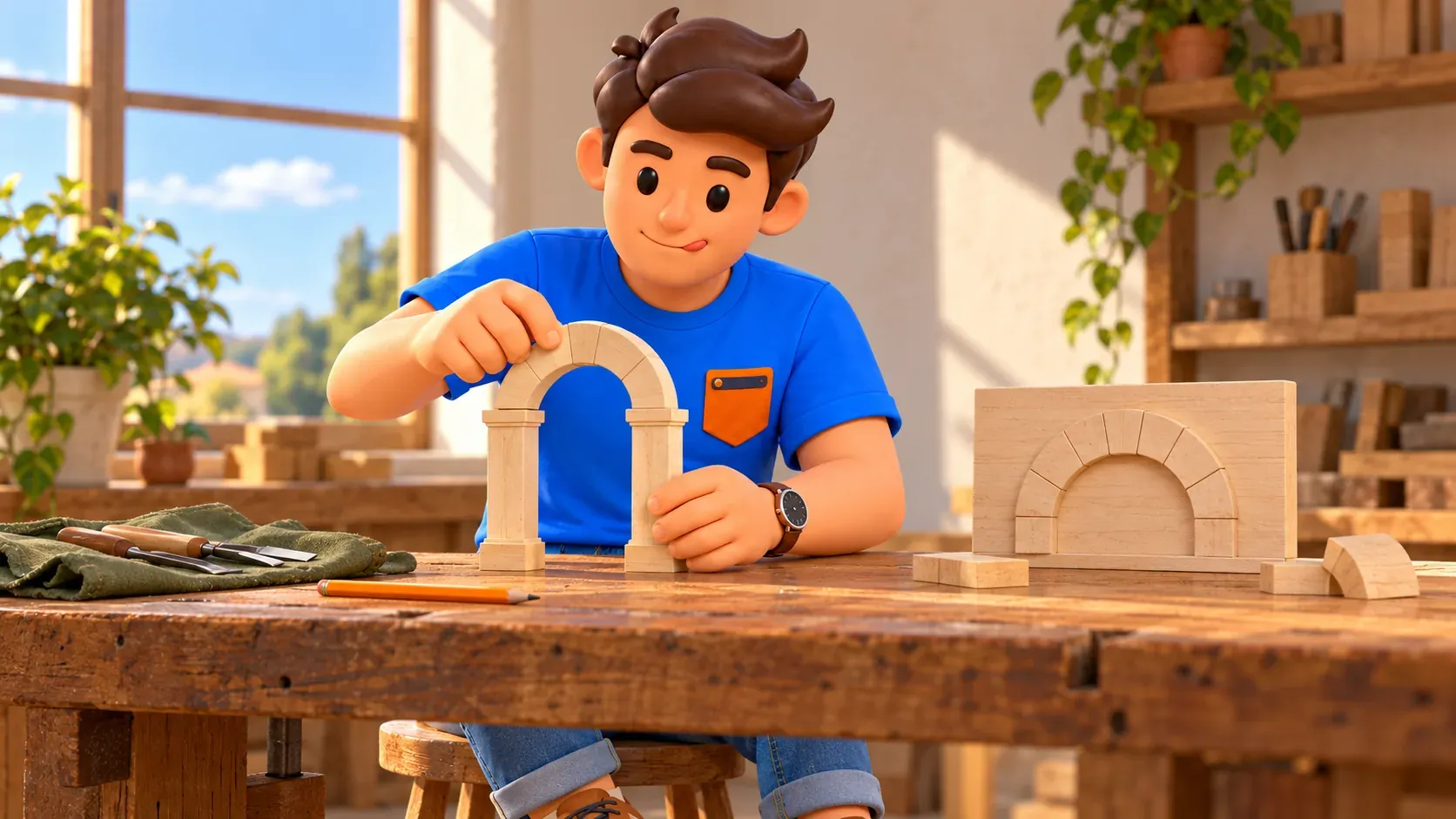
A blind arch organises the surface of a wall without becoming an open passage. Masonry remains behind its outline, sometimes containing a geometric motif, window or doorway. An open arcade lets you see space between the columns. At the cathedral, compare the more solid lower level with the galleries above. The important difference is depth rather than simply the number of arches. Where does the eye meet stone, and where can it travel into shadow? This single question explains more than memorising separate names for every architectural component before you have looked at how they work together.
View the repetition from a slight angle while keeping to available public paths. Columns stop looking like drawn lines and acquire volume; the spaces between them change in perspective. You need not enter a gallery to understand it: this is an exercise from ground level, not a promise of access to every visible part. Overcast weather still allows you to read depth and overlapping forms even without dramatic shadows. Sunshine makes the effect striking but does not create it. The architecture remains understandable when the weather refuses to match the postcard and the perfect picture is unavailable.
Look for rhythm rather than white marble alone
Pisan Romanesque is more than a white building with arches. Relationships matter: light and dark, broad and narrow, flat and recessed. Bands of different materials can connect a long wall, while smaller arches divide it into repeated units. Follow one horizontal line and notice where it continues or stops at a portal or another feature. The facade becomes something other than a collection of decorations. You begin to see the internal order that lets numerous small elements work together, rather than dissolving into a single large pale shape against the sky as you hurry past it.
Colour changes with distance, too. From further away, you read the broad bands; close up, individual slabs and inserts become clearer. Colour alone does not allow you to identify a stone, quarry or precise installation date confidently. For a first encounter, describe what is visible: a pale surface, dark belt, reddish accent or contrasting border. Guessing every geological name is unnecessary for enjoying the material. Nor should every present element be treated as untouched medieval fabric. Repairs and replacements belong to the building’s history, even when they are not easy to distinguish from the ground without specialist knowledge.
Notice the small geometry
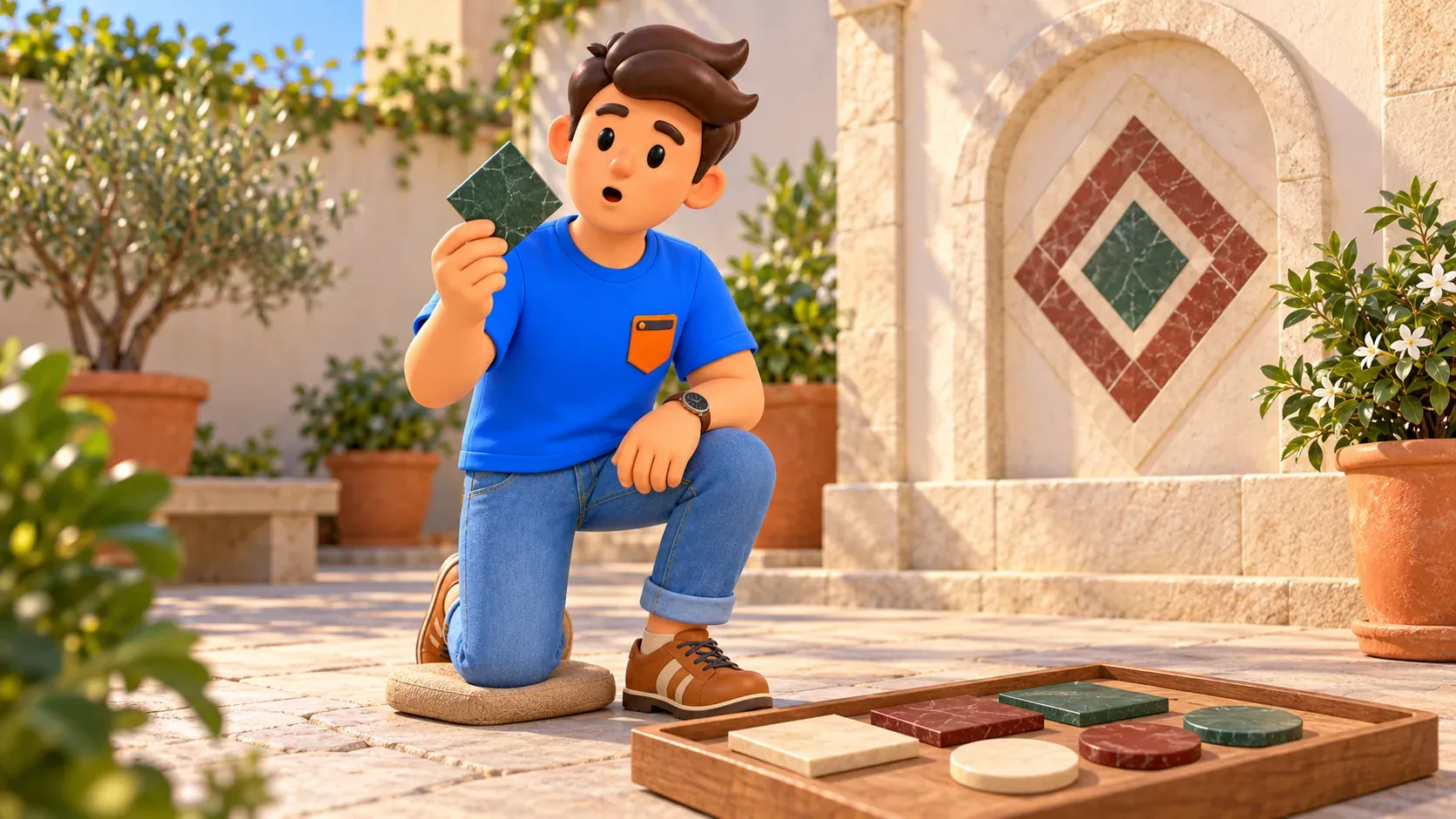
Diamonds, circles and other inserts appear within larger systems of arches on Pisan facades. At the cathedral, they help hold attention between columns and portals. Choose one diamond, find a neighbouring one and compare the frames. Repetition need not mean that every detail is mechanically identical. Inlay works through pieces of different material; carved relief works through projecting or recessed form. Distinguishing these methods is useful even without specialist knowledge. The vague word decoration becomes a set of observations about colour, surface and workmanship. You can appreciate the making as well as the effect of the finished building.
Do not immediately assign a single secret meaning to every geometric shape. Particular features may have an iconography and a research history, but a visitor’s visual guess does not establish either. First ask what the motif does in the composition: filling an area above an arch, marking a centre or connecting neighbouring parts. If you later investigate the detail, you will already have a clear question. This approach removes the pressure to decode a whole facade in one visit. It also makes room for artistic work that a quick look might dismiss as general ornament before moving on to the next sight.
Compare the cathedral with San Paolo a Ripa d’Arno
San Paolo a Ripa d’Arno, on the southern side of the river, shows recognisable devices outside the main ensemble. Here, too, you find blind arches, inlays and small galleries in tiers. A different scale, proportions and setting create an independent experience. Do not treat the church as a reduced copy to tick off after the cathedral. Compare the attention given to the portal and the transition towards the upper section. A familiar language remains recognisable while the individual sentence changes. That makes architectural comparison more rewarding than searching for an absolutely identical facade in another part of town.
Differences beside the central entrance are especially instructive: the arch forms and decorative treatments are not entirely symmetrical. This complicates the overly strict rule that Romanesque means only round arches and anything else cannot belong. The building developed over a long time and holds several solutions. Its traditional nickname, the Old Cathedral, should not be taken as proof that it once had cathedral status. Exterior observation is enough for this comparison. An interior visit is a separate choice under current arrangements, and the comparison itself does not oblige you to add a long crossing of town to an already full day.
Read the baptistery from the bottom upwards
The Baptistery of St John beside the cathedral offers another lesson: several artistic stages can coexist within one building. The lower band of rounded blind arches belongs to its Romanesque foundation. Higher sections become more elaborate, with pointed features, sculpture and openwork associated with Gothic development. There is no need to choose between two exclusive answers, as if the building must be entirely Romanesque or entirely Gothic. Long construction left a visible conversation between generations. Move your eye upwards and compare the density of the wall, the character of the outline and the amount of detail silhouetted against the sky.
That change does not mean later makers spoiled the first idea. They worked with an existing building and artistic tasks of their own. For a traveller, it is an opportunity to see time inside form. Differences between levels can explain a monument better than a single label applied to the whole. Use the same principle elsewhere: ask whether the base and upper section look alike, then investigate their histories. Just avoid turning every pointed element into an automatic date. A visual feature helps you frame a question, but confident dating requires more than one outline noticed during a brief walk.

Romanesque does not mean ancient Roman
The similar words can mislead: Romanesque architecture belongs to medieval history, rather than meaning that ancient Romans built the cathedral. Medieval builders could, however, reuse ancient materials and elements. In Pisa, that is an important part of artistic culture. An object older than a building can appear within its fabric without turning the whole structure into a Roman temple. Keep the age of the material, the date of an architectural decision and subsequent use separate. You do not need to identify every reused fragment yourself to understand why a visible surface can connect centuries and resist one simple date.
Later transformations continue that history. A fire in the late sixteenth century led to substantial work at the cathedral; the bronze doors now on its main facade are not the medieval leaves destroyed in the fire. This does not make the building cease to be historic. Damage, repair and continuing use are part of its biography. For a first visit, remember one boundary: the style of the main architecture does not guarantee that everything you see is the same age. It helps you avoid presenting a later detail as an early example while still appreciating what later generations contributed.
Take three questions on your walk
RoadMe creates a personalised trip plan in which architecture takes up as much space as you actually enjoy. Using it in the app is more convenient and effective than joining scattered tips yourself while trying to fit every church around breaks, museums and the rest of your day.
At the next church, ask where the wall is solid and where it opens into depth; what repeats; and whether the building changes character from bottom to top. That is enough to look more attentively without a long notebook. Take one general photograph and one chosen detail with its surroundings. With companions, invite each person to choose an example of repetition and explain why it caught their eye. Keep this a small shared observation rather than a speed competition. The aim is to recognise combinations, not to finish a perfect classification of Pisa: a second signature alongside the tower’s famous lean.
For a walking idea: our Tuttomondo to San Paolo a Ripa d’Arno walk.