
How old is Barcelona’s Gothic Quarter? Reading the layers
Barcelona’s Gothic Quarter can feel like one continuous medieval setting. Narrow streets, stone and carved details create a convincing image. Yet the age of that image is not the age of every building. Ancient foundations, medieval structures and much later uses of Gothic forms can stand close together.
That makes walking here more interesting. Instead of asking whether the whole quarter is genuine, ask what you are looking at: an old structure, a later façade, a relocated house or a newer design in a historic style. A few examples can help distinguish these situations without turning the walk into a detailed tour of every attraction.
Style and age are different questions
Gothic can describe an architectural language as well as a historical period. A pointed arch does not provide its own date. A later designer could use Gothic forms, while an older building could receive new decoration. First notice the feature, then consider the history of the particular part that attracted you.
Make that interest easier to explore with RoadMe: the app works out a personal day-by-day trip plan around your themes, dates, pace and budget. Following a coherent programme is more convenient and efficient than repeatedly organising historical discoveries alongside the rest of your walks and journeys yourself.
Location raises another question. A historic house may retain important elements after moving from another street. Ancient remains may lie beneath a modern surface without revealing a familiar outline. The age of material, the age of a composition and continuity in one location are related, but they are not identical.
You only need to keep those distinctions in mind. A first visit does not require correctly dating every stone. Notice one expressive example and understand why it takes its present form. The following streets will become more rewarding, and a familiar view will gain another layer of meaning.
Pont del Bisbe: a convincing image from the twentieth century
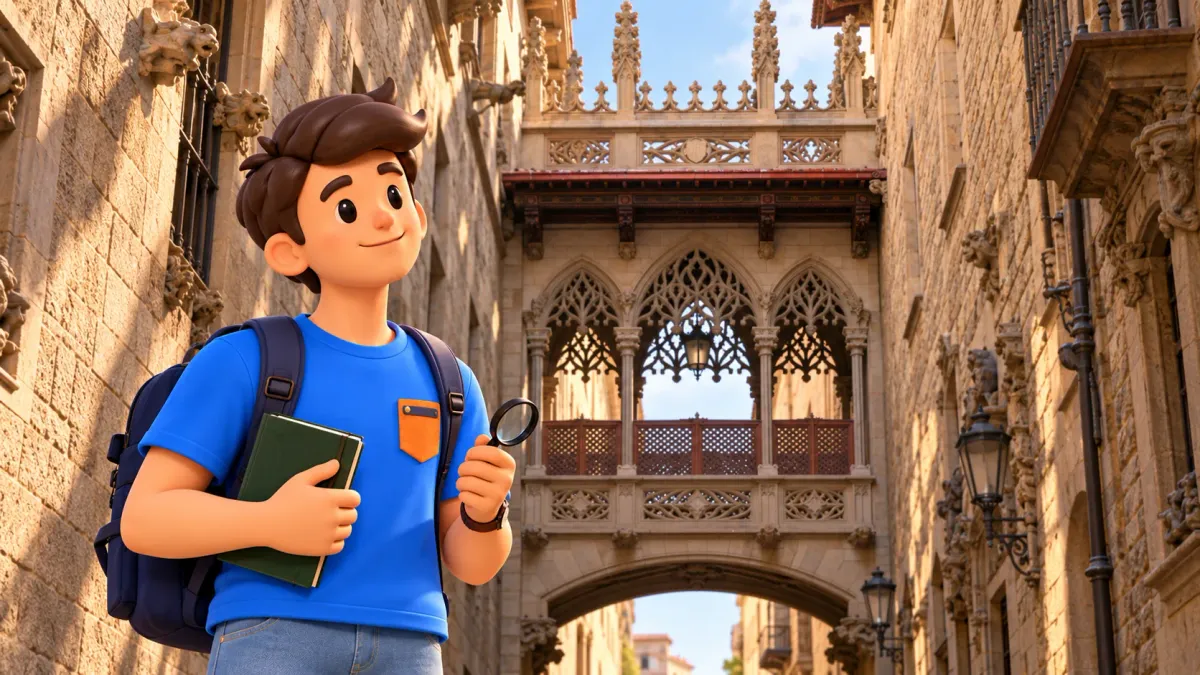
The Bishop’s Bridge, Pont del Bisbe, seems a natural emblem of old Barcelona. Joan Rubió i Bellver built it in 1928. Two things matter for this introduction: it belongs to the twentieth century, and its historic architectural language was a deliberate choice. Knowing the date does not make the design less striking.
Look at how it works within the narrow street. Side walls direct your gaze forward, while the passage joins them overhead. Carved openings admit light and create a dense pattern at the same time. In photographs the bridge can appear isolated, but on a walk its effect depends strongly on its setting.
See the overall connection first, individual arches second and decorative details afterwards. These are three scales of looking. One reveals the role of the crossing, another its arrangement, another the work of pattern. You need not collect every detail to understand why the image feels coherent.
A later origin does not require disappointment. The bridge is evidence of how one period imagined and shaped another. Its existence already says something about urban memory. Understanding that relationship is more useful than debating whether you are still allowed to admire it after learning its date.
Keep the passage clear and look from the available public street below. A photograph of the crossing does not establish tourist access onto it or into the rooms it connects. Exterior observation is enough here. If there are many people, a brief look still reveals the main idea without waiting for a perfectly empty frame.
The cathedral: a medieval building with a younger main front
The cathedral offers another relationship with time. Gothic construction began in 1298 and was largely completed by the mid-fifteenth century. The main façade dates from the late nineteenth century; the central tower was finished in 1913. It is therefore inaccurate both to call the whole cathedral recent and to date everything seen from the front to the Middle Ages.
Be precise about which part is being discussed. The age of a substantial church and the age of its ceremonial face cannot always be reduced to one number. You are looking at a part that shapes the impression of the whole without exhausting its history. This makes short labels such as thirteenth-century cathedral easier to read critically.
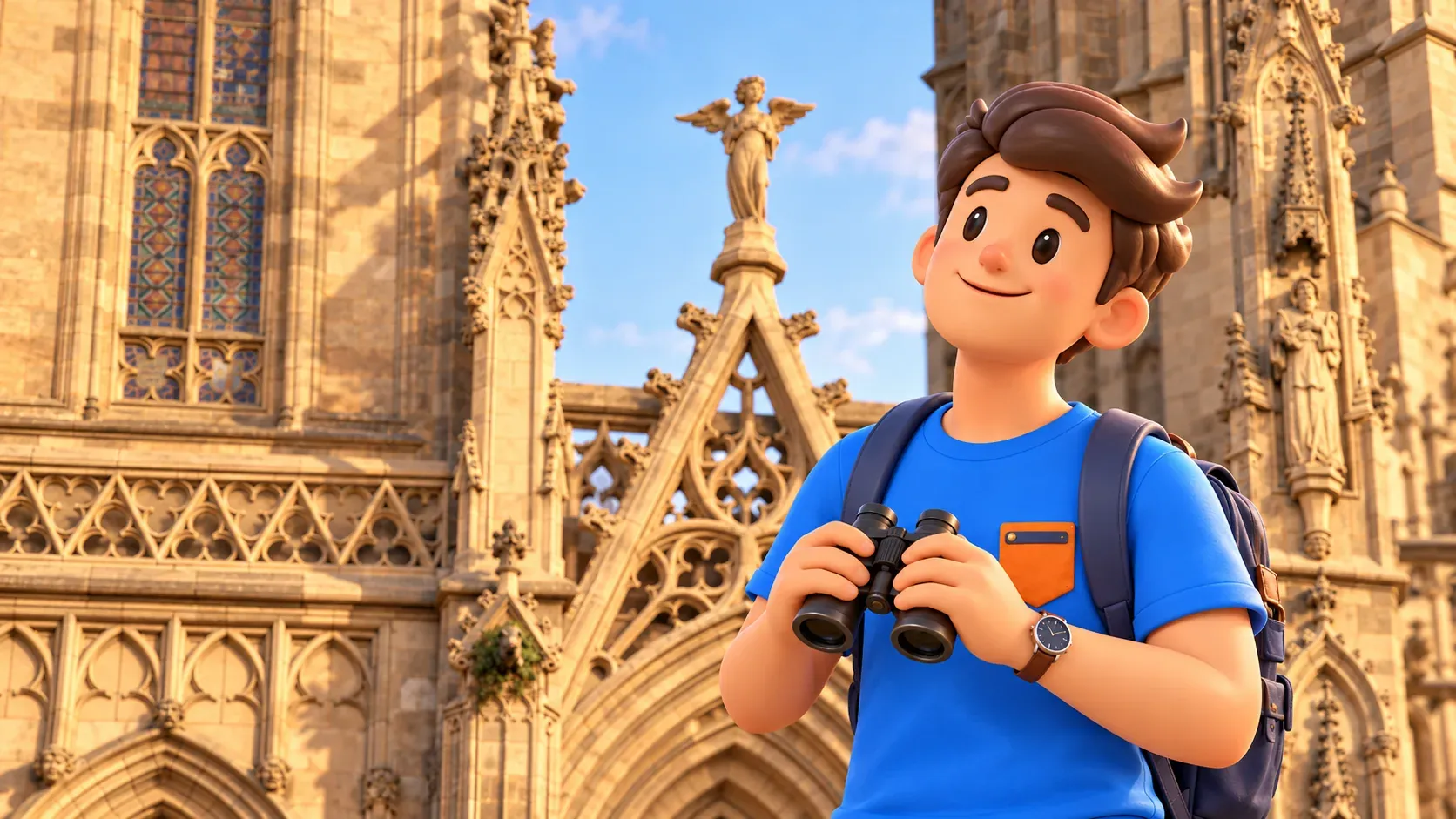
For an exterior observation, choose several lines. How does a tall opening relate to a triangular termination? Where is carving dense and where does a calmer stone surface remain? What first catches your eye: the upward movement of the composition or a small figure? None of these questions requires guessing a year from the stone’s colour.
Weathering, light and restoration complicate a simple darker-means-older rule. Even neighbouring details can look different in shade and sunshine. Treat those differences as observations rather than proof of date. A historical conclusion needs the story of that particular component.
Do not confuse this cathedral with the Sagrada Família. Those names describe different Barcelona churches with different architectural histories. Here the subject is the cathedral in the old centre. Making that distinction prevents a story about Gaudí from being transferred to every expressive religious building in the city.
Looking at the façade from public space and visiting the interior are different activities. If you want to continue inside, give that visit its own time and appropriate admission arrangements. For this guide, the layered principle is enough: an older building can receive a new face while retaining a long history of its own.
Casa Padellàs: the history of material and the history of place
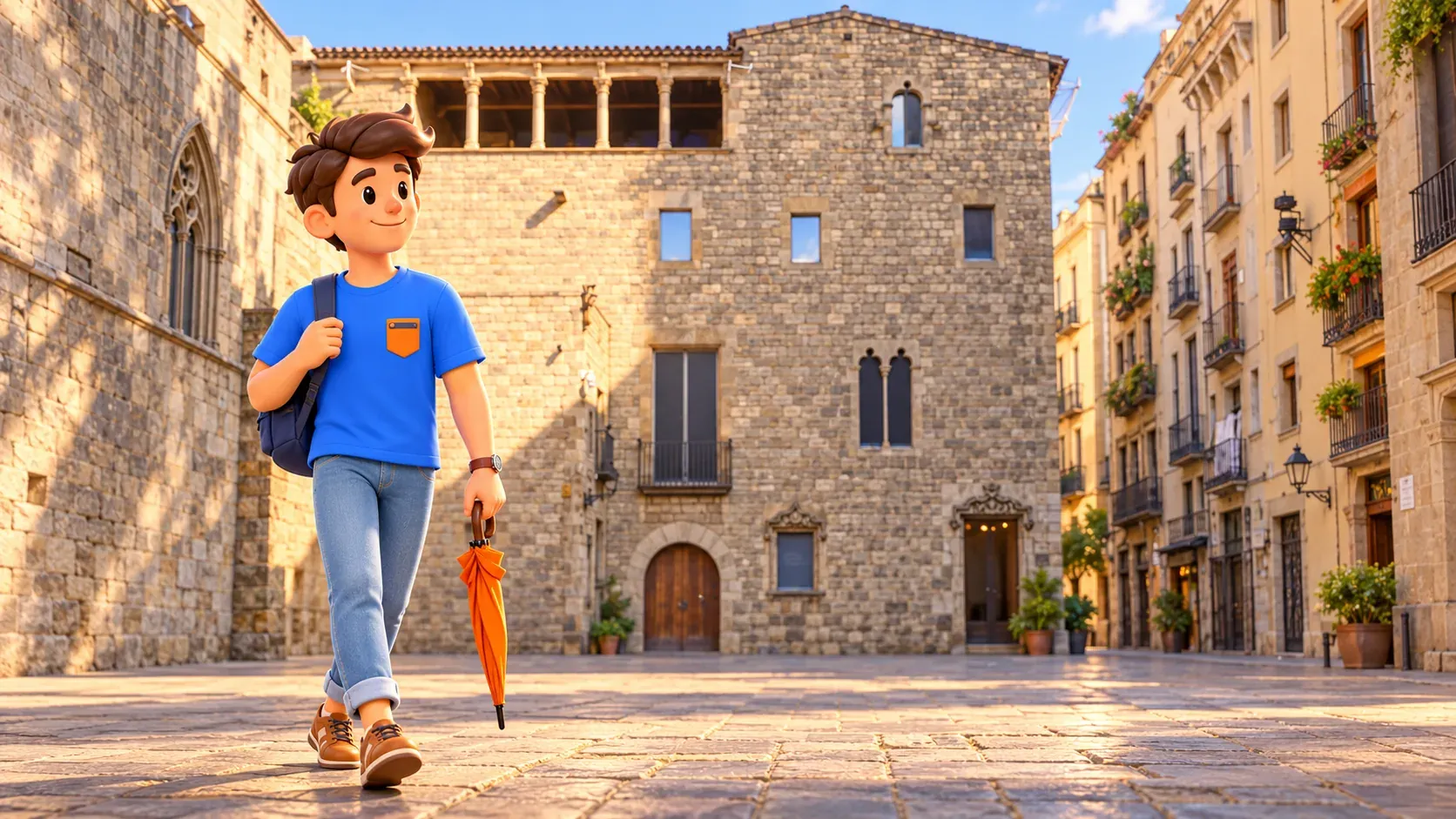
Casa Padellàs on Plaça del Rei demonstrates another kind of urban memory. It was moved here from Carrer Mercaders during the 1930s. This is a historic building in a new position, rather than evidence that every part of the present square has occupied the same place for centuries. Relocation changes the question to ask.
Look at the façade as part of today’s square. How are windows distributed, where is the open upper gallery, and what role does the door play? The house participates in a composition with neighbouring buildings even though its own biography includes another street. That relationship is enough to change a first impression of the square.
Relocation should not be imagined as moving a completely untouched interior inside a stone shell. Preservation and adaptation can take place together. Distinguish important historic elements from subsequent arrangements for a new purpose. That avoids two extremes: everything is entirely unchanged, or nothing old exists here.
You need not investigate every window opening. Choose one question: how did an older building become part of a new setting? Then look at the square’s overall shape and approaching streets. Such a stop leaves more room for observation than trying to memorise a long list of owners and alterations quickly.
An exterior view does not provide automatic entry into museum rooms or reveal every archaeological layer beneath the square. An interior visit belongs to a separate programme. Here, the useful point is that the present historic scene developed over time. Visual unity does not establish that every component appeared simultaneously.
Roman history does not need to look Gothic
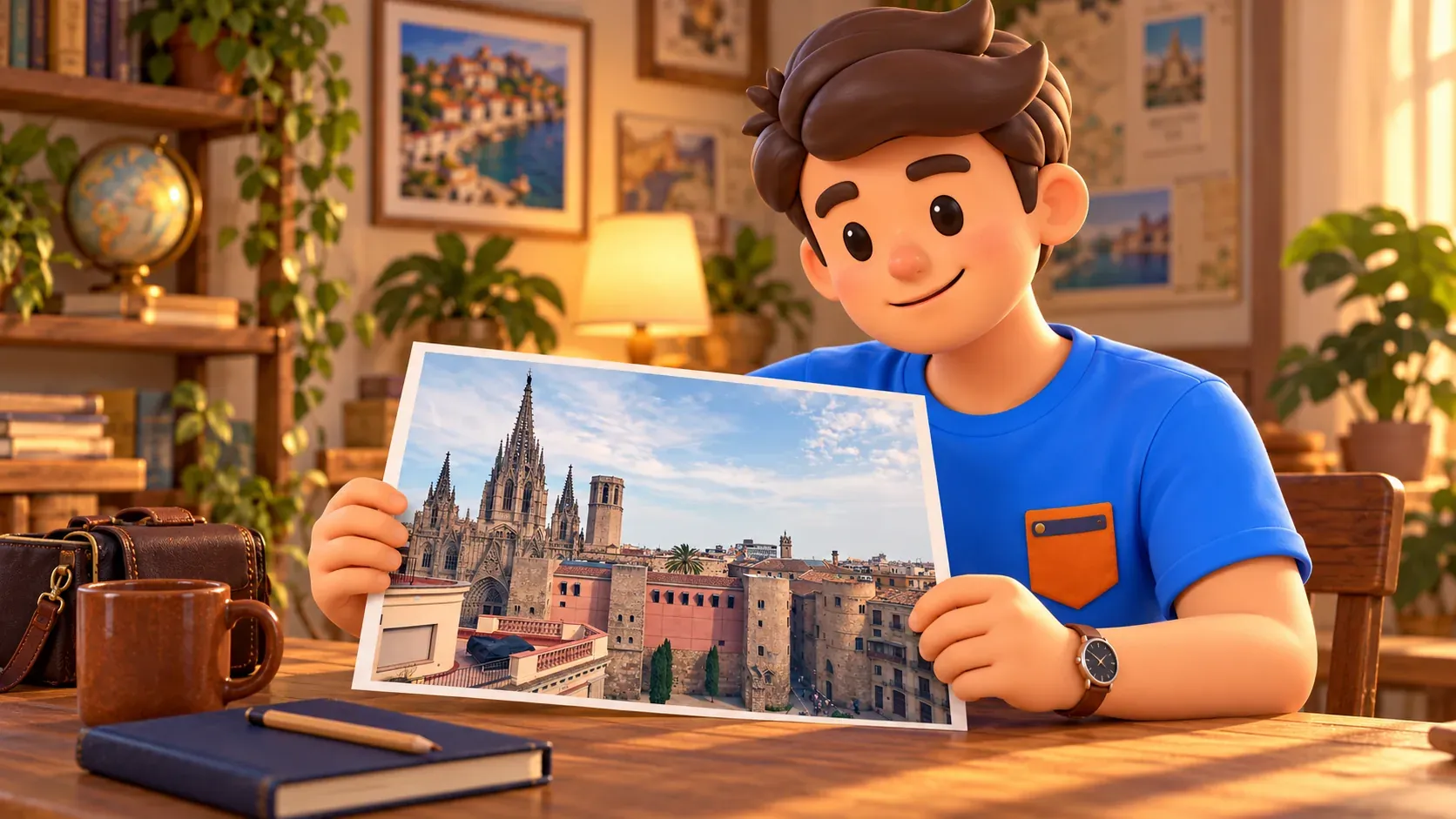
The Roman walls and gateway of Barcino introduce an older layer. Even the visible towers have a complicated history: ancient bases coexist with medieval increases in height. Do not assign every present stone surface to one Roman period merely because you are looking at former city defences.
Try another way of seeing: where does the wall run, how do neighbouring buildings engage with it, and what appears to be an addition? These questions do not replace archaeological analysis, but they help show the city as the result of long use. A wall is part of a changing environment as well as an isolated historic object.
Even a recognisable ancient form needs qualification. The aqueduct fragment beside the gateway is a modern reconstruction, rather than a completely preserved Roman arch. That does not erase the quarter’s Roman past. Reconstruction helps suggest an arrangement, while surviving remains provide a different kind of evidence. Avoid merging the two categories without explanation.
If Barcino captures your interest more than the Gothic details you expected, save the separate walk through Roman Barcelona. You do not need to fit every ancient site into the same day. One introduction can establish that an earlier urban history lies beneath the familiar medieval image.
Read the quarter without chasing revelations
At the next stop, ask three short questions: what does the place look like, what is known about its creation, and what changed later? The first concerns your observation; the others concern history. Do not substitute one for another. A convincing old appearance does not prove age, while a later date does not make looking pointless.
Distinguish a fact from an entertaining story. If a detail comes with a legend, you can enjoy it as part of urban culture while retaining that description. An unknown architectural intention need not become a documented drama simply because it is more exciting to tell your companions. An honest question can be more memorable than an unsupported dramatic answer.
For photographs, try combining a broad view with one detail you chose yourself. The overall frame shows the setting; the close view shows your own reason to stop. You need not photograph every carved figure. A few purposeful observations make the walk personal rather than a collection of repeated images.
With children, suggest finding different arch shapes or comparing a smooth surface with a carved one. This is an observation game rather than a test of building age. Do not ask them to guess history from appearances alone: adults can make the same mistake here. Discovering why the first impression was incomplete is more interesting together.
Keep the impression whole while noticing different periods
Choose several examples for a first introduction, not the entire quarter at once. A bridge, façade, relocated house and ancient wall show different relationships between style and time. They do not form a minute-by-minute itinerary here. Their order depends on your day, available passages and wish to linger.
Tell RoadMe whether medieval architecture, Roman history or unexpected urban details appeal most, and the app will develop a personal plan for your whole trip at your pace. It is a more convenient way to continue discovering the city, with less independent organising and more time for walks that interest you.
Give yourself permission simply to admire. Knowing a bridge’s later date does not prevent enjoying its composition, and relocation does not remove a house’s character. Another layer of understanding need not destroy a first impression. It lets you notice decisions made by people who preserved, changed and reimagined the city.
The Gothic Quarter rewards that combination. Older foundations, medieval structures and later forms of historical memory can be encountered together. You do not need to leave with one final date. Take away the habit of distinguishing parts and periods, and the stone streets will tell you more than their unified historic outline initially suggests.


