How many days do you need in Bruges: one, two or three?

One full day is enough for a first impression of Bruges if you choose the centre and one main visit. Two full days make it easier to slow down, explore another neighbourhood and leave room for an evening. Three days are worthwhile if you enjoy museums, close observation or a separate green outing. There is no compulsory ideal length: your interests and usable hours are the better starting point.
This article compares lengths of stay rather than providing another detailed route through every landmark. Markt, Burg, the canals, museum quarter and Minnewater form a useful introduction. Extra time changes the depth of that encounter, not just the number of names on a list. A few hours between trains are not a full day: walking to and from transport, eating and returning already take part of that window.
The quick choice: one, two or three days
Choose one day for an introduction and several principal spaces. Choose two for a more comfortable rhythm and a combination of the centre with a neighbourhood or thematic visit. Choose three when your interests extend beyond the familiar postcard selection. This is an editorial recommendation, not a city requirement or a judgment about how much every traveller ought to see.
RoadMe makes it much easier to develop a personalised plan for your whole trip around your interests, dates and pace. Try planning Bruges in the app to arrange walks, chosen visits and rest within the time you actually have.
Begin with three questions: what matters most, how long do you enjoy spending in one place, and do you want to stay overnight? Those answers are more useful than someone else's absolute claim that a few hours suffice or three days are essential. A visitor interested mainly in streets and water uses time differently from a painting enthusiast. Both can have a satisfying experience.
Do not judge the right duration solely by the size of the centre. Short distances reduce transfers, but not the time needed for a museum, lunch, entry or rest. Two neighbouring doors do not turn two visits into one. When a day is already full, the proximity of another appealing place can become a cause of overload rather than a real saving of energy.
One full day: an introduction with a clear priority
One day can reveal several sides of the historic centre: commercial Markt, Burg and its Town Hall, water at Rozenhoedkaai and the greener southern area around Minnewater. You do not have to make every stop a substantial separate tour. Together they give the city an outline, showing the relationship of trade, government, religious life and water.
The halls and Belfry help you read Markt, while the Gothic Town Hall changes the subject on Burg. The canals then show why the city cannot be understood solely through square-front facades. These brief historical connections are more useful than trying to learn every building's owners and rebuilding dates in a day. Leave details the opportunity to become interesting later.
The main discipline is choosing one substantial visit, if you want one. St John's Hospital museum can suit an interest in art and the history of care; the Belfry suits an interest in height and a prominent civic landmark, provided its stairs work for you. Do not automatically combine both with several more museums simply because each sounds like an important name.
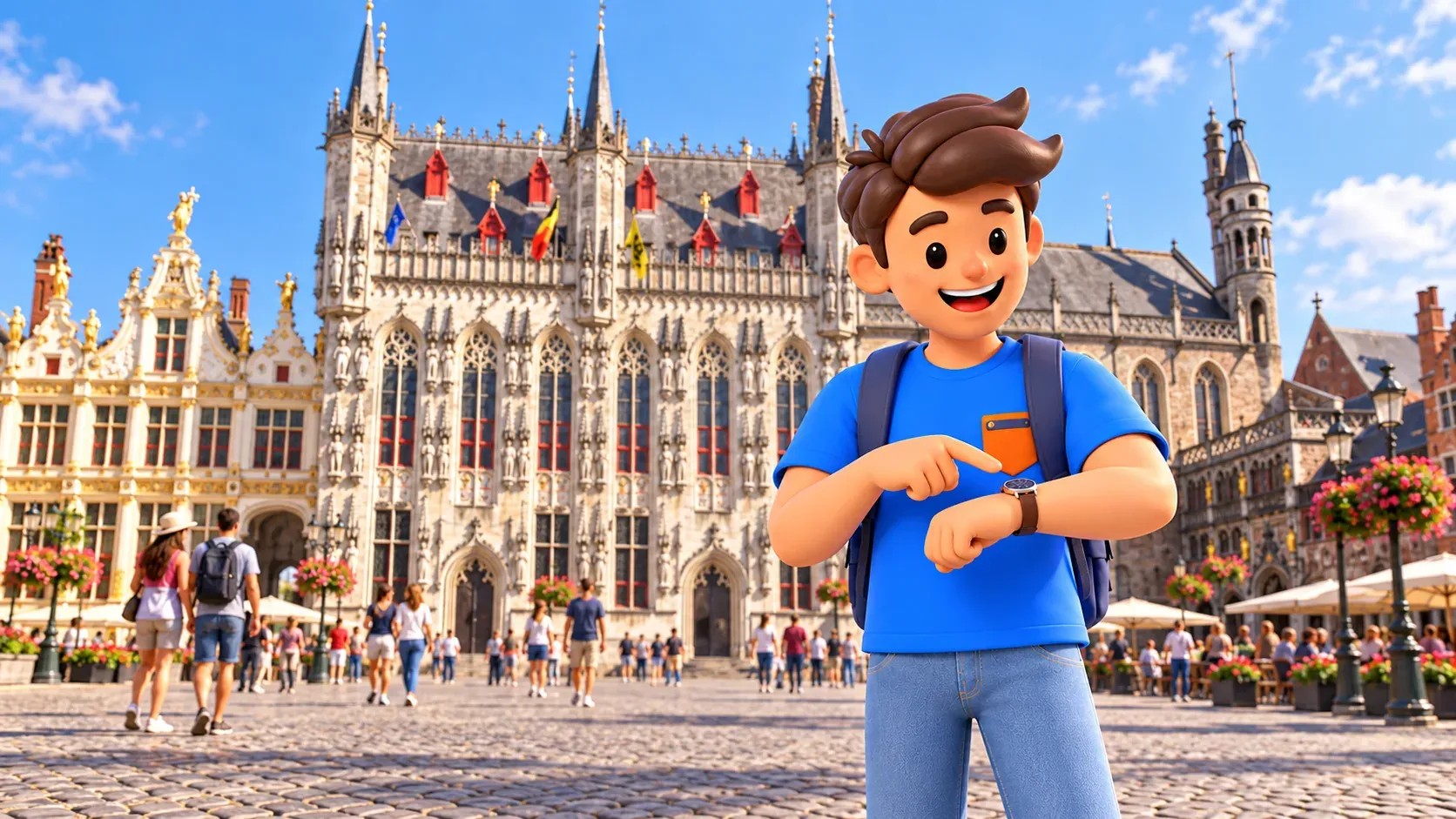
Keep a proper lunch break and a margin before returning to transport. If you want to linger beside the water, you can spend the day outdoors in streets and parks. A programme without paid interiors is also complete. One day becomes uncomfortable when it is expected to contain a comprehensive city overview, several collections and a leisurely rest simultaneously, rather than because of its duration alone.
Use the one-day Bruges plan as a basis for choices, not a promise that everyone moves at the same speed. A late arrival, early departure or cafe stop changes the usable window. When time contracts, remove a whole additional visit rather than shaving every pause down to a few minutes. The resulting day will be clearer and easier to enjoy.
What an overnight stay adds
The value of a night is mainly the way it separates time. You gain an evening after the main programme and a morning without immediately travelling from another city. This does not guarantee empty streets or late museum opening. It simply offers more freedom to choose when to walk, rest and finish, without tying every decision to the next return train.
One night is not the same as two full days. Arriving in the evening and leaving after lunch gives you substantially less usable time. Write down the actual hours for each day, including check-in, belongings and the journey to transport, then choose activities. A weekend in Bruges can describe trips with very different lengths once arrival and departure are included.
More nights do not automatically solve the planning question either. If you do not enjoy lingering and want neither museums nor neighbourhood walks, another day may be unnecessary for your particular trip. Choosing a shorter introduction honestly is better than searching for activities solely to satisfy an assumed rule about the correct duration of a city break.
Two full days: the centre and a different scale
With two days, divide the visit by character. Give the first to central squares, canals and the southern area, and the second to Sint-Anna, craft or everyday history and the Kruisvest windmills. The change is more than geography. Your attention moves from large civic spaces to people's activities, small streets and the green line of the ramparts.
Sint-Anna does not require several museums at once. The Lace Centre concentrates on one craft, the Folk Museum opens a broader everyday world, and the Adornes estate tells a separate family and religious story. Choosing one interest leaves time for the streets. Their proximity is not a reason all three must fill the same second day. A neighbourhood remains interesting between the doors.
The mills reveal another Bruges, with buildings stepping back and the historic ramparts becoming walking space. Sint-Janshuismolen preserves a working historic mill, but viewing it outside does not promise machinery in motion. For deciding your length of stay, the useful point is its contrast with the centre. That gives the second day a purpose of its own instead of making it the unfinished half of the first list.
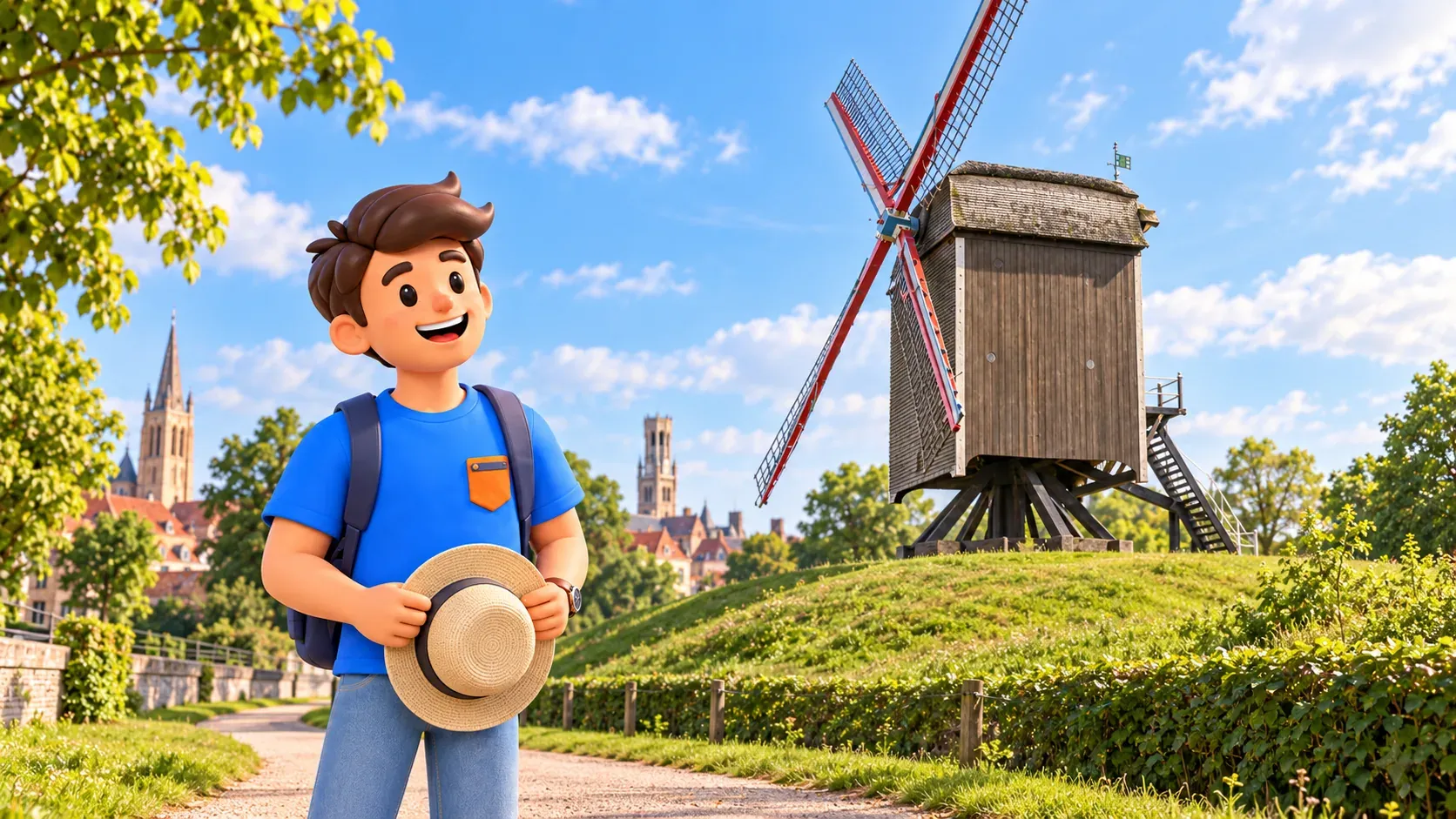
Two days work particularly well when you want one museum and separate walks without forcing every interest into the same sequence. One part of a day can be for looking closely, another for walking and resting. This does not make every hour empty: meals, transfers and visits still need space. It does let attention be distributed between two different stories.
For a detailed order, use the two-day Bruges itinerary. If arriving on Saturday and leaving on Sunday, match the actual hours to the calendars of the museums you want. Do not automatically count a weekend as two available museum days. Sometimes switching the neighbourhood walk and indoor visit preserves the trip's idea more effectively than trying to hold to a fixed order.
Three days: go deeper without having to go farther
A third day is valuable when it has a reason. For an art lover, that might be a separate museum half-day; for someone interested in urban history, northern canals and Jan van Eyck Square; for a visitor needing greenery, Tillegem or Tudor park. Choose one subject rather than declaring the third day necessary for everybody. More time should answer a specific wish.
Jan van Eyck Square and nearby canals recall commercial Bruges at another scale. The relationship of water, buildings and former port life matters as much as the artist's name on the monument. A walk here lets you stay with one fragment of the city. It is especially rewarding once the first days have given orientation and you want to examine connections more carefully.
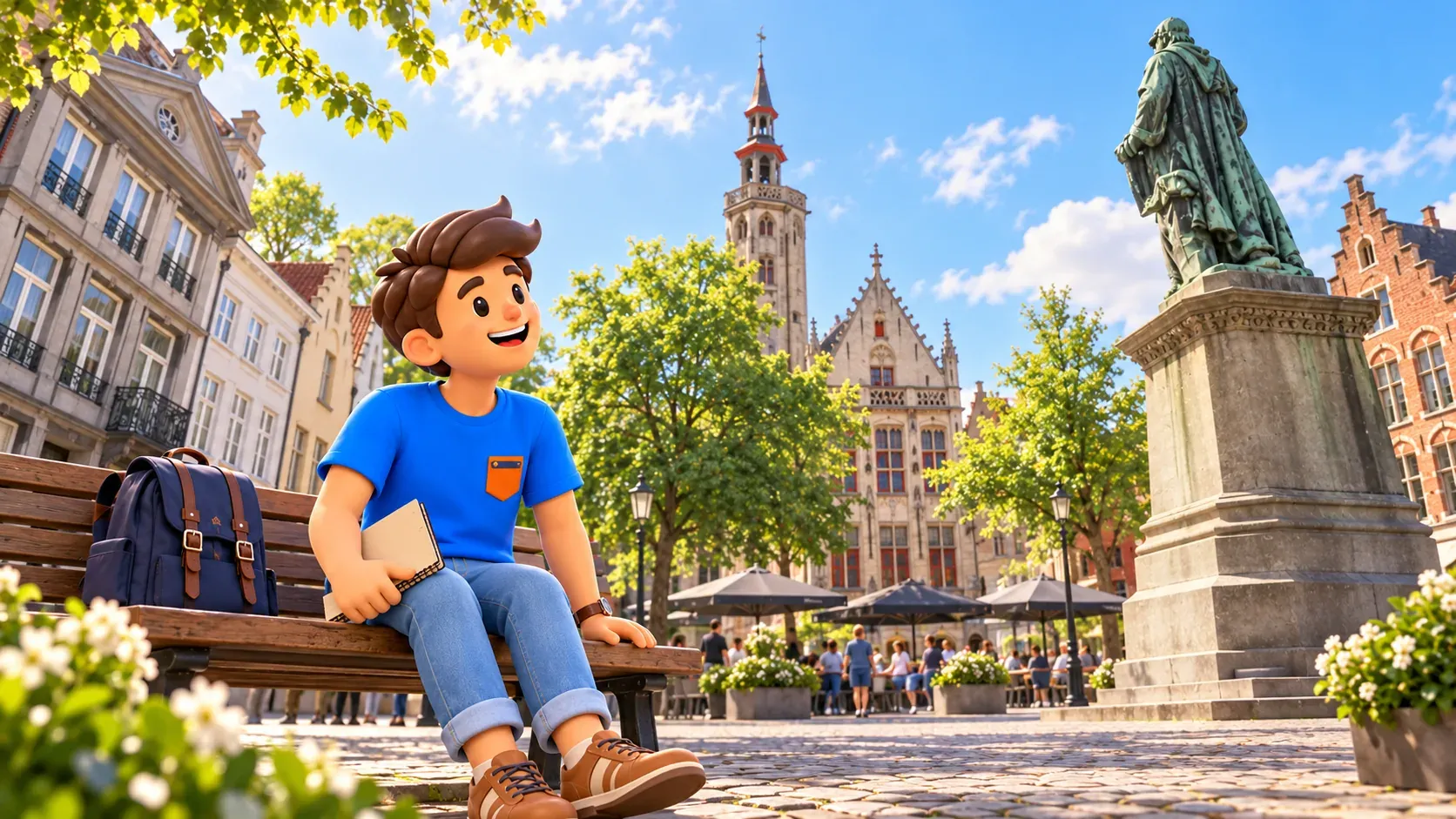
A museum-focused third day also benefits from a defined interest. Paintings, the objects of a city palace and the organisation of an old hospital are not interchangeable versions of another museum. Choose what you actually want to examine longer. Three days are valuable because you need not hurry away from a work, not because every available collection can be squeezed into them.
For a green outing beyond the centre, add the outward and return journeys separately. A few hours inside a park are not the same as a few spare hours between two central visits. That choice can occupy a distinct part of the day. It does not require another castle or a long extra circuit when the original aim was to take a break.
You do not have to leave for a neighbouring city simply because you have a third day. That is another goal with its own logistics. If your interest remains in Bruges, spend the time here. If no further subject appeals, staying with two days and preserving time for the wider journey is also reasonable. Another night should answer your needs rather than fulfil someone else's rule.
The calendar can matter more than the day count
Several days make visits easier to rearrange, but do not cancel closing days. Gruuthuse normally closes on Wednesday, while a number of other museums close on Monday. The museum section of the Church of Our Lady opens later on Sunday than on ordinary weekdays. Avoid transferring one blanket rule across the whole city. Choose the essential place and check its calendar first.
If a particular museum is closed on your only available day, a few extra outdoor hours cannot solve that problem. Sometimes the useful change is a date, sometimes a different main interest. For a visitor focused on a specific collection, moving to a suitable day can help more than adding an unchecked night. Duration and calendar need to be considered together.
With RoadMe, it is easier to turn these choices into a personalised plan for the whole trip, arranging city experiences around your interests and comfortable pace. Try the app so one, two or three days in Bruges form a considered sequence of walks, visits and rest.
The season also changes a comfortable daily programme. In winter, protect daylight for walking; in rain, a compact pair of neighbouring interiors may fit better. This is a reason to change the distribution, not automatically add another day for everyone. Consider your walking comfort, need for pauses and companions' interests. Sharing dates does not make two travellers' needs identical.
Make the final choice
Write down three priorities and mark each as a walk, a separate visit or an outing. Add food, rest and the actual journeys. If everything depends on nothing being delayed, shorten the programme or increase the number of full days. Do not remove breaks from the calculation because they cannot be shown in a photograph. They are part of the time the trip actually needs.
Keep one day for a first urban impression. Choose two for the centre and another neighbourhood at an easier rhythm. Add a third for a specific artistic, historical or green interest. Then move to the detailed routes: decide the kind of trip first, and its sequence afterwards. A good length is one in which your Bruges fits without a constant battle with the clock.