
How an Ancient Egyptian Obelisk Reached Central Park
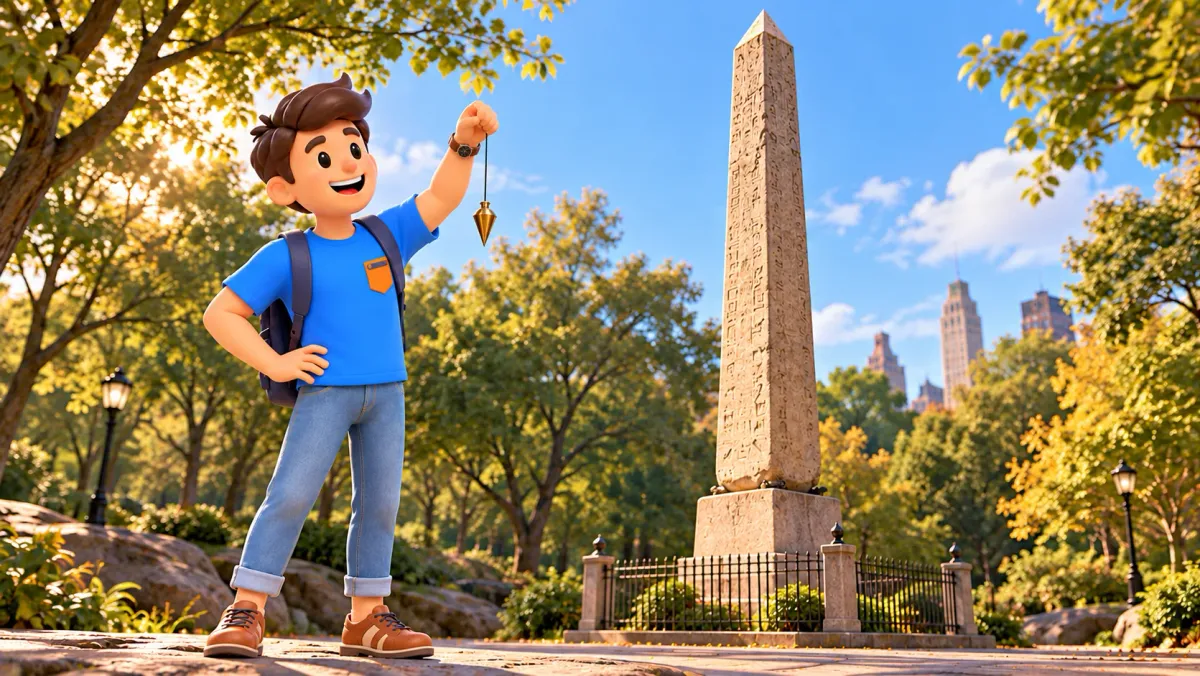
The Egyptian obelisk in Central Park is an ancient monument transported from Alexandria to New York in the nineteenth century and raised at its present site in January 1881. It came as a diplomatic gift from Egypt. Behind that short answer lies a remarkable journey: the stone first changed cities within Egypt, then crossed the Atlantic, then travelled slowly through Manhattan.
Today it is known as Cleopatra's Needle, although it was created long before the famous queen. It stands on Greywacke Knoll, west of the Metropolitan Museum of Art, between the museum and the Great Lawn. You do not need an extensive park tour to appreciate it. A thoughtful pause is enough to consider how far one stone travelled to become part of a New York walk.
Why Cleopatra did not commission this obelisk
The monument is associated with Pharaoh Thutmose III and dates to the fifteenth century BCE, making it roughly 3,500 years old. Carved from Aswan granite, it originally stood in Heliopolis, an ancient centre of sun worship near present-day Cairo. It was one of two obelisks at the Temple of the Sun, rather than an isolated city monument.
RoadMe makes it much easier to build a personal New York itinerary around your interests, from ancient cultures and unusual city stories to architecture and relaxed walks. Try the app to turn discoveries like this into a meaningful trip at a pace that suits you.
The nickname points to a later chapter. In Roman times, the pair was moved to Alexandria and placed at a temple whose origins are associated with Cleopatra. That connection is one explanation for the enduring name. A memorable nickname has outlasted the complicated chronology, making it easy to imagine, incorrectly, that the stone was carved at her command.
Keep three periods separate: creation under a pharaoh, relocation under the Romans and transportation to America. Centuries divide them. The obelisk does not tell one story about one queen; its surface and setting reflect successive decisions about how ancient objects should be used and understood.
Look at the stone before following its journey
At first glance, the obelisk might resemble any tall park memorial. A pedestal, fence and vertical form are familiar city features. Here, however, the shaft is an ancient granite monolith, not a modern Egyptian-style imitation. It was carved from one piece of stone, which immediately changes how you imagine its transportation. Dismantling it into convenient smaller sections was not an option.
The inscriptions also belong to different historical layers. The monument is associated with Thutmose III and later inscriptions of Ramesses II. Its surface should not be imagined as a single text completed on one occasion. Even without reading hieroglyphs, you can notice how rows of signs organise a narrow, tall plane and make the stone a record of royal authority.
Look first at the silhouette, then the visible carving, then the base. This simple sequence reveals material, writing and structural support, rather than just a shape in a photograph. Distinguish the age of the stone from the age of an inscription or support. A very old object can rest on newer elements without becoming less authentic; those additions help explain its continuing existence.

Heliopolis to Alexandria: the earlier relocation
Long before the Atlantic crossing, the obelisk had already changed its surroundings. The Romans moved the pair to Alexandria in the late first century BCE. A religious monument from ancient Heliopolis entered a different city and political environment. New York became the third principal setting in its biography, rather than the second.
This earlier move changes the way you read the present monument. A current location does not necessarily explain an original purpose. In Central Park the stone acts as an individual focal point; at Heliopolis it belonged to a pair beside a temple. The physical object remains, while the space around it changes what visitors expect it to mean.
Bronze crabs were introduced as supports for damaged corners when the obelisks were erected in Alexandria. The small animals beneath such a heavy stone are therefore not a whimsical modern joke. They performed a structural function. The supports beneath the New York monument today belong to a later phase, however: they are replacements for the Roman originals.
Why New York wanted an Egyptian monument
In the nineteenth century, Egyptian antiquities attracted cities, museums and collectors far beyond Egypt. The gift of this obelisk to the United States was announced in 1879. It became more than a historical object: it also represented international relationships, cultural ambition and a growing city's determination to accomplish something conspicuous.
The pair eventually acquired different addresses. One stands in London, the other in New York, a useful connection if you have walked beside the Thames. Their shipping stories should not be mixed together. The floating cylinder and dramatic sea voyage associated with the London monument do not describe how New York's stone crossed the Atlantic.
The word gift explains the form of the transfer, but does not answer every question about cultural heritage. Moving an ancient object changes the context in which it is read. You can admire engineering skill, remember the monument's Egyptian origins and consider changing attitudes to such transfers at the same time. A park visit need not reduce that complicated history to a single verdict.
The ocean crossing was only part of the problem
The transportation was directed by Henry Honychurch Gorringe, an American naval officer. The obelisk travelled from Alexandria aboard the Dessoug and reached New York in 1880. It had to be lowered safely, taken to the vessel, loaded, carried across the ocean, unloaded, moved again and finally raised. Each change of position created another engineering problem.
Modern surroundings make it tempting to imagine one large crane and a few vehicles. The more interesting story concerns the transitions between different ways of supporting and moving the stone. It did not become lighter on land, and a mistake while turning it could have been irreversible. Carefully prepared structures and a ready destination mattered as much as the ship.
The shaft is approximately 21 metres tall and weighs around 200 metric tonnes. These are useful indications of scale, rather than invitations to compare figures from different sources without checking their units. The pedestal and other components added their own complications. The long stone itself needed to remain intact throughout the journey.

The surprising journey through Manhattan
Crossing the ocean did not finish the job. A special route was prepared from the Hudson waterfront, using beams, rolling equipment and mechanical power. According to NYC Parks, 112 days passed between reaching the riverbank and reaching the site in the park. Those final miles formed a substantial engineering project, rather than a short delivery from a dock.
Crossing the 86th Street transverse alone took nineteen days. The section from Fifth Avenue to the knoll required another twenty, with a winter blizzard complicating progress. A modern map makes these distances look small. It records the length of a route, however, not the difficulty of moving an exceptionally long and heavy object along it.
On 22 January 1881, the obelisk was turned upright before a large crowd. A month later, on 22 February, an official reception took place at the Metropolitan Museum. These events are sometimes confused, although raising the stone and celebrating its arrival are different things. January 1881 is the key date for the vertical monument you see today.
Rather than trying to retrace every historical street, picture a single moment: the monolith moving slowly on a temporary structure, with workers responsible for the next safe step. This brings human labour into a story that might otherwise contain only donors' names and a date. An ordinary Manhattan distance becomes a question of preparation, patience and responsibility.
Crabs, conservation and the monument's continuing life
New bronze supports replaced the Roman crabs in 1881. Two originals belong to the Metropolitan Museum's collection; check their specific display availability separately if they interest you. They provide a connection between the outdoor monument and the museum nearby. Seeing the obelisk in the park and entering the Met nevertheless remain separate plans with separate admission arrangements.
Ancient stone needs continuing care. A major conservation project finished in 2014, cleaning the surface with lasers and stabilising it. Conservation did not mean carving the old signs again or making the monument new. The task was to work with surviving material and its condition, rather than turn antiquity into a smooth modern souvenir.
A separate landscape and plaza restoration was completed in 2021. One object therefore involves two related responsibilities: caring for the stone and caring for the setting in which people approach and see it. The park is not a neutral backdrop. Open views, paths and planting can reveal the monument's scale or make it harder to perceive.

Give one story a place in your park walk
You might allow twenty to thirty minutes for a thoughtful look. Including your approach and a relaxed walk nearby, that could become a small outing of roughly an hour to an hour and a half, depending on your starting point and pace. These are planning estimates. There is no need to attach every famous Central Park sight to make this stop worthwhile.
The obelisk stands outdoors behind the Met, not inside a museum courtyard. Choose daylight and comfortable weather, consider steps and path conditions, and check park notices for your date. You do not need to cross the fence, touch the stone or make a rubbing. Looking carefully does not require physical contact with an ancient surface.
With RoadMe, developing this curiosity into a personal trip plan is much more convenient: spend time on ancient Egypt, follow more city stories or combine them with a restful green space. Use the app to organise your visit around your interests and preferred pace, so memorable details have room alongside the major sights.
Before leaving, look back from a little farther away. The familiar park silhouette now contains Heliopolis, Alexandria, an ocean crossing and a slow passage through Manhattan. That is what gives a short detour its value: you have encountered an object with several addresses and a very long biography, rather than simply collected another monument photograph.


