
Two quiet hours in Hong Kong Park: birds or tea ware
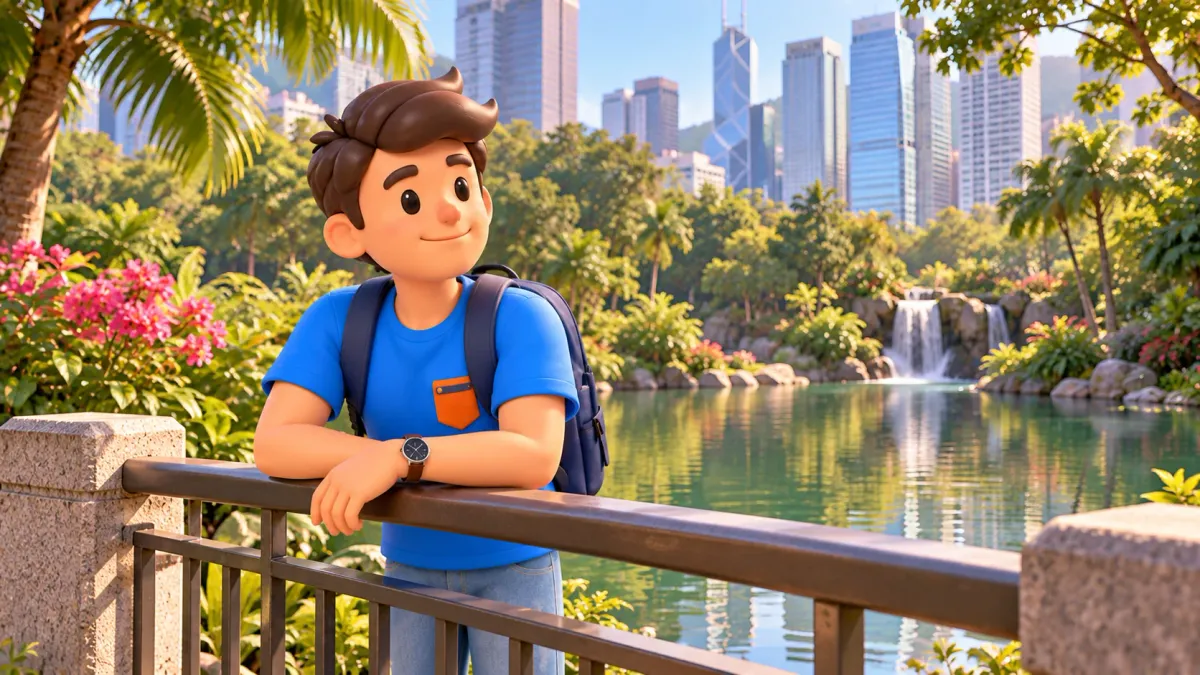
Hong Kong Park suits two hours when you would rather slow down than compete with the city. Walk among water and trees, then choose one main activity: birdwatching in the Edward Youde Aviary or a short visit to the Flagstaff House Museum of Tea Ware. Keep the remaining time for rest and movement between the park's levels.
The useful decision is to avoid making both facilities compulsory. The aviary offers moving birds and views through foliage; the museum asks for attention to small objects and a historic building. If greenery and a pause are all you want, leave both visits out. Two hours can still provide a worthwhile city break without a programme of indoor stops.
Choose a mood and one main stop
Use an entrance that suits your arrival position, then locate the chosen facility on the park map. The park sits between central urban development and the slopes, so the practical route depends on entrance level and onward direction. A line between map symbols does not explain steps, gradients or convenient alternatives. Start by understanding the path rather than counting nearby attractions.
A simple two-hour structure is around half an hour for arrival, water and trees, forty-five minutes to roughly an hour for one visit, then the remaining margin for walking and a quiet pause. These are estimates, not a timed field itinerary. If sitting longer appeals, reduce transfers rather than turning rest into a compulsory brief stop before another task.
To give a quieter park visit a place in your trip, try RoadMe: the app builds personal routes and day-by-day plans around interests, dates, budget and pace. Choosing a gentler rhythm in advance is more convenient than linking every nearby attraction and discovering there is no time left to rest.
You can choose birds or tea ware before leaving, without defending that choice at any cost. Consider current opening arrangements and how you feel. Personal planning helps organise the trip, while actual facility access and conditions still need checking with the venue and at its entrance. This itinerary does not promise automatic removal of every practical limitation.
Water, trees and the site's earlier life
The park opened in 1991 on the former Victoria Barracks site. Some historic buildings acquired new public roles, so the green space also tells a story of changing urban use. For a walk, that short connection is enough: today's leisure landscape occupies a place with an earlier organisation and buildings of its own.
Begin beside a convenient stretch of water rather than attempting every path. Notice how plants change your perception of the surrounding tall buildings. Trees do not erase the city, but they create a different scale. Attention moves from a distant outline to leaves, reflections and the few metres of path immediately ahead.
Set one small observation task, such as noticing a reflection or the difference between sunny and shaded foliage. It can slow the visit without requiring a particular relaxation technique. Stand and look, then continue when you want. The park does not need continuous explanation to be interesting, and you do not have to turn a break into another form of work.
Stay on paths and permitted spaces beside the water. Do not feed animals or use food to draw birds towards a camera. A reflection photograph does not require crossing a barrier or occupying the whole route. If a bench is taken, find another suitable pause instead of making one exact view essential to the outing.
Historic buildings can appear as occasional layers along the way. There is no need to search for every surviving structure during two hours. Compare one older, lower volume with the modern surroundings. That gives useful context for the museum option, while still allowing an aviary visitor to keep a mainly natural theme.

The bird option: Edward Youde Aviary
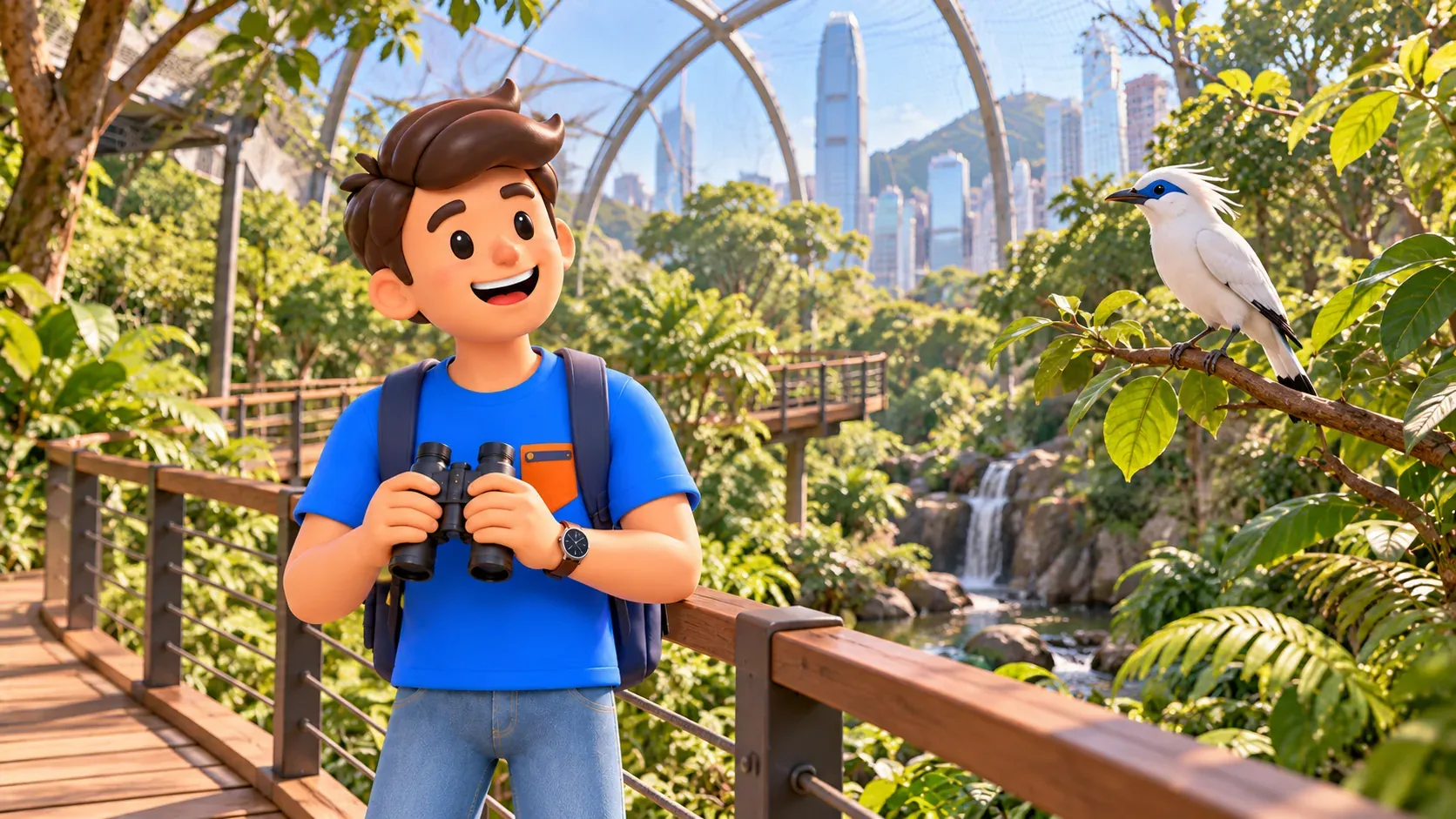
The aviary occupies a valley, with a raised walkway giving views of birds and vegetation at different heights. Its interest extends beyond finding the brightest feathers. You follow movement among branches and the space beneath the canopy, rather than simply proceeding from one small cage to another. The viewpoint is part of the experience.
As checked on 20 October 2026, the operator lists 9am to 5pm. Check current notices before setting out: the facility has its own schedule, and an open park does not mean every attraction operates at every hour. Avoid arriving at closing time and expecting a complete visit. A quiet period of observation benefits from spare time.
Begin with a short pause to distinguish movement within the greenery. Birds are not obliged to occupy an easy photographic branch or demonstrate particular behaviour. Do not chase, tap structures or attract them with food. Waiting and shifting attention are more appropriate than demanding an immediate result. A fleeting sight can still be a worthwhile part of the visit.
You might follow one bird's use of height, then notice the walkway and covering above the valley. That connects nature with the way the place is arranged. Naming every species is unnecessary. If identification interests you, use local interpretation rather than making a confident conclusion from colour alone. The aim is attention, not a score of sightings.
The operator describes the aviary walkway as wheelchair accessible. That is information about a particular facility, rather than a guarantee covering every approach from a station or through the park. Check the appropriate entrance, connection and current restrictions if accessibility matters. Different levels still require planning even when the main attraction has an accessible route.
The tea-ware option: Flagstaff House
The Museum of Tea Ware occupies a historic house from the 1840s that formerly served as a military residence. Its new purpose brings small ceramic objects together with a preserved building. Notice both parts: the house as evidence of the site's earlier use and tea ware as the material side of a familiar cultural practice.
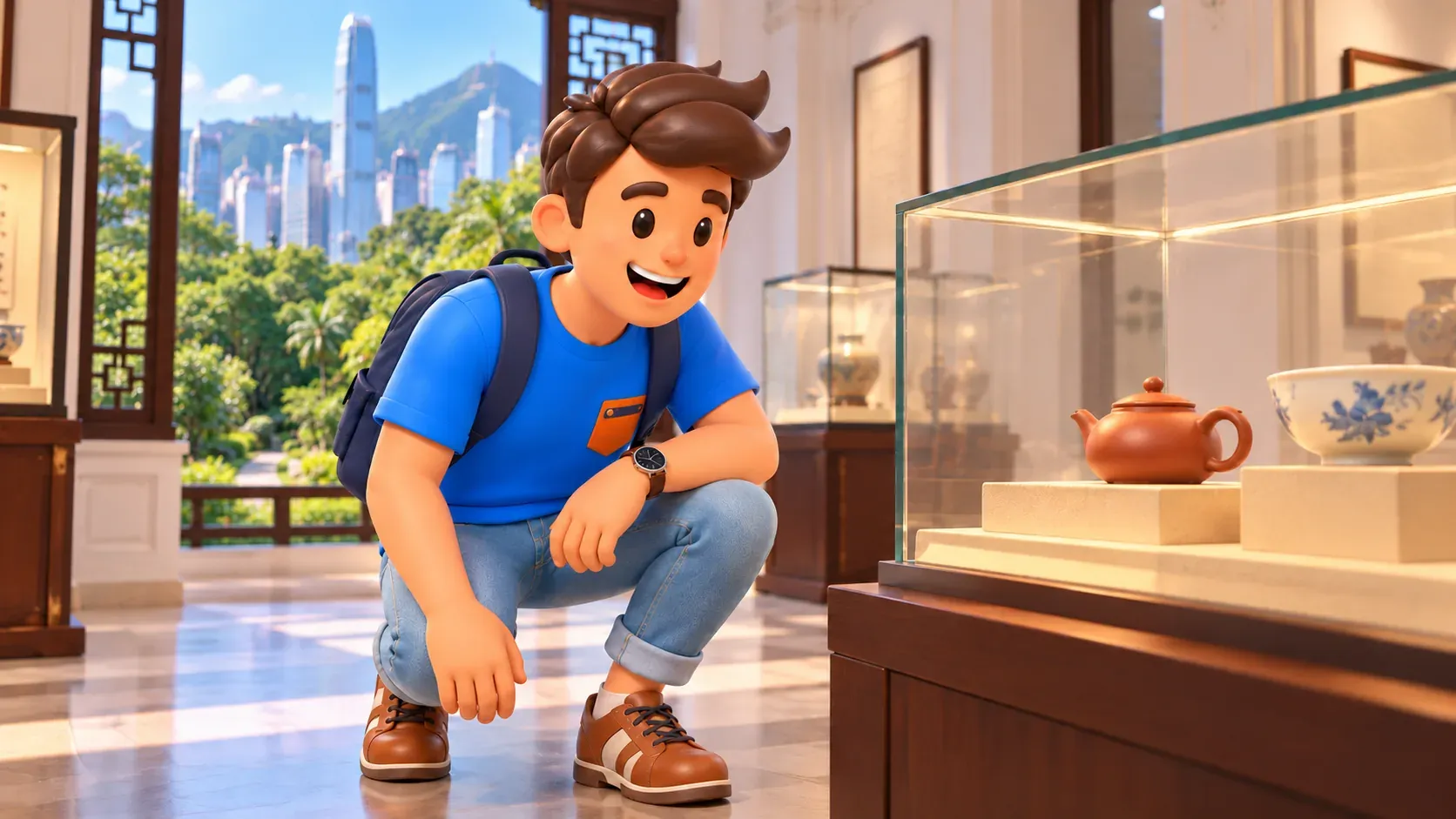
Begin with the façade, then select a few different forms in the available exhibition. A teapot offers relationships between lid, handle and spout; a bowl invites attention to proportion and surface. You need not memorise every period or rank objects by assumed price. Looking closely at one item can explain craftsmanship and use better than a long inventory.
Small size does not mean a simple history. Material, firing and form connect with making and using the object. Read the explanation for the item you actually choose instead of guessing its function from appearance. A vessel behind museum glass is not an invitation to touch the surface or test whether its handle feels comfortable.
A museum visit does not automatically include drinking tea. Workshops, demonstrations and other activities, when offered, have their own programmes and conditions. Do not plan a ceremony solely because tea appears in the museum's name. A short exhibition visit is enough for this outing; an additional event can become a separate plan with appropriate time.
The current normal schedule is 10am to 6pm on Monday and Wednesday through Sunday, with Tuesday closed except public holidays. Separate festive closures and shorter eves apply. Admission is free, but check the calendar for your date. An evening park walk does not become an evening museum session simply because the building stands inside the grounds.
Leave space for rest after the main visit
Do not automatically add the second facility because the first took less time than expected. The remainder can belong to water, trees and an unhurried exit. After the museum, a short outdoor section may be enough; after the aviary, a pause may be preferable to further walking. Rest was an original purpose, not a reward for completing a list.
In a group, agree where to meet if interests differ. One person might prefer the museum while another stays in greenery nearby, but check the real distance and connection on the map. Avoid promising a five-minute reunion between sites on different levels without looking at the path. A simpler shared plan can be more comfortable than splitting everyone into parallel activities.
If these pauses matter throughout the stay, planning in RoadMe is more convenient: the app works out a personal programme around interests and pace, with dates and budget included. Rest can then be part of a considered journey rather than whatever time remains between larger visits.
For a snack, use a permitted place and follow the facility's rules. Museum areas and a birdwatching walkway should not become an improvised picnic. One café is not compulsory, and a free table is not guaranteed. Water and an opportunity to stop may be sufficient to keep the outing from becoming another tiring programme.
If a second visit genuinely appeals, check its hours and your purpose first. It makes sense because its subject interests you, rather than because minutes remain to be filled. Saving it for another date can produce two distinct gentle outings instead of one busier session. Flexibility preserves the route's usefulness without requiring every opportunity to be used immediately.
Time, weather and a suitable path
A daytime period while your chosen facility is open is simplest for combining greenery with one main visit. Do not equate overall park hours with museum or aviary hours. An exterior-only pause gives more flexibility, though individual paths and areas can still have temporary restrictions. Follow signs rather than assuming a familiar path must remain available.
In heat, choose shorter connections and more time for water and rest. Postpone during heavy rain, thunderstorms or relevant official warnings. The park and individual facilities can close in adverse conditions. This article does not promise appropriate shelter on every path or automatic admission to a covered alternative. A practical change of plan may be the best way to preserve a relaxed day.
Wear shoes suitable for gradients and possible steps. Visiting every level is unnecessary. If someone finds prolonged standing or uphill walking difficult, use fewer connections and verify specific suitable routes. A straightforward outing within a manageable area is better than a complicated attempt to collect all zones. Match the path to the people, not only the destination name.
Keep photography limited too: greenery and a reflection, birds or a historic façade, perhaps one small museum object where photography is permitted. Those are possibilities, not three compulsory subjects. Put the phone away on stairs, stop somewhere stable and then compose the image. Attention to the route helps preserve the same calm pace that brought you to the park.
Finish two hours without a new checklist
Choose an exit according to the next part of your day rather than returning to the start for a loop. If you have a meeting or onward journey, leave time beyond the park. The two-hour estimate covers the walk and chosen visit, not any possible transfer from a hotel and back. Arrival and departure belong to the wider day's plan.
For a larger framework, see the three-day Hong Kong plan. The park can sit beside a busier urban block as a pause of its own. Relative closeness on a map does not require the Peak, every museum and the whole centre to be combined into this one outing.
A good result is simple: one activity chosen for your mood, with time left to see water, trees or an object properly. The remaining paths and detailed histories can wait. The park's value includes the ability to change the intensity of a city visit while keeping your own pace.


